Copyright Mark D. Martin 2004-2026, All Rights Reserved
Copyright Mark D. Martin 2004-2026, All Rights Reserved |
| Home | | | Photos | | | Museum | | | Energy & Environment | | | Links | | | Martin | | | Class Web Site | | | |
| CamHome | | | 35SLR | | | 35SLRAuto | | | 35Other | | | Medium | | | Large | | | 126 | | | Submin | | | Movie | | | Digital | | | Projectors | | | Scopes |
| ||
![[Agfa Chief]](images/camera/medium/agfachief.jpg) |
Agfa Chief (Large) (Circa 1942) The back of the camera reads: "Agfa Ansco, Binghamton, N.Y. Made in U.S.A." From 1928 until the early 1940s the Agfa and Ansco had merged. (See Agfa Ansco - Camera-Wiki. Products might be branded Agfa Ansco, Ansco or Agfa. Since this camera is branded Agfa, I included it in the Agfa catagory. The date is from a 1942 Paramount Supplies ad (page 118) for sale on eBay which states: "Same as Agfa Pioneer, with built-in flash synchronizer, - but fitted with lens having two-zone focusing adjustment and built-in yellow haze filter." There were two versions: the Chief PB20 at $3.19 taking PB20 Agfa Kodak 620 film for eight 2.25 x 3.25 inch pictures, and the Chief PD16 at $3.55 using PD16 Agfa or 616 Kodak film for eight 2.5 x 4.25 pictures. My camera is the PD 16 taking 616 film which is larger than 120 film. It provided postcard sized photos without enlarging. $3.55 in 1942 equals about $67 in December 2022 dollars. The flash unit for either the Chief or Pioneer, which I do not have, was $.89. The Pioneer PB20 was $2.48 and the Pioneer PD16 was $2.84. The Agfa Shur-Shot box camera that does not have a flash synchronizer was $1.98 for the 120 film version and $2.34 for the 116 film version. The Agfa/Ansco Pioneer appears to have been more common than the Chief. The Pioneer was made from 1940 to around 1953. Initially the Pioneer cameras were sold as the Agfa Pioneer while the post World War II cameras from about 1947-1953 carried the Ansco Pioneer name. (Ansco Pioneer - Camera-Wiki. See PressConnects on how World War II affected Agfa/Ansco.) For example, a early post World War II Montgomery Ward Photographic Catalog sold the Ansco Pioneer. The picture in that catalog also shows how the flash attaches to the Pioneer and Chief. I haven't seen any "Ansco" Chief cameras online and hence think the Chief may not have been produced post-war. | |
The camera body is all metal. The camera's rotary shutter has one instaneous (I) shutter speed, I assume around 1/30 -1/60 second. It also has a bulb (B) setting. The switch is on the bottom of the lens assembly. There is a single aperture that measures approximately 7mm in diameter, about the same as the eraser on a pencil. The focal length, the distance from the lens center to the film plane, measures approximately 110mm. The f-number is hence 110 divided by 7 which equals approximately f16 which sounds reasonable. The lens actually focuses to some degree. You move it to the F for Far and to the N for Near. The instruction manual at page 8 available at butkus.org says near is for subjects from 6 to 15 feet. For subjects further than 15 feet you should use F. The lens screws further out for Near and screws in for Far thereby increasing and decreasing the distance between the lens and film. The instructions have you go all the way to N or F, although I don't see why you couldn't use intermediate settings. The camera also has a yellow filter which is controlled by a lever near the top of the lens assembly. When the switch is up and in as far as it will go there is no filter. When the lever is down and as far out as it will go, the filter is in place. The instructions state: "The built-in yellow filter is especially useful when photographing landscapes, sunny beach scenes, bright snow scenes and cloud effects." A yellow filter is often used in black and white photography to increase the contrast between the sky and clouds. It is often good for photos of people against an environmental background. (See thedarkroom.com.) The shutter wasn't working right initially on my camera. It would just operate on bulb whatever you did. Recognizing that the camera had neither the value nor complexity of a Haselblad, I started taking things apart! First take out what they call the film cone. You will then see two flat head screws. When you unscrew these completely, the lens comes off in front and you can take the metal plate off the back. I played around with the shutter assembly in front trying to get it to work on instantaneous. Eventually, it started working. The red shutter button then got stuck, however. I learned you can pull it off with a pliers. There is a small felt washer and a small metal washer below the shutter button and ring that fits into the top of the camera. The red shutter button fits into that ring. There is a bent wire that fits into the shutter button. The other looped end fits into a pin on the shutter assembly inside the back of the camera. When the shutter is pressed, that moves the circular piece that triggers the shutter. It is a simple rotary shutter but it's pretty complicated for me. I then put the metal plate back, and screwed things together again. It works! I prepared this YouTube showing the lens and shutter mechanism. While I had the lens off, I cleaned both surfaces which were a little hazy. I also took off the plate that covered the viewfinder. There is a screw on each side. I could then clean both sides of each viewfinder lens. Be careful if you do this because the lenses pop out. I also gave the camera a good cleaning. I'm quite happy that I got the shutter working and everything back together. I don't recall where I got this camera. It was many years ago and probably from a garage sale or estate sale. While the Chief is a cool camera, the Clack below is more practical today since it takes 120 film. | ||
![[Agfa Clack]](images/camera/medium/agfaclack.jpg) |
Agfa Clack (Large) inexpensive German consumer camera using 120 roll film with a 6x9cm frame. Produced between 1954 and 1965 by Agfa Camera-Werk AG in Munich. Mine appears to be a later version according to the discussion in Matt Denton Photo. It has two aperture settings - a smaller opening for "sunny" and a larger opening for "cloudy." It has a third setting for close-ups of 1-3 meters or 3 to 10 feet. It seems to be the same aperture as the "cloudy." The apertures and the close focus are done by a simple turret. According to Alfred's Camera Page the close focus is done by a supplemental positive lens. Single shutter speed of 1/35 second according to Matt Denton Photo along with a B setting. That site also says the "sunny" setting is f16 and the "cloudy" setting is f11. Matt Denton Photo indicates that despite being a very simple, inexpensive camera, it is capable of producing quite clear photos due to its large image size, small aperture and curved film plane which compensates for the simple lens. Since the shutter speed is so low, it is important to hold the camera still. Surprisingly for an inexpensive camera, it has a tripod mount and a remote shutter release socket. Since it takes 120 roll film, it can also easily be used today. Mine was purchased as part of a collection of 35+ vintage consumer cameras for about $200 from an ad on Craigslist on 6-27-08 in Oceanside, CA. It is in very good cosmetic and working condition. It needs an empty film spool. | |
| ||
![[Ansco No.1 Deluxe]](images/camera/medium/ansco1deluxe.jpg) |
No. 1 Ansco Junior De luxe (Larger Image, Closed.) (Circa 1926) The film plate inside of my Ansco No. 1 Junior Deluxe states: "Made in U.S.A. by ANSCO Photoproducts, Inc., Binghamton, N.Y., Patented Sept. 20, 1910, Sept. 24, 1912. Others Pending, 80285." I assume the 80285 is the serial number. After considerable searching on the Internet, I finally found a reference to the exact model by searching "Ansco Photoproducts." Piercevaubel.com has an Ansco catalog referring to lower prices being effective as of July 1, 1926. On page 18 they have the "No. 1 Ansco Junior De luxe" that looks like mine. The only difference is that mine does not have the lever that comes down so you can set the camera opened on a flat surface in the vertical position. The description also says the leather is a rich blue, but mine looks black. The No. 1 Ansco Junior is similar except it does not have the brass front and was not in the rich blue leather. Both came with an Anscomatic f7.9 lens and an Ilex Ansco shutter with speeds of 1/25, 1/50, 1/100. B and T. The cost of No. 1 Ansco Junior De luxe was $15 and the cost of the No. 1 Ansco Junior was $13.50. There was also the No. 1 Ansco Folding camera which is like the No. 1 Ansco Junior except it had a faster lens, an Ansco f7.5 Antistigmat, and an Ilex General shutter with additional speeds of 1/10 and 1/5 second. It cost $17.50. While $15 sounds like a cheap price for my camera when new, $15 in 1926 has the same buying power as $192 in 2012. The highest price for a folding camera in the catalog was $60 for the Ansco Super Speedex f4.5. The least expensive folding camera in the catalog was the Vest Pocket Readyset for $7.50. The least expensive box camera was only $2.25. Nowhere does it say Junior on my camera. The model name is on the rail that the bellows folds out onto. It says "No.1 ANSCO DE LUX." The film plate on my camera has a decal that states the camera uses 4A Ansco film, which the catalog says is the same as 120 film. Pretty cool - they still make film for my camera! The camera still has a roll of, I believe, exposed film. It might be interesting to process it! The frame size is 2.25 inches x 3.25 inches (roughly 6cm x 9cm). The company was first named "Ansco Photoproducts" in January 1924. (billsphotohistory.com.) In January 1928 it merged with the German company Agfa to become Agfa-Ansco. (Id..) My camera therefore had to be made sometime between 1924 and 1928 consistent with the 1926 catalog. The aperture and shutter on my camera both work. The 1/25 sounds slower than the 1/100 second speed, but I have no idea if they are accurate. Cosmetically the camera is in good shape for its age. The bellows look good and the leather is in good condition. The leather on the front door comes off in one piece, however, and needs to be glued down. The camera comes with a very short cable shutter release which is not shown in the photo. The front of the lens looks in good shape. The rear of the lens could use some cleaning. The camera could probably take photos today; not bad for over 85 years old. I purchased my camera at a La Mesa, CA garage sale on February 25, 2012 for $10. | |
![[Agfa Ansco PD 16 Plenax]](images/camera/medium/anscopb16.jpg) |
Agfa Ansco PD 16 Plenax (Large Image, Closed, Side.) (Circa 1935-41) Uses PD 16 Agfa film or Kodak 616 film. According to 616 film - Wikipedia, 616 film was introduced by Kodak in 1932. It was 70mm wide and produced 63.5 mm × 108 mm (2.5" × 4.25") post card sized negatives, appropriate for contact printing without the need for an enlarger. Originally it produced six frames per roll, later increased to eight frames per roll. My camera also has an insert that allowed for half frame pictures of 2.5" x 2.125" allowing for sixteen frames per roll. (The user manuals says fifteen frames per roll.) 616 film was discontinued in 1984, although slightly narrower 120 film can be used with adapters that are on sale on eBay for around $10. Art Deco Cameras has a discussion about using 120 film in 616 film cameras including stating "with some cameras, for example the Agfa-Ansco PD16 Plenax, it is not possible to use a 120 feed or take up spool." If you are going to try using 120 film, review that page carefully. The camera was made by "Agfa Ansco Corporation, Binghamton, N.Y., U.S.A." As indicated in the discussion of the Ansco Viking 6.3 below, in 1929 Ansco merged with the German photo company Agfa to become Agfa-Ansco, with the two companies later splitting in two again as a result of World War II. This camera would have been produced just before World War II.
My camera comes with Tripar 130mm f11 uncoated lens. It has a focus scale from 5 feet to 100 feet. The 100 feet is for anything 100 feet or over. It has a Plenax shutter. The shutter speeds are 1/25, 1/50, 1/100 second plus B and T. The lens/shutter assembly says it is "Made in America by Agfa Ansco Corporation Binghamton, N.Y." The back of the camera has two red windows to show the exposure numbers depending whether you are taking full frame or half frame photos. I couldn't find the manual for this specific camera model. CameraManuals.org (Butkus.org) has the manual for the Agfa Ansco PD 16 Antar manual which is a similar 616 film camera but with a simpler shutter. Butkus.org has the manual for the Agfa Ansco PB 20 Plenax camera which is a 120 film camera with the same shutter and lens as the PB 16 Plenax camera. That manual states at page 6, "To use the camera as a fixed-focus camera, set the lens barrel at 15 feet. When the camera is used as a fixed-focus camera, set all indices on figures in red [1/25 second, f16]. Sharper pictures will result, however, if the lens is focused according to the index." The use of the "brilliant" waist level finder is explained at pages 11 and 12 of the Plenax manual. My camera appears to be in generally good cosmetic and operating condition. The bellows are intact although slightly wrinkled in one area. The lens is clear except for a small speck of something under the front element. The aperture and shutter work. The shutter speeds sound generally correct. The vertical footrest to stand the camera up vertically has broken off. The finder was dirty. I took the top lens of the finder off and cleaned all the surfaces with isopropyl alcohol and cotton swabs. The finder has a mask which lifts up for full frame photos and goes down for half frame photos. My mask had broken off. I can snap it back on but it is not hinged like it is supposed to be. Inside my camera has the half frame film mask and the take-up spool. I may have purchased my camera with the Agfa Clack above. Art Deco Cameras has information on this model with a different shutter. |
|
![[Ansco Shur Shot]](images/camera/medium/anscoshurshot.jpg) |
Ansco Shur Shot 20 (Large Image, Open, Film Holder, Shutter Mechanism, Viewfinder Mirrors) (Introduced 1948) A very simple 120 film box camera with fixed focus meniscus lens, one shutter speed, and one aperture. The focal length measures approximately 105mm. The aperture diameter is about 7mm, yielding a f-number of 105mm/7mm equals f15. The shutter speed of the rotary shutter is about 1/25 according to the 1948 Montgomery Ward Photographic Catalog, page 4. Due to the fixed focus, the subject should be at least 8 feet away. The camera takes eight 2.25 x 3.25 inch photos on 120 roll film. The exposure number is shown through a red window on the back, although this Film is More Fun Overview video indicates it may not line up correctly with modern films. He recommends winding 1.5 to 2 full turns between exposures. The camera is mainly constructed of cardboard, wood and a metal front and back. It is covered in a black paper(?) material. The dimensions are approximately 12.5cm x 8cm x 10.5cm. It has a leather handle. It has two waist level viewfinders. The light enters the front lens of a viewfinder, hits a polished metal mirror at a 45 degree angle, and is reflected up to a rectangular lens. It is made in the U.S.A. by Ansco, Binghamton, New York. The front can come off to reveal the rotary shutter and the viewfinder mirrors. It has a hinged back. The film holder comes out of the camera completely for loading. I made this two minute video showing these parts. The directions for film loading are shown in the instruction manual available at Butkus.org, as well on the inside of the back door of the camera. This Film is More Fun Film Loading video also shows how to load film. There were other previous Shur Shot models, some with multiple apertures and a bulb shutter setting. This model introduced in 1948 is called the Shur Shot 20, although the 20 designation does not appear on the camera. The price in the 1948 Montgomery Ward Photographic Catalog, page 4, was $4.54, or about $55 in December 2022 dollars. I think I purchased my camera with the Agfa Clack above and many other cameras over a decade ago. It is in good cosmetic and working condition. At first the shutter was somewhat sluggish but it is working fine now. The front of the lens was a little hazy but I cleaned it holding the shutter mechanism open after taking the front cover off and cleaning the front of the lens with a cotton swab and isopropyl alcohol. It is now ready to shot with readily available 120 film. A few days after writing this I discovered another Ansco Shur Shot 20 in very good working condition in the well worn original box. Other resources include Vintage Camera Lab, MfBoxCo, Camera-Wiki, Art Deco Cameras, Smithsonian, Film is More Fun Overview Video. | |
![[Ansco Viking 6.3]](images/camera/medium/anscoviking63sm.jpg) |
Ansco Viking 6.3 (Larger Image, Lens and name plate) (Introduced 1952) Folding viewfinder camera using 120 roll film with 6x9cm image size producing nine photos per roll. The name plate on the camera states: "Made for Ansco By Aga Camera Werk Munchen Germany." According Ansco, Wikipedia Ansco, founded in 1842, predated Kodak in the photographic industry. Originally named E. Anthony & Co., it merged with Scovill Manufacturing in 1901 to become Anthony & Scovil Co., later shortened to ANSCO. That year the company relocated to Bingham, New York. ANSCO held the first patent for flexible, transparent roll film, which was developed by Hannibal Goodwin, an Episcopal priest, in 1887 with the patent being granted on September 13, 1898. Goodwin's patent was sold to Ansco. Ansco sued Kodak which had also started using roll film. Kodak eventually settled for $5 million dollars in 1914. The introduction of roll film was a major development in the history of photography. Previously glass or metal plates were used. In 1929 Ansco merged with the German photo company Agfa to become Agfa-Ansco. That company and other German film companies became part of General Analine and Film. With the intervention of World War II, the United States took over Agfa-Ansco's interest in the United States. The company continued in business during World War II. An October 20, 1941 ad in Life Magazine, at pages 26 and 17, reproduced at Google Books, tells how Agfa Ansco films assist the U.S. Navy in the war effort. A November 22, 1943 Ad in Life Magazine at page 18, reproduced in Google Books, states: "Since June, 1940, the armed forces and war industries have been using every foot of Ansco Color Film as fast as we could produce it. That's why you'll have to wait for yours." While black and white film was still available to the public, three quarters of Ansco film went to the war effort. The name in that ad is still Agfa Ansco. Later ads in 1944 refer to it as formerly being Agfa Ansco and refer to the company now as "Ansco, Binghamton, New York. A Division of General Aniline & Film Corporation. (E.g., Life Magazine, July 17, 1944, page 16 in Google Books, Life Magazine, Sept. 25, 1944, page 41, in Google Books, Life, November 20, 1944, page 50, in Google Books. According Ansco, Wikipedia the assets were finally "sold as enemy assets to American interests in the 1960s." It continued under the Ansco name until 1967 when became named GAF for the parent company General Aniline & Film. The business continued until the early 1980s. Id.. A very detailed timeline for the company is at Ansco Chronology. See, also, Ansco - Camerapedia and Ansco Viking 6.3 - Camerapedia. In 1945 when the war was over Agfa reappeared as a separate company and was a major European film and camera manufacturer. (Agfa-Gevaert, Wikipedia. The 1952 manual which came with my camera, however, still states: "Agfa [and the Agfa symbol] are registered trademarks of Ansco Division of General Aniline and Film Corp., of Binghamton, N.Y." | My camera with leather case and instruction manual was purchased at a garage sale near 70th Street in San Diego, California for $10 on September 17, 2011. It appears to be in good working condition. The bellows appears to be excellent. I wondering if it was replaced. The 105mm f6.3 Agfa Agnar Anastigmatic lens appears to be in excellent condition also. According to page 1 of the instruction manual, it is "hard coated for higher light transmission, and color corrected." The Vario shutter has only four speeds - B, 1/25, 1/50, and 1/200. The shutter appears to work fine. You have to cock the shutter before firing. At first, the shutter button was not pushing the lever on the lens/shutter assembly quite far enough. I bent the lever slightly, however, and now it works fine. Focusing is from 3 feet to infinity. There is a focusing ring on the lens barrel. The camera has a simple optical viewfinder with no rangefinder. Focusing must hence be by estimation. There is a separate depth of field scale on the top of the camera by the shutter release button. My focusing ring works but it is stiff. This is common with the focusing rings on many of these cameras not movable due to dried up lubricants. (See, e.g., Can't focus Ansco Viking 6.3 - photo.net.) There is no separate exposure counter. Rather, there is a red window in back of the camera where you can see the exposure number on the film backing. This window can be closed and opened just when needed to avoid fogging the film. Cosmetically my camera is in decent condition except the chrome or nickel plating is heavily corroded. It came with an Ansco bulb flash in its original box. Perhaps an extra flash holder mounting on the bottom is necessary. It looks like it mounts to the side of the camera, but I'm not sure how. Since it takes 120 film, the camera should still be quite useable today. The Ansco Viking 6.3 cost $34.95 in the Fall 1952 - Spring 1953 Sears Camera Catalog. $34.95 in 1952 has the same buying power as almost $300 in 2011. The flash unit was an extra $9.95 and the case was an extra $4.95. There was also a Viking 4.5 with f4.5 lens and Prontor shutter for $48.65. The Ansco Viking 6.3 reappeared in 1955 Sears Camera Catalog at the slightly reduced price of $32.74. It is not present in the 1956 Sears Camera Catalog. The manual is available online at butkus.org. The camera in that manual and in the Sears Camera Catalogs is slightly different than mine. The viewfinder area of mine is more rounded. In the Butkus manual and Sears catalogs it is more angular. Mine also has the depth of field calculator/scale near the shutter button while the cameras in the Butkus manual and Sears catalogs do not. |
![[Ansco Viking 4.5]](images/camera/medium/anscoviking45sm.jpg) |
Ansco Viking 4.5 (Larger Image, Lens and name plate) (Introduced 1952) Folding viewfinder camera using 120 roll film with 6x9cm image size producing nine photos per roll. The name plate on the camera states: "Made for Ansco By Aga Camera Werk Munchen US Zone Germany." This refers to the US Zone unlike the Ansco Viking 6.3 above. See the extensive history of Ansco and Agfa in the discussion of the Ansco Viking 6.3 above. My Ansco Viking 4.5 has the more angular lines as in the viewfinder area as in the Fall 1952 - Spring 1953 Sears Camera Catalog compared to the rounded viewfinder area in my Ansco Viking 6.3 above. The lens of my Ansco Viking 4.5 is an Afga Agnar 105mm f4.5, serial no. 958674. It has a Prontor shutter instead of the Vario shutter in the Viking 6.3. Shutter speeds are bulb, 1/25, 1/50, 1/100 and 1/200. Apertures are f4.5 to f32. I don't see a depth of field scale on this camera. It has a simple optical viewfinder with no rangefinder. Focus is done by estimation. It focuses from less than 3 feet to infinity. Film advance is by twisting a knob until the next exposure number is visible in the red window on the film door. That window can be opened and closed to prevent stray light from hitting the film. The shutter must be cocked with the lever on top of the lens assembly before the shutter can fire can fire. I have the original box. The price in the Fall 1952 - Spring 1953 Sears Camera Catalog was $48.65 which has the same buying power as $421.91 in 2012 dollars. The camera looks in near new condition and seems to work well. I received this camera and several others as a bonus when I purchased a Yashica FR I camera and a Yashica FR II camera and numerous accessories on Craigslist for $50 on June 1, 2012 in the Point Loma area of San Diego from a gentlemen I have purchased several other cameras from. This is a wonderful 60 year old new condition camera which I look forward to trying out with film. | |
![[Anscoflex]](images/camera/medium/anscoflex.jpg) |
Anscoflex (Open) (1953 -1956) Twin lens viewing, 620 film yielding 6x6cm negatives, 2 element taking lens, fixed focus, one aperture of about f11, about 75mm focal length, about 1/60 second single shutter speed. T.W. Oliver Photography states he has been able to squeeze in 120 roll film. That site also indicates the close focus is about 10 feet. "Made in Binghamton, N.Y. U.S.A." The later Anscoflex II added a close up lens and a yellow filter with dials on front according to 1956 Sears Catalog. That catalog priced the Anscoflex II at $18.95 and the Anscoflex at $15.95. The Anscoflex was like many cameras at the time, such as the Argus 75 Reflex and Kodak Duraflex, which had twin lens viewing, but fixed focus and therefore did not offer the true benefit of a twin lens reflex focusing system. The lowest priced true twin lens reflex camera in the 1956 Sears Catalog was the Tower Reflex priced at $35.95. The Anscoflex has a striking modern design. The metal door in front opens up revealing the taking and viewing lenses. That automatically also opens the large, bright viewfinder. The design was by famed industrial designer Raymond Loewy, referred to at the official www.raymondloewy.com Website as the father of industrial design. His other credits include the Studebaker Starliner Coup in 1953, the Greyhound bus in 1954, the Studebaker Avanti in 1961 and the Shell gasoline logo in 1962. Despite its cool looks, it is a very basic box camera and significantly less sophisticated than true twin lens reflex cameras like the Kodak Reflex, Argoflex or Ikoflex. Mine was purchased as part of a collection of 35+ vintage consumer cameras for about $200 from an ad on Craigslist on 6-27-08 in Oceanside, CA. It is in very good cosmetic and working condition. It came with the eveready case. Anscoflex cameras appear to be relatively plentiful and cheap on eBay. | |
| ||
![[Argus Argoflex]](images/camera/medium/argoflex.jpg) |
Argus Argoflex EM (1948) appears to be an Argoflex EM made only in 1948 comparing it to the picture at Argus Collectors Group - Twin Lens Reflex Cameras. According to that site, the EM takes only 620 film although earlier E models also took 120 film. Rick Oleson shows how to convert an essentially similar Model EF (added flash shoe and flash synchronization) to 120 film. Therefore, I think it can be fairly easily converted to use 120 film which is still available unlike 620 film. (120 film and 620 film are the same size, but the spool size differs.) The EM and EF are metal bodied cameras. It appears that the earlier E cameras were bakelite. The EM and EF (1948-1953) appear to be the last of the true twin lens reflex Argus cameras. The later Argus twin lens reflex cameras were either fixed focus or estimation focus. The viewing lens on the Argoflex EM is an f4.5 Anastigmat. It has a depth of field scale. The taking lens is 75mm f4.5. Shutter speeds from 1/10 to 1/200 plus B and T. Apertures are f4.5, 6.3, 9, 12.7 and 18. In other words, they do not follow the usual f4, 5.6, 8, 11, and 16. You focus by turning the ring on the viewing lens. That cogged ring meshes with the cogged ring on the taking lens. Twin lens viewing and focusing with a magnifer and sports finder. Many complain that the viewfinder is rather dim. Tripod mount and remote shutter release. The manual for what appears to be the EM or EF is at www.butkus.org. Mine was purchased as part of a collection of 35+ vintage consumer cameras for about $200 from an ad on Craigslist on 6-27-08 in Oceanside, CA. My is in very good cosmetic condition. The name label around the taking lens is missing. The lenses look clear. The viewfinder is reasonably clean. The shutter works. A nice entry level true twin lens reflex! | |
![[Argus Seventy-Five]](images/camera/medium/argus75.jpg) |
Argus Seventy-Five (Large Image) (1949-1964) Dates from Camera-Wiki. My camera was made in May 1957 according to the 5705 date code on the inside of the camera door. It uses 620 film which is the same as 120 film on a thinner and narrower spool. Generally, 120 film cannot be used directly in a 620 camera. Camera-Wiki says that if you have a 620 takeup spool, you may be able to use 120 film in the Argus Seventy-Five. "[A] fresh roll of 120 can just barely be squeezed into the supply compartment, perhaps with some trimming down of the spool flanges." Camera-Wiki calls the Argus Seventy-Five a pseudo twin lens reflex (TLR) camera. While you view through the top lens, you do not focus the camera through the top lens like in a true TLR. Rather, the Argus Seventy-Five has a fixed focus single element meniscus 75mm "Argus Lumar" taking lens with a single aperture of approximately f11. The manual says subjects from 7.5 feet to infinity will be in focus. The "portrait attachement" allows pictures 28 to 38 inches from the subject. There was a single shutter speed of about 1/50 of a second, as will as a "Time" setting (actually bulb - it says open as long as you hold the shutter down). Images were 6cm x 6cm with 12 images per roll. The camera has double-exposure protection. Once you press the shutter, it will not fire again until you turn the film advance. Also, "a red-painted shutter blade is visible through the taking lens only after the shutter is cocked." (Camera-Wiki) The camera body is plastic while the film door is cast metal. The Argus Seventy-Five kit was $23.50 in the New 1957 Montgomery Ward Camera Shop Catalog at page 23, or about $250 in December 2023 dollars. The kit included a plug-in flash, batteries for the flash, a roll of film, two film processing mailers and a slip-on portrait lens. I have the slip-on portrait lens, but not the flash unit. The "Instructions for Use" are available at butkus.org. My camera may have been purchased with the Argoflex EM above. It is in good cosmetic condition. The shutter works, although it was hanging up for awhile after I shifted it from "inst" to "time." It seems to be working well now, however. I'll just keep it on "inst." I also have another Seventy-Five purchased at the same time. It was made in May 1954. It is has more scratches and dirt and the shutter is consistently hanging up. | |
| ![[Beattie Portronic]](images/camera/medium/beatie.jpg) |
Beattie Portronic, (Circa 1956) a heafty camera about a foot tall. It was made in the U.S.A. by Photographic Products Inc., Anaheim, Calif. It has a Wollensak 152mm, f6.3 Raptar lens. Apertures go to f32. It is a view camera focusing on ground glass approximately 2.5" by 3.25". It is also a twin lens reflex camera, however, having a separate focusing unit on top. It appears to have only one shutter speed. It has an elaborate system of electrical connections both outside and inside the camera. I assumed originally these were for some sort of flash system, but I saw one on E-Bay with some sort of attached bulk roll film holder. The electrical system may be involved with the roll film holder. The metal plate on the camera on E-Bay read "Beattie Portronic, Coleman Inc., Anaheim Cal. Model A-162, Type 15130." I assume the camera was made for studio portrait work, perhaps usually using bulk roll film. Mine looks to be in fairly good condition with some slight surface rust. I purchased it at a yard sale in about 2002 for $10. If anyone knows more about Beattie Portronic cameras, please e-mail me. | Update: There was an identical looking "Beattie 70mm long roll camera" for sale on San Diego Craigslist in September 2008 with two 100 foot film magazines. I called. The seller was a professional photographer. He had acquired it used many years ago. He had used it for school photos. The electrical connections drive the bulk film magazine. He also had a "Camerez 35mm long roll camera" for sale with tripod and also two 100 foot film magazines. It was similar in function but with a smaller 35mm format. He wanted around $200 for them which was too high for me since I would just use them for display having no need for bulk film capabilities. He guessed the Beattie was at least 40 years old. I also did a Web search. In Cleveland, Tennessee there is Beattie Camera Systems Sales Service & Repair which acquired the warehouse of Beattie Manufacturing. Beattie Camera System Sales Service & Repair has been in business since 1979. They also sell long roll Camerez cameras. On eBay in September 2008 there was also a Long Roll 2 1/4 Beattie-Coleman Camera for sale. It was more modern looking and purchased in the 1980s apparently for thousands of dollars. It had also been used for school photography. There were also several other ads for Beattie film magazines. There are also Beattie Intenscreens, which are brighter than traditional ground glass screens. This appears to be the same company since the logo is the same as on some of the more modern Beattie cameras. |
| Update April 2, 2017: While researching the Soligor Semi-Auto below, I came across the following in the What's New Section on page 40 of the July 1956 Popular Photography Magazine (scroll forward 2 pages to page 40): "RED LABEL PORTRONIC is the latest model of Beattie Portronic 70-mm automatic cameras. New features are positive interlock to prevent double exposure while release button is depressed; even-exposure control of indentification; film magazines which will accept daylight and darkroom loading spools as well as Portronic magazines. Price depends upon type of shutter and lens desired. Complete information available from Photographic Products Inc, 1000 N. Olive St., Anaheim, California." | ||
| ||
![[TKK Beautycord]](images/camera/medium/beautycord.jpg) |
TKK Beautycord (Large Image) The case, which is falling apart, spells it as two Words - Beauty Cord. This Japanese company's name was Taiyodo Koki also known as TKK. They went bankrupt around 1957 and then apparently reorganized as Beauty Company in 1958. Photo.net - Classic Cameras Forum, Taiyodo Koki (TKK) Japan. The museum has a Canter Beauty Rangefinder camera from 1963. I assume it is a related company. I believe my Beautycord is the Beautycord S model from 1955 as described at Taiyodo Koki (TKK) Japan. Mine has a TKK shutter with speeds of B, 1/10, 1/25, 1/50, 1/100 and 1/200 seconds. Apertures are from f3.5 to f22. The lens is a "Tri-Lausar" with an 80mm focal length. There is a ring around the lens assembly to set the shutter speed. You set the shutter cocking lever with your right hand. The shutter release is at the bottom of the lens assembly and can be conveniently released with your left hand. The aperture is set with a lever using your left hand. There is no light meter. My shutter and aperture both work. The lens looks to be scratch and mold free. The lens seems to be coated with a slight blue color. Cosmetically mine is missing the Beautycord emblem at the top front, the triangular emblem on the top of the hood, the leatherette covering on front and the cover over the focusing knob. The camera seems to focus fine although the magnifying lens in the hood does not seem to be as useful as on other twin lens reflex cameras I have used. In general it seems to be a competent twin lens reflex camera but not of the same quality and status as the Minolta Autocord or the Yashica-Mat 124G that I purchased with this camera. I purchased the camera at a garage sale on October 25, 2015 in La Mesa, CA on Dale Avenue. The camera had belonged to the seller's father who had operated a gasoline station on El Cajon Blvd in La Mesa and later became a photographer. The seller was about 3 or 4 years older than me and attended the same elementary school, junior high school and high school that I did. I purchased several cameras including this, a Minolta Autocord, a Yashica-Mat 124G, a Zenit-E 35mm SLR, a Keystone A-7 16mm movie camera, a Nikon 80-200 f4.5 lens, a Tamron 35mm to 80mm f2.8-3.5 lens with adaptall mount for Nikon, and a wood case that fits everything for a total of $77. | |
| ||
![[Ciroflex]](images/camera/medium/ciro.jpg) |
Ciroflex, twin lens reflex popular in the 1940s and 1950s. Made in United States. I have two. The shutter does not work in one. The viewfinder/mirror in both is very dim. The focusing glass on the working one is broken. I acquired both on eBay. The price in the 1949 Montgomery Ward Photographic Catalog for a Ciroflex with Alphax Flash Shutter was $83.50, equivalent to $768 in 2008 dollars. The price with Rapax Flash Shutter was $113.50, equivalent to $1,044 in 2008 dollars. For more information, see generally, The Classic Camera, medfmt.8k.com. The manual is available at photographica. | |
| ||
![[Empire 120]](images/camera/medium/empire120.jpg) |
Empire 120 (1930s) (Large Image, Alternate View, Back, Film Holder, JEMCO emblem, Shutter Assembly and Mirrors) The front of the camera states it was made in the U.S.A. The film holder inside the camera has a diamond shape with the letters JEMCO inside. This is the registered trademark of of J.E. Mergott Co. in Newark, New Jersey. BagLadyEmporium.com indicates that J.E. Mergott Co. dates back to at least the 1920s and made metal frames for ladies handbags. The factory was in Newark with showrooms in New York City. While at first it may seem odd they would start marking cameras, the cameras were made almost entirely of sheet metal. Even the cameras reflex mirrors are polished metal. Since the company's expertise was making metal purse frames, expanding to make simple all metal cameras makes sense.
The Smithsonian National Museum of American History has a sample of the Empire 120. They state it was made by Emmerling and Richter Co. of Berlin, Germany. As indicated above, this appears to be incorrect. There was a Emmerling & Richter camera company in Berlin. For example, Collectiblend mentions it for a 1910 field camera. Butkus.org has a huge list of "known" cameras. It lists Emmerling & Richter, Berlin at page 78. The next entries are Empire, Empire Scout and Empire State. There is no indication that Empire has anything to do with Emmerling & Richter, apart from being after it in alphabetical order. The camera at the Smithsonian has an interesting history. The entry states: "Flossie Haggard used this camera to document the family’s trip from Oklahoma to California during relocation of home by car and trailer via Route 66, 1935. Once in California, the Haggards and their children, Lillian and James Lowell, made their home near Bakersfield, and James found work with the Santa Fe Railway. Another son, Merle, was born in Bakersfield and began his singing career there." Merle Haggard was the famous country western musician. (See Merle Haggard.) | |
|
J.E. Mergott Co. made a very similar model called the JEM Jr. with a largely identical design. (See Junk Store Cameras; Jem Jr. - Wikipedia; Photography and Vintage Film Cameras; Seegideon Instagram; Pinterest.) The instructions for the similar Jem Jr. are at butkus.org. The guarantee in the instructions is from the "JEM CAMERA CO., a division of J.E. Mergott Co." The only functional difference between the two cameras appears to be that some Jem Jr. cameras had connections in the front for a flash gun while the Empire 120 does not support a flash. I measure the focal length of my Empire 120 to be 90mm. I measure the diameter of the lens opening to be 5mm. The f-number is the focal length divided by the diameter of the lens opening or 90mm/5mm which equals f18. That's close to the specified f16 in the instructions for the Jem Jr. The instructions indicate the shutter speed of the Jem Jr. is 1/25 second. Besides this "instantaneous" setting, there is a timed setting where the shutter stays open as long as you hold the shutter release down. The cameras take eight 6x9cm frames using 120 roll film. The Empire 120 and Jem Jr. are similar in many ways to other box cameras of the era such as the Kodak Brownie Jr. 620. The Empire 120 and Jem Jr. have some unique features, however. The Empire and Jem have a film holder that comes out of the camera. The single element menisus lens is part of that film holder and can be easily cleaned when the film holder is removed. You load the 120 film onto this film holder and insert it into the camera. The process is explained in the instructions. The shutter is part of the camera itself and sits in front of the lens. The front of the camera comes off with the removal of one small screw revealing the shutter mechanism and the two reflex mirrors. This makes it handy to clean the polished metal reflex mirrors and the viewfinder lenses. There is also a glass covering on the front of the camera which apparently only serves a protective function. I probably purchased this camera as part of a lot of 35 cameras for $200 on Craigslist in Oceanside, CA in 2009. It is in decent cosmetic condition. The film holder is in very good condition. The shutter seems to work fine. The lens is reasonably clear with some haze. |
||
| ||
![[Fotochrome]](images/camera/medium/fotochrome.jpg) |
![[Fotochrome with flash reflector up]](images/camera/medium/fotochromeflash.jpg) |
|
| Fotochrome (circa 1965) (Large Image) There are photos of the camera from several different angles at the following Japanese Site. Medium format camera with 6cm x 9cm frame using unique positive "Fotochrome" film. The manual in English is at La collection d'appareils photo anciens par Sylvain Halgand. The manual indicates the lens is a f4.5 color corrected lens with zone focusing. The address on the warranty card is Camera Division, Fotochrome Inc., 45-20 33rd Street, Long Island City, New York, 11101. According to a discussion at photo.net the "film" was "Ansco direct-positive color print material" with an ASA (ISO) rating of 10. According to the last comment in that discussion, the cameras did not compete well for a variety of reasons. Ken Riley Photographics states that the camera new in the original box has a book value today of $65 to $100, with the camera alone having a value of $30 to $50. These values are likely high today since I purchased mine on eBay on December 17, 2008 from a pawn shop in Plantation, Florida for $9.99 with $8.50 shipping. I was the only bidder and the seller had several more available. It is new in the box with all original packaging, but no owner's manual. The shutter works as does the aperture and Selenium meter at least to the extent the aperture appears to vary in changing light. The camera had an internal mirror which directed the light towards the bottom of the camera where the film was. Viewing was through a simple viewfinder window and was not connected with the mirror (it was not an SLR). It had a pop up flash reflector with a socket for M-3 flash bulbs. The apparent lack of sales likely explains why you can still find brand new 43 year old specimens today.
Ken Riley Photographics states it was made by Petri Camera of Japan. See also FOTOFEX CAMERA's PAGE, Flickr - Bill Strong - Fotochrome Camera, Flickr - John Kratz - Fotochrome Camera, www.stronghorses.com, Fotochrome - Chinese Site, Petri - Camerapedia (has photo of "Petri Fotochrome" but Fotochrome is not otherwise discussed in the history or in camera list). Petri made quality rangefinder and single lens reflex cameras as can be seen in those sections of the museum. The facts specified in court cases seem to cast doubt on whether the Fotochrome camera was made by Petri, however. The court in Fotochrome, Inc. v. Copal Co., 517 F.2d 512 (para. 2) (2d Cir. 1975) (http://www.altlaw.org/v1/cases/549959) states: "Fotochrome, Inc. ("Fotochrome"), a Delaware corporation with offices in the Eastern District of New York, and Copal Company, Ltd. ("Copal"), a Japanese corporation, neither present nor doing business in the United States, entered into a contract in 1966 under which Copal would manufacture cameras in Japan according to specifications provided by Fotochrome, and Fotochrome would purchase the cameras for distribution in the United States." The case involved a Japanese arbitration brought by Copal seeking payment for cameras it made for Fotochrome. Fotochrome counter claimed alleging that delivery was not timely and cameras were defective. Near the conclusion of the arbitration, Fotochrome filed for Chapter 11 bankruptcy on March 26, 1970. Thereafter, an arbitration award was issued in favor of Copal. The Second Circuit Court of Appeals upheld the decision of the District Court, 377 F.Supp. 26 (E.D.N.Y.1974), which found, after examining numerous international law and personal jurisdiction issues, the Japanese arbitration award was valid even though it was issued after the filing of the United States bankruptcy case. There is no mention of Petri in the case. Likewise there is no mention of Petri on the box, camera, or manual. Copal is a Japanese manufacturer of shutters. Copal - Camerapedia. |
||
| ||
![[Fotron]](images/camera/medium/fotron.jpg) |
Fotron (1960s) (Large Image, Top, Back) Made by Triad Corporation in Glendale, California, the Fotron used 828 film in a special cartridge which had to be returned to Fotron for processing. (Fotron - Wikipedia.) The cartridge snapped onto the back of the camera. Kodak introduced 828 film in 1935, only a year after it introduced 135 35mm film in standard metal cassettes. (828 Film - Wikipedia.) 828 film is essentially 35mm film without the sprocket holes and with a paper backing. Kodak used 828 film in its Bantam cameras as explained in the Kodak section below. 126 film is also essentially 35mm film with only one sprocket hole per frame, a paper backing and a plastic cartridge allowing for drop in loading. The Fotron film was therefore similar to 126 film in that the film was the same width and both used a cartridge. The frame size appears to be about 26mm x 26mm or similar to that for 126 film. The Fotron cartridge snapped onto the back of the camera, however, while 126 cameras had a normal film door on the back of the camera. Kodak introduced 126 Instamatic film in 1963. The Fotron cameras were sold in the 1960s although I don't know if they were introduced before or after 126 film. I put the Fotron in the medium format category since it not true 35mm film and is not 126 film. The square frame size actually has a smaller area than the standard 35mm film frame size, however. | |
Besides the film cartridge, Fotron cameras were innovative in at least two important ways - it had a built in electronic flash and it had built in electronic film advance. To my knowledge, it may have been the first camera with a built in electronic flash. I took my camera partially apart. In the interior photo you can see part of what I believe is a large rechargeable battery. Electronic flashes were available at least by 1953. (See, e.g., "Amazing Tower Speedlight" in 1953-54 Sears Camera Catalog, and Page 45 of 1960 Sears Camera Catalog.) Miniaturization of electronics was still progressing, however, and the units at the time were pretty big. To fit in the large battery and all the electronics resulted in the Fotron being a big camera. It was years ahead of its time, however, since the first built in electronic flash in a 35mm camera did not occur until the 1974 Konica C35 EF. It may have also been the first camera with built in battery powered electronic film advance, although several cameras by the 1960s had spring wound film advance. Despite the innovation with the built in flash and film advance, the Fotron is often viewed with disdain. (See, e.g., The Abominable Triad Fotron.) While I can't find specifications, the Fotron seems to have a very small aperture lens, possibly one element. Even if the lens is any good, there is a transparent plastic cover over the lens. It appears to have perhaps two shutter speeds - one for indoors and one for outdoors. There are two shutter release buttons which appear to also change the focus range. One is for "close" - 4 to 8 feet. The other is for "Far" - 8 feet to infinity for outdoors and 8-12 feet for indoors. Pushing on the "close" shutter seems to push the lens mechanism out slightly further. While it looks like there might be a light meter surrounding the lens, I think this is for just for looks and the camera does not have a light meter. Therefore, while its advertising emphasized no ASA, aperture, shutter speed or focus to set, these were not innovations. Rather, the Fotron simply didn't have many adjustments, automatic or otherwise. It only took 10 photos per roll. The flash took a long time to charge. The instruction manual is available at butkus.org. It says to charge the flash for 18 hours for one film magazine. If more than one magazine is to be used, they recommend charging the camera for 72 hours or longer! The instruction manual recommends just leaving it plugged in all the time. As indicated above it is huge with a width of about 21cm, a height of 12cm and a depth of about 7cm not including the film cartridge. The film had to be sent to Fotron to be developed. Perhaps the biggest complaints were the price and sales methods. The Fotron was exclusively sold door to door with prices from $150 to nearly $500. (See, e.g., Fotron - Wikipedia.) The basis for the lower figure is not known. Gustavson, Camera, page 299 (George Eastman House 2009), says it was priced at up to $415. Since it was sold door to door, perhaps the price varied depending on what the salesman could negotiate. A class action lawsuit was brought in California on behalf of over 100,000 buyers. The class was all buyers after December 31, 1966 who purchased the cameras under identical installment sales contracts for $491.60. Plaintiffs claimed the reasonable value of the camera was $40. The trial court sustained the defendant's demurrer to all causes of action. The California Court of Appeals in Metowski v. Traid Corp., 28 Cal.App.2d 332 (3d App. Dist. 1972) reversed allowing the action to go forward on several of the causes of action. I'm not aware of the final outcome. $491.60 was a huge amount of money in the mid 1960s, however. $491.50 in 1967 has the same buying power as $3,208.78 in 2010! (I don't know if the $491.60 included the finance charges. Even if it did, the cameras were expensive!) A professional quality Nikon F with original Photomic metered prism and 50mm f1.4 lens was $447.50 in 1967 as indicated in my Manual SLR Page. The Fotron was more expensive and clearly not equal to a Nikon F in photographic quality. Then again Nikon wouldn't have a built in flash and built in automatic film advance for two more decades! Door to door sales would have likely focused on stay at home "housewives" at the time. Triad's advertising materials bear this out. As indicated in an ad in the March 8, 1968 Life Magazine shown at Marc's Classic Cameras, the Fotron was "ideal for 99 out of 100 wives who refuse to fuss with their husbands' cameras." That sounds pretty sexist even in 1968. The same slogan was used in their brochures that can be viewed at Junk Store Cameras. That site also has some photos in a Fotron photo album. The photos look similar to those produced by Kodak Instamatic and other 126 cameras. I purchased my Fotron at a La Mesa, CA estate/garage sale on May 22, 2010 for $1.75. It comes with the Fotron leather case and the charging cord. There was no film or documentation. It is in good cosmetic condition. The shutter does not fire, but it may need film or charging, although I think it is a simple mechanical shutter. I have not plugged it in. The leather case is in good condition except the leather strap is deteriorating on the underside. By the time I left the estate sale I was covered in fine brown leather dust! My conclusion - The Fotron probably produced photos similar to an inexpensive Kodak Instamatic or similar 126 camera. While its electronic flash was innovative and would allow better indoor photos than an Instamatic with a flash cube, it resulted in a large and very expensive camera. The built in electronic flash would make more sense when introduced over a decade later once electronics were further miniaturized. The Fotron makes a great conversation piece today, however. | ||
| ||
![[Graflex Speed Graphic]](images/camera/medium/graflex.jpg) (Large) ![[Graflex Speed Graphic Side View]](images/camera/medium/graflexside.jpg) (Large Side/Back View) |
Graflex Speed Graphic (circa 1947) 3.25" x 2.25" Pacemaker Speed Graphic "press camera" made from 1947 to 1970. (I'm in the process of verifying the model.) Graflex.org states: "It was the dominant portable professional camera from the 1930's through the end of the 1950's." These are the cameras you see in the old movies with the flash bulbs popping. Viewing and focusing can be done in different ways. First, these are view cameras and hence you can view and focus using the ground glass on the back. It has a pop up device that covers the ground glass when closed. When opened, it serves as a shade for the ground glass. Second, you can view and frame through the viewing window on top. On the side is a separate "Kalart Synchronized Range Finder" to focus. Actual focusing is done by moving either of the two knobs in front which moves the lens forward and backwards on the rails. My camera has a Kodak Flash Supermatic shutter and Kodak Ektar 100mm f4.5 lens. There appears to be two sets of shutter speeds - fast speeds of 1/25, 1/50, 1/100, 1/200 and 1/400 second and slow speeds of 1/10, 1/5, 1/2 and 1 second. Apertures are f4.5, 5.6, 8, 11, 16, 22 and 37. My lens is serial number EO7900. According to the code at graflex.org, this means it was made in 1946. If this is true and if mine is indeed a Pacemaker model, it must be one of the earliest Pacemakers with the lens slightly predating the introduction of the Pacemaker model in 1947. There is no light meter or battery.
The Pacemaker Speed Graphic 2 1/4 x 3 1/4 sold for $338.20 in the 1955 Sears Camera Catalog. That's equal to $2,680 in 2008 dollars. This was therefore clearly a professional level camera. The 4 x 5 Speed Graphic sold for only slightly more at $356.75. The Crown Graphic models without the focal plane shutter of the Speed Graphic models sold for $315.85 for the 4 x 5 model and $318.90 for the 2 1/4 x 3 1/4 model. The only cameras in the 1955 Sears Camera Catalog selling for more than the Speed Graphic cameras was the Hasselblad with the 80mm f2.8 Kodak Ektar lens selling for $476 and some of the Zeiss Contax 35mm rangefinder cameras which ranged from $336 to $412 depending on the lens they came with. The Nikon 35mm rangefinder with Nikkor f2 lens and Leica mount was a bargin at $269. Manufactured by Graflex, Inc., Rochester 8, New York, U.S.A. The shutter and lens were also made in the U.S.A. by Eastman Kodak, also located in Rochester. I believe the camera will take either sheet film or roll film. These were also made in 4" x 5" and 3.25" x 4.25" models. Cosmetically, it is in excellent condition. There is some paint loss near the name "Speed Graphic." The rangefinder works. The lens looks clear and free of scratches. The leather is good. It opens by pressing a button under the leather just in front of the top of the handle. This took me quite a while to find out and apparently is one of the most frequently asked questions about the Speed Graphic. I have not fired the shutter yet since I need to figure out how to cock it. I haven't spent much time with the camera yet, and it is indeed a pretty complicated looking piece of equipment which, of course, just adds to its extreme coolness! I'm going to study up on how to operate it so as to not break anything. I purchased it with a bunch of other camera equipment for a total of $75 on 2-1-09 in Chula Vista, CA from an ad on Craigslist. This was by far the most valuable item and we allocated $50 to it. The seller had acquired the items as part of a large collection of things in an apartment contents auction. The original owner was an elderly gentleman in his 90s who had to leave the apartment for medical reasons. A super cool camera which I will be exploring more in the future! |
|
![[Graflex Speed Graphic 4 x 5]](images/camera/medium/graflex4x5.jpg) (Large) |
Graflex Speed Graphic (circa 1947) 4" x 5" Pacemaker Speed Graphic "press camera." Date is from the Kodak lens that has serial no. ES 15994. According to the code at graflex.org, this means it was made in 1947. That site specifies a 4 digit number code while mine has 5 digits. I assume the letter code for the date still works, however. The Lens is a Kodak Ektar 127mm f4.7. According to graflex.org, Kodak started making the Ektar series around 1940. Graflex.org states: "The 127/4.7 . . . was the best corrected on axis of the Ektar 101/127/152 series. Though nominally a lens for 3.25x4.25 press cameras, it is fairly common on 4x5" Speed Graphics, and works admirably on 4x5" without movements. In all but the most demanding situations, the circle of coverage was adequate. It was particularly suited to press use, because in documentary photography, the clarity in the corners may . . . often not be important." Kodak Flash Supermatic shutter with speeds of T, B, 1, 1/2, 1/5, 1/10, 1/25, 1/50, 1/100, 1/200 and 1/400. Apertures of f4.7 to f32. Hugo Meyer Precision rangefinder Model 4P. It came with six Riteway Graphic 4x5 film Holders by Graflex that appear to be new in the box. There was one additional used Fidelity film holder. Additionally, there is a Graphic Film Pack Adapter by Graflex and a Adapt-a-Roll 620 medium format roll film adapter made by Ta-Mar, Incorporated, Culver City, California. It also came with a large chrome flash that attaches to the side although it is missing the reflector. It all comes in a large case in pretty rough condition. The camera itself appears to be in working, although well used, condition. The shutter and aperture work. The seller said it was used by a professional photographer in the Ocean Beach area of San Diego for many years. Mine was purchased around early summer 2009 from an ad on Craigslist for $50. At the same time I purchased an older Polaroid camera from the seller for $25. | |
| ||
![[Hasselblad 500C]](images/camera/medium/hasselblad.jpg) ![[Hasselblad 500C front view showing lens]](images/camera/medium/hasselbaldfrontsm.jpg) |
Hasselblad 500c (1968, model made from 1957 to 1970) a Swedish medium format single lens reflex camera with a German Carl Zeiss Planar 80mm f2.8 lens. Hasselblad cameras and Carl Zeiss lenses are noted for their precision and sharpness and are two of the most respected names in photography. They are expensive, however. A new Hasselblad 503CW with an 80mm f2.8 Zeiss lens costs over $4,000 as of the Summer of 2007 at B&H Photo. The shutters and focusing mechanisms are in the lenses. Photoethnography has a fantastic and detailed discussion about Hasselblad. She notes it is relatively compact for a medium format camera. Mine, with lens and film back, is under 17cm long, 10cm high and 10cm wide. Another popular medium format camera, the Mamiya 67, is significantly larger in part because it has bellows focusing. The advantage of bellows focusing, however, is a closer minimum focusing distance. Setting the exposure on the Hasselblad takes some getting use to since it uses Exposure Values (EV). The shutter ring on the lens has both shutter speeds and EVs. You press the EV/aperture button on the aperture ring bringing the red arrow on the aperture ring in line with the correct EV which you read from your hand held light meter. Release the EV/aperture button and then turn the shutter dial, which is now coupled with the aperture ring, to the shutter speed/aperture you want. All of this sounds pretty confusing, but it takes only a short while to get use to it. I got a book by H. Fretag, The Hasselblad Way (Focal Press, 7th ed 1978), on eBay to help me figure things out. (There are several subsequent editions of the book.) The 500C was made from 1957 to 1970 according to Photoethnography. Using the chart at that site also revealed that my camera was made in 1968. My camera was purchased around May 2007 at a Sunday garage sale in the Eastridge area of La Mesa, CA. The seller had a bunch of photography stuff out, but not this camera. I asked if he had any cameras and he brought this out. He had a newer Hasselblad and was willing to sell this with two film backs, 70mm film adapters, a flash bracket, and a flash for $150 which I considered a great deal for a Hasselblad. It seems to be in very good cosmetic and working condition although I have not tried it out yet extensively. (I'm still learning.) It did not come with a viewfinder hood, but I purchased a Hasselblad waist level finder from an ad on Craig's List San Diego on 7-10-07 for $20. I also on 6-12-07 purchased a Hasselblad chimney magnifying finder on eBay for $9.99 plus $10.22 shipping. I got this since the waist level finders seemed too pricey on eBay. There are numerous other kinds of finders including eye level metered finders. Photoethnography has a separate page discussing Hasselblad and Russian Kiev finders. I always wanted to try out medium format photography but found it too expensive. This turned out to be an inexpensive and fortunate way to try it out with one of the most respected names in cameras. I doubt if I will use it that much, however, since digital is so much more convenient. They make digital backs for modern Hasselblads, but the cost of a 16.3 megapixel digital back alone as of the summer of 2007 is about $9,000 at B&H compared to 10 megapixel digital SLRs costing $700. | |
| ||
![[Insta Flash]](images/camera/medium/instaflash.jpg) |
Insta Flash (Large Image, Back) (Circa 1952) Date is from Collectiblend.com which lists cameras made by the Herbert George Co. Many other sites give a date of circa 1950. The Herbert George Company was founded around 1945 in Chicago with a name change in 1961 to Imperial. Many of the Herbert George cameras before that time had the Imperial brand name. (Imperial - Camera-Wiki.) The Insta Flash is a simple fixed focus camera with one aperture value and one shutter speed. Measuring from the film plane to the lens I get a focal length for the single element meniscus lens around 75 to 80mm. The single aperture is around f11. (The lens opening diameter appears to be slightly smaller than the diameter of a pencil eraser - perhaps 6 or 7mm. The f number is the focal length divided by the actual lens opening diameter. 80mm/7mm is a little over 11.) The camera has a spring operated rotary shutter with a single speed of around 1/30 to 1/60 second. It has a simple film advance knob with the exposure number showing through the red window on the back of the camera. The dimensions of the main camera body without the extensions for the hood, knobs or lenses are about 13.6cm height, 7cm width and 7.4 cm depth. Despite being fairly big, it is light weighing about 9.5 oz. on my kitchen scale.
Jeremy Mudd Photography has an old ad for the Insta Flash stating: "Lowest priced flash camera with twin-lens reflex action. Has precision flash unit with hot flash bulb ejector as plus safety feature. 1 3/8 x 1 3/8 in. finder shows exact picture before clicking shutter. Twin Meniscus lenses - optically ground, pitch-polished - with built-in sun shade. Takes 12 2 1/4 x 2 1/4 pictures from 620 film. Handsomely styled plastic housing . . . satin-finish aluminum front. Complete with flash unit and neck cord." The list price was $6.95 or about $83 in December 2024 dollars. It is a twin-lens reflex camera in the sense it has a separate lens, mirror and a focusing screen. Since the lens is fixed focus, however, it is not a true twin lens reflex camera where the taking lens and viewing lens are coupled to allow for precise focusing. Fixed focus cameras like this are sometimes called "pseudo" twin lens reflex cameras. The twin lens feature made marketing sense since there were many sophisticated twin lens reflex cameras at the time. The ad says the "finder shows exact picture before clicking shutter." Actually, twin lens reflex cameras don't show the exact image at close distances because of parallax. Parallax would not be a problem with this camera, however, since you would have to be several feet away from the subject to have the image in focus since the camera has no focusing mechanism and a single aperture lens. For example, the manual for the Imperial Mark XII Flash below indicates you should be at least 8 feet away from your subject. While the Insta Flash and Imperial Mark XII look very different, functionally the two cameras are very similar.My camera is in good cosmetic condition. The shutter was a little sluggish at first, but seems to operate well after firing it several times. The reflex image is fair. Looking through the front of the viewing lens I can see that the coating on much of the mirror has deteriorated. I don't have the flash unit, but I'm guessing the flash unit of the Imperial Mark XII Flash below would fit. I'm guessing I purchased this camera with the Imperial Mark XII Flash camera in the same lot of cameras. | |
![[Imperial Mark XII Flash]](images/camera/medium/imperialflash.jpg) |
Imperial Mark XII Flash (Large Image) (1956-1965) Moving on alphabetically from the Hasselblad, we come to the Imperial Mark XII Flash camera. Both take 6X6 cm images, the Hasselblad using 120 film and the Imperial using 620 film with a thinner and more narrow spool. The two cameras represent two extremes on the medium format camera spectrum from the same time period, the Imperial selling for $4.95 according to a 1961 magazine ad selling on eBay and the Hasselblad selling for 110 times more at $549.50 according to an ad in the May 1963 Popular Photography Magazine. (Photrio Forum price of Hasselblad.) Those prices translate to about $49 dollars for the Imperial and $5,300 for the Hasselblad in December 2022 dollars. The Imperial Mark XII camera is a plastic camera, including the lens I think, with a few pieces of metal. It sold between 1956 and 1965 under a variety of names including the Savoy, Mark XII Flash, Reflex, Six Twenty and Six Twenty Reflex. (The Camera Shelf.) The Mark XII Flash model had a flash socket composed of two holes on the side of the camera with a reflector that fit into the holes. The Savoy did not have the flash socket. These cameras came in a wide variety of colors and cosmetic designs including mint green, grey, baby blue, red, and black. There were official Girl Scout and Boy Scout models. The cameras were made in the United States by the Imperial Camera Corp. located in Chicago. The company, founded around 1945, was originally called the Herbert George Co., with the name change to Imperial in 1961. The Imperial brand name had been used on many models. | |
|
It is a very simple camera. Measuring from the lens to the film plane, I get a focal length of about 75mm. The single aperture diameter is about 5mm. That yields a f-number of 75/5 of f15 or let's call it f16. A small aperture is needed to achieve sufficient depth of field in a fixed focus camera. The subject should be at least 8 feet away. (See Manual for Imperial Debonair recommending being at least 8 feet away at camera manuals.org.) It has a simple, one element lens. The film plane is curved as is true in many inexpensive cameras of the 1950s and 1960s to partially correct the spherical aberration in single element meniscus lenses. (See Nicholas Lindan comment on Photrio Forum.) It has a single shutter speed likely between 1/30 to 1/60 second. You can remove the front of the camera by removing two screws revealing the rotary shutter. I did a one minute video showing the operation of the shutter. (See also Imperial Mark XII - Pentax Forums.) I think I purchased this camera with a large lot of other cameras many years ago. It is in good cosmetic and working condition. What grade should the Imperial Mark XII get? A for marketing with its space age design, flashy color choices, low cost, fancy name, ease of use and Scout endorsement. C- for photo quality. Sample photos on the Internet are not very sharp and people complain of light leaks. The viewfinder is very small and many complain that it is not very accurate. |
||
![[Imperial Debonair]](images/camera/medium/imperialdebonair.jpg) |
Imperial Debonair (Large Image) (circa 1957) "Let's take pictures," with "Junior Flash Camera Outfits." "New! Imperial Debonair Camera Photo Outfit. Our best children's photo set!" states page 234 of a 1957 Sears general catalog for sale on eBay. All for just $6.97 including the camera with ebony Bakelite casing, a plastic gadget bag, a roll of 620 film, flash unit, 4 bulbs, and two batteries. That's about $73 in December 2022 dollars. The "new" Imperial Mark XII Flash camera (see above entry) with a similar outfit was $4.97 (about $52 in December 2022 dollars) or $3.97 (about $42 in December 2022 dollars) without the plastic gadget bag. The two cameras functionally seem to be the same - about a 75mm focus free f16 lens and a shutter speed around 1/30 to 1/60 second with a rotary shutter. The only difference is the styling. The Debonair Flash Outfit was also sold in the New 1957 Montgomery Ward Camera Shop Catalog at page 23 for $6.79. This camera states it from the Herbert George Co., therefore, before the 1961 name change. The camera is made in the U.S.A. The Debonair was also sold as an official Cub Scout camera and Girl Scout camera. I believe I purchased this camera in the same lot as the Imperial Mark XII above. It works, although the Bakelite plastic is cracked and missing in several places were the two camera pieces join. The camera comes with a flash unit.
The instruction manual is at butkus.org. The marketing continues in the manual for this "sensational new camera with the famous M-2+ flash unit." "Your Debonair camera is a fine precision instrument, designed to take consistently clear and beautiful pictures." The camera is a good example of changes in styling as a marketing device, which was also seen in the cars with fins also in the late 1950s and early 1960s. (See generally, Vance Packard, The Waste Makers (1960).) I find the styling gimmicky, although others may disagree. Daniel J. Schneider finds it "a stunning example of Streamline Moderne industrial design." He continues: "What really wins you over with this camera is the beautiful Art Deco lines and asymmetric design." "The best single feature, visually, is the beautiful chrome shade over the lens. It reminds me of a machine-age traffic light, and it's a really great element to round out the Streamline Moderne design (one of my favorite schools of Art Deco)." In my opinion one should pay somewhat more for a better camera even for a child. Looking at a 1961 Sears Camera Catalog it looks like it cost somewhere between $1 and $4 for a roll of film and processing depending on whether black and white, or color, and depending on who processes it, Kodak being more costly than Sears. If one is spending that much on film, it seems to make sense to pay more for a better quality camera. Again, others may disagree. In the comments to the Daniel J. Schneider page, a gentleman writes that the Debonair was his first camera that he got for selling Christmas cards in 1959. He used it until 1966 and it led to a lifelong interest in photography. (See also Junkstore Cameras giving a favorable review.) | |
| ||
![[Kinax Senior]](images/camera/medium/kinaxsenior.jpg) |
Kinax Senior (Large Image) (circa 1950-52) While the name is not on the camera, this appears to be a Kinax Senior Camera according to the photo and specifications at Kinax SA. That page also lists dozens of other Kinax models. Camera-Wiki states: "Kinax was a French camera maker from the late 1940s to about 1956. It was part of the group Etablissements Jousset and continued the group's camera branch. They made mainly 6x9 folders . . .." It looks like most of the Kinex folders had a black leatherette covering, but some had a grey-green covering like mine, or a red covering. (See wlpa.auction2000 - Super Kinax Lox - the lot of three Super Kinax cameras in black, red and green-grey, in near mint condition, sold for 480 Euros in June 13, 2020 auction.) My camera has 105mm f4.5 lens Kinn Som Berthoit lens, Paris. Apertures go to f22 and there is a depth of field scale around the lens. Close focus is somewhat less than 7 feet. It has an IPO shutter with speeds 1, 1/2, 1/5, 1/10, 1/100, 1/200, and 1/350 second. The inside of the camera back reads: "Kinax Emploie la Bobine 6 x 9 Axe Reduit." It also says "Made in France." Since the lens distances are in feet and the camera says Made in France in English, I assume this particular camera was marketed in English speaking countries. According to Kinax SA it took 620 film. There was apparently another version of the Kinax Senior with a 100mm f4.5 Kinn lens. (collection-appareils.fr. See also flickr.com.) That version may have also been called the Major B. (Worthpoint.) My camera is in pretty good cosmetic condition. The leatherette is firmly attached. The edge paint is worn off in many locations. The lens looks good. The shutter fires at all speeds and is varying appropriately. The bellows is well used but intact. You can trigger the shutter with a lever on the bottom of the shutter assembly when holding the camera horizontally. There is also a shutter release on top of the camera, however. It appears that is supposed to trigger the lever on the shutter assembly. It does not reach the lever on my camera, however. I assume it is missing a part. The front of the viewfinder is also missing. I think I purchased this at a garage or estate sale many years ago. | |
| ||
![[Eastman Kodak No.3 Folding Brownie Camera, Model D]](images/camera/medium/foldingbrownie3.jpg) Interior with bellows folded up |
Eastman Kodak No.3 Folding Brownie Camera, Model D (circa 1909-1912) The interior of the back door says "No. 3 Folding Brownie Camera, Model D, Manufactured by Eastman Kodak Company, Rochester, N.Y.-- Made in U.S.A., U.S. Patents: Sept. 25, 1894; Jan 21, 1902; July 8, 1902; Nov. 18, 1902; Sept. 7, 1909. Other Patents Applied For." You open the front by a covered button, top - center - toward the front. Pull the bellows all the way out until it clicks in place. On the left, bottom of the board holding the bellows is a focusing scale. You set the estimated or measured distance and then slide the bellows until it stops at that point. There is a small viewing screen on the opposite side to compose the photo. The shutter lens combination has written on it F.P.K. Automatic. Shutter Speeds are T, B and I. There is therefore only one measured shutter speed. Apertures are 4, 8, 32 and 64. The lens is a Bausch & Lomb Optical, Rapid Rectilinear. I don't know the design, but it has multiple elements. The front element, composed of multiple pieces of glass, screws off. The shutter is immediately behind this front element. The aperture is behind the shutter, followed by the rear lens element. The focal length appears to be about 5.5 inches or 14cm (140mm). The negative area is 4.25 inches x 3.25 inches (about 10.8cm x 8.3cm). The camera is constructed of wood covered by imitation leather. Closed dimensions are about 4.75 x 8.5 x 2.375 inches (about 12cm x 21.2cm x 6cm). The back folds down by pressing two covered buttons on the top, rear of the sides. The Web site http://www.nwmangum.com/Kodak/No3FB-2.html indicates the film size is 124. That site indicates the camera model was manufactured from 1905 to 1915. Mine has to be from at least 1909 since that is the last patent date. I can further pin the date of mine down to 1909-1912 since The Brownie Camera Page states the "Rapid Rectilinear lens with F.P.K. Automatic shutter" was made from April 1909 to 1912. That site also refers to serial numbers, although I can't find the serial number on mine. According to http://www.nwmangum.com/Kodak/No3FB-2.html, the original list price was $11. The Consumer Price Index Calculator states $11 in 1913 (as far back as it goes) is equal to about $255 today. The Brownie Camera Page states the approximate worth is $45-70 for the red bellows like mine and $25-$35 for the black bellows. I paid $20 for mine at an Allied Gardens area of San Diego garage sale on April 21, 2012. It is in good working condition. The shutter fires and the aperture changes. The bellows look to be in good shape. The handle appears to be a replacement. In conclusion, it is a very handsome 100 year old camera. | |
![[No. 1A Folding Pocket Kodak, Model D]](images/camera/medium/1afoldingpocket.jpg) |
No. 1A Folding Pocket Kodak, Model D, (large image, profile) 1910-1915 according to Kodak History. That site lists the original list price as $12, about $240 in 2006 dollars. An eBay auction ending 5-21-06 states Kodak changed to black bellows after 1912. If correct, then this camera dates from 1910 to 1912. Mine has an earlier seriel no. than the red bellows camera on eBay. Mine is No. 150093 while the eBay camera has a seriel no. of 154931. There were four models of the No. 1A Folding Pocket Kodak produced from 1899 to 1915. This Model D, with a metal lens mount, is the last of the four models. Oz Camera has an excellent description of the Model D. Models A-C are pictured at stronghorses.com. See also BoxCameras.com, George Eastman House, nwmangum.com. Closed dimensions of about 7.5" x 4" x 1.75". The thickness of 1.75" goes out to about 6" when the bellows are extended. My camera was purchased for $10 at a garage sale in the San Carlos area of San Diego on 5-20-06. Seriel No.150093. It is in very good working and cosmetic condition with the leather intact, no holes in the bellows and a working shutter. I'm not sure how to open up the film chamber and do not want to force it. A fellow shopper indicated he had the same or very similar camera as a child. It may be my oldest camera and probably one of the coolest! | |
![[Kodak Autographic 2C Jr]](images/camera/medium/autographic2clg.jpg) |
Autographic 2C Jr., 1916-1927 according to Kodak History. That site lists the original list price as $27 while George Eastman House indicates prices ranged from $9 to $16 depending on the type of lens and date of purchase. (See also The Kodak Collector's Page.) It apparently came with several different lenses over the years. (See Brownie Camera Page.) The Eastman site indicates 130,000 were sold before 1921, which according to The Kodak Collector's Page is why these old cameras sell for relatively modest prices today. The manual for the similar Autographic 1A Junior is available at butkus.org. A picture of a similar 3A Autographic with the cover of the 1916 Kodak catalog is at Manuals2Go. A nice image and description from the 1923 Kodak Catalog is at www.bouletfermat.com/photography. The French site mgroleau.com/photo/collection.html has numerous photos of the larger, but otherwise identical, Autographic 3A Junior. The Kodak ball bearing shutter has shutter speeds of 25, 50 and 100 plus B and T. Apertures are set by a sliding ring on the bottom of the lens assembly with the numbers 1, 2, 3 and 4. Photoethnography states the apertures were f7.7, 11, 16, 22, 32 and 45 although this may be for a different lens. Focusing is done by sliding the bellows to the appropriate point indicated on the distance scale. Autographic models allowed you to write a small note on the film by opening a small window on the back of the camera. The note would show up on the negative and the print. They used special Autographic film, the 2C taking A130 film with an image size of 2 7/8" by 4 7/8", larger than 120 film. The film and Autographic process are explained well at Scott's Photographica Collection. It is a large camera with unfolded dimensions of about 7.5 x 9 x 4.5 inches. (profile) The front folds up reducing the 7.5 inches to about 1.75 inches for relatively easy carrying. (Camera being held.) The camera is in great working and consmetic condition. The camera is a greatly appreciated donation from a donor in Allentown, Pennsylvania. The camera belonged to the donor's father. The camera comes with the original box, a closeup filter in a yellow Kodak case, the stylus for writing on the film, and a shutter release. The box has a small portion of a mailing label still attached which appears to indicate it was shipped from Eastman Kodak in Rochester, New York where the cameras were made. | |
 |
Kodak No. 2 Film Pack "Hawk-eye" Camera (1922-1925) (YouTube Video Overview, Large Image, Shutter Mechanism, Interior of Back Cover) This Hawkeye box camera is all painted metal. It must be steel since a magnet sticks to it. It takes 520 pack film; not roll film. (See westfordcomp.com showing a No. 2 Hawkeye camera and film pack.) A film pack held twelve sheets of film. The picture area was 2.25 inches x 3.25 inches, or 57.15 mm x 82.55 mm. That's about the same picture area of 120 roll film 6cm x 9cm format which has an actual picture area of 56 mm x 84 mm. 120 Film - Wikipedia. Like many simple cameras into the 1960s, it has a rotary shutter and meniscus lens. Photography and Vintage Film Cameras explains how a rotary shutter works. The shutter speed is around 1/30 to 1/60. "A positive meniscus lens has two spherical surfaces. The name comes from the Greek [word] meaning a little crescent moon." (Meniscus Lens - Camera-Wiki.) The use of Kodak film packs is explained at Film Packs - Kodak Classics. (See also Film Pack - Camera-Wiki.) This YouTube video with more modern 4 x 5 inch pack film helps visualize how pack film works. (See also Kodak Verichrome 520 Film Pack - photo.net/forums.) The original list price for the camera according to No.2 Film Pack Hawk-Eye - Kodak Classics was $2. Adjusted for inflation that's equal to about $33 in 2023 dollars which is really quite reasonable. Harvard Historic Scientific Instruments Collections has excellent information. The very cool owner's manual, "Picture taking with the No.2 Film Pack Hawk-Eye Camera," dated November 1922, is at butkus.org. It contains a price list that states a 12 pack of film was 50 cents. | |
|
The camera is fixed focus. Subjects 11 feet away and further will be sharp and subjects 8 feet away will be acceptably sharp for practical purposes. There was the Kodak Portrait Attachment available for subjects closer than 8 feet. With the Portrait Attachment the subject must be exactly 3.5 feet away. The camera has one instantaneous shutter speed which is probably around 1/30 to 1/60 second as explained above. By pulling up on the slide on the top front of the camera, the shutter will remain open for time exposures. Pages 11-13 of the manual give suggested times for indoor photos which can be from several seconds to minutes. The film speed is not given but it must have been quite slow. (ASA Film speed ratings were not developed until 1943. Film Speed - Wikipedia.) The focal length is not specified but measuring from the approximate location of the lens to approximate film plane is about 105mm or a little over 4 inches. That's pretty close to a "normal" lens using 6mm x 9mm film. (See Shoot It With Film.) The diameter of the lens is about 7.5mm. The f-number would be the lens focal length divided by the lens diameter, or about 105mm divided by 7.5mm equals f14. (See generally, Photography and Math.) That sounds reasonable since a small aperture is required to give sufficient depth of field with the fixed focus lens. Curiously, the name of the camera model is nowhere on the outside of the camera. The leather strap says "Brownie." The inside of the camera back reads: "No. 2 Film Pack Hawk-Eye 2 1/4 x 3 1/4 Patents Pending MADE IN U.S.A. BY Eastman Kodak Company, Rochester, N.Y." I think I purchased this camera from a Craigslist sale with numerous other cameras many years ago. This camera and several others were in the storage box with a handwritten identification number taped to each camera. The camera is in generally good condition. The lens is clear. The shutter works fine including both the instantaneous and timed exposures. The front comes off revealing the shutter mechanism. There are two viewfinders - one for vertical photos and one for horizontal photos. Each viewfinder has a lens pointing towards the subject. The image from the lens hits a mirror at a 45-degree angle. That reflects the light up to a piece of ground glass. The viewfinder lenses were quite dirty, but cleaned up well with a cotton swab and isopropyl alcohol. The ground glass in one viewfinder is missing. I cleaned the other ground glass with a cotton swab and isopropyl alcohol. The mirrors are missing much of the silver coating. I tried lightly cleaning them with a cotton swab and water. (I did not want to use isopropyl alcohol to avoid causing harm to any surface coating.) While that got rid of some dust, the silver coating is still missing. You can still see an image somewhat if the subject is in bright light. The leather strap on top of the camera is present but torn apart at one end. I glued it together with Super Glue. |
||
![[Kodak Vest Pocket B]](images/camera/medium/kodakVestPocketB.jpg) |
Vest Pocket Autographic Kodak Model B (1924-1934) (Large Image, Side, Open, Closed, Back, Case) Vest Pocket Kodak - Camera-Wiki gives dates of 1925-1934. Nova - Lost on Everest, however, states the Vest Pocket Model B was introduced in 1924. That site indicates the Vest Pocket Model B camera was used by George Mallory and Andrew Irvine during their attempt to summit Mt. Everest in 1924. While the two did not survive, a 1999 expedition attempted to discover whether they made it to the summit. If the camera were found, it could provide important evidence. The 1999 expedition found the remains of Mallory while partial remains of Irvine were found in 2024. The camera has not been located, however. (See 1999 Nova Episode on YouTube, National Geographic - Remains of Irvine Found.)
The Vest Pocket cameras were a series of small cameras which could be folded closed and fit in a vest pocket. My Vest Pocket B camera when folded is indeed small measuring about 5 inches x 2 3/8 inches x 3/4 inch. The Vest Pocket cameras used 127 film which produced eight 6 x 4.5 cm images. To load film you press two buttons on the sides of the camera. (Camera Go Camera.) The entire front then comes out including the entire lens assembly and bellows. The manual is available at cameramanuals.org. The camera only has two shutter speeds - instantaneous (I) and timed (T). The instantaneous setting is about 1/30 second. (Camera Go Camera, Aperture Preview.) The manual at pages 27-33 also has an extensive discussion of time exposure indoors using the Time shutter setting. Films were very slow 100 years ago and exposures up to 5 minutes were suggested. Of course, a still subject and a tripod or other way to prevent movement were required. The camera has 4 apertures which are simply labeled 1, 2, 3 and 4. These are set by moving a wheel on the right side of the lens assembly (the side with the viewfinder). The different apertures are individual holes drilled into a round plate. 1 is the largest aperture and 4 is the smallest aperture. #1 is f11, #2 f16, #3 f22 and #4 f32. (Camera Go Camera, Aperture Preview.) There is a small mirrored viewfinder which can be used for either portrait or landscape photos. The lens is a fixed focus meniscus lens. The manual at pages 14 and 15 indicates that at aperture #1 a subject 7.5 feet from the camera will be in focus. The manual discusses how to increase the depth of field by using smaller apertures. You could also use a "portrait attachment" over the lens to focus as close at 3.5 feet as discussed at page 34 of the manual. Vest Pocket Kodak - camera-wiki indicates the original price was $7.50. That's equal to about $140 as I write this in 2026 adjusted for inflation. There were several different variations of the model B. (See redbellows.co.uk.) My version has the "Autographic" feature. When used with special autographic film, you could open a window on the back of the camera, and with the stylus attached on the front of the camera, write a note such as the subject and/or date. This would then show up on the negative. (See the manual at pages 22-26.) There were also models decorated for Girl Scouts and Boy Scouts. (See redbellows.co.uk.) While Vest Pocket Model B cameras generally sell on eBay for under $50, the Boy Scout and Girl Scout versions can sell for several times that. I don't recall where I acquired my camera. It is in good condition. The shutter and apertures appear to work. The lens appears to be free of fungus or haze. The bellows look to be in decent shape although I have not tested them for light leaks which are common in old bellows cameras. I have the stylus for the autographic feature. I can't open the autographic door on the back of the camera, however. My camera is also missing the lever that opens the camera and also provides a support for the camera when opened. You can still open the camera, however. I also have the case which is in decent condition. |
|
![[Kodak Baby Brownie Special]](images/camera/medium/kodakbabybrowniespecial.jpg) |
Kodak Baby Brownie Special (September 1938 - 1954) (Large Image, Back, Open) This camera had a terrific 25 year run being manufactured from September 1938 to 1954 according to Camera-Wiki. (Compare The Brownie Camera Page giving a September 1939 start date.) It was an upgrade to the 1934 Baby Brownie that only had a folding frame finder instead of a direct vision optical finder. (The Brownie Camera Page) The manual is available from Brownie-Camera.com. The camera uses 127 paper backed film which is 46mm wide sized between 35mm and 120 film. It produces 4.5x6cm negatives with 8 frames per roll. (E.g. Daniel Schneiden, 127 Film - Wikipedia.) Usually contact prints were made. By comparison, 35mm film is 35mm wide with the usual frame size being 24mm x 36mm. (35mm Film - Camera-Wiki.) 120 film is about 6cm wide (more precisely 5.6cm) and has common frame sizes of about 6x6cm, 6x9cm, 6x7cm and 6x4.5cm. (120 Film - Camera-Wiki.) The camera has a single element meniscus lens with a single aperture of f11 and a single shutter speed of about 1/40 second according to Camerapedia. By my measurement, it appears to be about a 62mm focal length lens. The manual at page 4 states you should be at least 5 feet away from your subject although you could use close-up attachment 3 to get as close as 3 to 4.5 feet from the subject. As stated at Camera-Wiki, "The body was made in two halves, held together by a sliding latch either side; the front panel carried the shutter, lens and film transport, the back box just the viewfinder and red window." The body was made of Bakelite. I probably got my camera at a garage sale many years ago. It is in decent, well-worn condition. The lens has considerable dust on the inner side. The simple viewfinder also has a lot of dust. The shutter fires correctly. The camera is missing the strap. The original price was only $1.25. (Brownie-Camera.com.) That's about $28 in 2024 dollars. The back states: "Made in U.S.A. by Eastman Kodak Co. Rochester, N.Y." | |
![[Kodak Vigilant Six 20]](images/camera/medium/vigilantsix20.jpg) |
Kodak Vigilant Six 20, folding 6 x 9 cm camera using 620 roll film. According to the Bill Strong Vintage Camera site, there were three versions of the Vigilant Six 20 sold from 1939 to 1949. Mine appears to be the later of the three with a Flash Dakon shutter made in 1947-1949. Mine says it was made in the U.S. It has a Kodak Anasten 105mm, f6.3-32 lens. Shutter speeds are T, B, 1/25, 1/50 and 1/100 second. It has an adjustable focus from 3.5 feet to infinity. You have to estimate the distance. My camera is in reasonably good condition with a working shutter and intact bellows. The film advance knob is missing, however. Purchased at a La Mesa garage sale for less than $2 on October 8, 2005. The manual is available at Butkas.org. | |
![[Kodak Vigilant Six 20]](images/camera/medium/vigilant620.jpg) |
Kodak Vigilant Six 20, this one has the better lens and shutter of the several combinations made - a No. 1 Supermatic shutter with a Kodak Anastigmat Special 101mm f4.5 to f32 lens. Focusing to 3.5 feet. Shutter speeds 1/25, 1/50, 1/100 and 1/200. The original list price was $38 equal to nearly $600 in 2008 dollars. Appears to be in good working condition. Comes with a leather case in good condition but with considerable greenish colored corrosion around the button snaps. Purchased as part of a lot of several cameras (Minolta XG-1, Argus C-4, Canon T50, a 5x7 view camera, another folder), dozens of filters, and assorted other camera and miscellaneous "stuff" for $40 at a San Carlos area of San Diego garage sale on December 6, 2008. I have purchased from the same gentleman before whose interests include photography, astronomy and electronics. Several sites have excellent information on the Vigilant Six 20 including: Mike Connealy Photography - Vintage Photography, Matt's Classic Cameras and Camerapedia. | |
![[Kodak Junior Six-20]](images/camera/medium/kodakjuniorsix20.jpg) |
Kodak Junior Six-20 (Circa 1935) (Large Image, Other Side, Closed, Case, Compared with Smartphone) The 1935 date is from a magazine ad for sale on eBay. The camera sold for $13.50. Adjusted for inflation, that's over $310 in 2024 dollars or around the price of a smartphone today. It's also about the size of a smartphone today (although thicker). In addition to taking color photos and videos, today's smartphone can, of course, also make telephone calls around the world, search the Internet and operate as general purpose computer. All those things were science fiction in 1935. The camera's price of $13.50 would have been expensive for many since it was in the middle of the Great Depression. The camera model in the ad appears to be the same as my camera. There were actually three series of the Kodak Junior Six-20 - the original, the Series II and the Series III. There were also British made cameras and USA made cameras. Each version also came with different lens options. Butkus.org has the manual for the original Kodak Junior Six-20 as well as the manual for the Kodak Junior Six-20 Series II. Mine appears to be the original series since it lacks, for example, the button to open the camera front and the tripod socket found on the Series II on the side of the camera with the winding key. Also, if you look carefully at the camera at gotfilm.org, I believe it states Series II on the nameplate. Mine simply says "Kodak Junior Six-20," with made in USA below that. Camera-Wiki seems to indicate that models with an octagonal front plate were the Series II. This doesn't appear to be correct, however, since both the original and Series II cameras in the above manuals have octagonal plates. The manuals have apparent date codes. The manual for the original series has a date code of 12-34 (on the second to the last page) consistent with the 1935 date in the eBay magazine ad, while the manual for the Series II has a date code of 2-37 on the last page. Pentax Forums also states the Series II was introduced in 1937. The Pentax Forums page has some wonderful catalog pages from 1935-1938 featuring the Junior Six-20.
The camera is pretty easy to figure out. It has "No. O Kodon shutter" with settings of T, B, 1/25, 1/50 and 1/100 second. The shutter speed settings are on the top front of the octagon front plate. You slide a lever above this to set the shutter speed. The aperture is shown on the bottom of the octagon as well as on the top just to the right of the viewfinder. You set the aperture with a lever at the bottom of the octagon. Aperture settings are f6.3, f8, f11, f16, f22 and f32. The focus is set by turning the ring surrounding the lens. Focus is by estimation or actually measuring the distance. There are click stops for 5, 6, 8, 10, 12, 15, 25, 50 and 100 feet. The focus also goes considerably below 5 feet, I assume approaching 4 feet, and slightly above 100 feet, I assume to infinity. It has a 100mm Kodak Anastigmat f6.3 multiple element lens. The picture is framed with a small reflex viewfinder above the lens. It can be rotated for either vertical or horizontal photos. In addition to this "brilliant view finder," there is also a metal frame view finder that you can pop up on the side of the camera. The camera uses 620 film which is basically 120 film on a slightly smaller spool. It was introduced by Kodak in 1932 and discontinued in 1995. (See 620 Film - Camera Wiki.) The standard frame size is 6 x 9 cm. (Id.) To advance the film you turn the winding key on the side of the camera until the next exposure number shows in the red window at the rear of the camera. You should close the slide cover over the red window when not winding to avoid excess light hitting the film. That's pretty much it, although the instruction booklet goes into great detail about exposure, focusing and depth of field. Exposure settings were tricky at the time because film speeds were very low by modern standards. This often meant slow shutter speeds and/or wide apertures resulting in motion blur and/or shallow depth of field. I believe I likely purchased my camera at a garage sale many years ago. Indeed, I think it might have been part of the collection referred to in the Kodak Vigilant Six-20 description above. I also have an original manual for the Six-16 Kodak which may have been part of the same collection. Six-16 film was introduced in 1932 with Six-20 film. Six-16 film is 70mm wide while Six-20 film (and 120 film) is 60mm wide. (See generally A Guide to Popular Film Formats - The Darkroom.) | |
| My camera is in very good cosmetic condition especially for its age. The aperture works and the shutter works although it's hard to tell how accurate the shutter speeds are. The front of the lens looked clear. The rear element seen from the film compartment looked hazy, however. You can remove this from the rear using a spanner. (Thephotoforum.com. But see gotfilm.org cautioning that removing the lens and not putting it back correctly can lead to improper focus.) I went ahead and removed the lens assembly with a spanner. The entire lens/shutter assembly comes out. You can then unscrew the rear lens element with your fingers. I did this and cleaned the rear element with a lens wipe. This seem to work well. I then reinstalled the lens assembly. There is a washer that your need to fit in properly. I think I was successful in doing all of this and the camera still works! The rear element is clean. With the shutter open and at the widest aperture, I then looked in the lens with a flashlight. There is still a lot of haze indicating that the lens elements in front of the shutter are also dirty. I stopped there. I'm not sure how much it would affect the image. The viewfinder was also quite dirty. There is a notch where you can pry off the top with a small flathead screwdriver. I then clean the top lens, the mirror and the front viewfinder lens with rubbing alcohol and cotton swabs. It cleaned up very well and the view is much better now. (It is still a very small viewfinder, however!) The bellows look good, although when you shine a light in the film compartment in a dark room you can see numerous tiny light leaks along the edge folds. I think it highly likely this would affect the image. Others have had luck repairing bellows with black fabric paint. (Repairing bellows pinholes in folding cameras - Down the Road.) 620 film is also still available at B&H as I write this in 2024. (Film Photography Project Basic Black and White Negative Film (620 Roll Film) at B&H.) It's not cheap, but the Film Photography Project has to cut and respool 120 film onto 620 film spools. You can also do this yourself. Film photography is a wonderfully interesting process. Then again, all this work and cost makes one appreciate digital photography! Finally, my camera came with what I believe is a faux leather case with a red velvet lining. The case is in very poor condition. It looks like all of the stitching has come out and the case is being held together with black tape. It protected the camera, however. | ||
![[Kodak Brownie Flash Six-20]](images/camera/medium/flash620.jpg) |
Kodak Brownie Flash Six-20 (Large) According to the Brownie Camera Page sold from July 1946 to January 1955. Uses 620 film which was introduced by Kodak in 1932 and discontinued in 1995. 620 film is the same size as 120 film but uses a thinner spool. Since 620 film is no longer made, you can load in complete darkness 120 film onto a 620 film spool. See, e.g., History of Kodak Roll Film Numbers. The name "Flash Six-20" emphasizes that the camera had an accessory flash and used 620 film. The flash holder can be seen at Brownie Flash Six-20. My camera did not come with the flash holder, but it looked so neat that I bought one on eBay on 7-5-08 in near new condition in the original box for $10 (Buy It Now) plus $6.80 shipping. The two projections above each side of the lens is what the flash mounts on. The flash holders appear to be relatively common on eBay. The bulbs appear to be more difficult to find, however. This camera is essentially the same as the Six-20 Flash Brownie made from 1940 to 1946. Frame size is 6x9cm with 8 photos per roll. Single shutter speed with B. Single aperture. Fixed focus for beyond ten feet with a supplementary lens rotating in front of the main lens for 5 to 10 feet. Focal length looks to be about 95mm. The little thing that comes out on the winder side of the camera is to level the camera for portraits according to Junk Store Cameras. The camera appears to have a curved focal plane. It also comes with a tripod mount. Mine was purchased as part of a collection of 35+ vintage consumer cameras for about $200 from an ad on Craigslist on 6-27-08 in Oceanside, CA. It is in very good cosmetic and working condition. | |
![[Kodak Reflex]](images/camera/medium/kodakreflex.jpg) |
Kodak Reflex (1946-1949) See www.nwmangum.com - Kodak Reflex for dates and price. 80mm f3.5 Kodak Anastigmat taking lens. Flash Kodamatic Shutter 1/2 to 1/200 with B and T. Original price $100 - that's over $1,100 in 2008 dollars! Tripod mount. Remote shutter release. Excellent information at Kodak Reflex. You cock the shutter by first moving the shutter release up. You press down to release the shutter. The holes on the side opposite the winding knob are for the flash. Unfortuanately, it uses 620 film which is no longer available. Glenn E. Steward give excellent illustrated instructions on "Respooling 120 film onto 620 spools for use in older cameras." 6x6cm (2.25" x 2.25") frame. A nice entry level true twin lens reflex camera made in the USA. See generally, Rick Olsen, The American TLR - The Best and the Rest. The manual for the later, but similar, Kodak Reflex II is at Kodak Reflex II Manual - http://www.michaelbutkus.com. Mine was purchased as part of a collection of 35+ vintage consumer cameras for about $200 from an ad on Craigslist on 6-27-08 in Oceanside, CA. It is in very good cosmetic and working condition. | |
![[Kodak Bantam 4.5]](images/camera/medium/kodakbantam45.jpg) |
Kodak Bantam 4.5 (1938-1948) (Large Image, Back) Uses Kodak 828 film which is no longer made. Kodak introduced 828 film as a way to make a slightly larger frame size out of 35mm film. (See generally Kodak 828 Roll Film Cameras - Kodak Classics.) With 35mm film useable film area is lost due to the sprocket holes on both edges of the film. With 828 film there is only one sprocket hole for each frame for automatic frame advance. The film is backed with paper like with 120 film. 828 film came in only 8 exposure rolls. The resulting frame size was 28mm x 40mm for a total of 1,120 square mm compared to a 35mm frame size of 24mm x 36mm for a total of 864 square mm. The difference of 256mm results in a 29.6% (256/864) increase in frame area for 828 film compared to 35mm film. The paper backing allowed for a green window in the back to tell what exposure you were on. While the larger frame size makes technical sense, it also probably represents a marketing strategy by Kodak as was its change from 120 film to 620 film in cameras such as the Kodak Reflex above. The last Bantam camera was introduced in 1957 and Kodak ceased production of 828 film in the mid 1970s. The same concept of not wasting 35mm film area with sprocket holes, however, was also seen in Kodak 126 Instamatic film which introduced in the early 1960s and remained popular through much of the 1970s. It likewise has one hole per frame, is paper backed and is 28mm wide. It has a square format and therefore has a frame area of 28mm x 28mm (784 square mm), somewhat less than both 35mm film and 828 film. | |
The camera is quite compact when folded with dimensions of about 12cm wide x 6cm tall x 4cm deep. Kodak Anastigmat Special 48mm f4.5 lens. Shutter speeds of 1/25, 1/50, 1/100, 1/200 plus B and T. The viewfinder pops up. The camera unfolds by the button by the winding knob. The shutter is cocked by a switch just in front of the right side of the folding cross bar. Focusing from 2.5 feet or less to infinity by estimation. Apertures are f4.5 to f16. Mine is in very good cosmetic condition and comes with a leather case. I have not tested the shutter since the camera still have film in it. It is on the fourth exposure. I think I will try and shoot the rest of the roll sometime and process it myself. While film is no longer available, you can respool your own as described at Art Deco Cameras. (See also Resurrected Camera - My Grandfather's Camera.) The owner's manual is available at butkus.org. The camera's price in the 1947 Montgomery Ward Photographic Catalog at page 6 was $40.40, or over $550 in 2023 dollars. The case was an additional $5.50. Mine may have been purchased with the case as part of a collection of 35+ vintage consumer cameras for about $200 from an ad on Craigslist on 6-27-08 in Oceanside, CA.. Conclusion: a very cool and compact camera which in its day could take some pretty nice photos. |
||
![[Kodak Flash Bantam]](images/camera/medium/kodakflashbantam.jpg) |
Kodak Flash Bantam (1947-1953) (Large Image) This appears to be essentially the same as the Kodak Bantam 4.5 above, except it has built in flash synchronization for use with a Kodak flash holder. My camera appears to be in good working and cosmetic condition. The film wind seems stiff. While film is no longer available, you can respool your own as described in detail at Kodak Cameras - 828 Film. The camera's price in the 1949 Montgomery Ward Photographic Catalog was $57.72, or over $700 in 2023 dollars. The case was an additional $5.50. Mine was purchased with the case as part of a collection of 35+ vintage consumer cameras for about $200 from an ad on Craigslist on 6-27-08 in Oceanside, CA. Mike Eckman has a detailed article on the Kodak Flash Bantam. | |
![[Kodak Pony 828]](images/camera/medium/kodakpony828.jpg) |
Kodak Pony 828 (1949-1959) (Large Image, Top View, Back) The first in the Kodak Pony line, the Pony 828 uses 828 format film which is the same width as 35mm film but has only one sprocket per frame and has a paper backing as explained under the Kodak Bantam 4.5 above. This allows for a larger film area for each picture. There are only 8 images per roll. You have to look in the green window in the back to advance the film to the next frame. The camera has a glass three element 51mm f4.5 Kodak Anaston Lens. On the Pony 828 this should be slightly wide angle while on the Pony 135 this is a normal lens. Listed apertures are f4.5, f8, f11, f16 and f22. The Kodak Flash 200 shutter has four speeds of 1/25, 1/50, 1/100, 1/200 and bulb. The shutter ring is just in front of the aperture ring. You have to cock the shutter then press the shutter release on top. Focusing is by estimation with close focus at 2.5 feet. The lens assembly has an easy-to-read depth of field scale to aid in focusing. The focus moves the front element. There is no exposure meter. Rather you can use an external meter, the sunny 16 rule or the recommendations on the film insert. The camera had an ASA post-style connector to attach a bulb flash. The Pony 828 sold for $31.15 in the Fall 1952 - Spring 1953 Sears Camera Catalog at page 19. While that sounds cheap, it's about $350 in January 2023 dollars. Cameras weren't cheap. An Exacta VX SLR on the same page was $269.50 or about $3,000 in January 2023 dollars! That page also has the Pony 135 which took regular 135 film with 20 or 36 exposures. It sold for $35.75. It was also listed in the 1956 Kodak Camera Gift Guide at page 8 for $31.50. I assume I got my Pony 828 many years ago at a garage sale or estate sale. It is in very good cosmetic and working condition. All shutter speeds work although the slower speeds may be too slow. The apertures work. The lens is clear. It had film in it with one or two exposures left. It comes with the instruction manual and the original box. I like the Pony series. They are simple adjustible cameras with much more flexibility than a fixed focus, fixed aperture box camera, allowing the user to easily learn the basics of photography. Focusing by estimation is not that difficult especially with the depth of field scale. The camera's simplicity leads to reliability. Several sites discuss the camera including: Camera-Wiki, Wikipedia, Eric Constantineau (a rather harsh review saying under "best suited for" - "Good for nothing"), filmphotography.eu, Camera Collecting and Restoration (Excellent repair and cleaning advice and photos - States the cameras are "quite reliable and the lens is suprisingly good for a camera in this range"), Mike Eckman ( lengthy history and review - "wonderful cameras"), Pentax Forums (many photos and repair information), Camerashiz. The manual is available at butkus.org. | |
![[Brownie Model 2A]](images/camera/medium/box.jpg) |
![[Brownie Hawkeye Flash Model]](images/camera/medium/kodakbrowniehawkeyeflash.jpg) |
|
![[Brownie Starflex]](images/camera/medium/browniestar.jpg) |
![[Brownie Super 27]](images/camera/medium/browniesuper27.jpg) |
|
![[Kodak Starflash]](images/camera/medium/kodakstarflash.jpg)  |
Kodak Brownie Starflash (Large Image, In Box, Front of Box) (March 1957 - June 1965) A Brownie "Star" series 127 film camera with an integrated flash. 127 film is 46mm wide while 120 film is about 61mm wide and 135mm film is 35mm wide. 127 film in a square format produces negatives that are 4cm x 4cm (16 sq cm). 120 film in a square format produces negatives that are 6cm x 6cm (36 sq cm). 135 film produces a negative that is 2.4cm x 3.6cm = 8.64 sq cm. Prints with the Starflash were 3.5 inches x 3.5 inches. 127 film could also produce "SuperSlides" of 4cm x 4cm viewing area in a 2 inch x 2 inch slide mount and shown with the same slide projectors as 35mm slides. 127 film was introduced by Kodak in 1912 and was popular in cameras like the Brownie Starflash in the 1950s through the mid 1960s. By the mid 1960s 126 instamatic film, introduced by Kodak in 1963, became more popular for inexpensive square format cameras. Wikipedia has articles on 127, 120, 135 and 126 film.
The Starflash was sold in 5 different colors at different times during its run: Black (March 1957 - June 1965), Red (March 1958 - October 1960), White (March 1958 - August 1962), Blue (March 1958 - February 1962), and Coca-Cola promotional design (October 1959 - December 1961). (Starflash - Brownie-camera.com, Kodak Starflash - Wikipedia.) The cameras were made in the United States and France. According to Starflash - Brownie-camera.com the price was $8.50. As I write this in January 2023, that's equal to about $90 adjusted for inflation. The 1957 Montgomery Ward Camera Shop sold the Starflash Outfit with camera, 2 rolls of film with two 75 cent processing mailers, 4 M-2 flashbulbs, and batteries in gift box for $9.95. The Starflash Outfit is even one of the cameras featured on the front of the Catalog. The manual is available at brownie-camera.com. The manual at page 3 recommends Verichrome black and while film (ASA 80), Kodacolor color print film (ASA 32), or Ektachrome color slide film (ASA 32). The ASA values are from the 1957 Ward Catalog, pages 75 and 76. Accounting for those low film speeds, page 4 of the manual states: "The best color snapshots are made in bright sunlight or with flash. Kodak Verichrome Pan Film can be used on sunny or hazy days." It also said to "Keep at least 5 feet away from your subject when using the 13 setting [color film] - at least 4 feet with the 14 setting [B&W film]." A roll of film took 12 snapshots. The exposure number shows up in the red window on the back of the camera. Kodak does not give the aperture or shutter speed specifications. The 13 and 14 refer to exposure values. With respect to the somewhat similar Brownie Flash-20, artdecocameras.com states: "The aperture control is labelled with the numbers 13, 14 and 15. These are not F values but EV values based on the film ISO at the time. This was Verichrome Pan with an ISO of 80. My measurement reveal that EV13=f/11, EV14=f/16 and EV15=f/22. The shutter speed is 1/100s." A Flicker entry about a Starmite camera refers to a 1/50th rotary shutter speed. I assume the shutter speed of the Starflash is hence around 1/50 or 1/100 second and the apertures are f11 and f16 selected by the 13 Color and B & W 14 switch at the bottom front of the camera. Those exposures are around the classic "sunny 16" rule. The camera has a plastic, uncoated, simple single element Dakon lens. Camerapedia states: "In the 1950s, Kodak began making simple lenses from acrylic plastics. These were often labeled Dakon (a recycled brand name formerly used on simple shutters). Performance of these early plastic lenses left much to be desired, but they helped keep camera costs down." There is no focusing mechanism. With the small apertures, there is sufficient depth of field for the distance ranges given above. The specifications in the manual do not state what the focal length is. Roughly measuring from the lens to the film plane seems about 45mm, which would be a pretty wide angle lens for this format and appropriate for the fix focus. The camera takes two 1.5 volt AA batteries for the flash only. My camera had two vintage batteries in it. They leaked somewhat but did not appear to cause damage. My camera comes with the original outfit box and one unused flash bulb. The camera and box are both in excellent cosmetic condition. The camera seems to work fine. It's so simple, there is not much not to work! As I write this in January 2023, I think I probably got this at a garage or estate sale many years ago. |
|
![[Kodak Brownie Bullet]](images/camera/medium/kodakbullet.jpg) |
Kodak Brownie Bullet (Large Image, Back, Box Front, Box Back, Box Side, Interior) (September 1957 - 1964) This camera is about a simple as it gets. A fixed lens, one aperture, one shutter speed, film and a box to hold it all. Load film, point, shoot, wind. It's very similar to the original Brownie cameras except it is plastic instead of wood. Even the Dakon lens is plastic instead of glass. According to the box, the camera was "Made in Rochester, N.Y., U.S.A. By Eastman Kodak Company." There was a functionally identical camera called the Brownie Chiquita made in Brazil for the Brazilian and South American Market. As explained at The Brownie Camera Page, the Brownie Bullet itself was a promotional or "premium" version of the Brownie Holiday camera. The Bullet cameras were not sold. Rather, they were given away as product promotions. For example, the Brownie Camera Page author's brother sent in Campbell soup labels around 1960 to get the free camera. The Brownie Holiday was introduced October 1953 and discontinued in April 1962. The lens from 1953 to 1955 was the Kodet, and from 1955 to 1962 the Dakon plastic lens. The original price was $5. (Brownie Holiday - Brownie Camera Page.) Like the Starflash above, the Holiday and Bullet cameras used 127 film. Instead of using a square format, however, it used a 1 5/8 inch x 2 1/2 inch rectangular format, producing 8 photos per roll instead of 12. Standard enlarged prints were 3.5 X 5 inches. The Bullet, and original Holiday models from October 1953 to September 1957, did not have any provision for adding a flash. From October 1954 to April 1962 the Holiday Flash model allowed for the addition of a flash. Brownie Holiday - Brownie Camera Page has a copy of the manual for the Brownie Holiday Flash camera. Cameramanuals.org has the Bullet manual. Since the camera was fix focus, you could not get closer than 5 feet from the subject. To open the camera, you pull the slide locks down on both sides of the camera. According to The Camera Collector on YouTube, the Bullet/Holiday had a 1/45 second shutter speed. Art Deco Cameras measured the shutter speed as 1/30 second, and indicates an aperture of f16 with a 60mm focal length lens. The film "plane" appears to be curved. As I write this in January 2023, I think I likely got this camera at a garage sale or estate sale, or on Craigslist, many years ago. It comes with the original box. The camera is in excellent cosmetic and working condition. I doubt it was used more than a few times. | ![[Brownie Starmite]](images/camera/medium/starmite.jpg) |
![[Duaflex IV]](images/camera/medium/duaflexiv.jpg) |
![[Kodak Brownie Fiesta]](images/camera/medium/kodakfiesta.jpg) |
Kodak Brownie Fiesta (Large Image, Back, With Flash, Back with Flash, Disassembled, Open, Box Opened, Box Closed) (Circa 1962-1966) Another very simple, almost entirely plastic, camera with a fixed focus one element meniscus lens, one aperture (f11) and one shutter speed (1/40). It takes 127 film which is 46mm wide and produces 4cm x 4cm negatives in this camera. While almost twice the area of a 35mm frame, it's considerably smaller than most 120 film medium format cameras. 4cm x 4cm produces an area of 16 square cm compared to 35mm film with 2.4cm x 3.6cm negatives or an area of 8.64 square cm. 120 film in square format produces 6cm x 6cm negatives or 36 square cm in area or over twice that of square format 127 film or over 4 times that of 35mm film. The focal length measures about 45mm which should be a moderate wide angle lens for this format. Prints were usually 3.5 x 3.5 inches. The camera takes twelve exposures. There were several cosmetic variations of the Kodak Brownie Fiesta with some being made in the United States, some in Argentina and some in Spain. (Kodak Brownie Fiesta, Brownie Camera Page.) My camera says it was "Made in Rochester, N.Y., U.S.A. By Eastman Kodak Co." The front has a textured steel color pattern to it, but it is just paper underneath the clear plastic. The front comes off with two screws and the plastic lens pops out. The film holding mechanism comes off with three screws and reveals the shutter mechanism. My simple video shows the various parts and the operation of the shutter. The original price was $5.95. Adjusted for inflation, and measured from the introduction in March 1962, that equals about $66 in 2026 dollars. If the $5.95 was too expensive, you could get one free by sending in 15 Campbell Soup labels! (Brownie Camera Page.) Kodak, of course, made money on film and processing. The manual is available at the Brownie Camera Page. The manual indicates you should be at least 5 feet away from your subject and hold the camera steady. For color film, the subject must be in bright, direct sunlight. With black and white film the subject could be in bright or cloudy bright sunlight. These requirements were all necessary with the fixed focus lens, the small aperture, slow shutter speed and low ASA (ISO) films in the 1960s. There is a simple viewfinder. Several sites discuss the Kodak Brownie Fiesta. (See, e.g., Down the Road, Walk-Click-Make, Reddit.) I don't recall when or where I acquired this camera. | |
| Kodak Instant Cameras. Kodak produced 26 instant print cameras from 1976 to 1986. The Land List - Non-Polaroid Instant Cameras discusses numerous manufacturers other than Polaroid that made instant print cameras, some compatible with Polaroid and some which were not compatible like the Kodak system. Polaroid brought litigation against Kodak in 1976 for patent infringement. This litigation went on for nearly a decade with the court deciding in 1986 that Kodak had infringed certain patents. Sale of Kodak instant cameras and film therefore ceased in 1986. www.patents.com has the decision of a later case for damages which explains the prior litigation finding the patent infringement. The damages case was eventually settled for over $900,000,000, making the case one of the largest patent infringement cases ever. There were also class action lawsuits on behalf of consumers who now had cameras they could no longer use since film was not available. To participate in the settlement of these class actions consumers had to mail the nameplate on the front of the camera back. www.ozcamera.com describes this process and indicates that since so many of the cameras were sold they do not have significant collector value. The ones with the name plate have a higher, although still low, value. | ||
![[Kodak EK6 Instant Camera]](images/camera/medium/kodakek6.jpg) |
![[Kodak Handle 2]](images/camera/medium/handle2.jpg) |
|
![[Kodak Pleaser II]](images/camera/medium/kodakpleaserii.jpg) |
Kodak Pleaser II Kodamatic (Large Image, Back) (1982-1985) Dates from Kodak Classics, which indicates the Pleaser II had a 100mm f12.8 lens with electronic shutter speeds of 1/300 to 2 seconds. It took Kodak HS144 film which yielded prints 67 x 91mm. It takes one J battery. (See also Collectors Weekly.) The instruction manual is available at butkus.org. The font used in the camera's name logo "is based on the 'Love' weight of True Critt, a Headliners original designed by Critt Graham in 1970," according to the Fonts In Use website. I assume I got my camera at a garage sale. It is in good cosmetic condition. Without film and a battery, I have no idea if it works. | |
![[Kodak Trimprint 920]](images/camera/medium/kodak920.jpg) |
Trimprint 920 (Large Image, Back) (1984-1986) According to Kodak Classics, the Kodak Trimprint 920 sold for only $29.95 (about $85 in December 2022 dollars). The "Trimprint" feature allowed you to peel off the photo from the negative backing and development pod allowing you to fit the picture into a photo album and trim it, however, you wanted. (Land List.) Search "Trimprint" on YouTube and you can see several television commercials for Trimprint cameras. In An Instant video shows shooting with Trimprint film. The camera took HS144-10 and used one 6 volt Size J Battery. The owner's manual is available at Internet Archive. I believe I purchased my camera as part of a lot of 30+ cameras well over a decade ago. It is in very good cosmetic condition. It, of course, does not work since film has not been available since 1986. | |
| ||
![[Kowa Six MM]](images/camera/medium/kowasixmm.jpg) |
Kowa Six MM (1972) (Large Image) Referred to as the poor's man Hasselblad, the Kowa Six is a 6cm x 6cm square medium format single lens reflex camera that used leaf shutter lenses. Kowa is a Japanese company that was initially formed in 1894 as a textile company. After 1945 it started to produce optics and in 1954 starte to produce cameras with the introduction of the Kalloflex 6X6 twin lens reflex camera. In 1960 it introduced a series of 35mm single lens reflex cameras with a leaf shutter. (Kowa - Camera-Wiki.) In 1968 it introduced the Kowa/SIX, a 6X6 single lens reflex camera competing with similar cameras from Hasselblad and Bronica. Unlike the Hasselblad and Bronica cameras, it did not have replaceable backs. (Life in Squares – The Kowa Six.) Life in Squares – The Kowa Six shows an April 1970 magazine ad for the Kowa Six with a price at "under $350" which sounds pretty reasonable. That's about $2,800 in September 2023 dollars, however. The upgraded Kowa Six MM, which added mirror lock-up and double exposure capability, was introduced in 1972. In 1974 the Supper 66 was introduced which offered interchangeable film backs for the first time. (Life in Squares – The Kowa Six.) | |
| ||
![[Mamiya C220]](images/camera/medium/mamiyac220.jpg) |
Mamiya C220 (1968 - circa 1982) (Large Image) A twin lens reflex (TLR) camera taking 120 or 220 roll film with square 6cm x 6cm negatives. It is part of the Mamiya C series of twin lens reflex cameras that had interchangeable lenses. The only other twin lens reflex camera with interchangeable lenses was the Koni-Omegaflex. (Mamiya C - Camera-Wiki.) Mamiya's original A and B series TLR cameras which started in the late 1940s had fixed lenses. The C series started in 1956 with the Mamiyaflex C. According to Mamiya C - Camera-Wiki, in addition to interchangeable lenses, the C series cameras also had "a double extension bellows system of focusing [that] permitted very close focus" and a "film path spool to spool [that] was absolutely straight." The Mamiya C220 was introduced in 1968 and continued to be produced until about 1982 when the Mayiya C220f was introduced and produced until 1995, the last year a C series camera was made. Mamiya C - Camera-Wiki lists a total of eleven C series cameras. Many sites discuss the C220 including Steve Harwood - Flickr and 50mmf2.com. The operating manual is at butkus.org. A complete repair manual is available at www.lumieresenboite.com (scroll down to links at end). Grahamp.dotinthelandscape.org and has extensive information on all C model cameras including a table of production dates (page 23). (See also http://dotinthelandscape.org/mfaq/ (over 18 chapters of information!). My serial number begins with "B" and hence is apparently from 1969. A 1969 magazine advertisement on eBay indicates the price for the Mamiya C220 with 80mm f2.8 lens was $219.50. While that sounds inexpensive, it's equal to over $1,800 in August 2023 dollars. In the May 1981 Popular Photography Magazine, page 115, the price of the Mamiya C220 was $299.95, or just over $1,000 in August 2023 dollars. In the same ad, the more recent and advanced Mamiya C330f was much more expensive at $489.95 or about $1,675 in August 2023 dollars. I have a vague recollection of purchasing my C220 at a garage sale in San Diego perhaps advertised on Craigslist. It was many years ago and I don't recall what I paid. It appears to be in very good cosmetic and operating condition, although I have not tried it with film. | |
![[Mamiya M645 1000s]](images/camera/medium/mamiya6451000s.jpg) |
Mamiya M645 1000s (1976-1990) (Large Image, Other Side) The Mamiya 645 Uses 120 or 220 roll film with 6cm x 4.5cm frames (actual negative size is 56 x 41.5mm). It is hence 3/4 the frame size of a 6cm x 6cm square format camera like a Hasselblad or most twin lens reflex cameras like the Mamiya C220 or C33 cameras above. Mamiya also made the Mamiya RB67, a 6cm x 7cm format camera with a revolving back. The Mamiya M645 camera was originally introduced in 1975. The improved Mamiya M645 1000s added a top shutter speed of 1/1000 second, a depth of field preview button and a self timer. The Mamiya M645 is a system camera with interchangeable lenses, viewfinders and focusing screens. Unlike the Mamiya RB67, however, it does not have interchangeable backs. Rather, it has film inserts for 120 and 220 film that go in the back of the camera. These film inserts may be pre-loaded.
The Mamiya M645 in the 1977-78 Sears Camera Catalog with the standard 80mm f2.8 lens was $484.50. That's the same buying power as $1,742.99 in 2010 dollars (as measured from 1976). The waist level viewing hood was standard. The eye level metering viewfinder was an additional $249.50 (Almost $900 in 2010 dollars!) In the same catalog the Mamiya RB67 was $759.50 and the twin lens reflex Mamiya C330f Professional was $379.50. Other manufacturers such as Pentax also offered cameras in the 645 format. Advantages of the 645 format over larger medium formats include a somewhat smaller camera, more images per roll of film, and with respect to the 6x6 format, the ability to compose in either a vertical or horizontal format. The smaller size means less resolution than the larger medium format cameras, however. The 645 format has an area about three times more than 35mm format, however. Mamiya introduced several 645 models after the M645 1000s including autofocus models starting in 1999 and a digital model and backs in 2009. (Mamiya - Wikipedia.) I purchased my Mamiya M645 1000s in May 2010 from the same person I purchased my Pentax 6x7 cameras below. It is in good working condition. It also did not come with the film advance crank although I was able to purchase one online for about $8 with $10 shipping. It also did not have a film insert. I purchased one on eBay for about $10 as I recall. It also had some stickers on the finder which I removed. At first I thought the finder meter was not working. I learned that you have to set the shutter speed knob to the red dot. I have the AE metered finder. You set the aperture; the camera automatically sets the shutter speed. This is not in the manual, although it is mentioned at photo.net. Pretty cool! I at first thought I had some odd non-coupled meter. I have not yet run film through my camera yet. Mamiya has the instruction manual online. On October 17, 2015 I puchased for this camera a Mamiya 200mm f4 lens, a Mamiya 45mm f2.8 lens, and two 220 film inserts in plastic cases. I also purchased a older Nikon Coolpix camera and compact 35mm autofocus camera. The total price was at the estate sale in the San Carlos neighborhood of San Diego was $50. In October 2024 I replaced the light seals with the idea of finally testing out the camera. At that time I noticed the aperture on the 80mm is wide open and will not stop down. While the lens cosmetically is in great shape, it likely has oil on the blades. The YouTube videos "How to clean aperture oil on Mamiya Sekor C 80mm 2.8 N 645 lens" and "Cleaning Aperture blades in Mamiya Sekor C 1:2.8 f=80mm" show how to fix this problem. They indicate it is "easy" or "not too difficult." Looks pretty darn complicated to me! I did the first step of taking off the mounting plate on the back. With a toothpick I could then move a lever to operate the aperture. Doing this the aperture opens and closes. You can also open it with the aperture ring, but once opened, it will not close with the aperture ring. With the aperture closed I could see significant oil on the blades - more on the back than the front. The next step in the videos was to remove rings around either the front or back elements. I could not get them to budge at all. I put the mounting plate back on and plan to place the camera back on the shelf. I considered buying a working used 80mm lens, but a decent one seems to be around $150 - too much when I have so many other cameras to use. |
|
| ||
![[Minoltaflex]](images/camera/medium/minoltaflex.jpg) |
Minoltaflex II (Circa 1950-1952) (Large Image) A 120 film twin lens reflex (TLR) camera with 75mm f3.5 Minolta Rokkor taking lens and f3.2 viewing lens and a Konan Rapid shutter with speeds from 1 to 1/500 second. The manual is available at butkus.org. The Minoltaflex cameras were made from 1937 until 1955 when the Minolta Autocord series was introduced. The post World War II Minoltaflex cameras were called the Minoltaflex II, IIB and III. (Camera-Wiki - Minoltaflex II and III.) I purchased my Minoltaflex on eBay on February 15, 2010 for $55.89 plus $10 shipping. Obviously, my Minolta Autocord I was a better deal since I got four cameras, two lenses and a nice wooden carrying box for a total of $77. | |
![[Minolta Autocord I]](images/camera/medium/minoltaautocord.jpg) |
Minolta Autocord I (1965) (Large Image, Other Side) A 120 film twin lens reflex (TLR) camera with 75mm f3.5 Minolta Rokkor taking lens and f3.2 viewing lens and a Citizen-MVL shutter with speeds from 1 to 1/500 second. Shutter speeds are set with your right hand moving a lever next to the taking lens, while the left hand moves an aperture lever next to the taking lens. The shutter speed and aperture are shown above the taking lens. EV values are shown around the taking lens. The focus lever is on the bottom of the lens assembly which moves the taking lens and viewing in and out. Close focus is one meter. The shutter release is controlled by the right hand towards the bottom of the camera. The right hand also controls the film advance on the side of the camera. The lever is wound clockwise to advance the film until it stops. You then wind counter-clockwise to cock the shutter. The manual is at butkus.org. Minolta had made twin lens reflex cameras since 1937 starting with the name Minoltaflex. The Autocord series started in 1955 to compete in the premium TLR market. The Autocord series continued until 1966. During this time there may have been at least 17 variations of the Autocord. (Camera-Wiki - Minolta Autocord.) My camera with Citizen-MVL shutter, no exposure meter, small "minolta" above "AUTOCORD," and only taking 120 film is referred to as a Minolta Autocord I from 1965. (Id., web.archive.org.) I purchased several cameras including this, a Keystone A-7 16mm movie camera, a Yashica-Mat 124G TLR, a Zenit-E 35mm SLR, a Beautycord S TLR camera, a Nikon 80-200 f4.5 lens, a Tamron 35mm to 80mm f2.8-3.5 lens with adaptall mount for Nikon, and a wood case that fits everything for a total of $77 at a La Mesa, California garage sale on October 25, 2015. I have not tested my Minolta Autocord I thoroughly, but it seems to work. The shutter cocks and fires. I don't know how accurate the speeds are. The focus works. It is in good cosmetic condition. There is an excellent, extensive review at 35mmc.com - Review by Sroyon with ads from 1956 and 1957 and links to other reviews and sources. There are several other magazine ads shown at tlrgraphy.com. (See also dustygrain.com.) The price of an Autocord in 1957 was $99.50, or about $1,085 in February 2023 dollars. | |
| ||
![[Konica Rapid Omega 100]](images/camera/medium/rapidomega100sm.jpg) |
Konica Rapid Omega 100 (Large Image) 6cm by 7cm medium format rangefinder camera. The original design in 1954 was by the Simon Brothers in the United States, known for their enlargers. Konica produced the later Koni-Omega cameras in Japan. According to the Omega Wikipedia article the last cameras including the Omega 200 and I assume 100 were made by Mamiya in Japan. They were marketed in the United States by Berkeley Camera. Originally designed as a press camera, they were used extensively as a wedding camera in the 1960s and 1970s. Manufacturing of the line stopped in 1981 with the Omega 100. I purchased mine on February 21, 2015 in San Marcos, California from an ad on Craigslist. | |
| ||
![[Asahi Pentax 6x7]](images/camera/medium/pentax6x7.jpg) |
Asahi Pentax 6x7 (1969-1988) (Large Image) The largest member of the Pentax family, the Pentax 6x7 uses either 120 or 220 roll film and produces 6cm x 7cm images. Unlike most medium format cameras, it looks and feels like a big 35mm SLR camera. It does not have interchangeable backs, but there is a switch for it to take either 120 roll film with a backing and delivering 10 exposures or 220 roll film without a backing and delivering 20 photos. In this "Pentax Family Photo" you can think of the 6x7 as the Dad, the 35mm SLR Spotmatic SPII as the Mom, and the Pentax Auto 110 as the baby. The Dad delivers 60mm x 70mm negatives with an area of 4200 square mm. The Mom delivers negatives of 24mm x 36mm with an area of 864 square mm. The baby delivers 17mm x 13mm negatives with an area equal to 221 square mm. The 6x7 therefore has a negative area 4.86 times larger than a 35mm camera and 19 times larger than the a 110 camera. One 6x7 negative has about as much area, and hence information, as an entire 20 exposure roll of 110 film. The large negative size is why a medium format camera was just right for discriminating photographers. | |
The Pentax 6x7 had a long run of twenty years. It was introduced in 1969. The newer Pentax 67, sporting an electronically controlled shutter, was not introduced until 1989. Finally, the Pentax 67 II was introduced in 1998 with matrix metering and autoexposure. All Pentax lenses for the 6 x 7 format can be used on any of the three models. Pentax also offered a medium format camera with a 6cm x 4.5cm format. Since it is like a large 35mm SLR the Pentax 6x7 has a much different look and feel compared to the typical medium format SLR camera such as a Hasselblad or Mamiya RB-67. It also has a focal plane shutter and hence has a flash synch of only 1/30 of a second. Film loading is also slow compared to cameras with interchangeable backs. Cameras like a Hasselblad or Mamiya RB-67 have, therefore, typically been favored by portrait and wedding photographers. The Pentax 6x7 is a favorite of many nature photographers, however. My Pentax 6x7 was purchased at a La Mesa, CA garage sale around April 2008. It belonged to the seller's father. He lead nature workshops and was a semi-professional nature photographer with photos published in Arizona Highways Magazine and other publications. The seller and her husband had just sold their house and were moving to Oregon. I had bought a couple of old photography books and an A-16 tent at the sale. Knowing of the photography books, I asked if there were any cameras. It was then that the seller brought out the Pentax "Professional Trunk Case" with the camera including the wooden handle, a Super-Takumar 105mm f2.4 lens, and the metered prism. Also in the case were four additional Super-Takumar lenses: a wide angle 55mm f3.5, a 135mm f4 macro, a 165mm f2.8 and a 200mm f4. (Photo.net has an article on Equivalent Lens Focal Lengths For Different Film Sizes.) Also included were a Pentax R2 red filter, a Pentax 056(2) orange filter, and a Promaster Polarizing filter (all in 67mm diameter). There are three Pentax lens cases. (Case Open.) Everything is in great condition. The husband and wife I think could sense my joy. I told them about my long interest in photography, my collection and my online camera museum. I told them I could pay $300 with a trip to the ATM or we both could think about it further. She accepted the $300 knowing it would go to a good home. I use to pour over the pages of a Pentax 6x7 booklet which I got at a library book sale maybe 15 to 20 years ago. I still have the booklet. It took the digital revolution to make the actual cameras and lenses affordable. I haven't had time to do this Web site entry and start learning about the camera until the summer. This wonderful camera system is still a very useful tool even in this digital age. Even without the great deal I got, these cameras today are much more affordable than when new. They produce a very large negative which can produce a larger digital image when scanned than any of the digital 35mm full frame SLRs today. Further, while there are medium format cameras today with digital backs, the cameras and backs are very expensive. The Pentax lenses are known for exceptional quality. 120 film and processing is also still widely available. Black and white processing of the film can be done at home with no darkroom. (See the following photo.net discussions: Processing 120 film compared to 35mm, B&W 120 film developing, 120 film on it's way out?, New To B/W Processing-How Practical?, How to develop 120 B&W film?. Processing 35mm and 120 film and The Black and White Darkroom have tutorials on film loading and processing.) Also, I have an Epson 3170 scanner that scans medium format images. ($5 in near new condition at a La Mesa garage sale in 2007.) Therefore, I can scan the photos and publish online or print without a darkroom. The full manual is available on the Internet at butkus.org. Photoethnography has an excellent article about the Pentax 6x7 system including "Myths and Truths." |
||
![[Asahi Pentax 6x7]](images/camera/medium/pentax6x7womlusm.jpg) |
Asahi Pentax 6x7 without mirror lock-up (1969-1976) (Large Image) This is the earlier version of the Pentax 6x7 without a mirror lock up feature. The slap of the mirror going up in a single lens reflex camera can cause some vibration in the camera just as the shutter is firing. A mirror lock up allows you to lock the mirror in the up position prior to releasing the shutter. As a result there is no camera vibration from the mirror moving. This is a feature generally found on more expensive 35mm single lens reflex cameras and may be especially important in close up work. Vibration from mirror slap is a potentially larger problem with the medium format Pentax 6x7 as a result of the very large mirror. Some complained that despite the highly acclaimed Pentax lenses and large image size, negatives were not as sharp as desired due to vibration from the mirror. According to Camerapedia - Pentax 67 Pentax therefore added a mirror lock up in 1976. There is a sliding lever on the right hand side of the mirror housing to activate it. As can be seen by the photo, this camera does not have the sliding mirror lock up lever. This camera therefore does not have the mirror lock up feature. The Pentax 6x7 camera in the prior entry does have the mirror lock up. A camera with the mirror lock up feature is often named Pentax 6x7 (MU) or Pentax 6x7 (MLU). According to Photoethnography you could send the cameras without mirror lock up back to Pentax to have the mirror lock up feature installed. The mirror lock up feature is highly desired so Pentax 6x7 cameras with the mirror lock up feature usually cost significantly more than those without it on the used market today. I acquired my second Pentax 6x7 (without mirror lock up) from the same person as my first Pentax 6x7 in the entry above about two years later in May 2010. The shutter works well. It also came with a waist level hood and a macro bellows. | |
| ||
![[Pho-Tak Traveler]](images/camera/medium/photaktraveler.jpg) |
Pho-Tak Traveler 120 (1948 to mid 1950s) (Large image, Second Camera, Second Camera Open,) This is a simple all-metal box camera with a one element 110mm f11 glass meniscus lens and shutter speeds of 1/50 and time. It was first produced in 1948 in Chicago by Pho-Tak Corporation which also went by the name United States Camera. There is a good review at Beacon 225 along with photos taken with a Traveler. As the name implies it takes 120 film which is still readily available today. A roll of film gives eight 6x9cm negatives. A 1952 magazine ad for sale on eBay states: "A good, easy to use, camera for beginners that takes clear, sharp pictures with 110 mm Zellar lens from 8 feet to infinity without adjustment. The shutter is synchronized for flash. Flash attachment plugs in with ease. Takes 8 album sized pictures 2 1/4 x 3 1/4" using 120 film, black and white or color." The camera sold for $4.56 with the flash unit selling for $1.96. $4.56 is equal to about $62 adjusted for inflation as I write this in August 2026. The camera is relatively heavy weighing almost 18 oz. To open the back, you first left up on the winding knob. You then pull the front and back apart. The features of the camera are demonstrated in this YouTube video by Diecast Chill With Sabi. Also, I have a short video showing the camera partially disassembled. There is a simple viewfinder on top. Like other fix focus, fixed aperture cameras, you generally needed full sunshine or a flash. I have two of these cameras with slight differences. The first has two holes on the side near the front for the flash synch. It works, however, in taking the cover off, however, I loosened the spring that returns the shutter release. You therefore have to pull up on the shutter release a bit before taking another photo. The second camera has two pins sticking up on the top near the shutter selection switch. The lettering at the bottom of the name plate is also smaller. This camera works well. The inside has a date of Jun 17, 1953. (The last digit is smugged, but I belive it's a 3.) I assume this is the manufacture dated. I don't recall where I acquired either camera. | |
![[Pho-Tak Foldex 6.3]](images/camera/medium/foldex63.jpg) |
Foldex 6.3 (Foldex 30) (1952-54) (Large image, Front Folded, Back) Dates are from Historic Camera. The Foldex 6.3 is often called the Foldex 30 as the successor to the Foldex 20, although the "30" designation does not appear on the camera. An eBay listing has one with the instruction manual which calls it the Foldex 6.3 since it has a Steinheil Munchen Cassar 100mm f6.3 lens. The prior Foldex 20 had an "f11 Octvar 105mm fix focus meniscus lens and a Pho-tak time and snap shot shutter working at 1/50th of a second speed." (Historic Camera.) In addition to being faster, the Foldex 6.3 camera lens has multiple elements and focuses by estimation or measurement with close focus at somewhat less than 3 feet. The Foldex 6.3 camera's Vario shutter also has shutter speeds of 1/25, 1/50, 1/200 and B. It has a simple viewfinder. It takes eight 2.25 x 3.25 inch exposures on either 120 or 620 roll film. It is made by Pho-Tak Corporation, which is closely connected to, or an alternate name for, United States Camera, both located at the same address in Chicago. (Pho-Tak - Camera-Wiki, United States Camera - Camera-Wiki, Made in Chicago Museum.) The camera was made in Chicago, although the lens for the Foldex 6.3 was made in Germany. I could not find the manual for the Foldex 6.3 online, although butkus.org has the manual for the Foldex 20. The Foldex 6.3 is relatively easy to use with shutter, aperture and focus rings all around the lens assembly. You cock the shutter with a lever just above the shutter settings. The shutter release is on the side of the fold-out door and triggered by your right hand. The camera has flash hot shoe for synchronized flash. I couldn't find the original price for the Foldex 6.3. The 1952-53 Sears Camera Catalog at page 11 has two Sears Tower versions of the Foldex 20. (See Camera-Wiki - Rollex 20.) The Tower 51 with synchronized flash was $16.95 while the Tower 50 without synchronized flash was $11.95. Adjusted for inflation, those amounts in March 2023 dollars would be about $190 and $135 respectively. With the variable shutter speeds, adjustable focus and faster lens, I assume the Foldex 6.3 would have been considerably more. For example, on the same page of the catalog, the Ansco Viking 6.3 with similar specifications was $34.95, or about $395 in March 2023 dollars. I later came across a 1952 magazine ad on eBay with a price for Foldex 6.3 of $22.71. That equal to about $310 in 2026 dollars adjusted for inflation. I don't recall where I got this camera. The aperture works. The camera is in good cosmetic condition. The shutter generally works. I notice that you have to reset the shutter speed each time. Otherwise, the shutter fires as you cock the shutter. I don't know if it supposed to work this way, or whether it is a malfunction. | |
| ||
| ||
![[Polaroid 800]](images/camera/medium/polaroid800.jpg) |
Polaroid Land Camera 800 (1957-1962) (Large Image, Closed) Dates from Wikipedia - Land Camera. According to the The Land List, the original retail price was $126. $126 in 1957 has the same buying power as $970 in 2009. The Land List estimates production at 525,000 to 650,000 cameras. Like other Polaroid cameras at the time, it was a folding camera. Once unfolded, you focused with the big knob on the bottom of the camera (on the front when closed). You focused with a rangefinder which gave a reasonably large and bright magnified view. There is a separate framing window. According to The Land List, it used roll film in the type 40 series. Each roll gave 8 photos. The image size for a photo was 2 7/8" x 3 3/4" (7.2 x 9.5 cm). Film was relatively expensive. For example, type 42 film which was Polaroid's first panchromatic film, produced from 1955 to 1992, sold initially for $1.98 per roll or about 25 cents a photo. (The Land List.) 25 cents in 1955 has the same buying power as about $2 in 2009 (or a factor of 8). Color Polaroid roll film was not introduced until 1963 and was considerably more expensive. Type 48 color film which was produced from 1963 to 1976 produced only six prints and originally sold for $3.55 or more than 59 cents a print. 59 cents in 1963 has the same buying power as $4.17 in 2009. It is a large camera. Folded it is about 10 inches wide by 6 inches high by 2 inches deep (the focusing knob adds another 3/8 inch or so). The depth increases to about 8 inches when unfolded. Mine appears to be in very good cosmetic condition. The shutter fires. The lens is clear. The rangefinder works. They do not make film any longer for these cameras. Some people convert them to use 120 roll film, however. Mine came with a flash, an electronic flash, close-up lenses, a light meter, the owner's manual and a large case. I purchased it at a garage/estate sale in Spring Valley, CA (near Casa de Oro) on December 26, 2009 for about $10 to $15. (Originally, the seller and I allocated $15 to the Polaroid 800, but then discounted things because I bought several photo items.) | |
![[Polaroid 104]](images/camera/medium/polaroid104.jpg) |
Polaroid Land Camera 104 (1965-67) (Large Image) According to this Film Photography Project video, the Polaroid 104 was the first Polaroid Automatic Land camera with a plastic casing and two element plastic lens. The Polaroid 104 is a simplified version of the original Polaroid 100 land camera allowing it to be sold at $60, less than half the price of the $150 Polaroid 100. (See ads at Clickamericana.) That sounds inexpensive but adjusted for inflation that's about $570 in December 2022 dollars. That's a lot for a rather basic camera with a plastic lens. Unlike the Polaroid 100, the 104 does not have true rangefinder focusing. Rather, as stated at KEH, it "has a simplified 'image sizer' that is used as a focusing aid for portrait shots. There are two horizontal lines in the viewfinder, and one remains stationary while the other shifts up and down as the camera is focused. This allows the shooter to adjust the focus so the subject's head fits between the two lines, thus resulting in a properly composed image." For other subjects you estimate the distance. The distance you estimate is shown in the viewfinder. The viewfinder focusing system on my camera does not appear to be working. The manual is available at Polaroid-Passion. It appears to be about a 115mm lens. I couldn't find information on the apertures or shutter speeds. It has an automatic exposure control with a non-TTL exposure meter window on one side of the lens. It takes Polaroid pack film. I acquired this at an estate sale many years ago for $1.50. The price on masking tape was still on the camera as I write this in February 2023. | |
![[Polaroid 230]](images/camera/medium/polaroid230.jpg) |
![[Polaroid Big Swinger 3000]](images/camera/medium/bigswinger.jpg) |
|
![[Polaroid 180]](images/camera/medium/polaroid180.jpg) |
Polaroid Land Camera 180 (1965-1969) (Large Image) The Polaroid 180 was a professional level instant pack film camera sold from 1965 to 1969. It was followed by the similar Polaroid 195 sold from 1974-1976 according to The Land List. The 180 has a 114mm, f/4.5 4-element Tominon lens while the 195 has a faster f3.8 lens. The lens stops down to a very small aperture of f90 for very great depth of field. The 180 has a combined rangefinder and viewing window made by Zeiss Ikon, while the 195 has separate rangefinder and viewing windows. The 195 also has a development timer on the back. They are quite collectible today since they take FujiFilm FP-100C (ISO 100) color instant film and FujiFilm FP-3000B black and white film. On Amazon you can get a ten exposure pack of the color film for about $7 and the black and white film for about $13 as of July 2012 as I write this. [May 2023 Update - Unfortunately, the FujiFilm was discontinued.] Collectiblend.com gives a used price range today of between $140 and $360 for the Polaroid 180 depending on condition. As I reviewed completed listings on eBay on July 23, 2012 the least expensive Polaroid 180 sold recently was $300. That's pretty darn high for a camera which produces 3.25 X 4.25 inch (7.3 x 9.5cm) instant prints. Neither model has a light meter. The original list price was $189.95 for the Model 180 according to The Land List. Measured from 1965, that has the same buying power as $1,383.79 in 2012 [Update - about $1,825 in April 2023 dollars.] | |
| The very helpful manual is at jameskbeard.com. The camera focuses by moving the levers labeled "1" on the camera until there is a single image on the rangefinder mark in the viewfinder. You set the shutter speed and aperture using an external light meter. You have to cock the shutter using the button labeled 3 on the camera. The shutter release is button 2. To develop you pull out the white tab. You then pull out the yellow tab. That starts the development. Development times depend on the film used and the temperature. Once the time has passed, you strip the white paper off the brown paper. Color processing is a complicated process. The fact that Edwin Land was able to develop this process is amazing. The advantage of the Polaroid process is the instant photo. The disadvantages include the cost per photo, relatively poor picture quality compared to regular film cameras, and the difficulty in reproducing the image. The instant photo advantage has been superseded in part by digital photography that allows you to instantly have the photo available on the camera screen. I am fortunate to have three Polaroid 180 cameras. The first was purchased at a garage sale several years ago for $5! The second was purchased in May 2012 with a broken Polaroid 195 for $120 in Spring Valley, CA from an ad on Craigslist. The third was purchased on July 23, 2012 for $50 in Chula Vista, CA from an ad on Craigslist. All three work. The lenses on all three are great condition. The one purchased in May 2012 has a slight crack on one of the plastic pieces that was covered with duct tape. | ||
![[Polaroid Swinger Model 20]](images/camera/medium/polaroidswinger20.jpg) |
Polaroid Swinger Model 20 (July 1965-1970) (Large Image, Back, Open, Side) An instant film camera that used Type 20 black and white peel-apart ASA 640 roll film, "the first type of roll film for exposures which had to be pulled out of the camera to be developed in the light." (Camera-Wiki.) It was designed by famous designer Henry Dreyfuss who designed such iconic products as the Western Electric 500 Telephone (1949-1972), the Princess telephone (1959), the Royal Quiet DeLuxe typewriter (late 1940s), several Westclox Big Ben alarm clocks (1931-1956), and the Polaroid SX-70 Land camera (1972), in addition to buildings, vacuum cleaners, locomotives and tractors! (Wikipedia - Henry Dreyfuss.) The Swinger has a fixed focus meniscus lens 100mm f17 with a simple 1/200 second rotary shutter. (Wikipedia - Polaroid Swinger.) The meter is an "extinction meter" which is defined at Marriam-Webster "an exposure meter that indicates the intensity of light usually by gradually attenuating the light until a selected design (such as a number superimposed on a ground-glass screen) is barely visible or disappears completely." With the Swinger you press in on the red knob while turning it until you see the word "yes." Early models also showed the word "no." This process adjusted the aperture. The camera also has a socket for AG-1 flash bulbs. The red knob was used to dial in the distance for flash which would set the correct aperture. Most Swingers were made in the United Kingdom, although the earlier ones were made in the United States. | |
| The big selling point for the camera was its low price, $19.95. The price was also in the famous jingle featured in television commercials. "Meet the Swinger, Polaroid Swinger. It's more than a camera, it's almost alive, it's only 19 dollars and 95. Swing it up. It says yes. Take the shot. Count it down. Zip it off." One commercial featured actress Ali McGraw (Wikipedia) bicycling before MacGraw becoming famous in the 1970 film, Love Story. Another commercial features a bikini-clad Ali McGraw walking along the beach swinging a Polaroid Swinger. "The song of the commercial Meet the Swinger was sung by Barry Manilow and a female chorus with the music written by Mitch Leigh and the lyrics that used the instructions of how to take photographs with the camera and also revealed the price were written by Phyllis Robinson." (Wikipedia - Polaroid Swinger.) The low price and marketing made the Polaroid Swinger one of the best selling cameras of all time. (Wikipedia, Landlist. See also The Polaroid Swinger: Changing the Market in an Instant, N.Y. Times July 2, 2015.)
While the price was a major selling point, $19.95 was still a decent amount of money in July 1965 equal to about $192 in April 2023 dollars. Film was originally $1.99 for eight exposures or about 25 cents per print. That's equal to $19.10 or about $2.39 per print in April 2023 dollars. Prints were relatively small at 2.5 x 3.25 inches. The manual is at butkus.org. While the television commercials and ads show people rapidly taking photos in fun situations, it was actually a fairly complicated process to load the film and to take out and develop the photos. This includes letting the film hang outside the camera without moving for 15 seconds before peeling apart the paper the film. You had to straighted the print by drawing the print face up across a smooth straight edge. Finally, you had to coat the photos within two hours. This fixed the image which would otherwise fade away. Sam Davisson shows the process with some old film as well as the large amount of waste material created with the process. 52 Cameras has an eleven minute video explaining the camera and showing how he used 120 film in one. "By 1970, sales went down because young people did not like the quality of the photos, and those who did buy the camera used two rolls of film on average." (Wikipedia - Polaroid Swinger.) By the turn of the 21st century digital photography in many ways gave the best of both worlds - high quality photos instantly with virtually no extra cost once you purchased the camera. Smartphones have taken over the inexpensive consumer camera market. People use smartphones a lot like they used Polaroid cameras in the 1960s commercials. They take a lot of photos with their friends and share them instantly - now through text messages and apps and websites like Instagram. People have even come back to instant prints with a resurgence in Polaroid branded cameras sold at retail stores like Target and Walmart and online on Amazon.com. The film still isn't cheap. Five packs of color i-Type Film with 8 exposure per pack costs $70 on Amazon or $1.75 per print. Polaroid had a wide range of cameras in terms of quality and expense during the time the Swinger was made. The Polaroid Land Camera 180 (1965-1969) above with a 114mm, f/4.5 4-element Tominon lens sold for $189.95 or nearly ten times what the $19.95 Swinger sold for. $189.95 in 1965 equals about $1,825 in April 2023 dollars. According to Michael Beschloss, The Polaroid Swinger: Changing the Market in an Instant, N.Y. Times July 2, 2015, Edwin H. Land, the founder of Polaroid, "always worried that selling inexpensive cameras like the Swinger might damage Polaroid's esteemed reputation. And initially his ad people feared that the strait-laced Land might veto the Swinger's mildly salacious name and ad campaign. But Land was also very competitive. And although the Swinger's appeal was soon to fade, it immediately became what was, at that time, the fastest-selling camera that Polaroid had ever produced." I don't recall where I got my Polaroid Swinger Model 20. It was many years ago. It is in good cosmetic condition. Mine is made in the United States and is therefore likely one of the earlier ones. The two AA batteries don't seem to fit very tightly and I have not gotten the meter to work yet. The shutter also does not fire. I don't know if it needs film to fire. Film is no longer available. |
||
![[Polaroid 360]](images/camera/medium/polaroid360.jpg) |
Polaroid Land Camera 360 Electronic Flash (1969-1971) According to Jim's Polaroids originally sold for $199.95. $199.95 in 1969 is equal to about $1,160 in 2008, reminding us of the high inflation in the 1970s. It was therefore an expensive camera at the time. Jim's Polaroids indicates the shutter speeds were from 1/2000 to 10 seconds. Three element glass lens with apertures of f/8.8, f/12.5, f/17.5, f/25, f/35, f/42. I estimate the lens has a focal length of 125mm. Zeiss Ikon range and viewfinder, made in West Germany. ASA (ISO) speed film of 75, 150, 300 and 3000. Takes two No. 532 3.0v volt batteries. (I don't know where the battery compartment is.) The Land List estimates production of 250,000 to 500,000 cameras. Comes with electronic flash with internal rechargeable NiCad batteries which are recharged with the included charger. The batteries no longer hold a charge. The Land List has instructions for replacing the rechargeable battery for those with sufficient experience. (All electronic flashes carry a risk of electric shock.) According to The Land List the flash couples with the focusing mechanism to provide correct flash exposure. According to savepolaroid.com, the 360 was the first Polaroid model with an integrated circuit. I purchased mine with flash, recharger, close-up lens kit, and case to hold it all in for $4 at a San Carlos/Del Cerro area of San Diego garage sale on 1-10-09. It is in good cosmetic condition. I don't know where to put batteries in so I don't know if the camera fully works. It opens, the rangefinder works, and the shutter appears to work. | |
![[Polaroid 360]](images/camera/medium/polaroidbigshot.jpg) |
Polaroid Big Shot Portrait Camera (1971-1973) (Large Image, Back) A virtually all plastic camera with a 220mm f29 plastic meniscus fixed focus lens with a rangefinder. You might ask, how do you have a fixed focus camera with a rangefinder? Well, you focused by moving back and forth until your subject was in focus - i.e. no double image. This became know as the "Big Shot Shuffle." The focus distance is about 4 feet. The camera is designed only for portraits or other close subjects. The price according to several magazine advertisements on eBay was $19.95, or about $145 in December 2022 dollars. (See, e.g., April 30, 1971 Life Magazine ad at phsc.ca.) It took Magicubes that fit behind a diffuser. With the very small aperture and relatively slow film photos were to be taken with a flash cube. The person being photographed was usually brightly lit with a dark background. Images tended to be rather soft due to the simple plastic meniscus lens. It took Type 108 color film. Polaroid Passion lists this film but does not appear to sell it. Fujifilm did make it but stopped making it in 2016. Photos were 3.25 x 4.25 inches. A pack was eight photos. Analog Resurgence has an extensive video on the camera and says the pull apart pack film is no longer available. As described in that video, famous pop artist Andy Warhol used the Polaroid Big Shot extensively taking portraits of famous people. Several sites discuss the Big Shot including: Vintage Camera Lab, Camera-Wiki, Petapixel.com (how to convert to shoot instax instant film), hackaday.com (another film conversion article), phillips.com (Andy Warhol and the Big Shot), arthurpolaroid (celebrating 40th anniversary in 2011). The instruction manual is available at Polaroid Passion. While I have always been fascinated at the Polaroid instant photography process, I've never been a fan of using Polaroid cameras. The pictures aren't that great and are expensive. That's especially true with an inexpensive Polaroid camera like the Big Shot. Nevertheless it is rather amazing how popular this strange, simple camera became. | |
![[Polaroid MP4+ Instant Camera System]](images/camera/medium/polaroidmp4.jpg) |
Polaroid MP4+ Instant Camera System (Circa 1985-1991) Dates are from the date codes on what appear to be addendum to the manual. The camera may go back to as early as 1974, however. The Focal Encyclopedia of Photography in Google Books has a timeline stating for 1974, "The MP-4 technical camera replaces the older MP-3." I'm not sure whether the MP-4 was a different and earlier model than the MP-4+. I have not found any information on the original price of a Polaroid MP4+ system. If you have that information, please let me know. Given the size, sturdy build and specialty uses in science and industry, I'm guessing it was relatively expensive.
As stated at the Polaroid Support Site: "The MP4+ Multipurpose Camera System is a unique, versatile, instant photographic system which features a modular copy stand system with multiple lens, lighting, and camera head options." The manual, available at butkus.org, states: "The Polaroid MP-4 Land Camera is an unusually versatile photographic unit. Its uses in industry, education, the graphic arts, and in a vast variety of other fields are almost unlimited. They include photomicrography, photomacrography, wall chart copying, slide making, X-ray copying, small object photography, gross specimen photography, and many others." The camera can also be used with a microscope. Essentially, the system is a heavy duty copy stand with a 4x5 inch view camera mounted to it. The camera can also be removed and replaced with "Universal Camera Mount No. 44-85" which allows you to mount most cameras with a standard tripod mount. My system came with the universal camera mount. There was also a "tripod adapter 44-81" which I do not have. According to the manual, it allows "the MP-4 [to be] converted into an excellent studio camera for portraiture, large-scale copying, and many other uses which do not demand the availability of camera swings and tilts." Some sites also indicate you can use the lenses on other 4x5 view cameras, but they will not have full coverage if you use swings and tilts. There are also two arms which come out to attach lights. My system came with two Polaroid 760-SG halogen 300 watt lights. The lights plug into electrical outlets in the baseboard. In discussing the lighting, the manual states the system can provide "magnifications up to about five times life size." The camera has a 4x5 inch polaroid instant sheet film back. The view camera does not have front and back movements. There is a reflex viewing head which sits over the ground glass viewing screen. There was a fixed camera head and a sliding camera head available. With the fixed head you have to remove the film holder to view the subject and then replace the film holder to take the photo. With the sliding camera head you can view the subject and then simply slide the film holder into place. My system has the sliding film holder. The shutter is independent of the lenses. It has shutter speeds from 1/125 second to 1 second and bulb. The shutter is self cocking. It cocks as you slide the film holder into place. It has a cable shutter release. While I have not tested the speeds, the shutter appears to work. Six different lenses were offered by Polaroid. I thought I originally just had one lens - a Tominon 105mm f4.5. When I was rummaging around the drawer attached under the base of the unit, however, I found four more lenses. The other four lenses I have are: (1) Tominon 135mm f4.5, (2) Tominon 50mm f4.5, (3) Rodenstock-Eurygon 35mm f4, and (4) Rodenstock-Eurygon 35mm f4. The system and lenses are made in Japan, except the two Rodenstock lenses are made in Germany. All lenses appear to be in good shape and have front and rear caps. My system also came with two "Macro Extension No. 44-45" units that appear to be made of cast Aluminum. The extensions fit between the camera and bellows to give even more extension between the camera and lens for very high level magnification macro photographs. |
|
|
I purchased my MP4+ system in Mission Valley, San Diego, from an ad on Craigslist on August 13, 2012 for $40. The seller was the son of the former owner of an electrical company that made various electrical components. The camera was apparently used to photograph the compenents and perhaps circuit diagrams. The entire system appears to be in excellent working condition. I was reluctant getting it since it is so large. It is interesting enough, however, that I couldn't pass it up. I did pass up another unit, a Bencher M2 system, which appeared to have some sort of older digital camera attached to a thick parallel port cable. It was mounted to a large metal camera and was much too big for me. Several sites discuss the Polaroid MP4+ system. At www.magnachrom.com there is an article about using the MP4+ system with a digital scanning back. Apparently, 4x5 digital scanning backs are $6,000 and up, however! Photo.net has an article about possible uses of the MP4+ and early MP-3 cameras. I found a 1971 magazine ad for the MP-3 Polaroid camera on eBay. A discussion in Large Format Photography Forum discusses the differences between the MP-3 system and the MP4+ system. There is also an article on using the viewer on a Speed Graphic camera. Likewise, Photo.net has a discussion about using the reflex viewer on a 4x5 Crown Graphic camera. Largeformatphotography.info discusses the MP4+ as an economical copy camera. Repair of shutters is discussed in a APUG Forum discussion. The lenses and shutters in the MP4+ and MP-3 are discussed in this Largeformatphotography.info forum. Largeformatphotography.info has a discussion of using the MP4+ lenses in general photography. Butkus.org has an owner's manual for the Kenro MP-810 8 x 10 camera which could be substituted for the Polaroid camera on an MP-4 stand. Largeformatphotography.info discusses the Kenro 8x10 camera as well as well as an 8x10 Polaroid back made for the MP4+ system. |
||
![[Polaroid ProPack]](images/camera/medium/polaroidpropack.jpg) |
Polaroid ProPack (Circa 1990-2003) (Large Image, Closed, Back) A Polaroid instant camera taking peel apart pack films. 1993 Polaroid ProPack - Vintage Film Camera YouTube video explaining the operation of the camera gives dates of 1992 to 2003 although the camera is in a 1990 magazine ad referred to below. Polaroid ProPack - One Minute Manual video also shows how to load the film. The camera in those videos have a contact for a Magicube Flash which mine does not. Those cameras and mine have contacts on the bottom to take a Polaroid electronic flash that mounts to the side. The camera has a three element plastic 114mm f9.2 lens. Focus is by estimation with 1m close focus. It has a simple viewfinder on top of the camera. There is a switch on top for ISO 80 or 3000 films. It has an electronic shutter with speeds from 10 seconds to 1/500 second. (Camerapedia.) The camera takes two AA batteries. The camera was made in India. Polaroid Passion has a user guide. Manualslib.com has a repair manual. A B&H ad at page 123 of the August 1990 Popular Photography Magazine has a price of $83.95 for the camera alone and $133.95 for the kit with the flash. Those prices are $193 and $307 in March 2023 dollars. The camera was similar to other Polaroids dating back to the the 1970s including The Reporter (1977) and Polaroid EE100 Special. (See generally The Land List.) Page 27 of the 1978-79 Sears Camera Catelog sold The Reporter for $49.50, which equals about $220 in March 2023 dollars. I recall purchasing my camera at a garage sale in the College area of San Diego many years ago. I don't recall what I paid. It is in good cosmetic condition and the shutter fires. I have not tested it thoroughly. I do not have the flash. Unfortunately, as I write this in 2023 peel apart pack film is no longer available. | |
| ||
![[Polaroid SX-70]](images/camera/medium/sx70deluxe.jpg) |
Polaroid SX-70 Deluxe Chrome Model (1974) (Large Image) the original chrome model of the SX-70. The SX-70 was sold from 1972 to 1977. It is recognized for its unique design and reflex viewing system. It was the first Polaroid that you did not have to peel off the top of the photo. The SX-70 still commands relatively high prices on eBay. This was purchased at a garage sale in the San Carlos area of San Diego around May 2007 for $8 with leatherette case. A great deal! It seems to be in great shape, but I haven't tested it with film. It came with a brochure that described three SX-70 models: this original chrome model ($194.95), a model with white trim and artificial leather looking similar to the SX-70 below ($149.95), and a new model with black trim and non-reflex viewing where you estimate the focusing distance ($99.95). The two reflex models are light weight (24 ounces) and compact (1" x 4" x 7" folded). Close focus is only 10.4" or 5" with an optional attachment. The unique reflex viewing system, illustrated in a page from the brochure, is bright and clear. The Polaroid Web site has a user guide. A problem today is that Polaroid ceased production of SX-70 film in 2006. Polaroid explains that 600 film can be used by removing the two center nubs on the bottom of the 600 film pack, removing the neutral density filter in front of the exposure meter window, putting a 1 stop neutral density filter in front of the lens, and adjusting the exposure control button on the camera. The adjustments are needed because 600 film is 4 times more sensitive or faster than SX-70 film. Found Photography has detailed instructions with images for modifying an SX-70 to use 600 film. It also shows how SX-70 camera opens and closes. Today there is also a SX-70 blend film available as explained at The Hacker's Guide to the SX-70, which also has a lot of other information including how to disassemble an SX-70. Lord of the Lens sells the new film for $40 for 20 shots. That's pretty expensive, but 600 film itself is usually about $1 per shot. That's a problem I always had with Polaroid - the film is very expensive. The Land List - Serial Number Calculator is an interesting page where you enter the serial number and it tells you the date your SX-70 was made as well as other information. Mine was made 4-12-74 during the B shift. It has the original SX-70 shutter electronic design ("hybrid shutter"). It is probably an original SX-70 or Alpha / Alpha 1. Very cool site! Other sites of interest include: Wikipedia, Land List, photoethnography.com, PC World - 50 Greatest Gagets SX-70 is #8 (Dec. 24, 2005), SX-70 Blog, camerapedia, SX-70 Family, Arthur's SX-70 Resources. | |
![[Polaroid SX-70]](images/camera/medium/sx70.jpg) |
![[Polaroid SX-70 Camera with Attached ITT Electronic Flash]](images/camera/medium/sx70flash.jpg) |
|
![[Polaroid One Step]](images/camera/medium/onestep.jpg) |
Polaroid SX-70 One Step from 1977, the One-Step is in the same family as the SX-70 using SX-70 film. It was much less expensive and had many fewer features, however. It has a solid, instead of folding, body, with a simple direct viewfinder. According to The Land List, it has a single element 103mm f14.6 plastic, fixed focus, lens. Also according to that site, it has an electronic shutter with programmed auto exposure. A flash bar with ten flashes can be inserted on the top. The suggested retail price was $39.95, about $128 in 2005 dollars. Mine was purchased at a garage sale on July 3, 2005 for $5 with a Kodak Instamatic 304. Both cameras came with cases. It is in very good cosmetic condition. I have not tested it with film. The film pack includes the battery which would be necessary to test the shutter. | |
![[Polaroid One Step]](images/camera/medium/sx70sonar.jpg) |
Polaroid SX-70 Sonar One Step (1978) (Large Image, Back, Other Side, Flat Bottom, Flat Top) A medium format instant film single lens reflex autofocus camera. Indeed, it is the first autofocus single lens reflex camera available to consumers predating by many years 35mm single lens reflex cameras such as the Minolta Maxxum 7000. (See Wikipedia - SX-70.) The 1978 date is from instantoptions.com/landlist which states the Sonar One Step is similar to the SX-70 Alpha 1 except it has autofocus using the Polaroid Sonar AF system. (See also Dan Finnen.) Full manual focus is also possible like the original SX-70. The original retail price was $249.95 or about $1,150 in March 2023 dollars. The manual is available at butkus.org. Page 4 of the manual explains the sonar autofocus. It works by releasing high frequency sound waves at the speed of sound (1,100 feet per second). The sound waves bounce off the subject. The camera's processor uses the time it takes for the sound waves to return to calculate the distance between the camera lens and the subject. A signal is sent to the lens motor to achieve the correct focus. All of this takes about 1/3 second. The Instant Camera Guy states: "it's one of the most accurate automatic focusing systems ever made, and will outperform most new digital SLRs. It can focus from infinity down to 26cm in under 1 second!" It can also focus in the dark since it uses sound, not light. The camera has a 4-element 116mm f/8 glass lens with shutter speeds from 1/175 to more than 10 seconds. Like the original SX-70 it folds flat although the camera is considerably bigger than the original SX-70 due to the sonar autofocus mechanism. My camera is in excellent condition and comes in the original box. I have not tested the camera since film is no longer available and the battery is contained in the film pack. From notes on the box and a price sticker it looks like it may have been purchased in March or April 1981 for $188 from a store called "The Treasury." While I'm not a big fan of Polaroid cameras, the SX-70 cameras are quite amazing with their folding design and big, bright SLR viewfinder. I also have the Polaroid Polatronic Flash #2350 "for Polaroid Sonar OneStep Land Cameras." The flash has a price tag of "$44.95" also from "The Treasury." The box for the flash indicates it was made in Japan and has a date of 11/78. The box for the camera indicates it was made in the U.S.A. I also have an unboxed "Polaroid Land Camera Time Zero SX-70 AutoFocus" camera with more wear. According to comments on reddit the two cameras are essentially the same with only cosmetic differences and different names. The Time Zero model will be slightly newer. "Time Zero" refers to the faster developing Time Zero SX-70 film that came out in 1981. | |
| ||
![[Polaroid Captiva]](images/camera/medium/polaroidcaptiva.jpg) |
Polaroid Captiva (1993-1997) (Large Image, Front Closed, Back Closed, Back Open) Uses Polaroid 500/Captiva film with an image size of 73 mm x 54 mm, an ISO of 600 and ten pictures per pack. Polaroid 500 Film is no longer made for it. That's why the single lens reflex Polaroid Captiva is a camera to avoid in this Analog Resurgence video. Camera-Wiki states it has a 107mm f12 three element plastic lens. It is autofocus, but it is not sonar and it has only two focus zones. Close focus is 2 feet. It has single lens reflex viewing, but has no manual focus. It has a built-in electronic flash which cannot be overridden. The electronic shutter has speeds from 1/4 to 1/180 seconds. Pictures are ejected into a transparent storage area. It has a built-in self-timer. The manual is at polaroid-passion.com. A battery in the film pack powers the camera and flash. The only control on the camera is a brightness (exposure compensation) switch. In the January 1994 Popular Photography Magazine at page 119 there is a Smile Photo ad listing the Captiva at $109.95 ($227). A pack of Captiva film was $11.95 ($24.67). The March 2023 equivalent prices are in parenthesis. Even in 1994 one photo cost about $1.20. As can be seen in the photos of the camera it folds in a rather odd way. Overall, the camera sounds more impressive than it is. The SX-70 seems to be a much more sophisticated camera than the Captiva. My camera is in good cosmetic condition and came with the original box. I don't recall where I got it. Without film I can't try it out. | |
![[Polaroid Joycam]](images/camera/medium/polaroidjoycam.jpg) |
Polaroid Joycam (late 1990s) Uses Poloroid 500/Captiva film. It is fixed focus with no manual settings. The image size is 73 mm x 54 mm. (filmphotography.eu.) "High quality is not a term that can be chosen to describe the camera" made mostly of plastic. (Id..) Nevertheless, Polaroid Joycam - Death of a Legend describes it as "easy to use and a fun camera, ideal to use with your friends . . . If you can find good film . . ." That's the problem. Polaroid 500 Film is no longer made for it. That's why it, and the much more sophisticated single lens reflex Polaroid Captiva, are cameras to avoid in this Analog Resurgence video. I assume I got my Joycam at a garage sale many years ago for a dollar or so. It is in good cosmetic condition, although I will never know if it works. When you look inside you can see the light path. The light comes in the lens in front and then hits a mirror at a 45 degree angle which sends the light down to the film at the bottom of the camera. There is also a large capacitor in the interior for the flash. The camera is made in China. | |
| ||
![[Polaroid Sun 660]](images/camera/medium/sun660.jpg) |
![[Polaroid Impulse]](images/camera/medium/impulse.jpg) |
|
![[Polaroid Autofocus 660]](images/camera/medium/polaroid660.jpg) |
Polaroid Autofocus 660 (Large Image) (1981) The Polaroid Autofocus 660 was the first in the 600 film series to use Polaroid's patented sonar focusing mechanism. The distance to the subject is calculated by firing an ultrasonic tone that is bounced back to the gold-colored receiver microphone. (Polaroid Autofocus 660 - Camera-Wiki.) It has a 116mm, f/11, single-element plastic lens. The electronic shutter has speeds from 1/4 to 1/200 seconds. The flash fires automatically and cannot be disabled. The original retail price of the camera was $95 according to the Landlist. That's over $300 in December 2023 dollars. As I write this in February 2023, Polaroid 600 film is still available from Polaroid for $19.99 a pack for 8 photos whether color or black and white. That's $2.50 a picture which seems really expensive to me! There are slight savings for buying multiple packs. Apparently, Polaroid was selling refurbished 660 cameras recently but is out of stock now. The Polaroid Sun 600 above is simply a rebranded Polaroid Autofocus 660. (Polaroid Autofocus 660 - Camera-Wiki.) I assume I purchased my Polaroid Autofocus 660 many years ago at a garage sale. It is in very good cosmetic condition and appears to have an empty film pack inside. I don't know if it works and don't want to pay $20 for film to find out. | |
| ||
![[Polaroid Spectra 2]](images/camera/medium/polaroidspectra2.jpg) |
Polaroid Spectra 2 (Large Image) (Circa 1995-1996) A Polaroid Instant camera using Spectra film. The original Spectra camera and film came out in 1986. (Camerapedia - Polaroid Spectra.) Spectra film was called Image film outside North America. Spectra film differs from 600 film in that it has a rectangular 9.2 x 7.3 cm format rather than the 7.8 x 7.8 cm square format of 600 film. Otherwise, the film was the same as 600 film with an ISO 600 speed and the same development methods. Camera-Wiki - Polaroid Spectra states: "The Spectra range of cameras also sport better lenses on average than the 600-film range, with most of the models utilising an arc-shaped range of focusing lenses inside the body that swing across the exterior lens element to provide correct focusing, rather than adjusting the distance between internal lens elements. Spectra cameras are thought to take higher-quality pictures than a conventional 600 Polaroid camera, due to the camera's higher build quality and a proportionally larger print area." A search on YouTube reveals many over the top television commercials for Spectra system such as those at Polaroid Spectra Commercials. | |
| The Spectra 2 is similar to the original Spectra but with a rounded top and fewer controls. The only control on the Spectra 2 is a lighten/darken switch. It is a viewfinder camera with a 125mm f10 3-element Quintic lens with automatic sonar focusing and a built-in electronic flash. It has an exposure meter directly above the viewfinder. Like the original Spectra, the top pops up to reveal the lens, viewfinder, flash and sonar sensor. Polaroid Madness says it was produced starting in 1995 while All My Cameras gives a 1996 date. My camera on the bottom states it was made in the U.K. Polaroid Madness shows dozens of different Spectra camera model and name variations. Polaroid Madness gives shutter speeds for other cameras with the rounded top of 1/245 to 2.8 seconds and apertures of f10 to f45. I don't know if these are the same for the Spectra 2. As I write this in May 2023 there are thousands of Spectra cameras for sale on eBay. Butkus.org has manuals for the original Spectra and the Spectra SE. The price for a Spectra 2 at Focus Camera at page 225 of the December 1996 Popular Photography Magazine was $74.95 or about $143 in March 2023 dollars. Film was expensive at $9.29 for a ten pack of Spectra film at B&H at page 234 of the same magazine. The current Polaroid company was providing Spectra film but ceased support for it in October 2019. Analog Resurgence in a video discusses "The Death of the Polaroid Spectra." I likely purchased my Spectra 2 at a garage sale for $3 many years ago since it has a label with a handwritten "3-" on top of the camera. My camera still has a film pack in it. The shutter does not fire. These cameras had the battery contained in the film pack and the battery has likely been dead for a long time. (See What to do when you have a dead battery in a Polaroid film cartridge and Polaroid Battery YouTube videos.) | ||
| ||
![[Ricohflex Model VII]](images/camera/medium/ricohflexvii.jpg) |
Ricohflex Model VII (Large Image) (1954) A twin lens reflex (TLR) geared lens 120 film camera made by Ricoh in Japan producing twelve 6x6cm negatives. The viewing lens and taking lens are geared together. Hence when you turn the viewing lens, it also turns the taking lens. With these cameras the front part of the lens moves. The rear part remains stationary. The shutter is in between the two parts of the lens. With more sophisticated TLRs like a German Rolliflex, the Japanese Yashica Mat or Ricoh's Diacord line the entire lens moves in or out while focusing. (See AntiqueCameras.net regarding the Diacord cameras.) The taking lens on my Ricohflex Model VII is a Ricoh Anastigmat 8cm f3.5. The viewing lens is a Ricoh 8cm f3.5. The Riken shutter has only three speeds: 1/25, 1/50, and 1/100 plus bulb. The lever that cocks the shutter is the same lever that fires the shutter. To cock, you push it up. To fire, you push it down. Camera-Wiki states: " It's an easy to use camera giving sharp images." Steve Harwood on Flickr states: "This is a camera I've personally used - it's optics are very sharp and it's a very easy to use camera in the field." The instruction manual is available at butkus.org. The manual also explains the use of an optional Ricohkin 35mm film adapter that could be used in place of the supplied 120 film cage. It seems fairly cumbersome. Additionally, since the viewing area is going to be smaller, I don't understand how you frame your pictures using 35mm film. My camera is in good cosmetic condition. The shutter works. The focus is very stiff which is apparently a frequent problem as these cameras age. Japan Vintage Camera has an excellent 52 minute YouTube video on how to repair a Ricohflex TLR camera. Japan Vintage Camera has another 48 minute video on repairing the Model VII specifically. Finally, Japan Vintage Camera shows how to use the Model VII. There is more repair information at photo.net and photrio.com. A listing of all Ricohflex models is at angelfire.com. I couldn't find the original price of a Model VII. A 1953 magazine ad for a Ricohflex Model VI was $49.95 plus an additional $18.95 for the 35mm adapter. $49.95 in late 1953 equals approximately $550 adjusted for inflation as of December 2022. The prices for the Ricohflex went down later in the 1950s, however. For example, a 1956 ad for a Super Ricohflex had the price at only $29.95, and a 1958 Sears Catalog page on Pinterest had the price for a Super Ricohflex at only $19.95. | |
| ||
![[Franka Rolfix II]](images/camera/medium/rolfix.jpg) |
Franka Rolfix II (Large Image, Back View.) 1951-1957. Folding camera. "Made in Germany US Zone." Made by Franka Werke in Bavaria. See Franka Rolfix 6x9cm Folder Camera. 6cm x 9cm format using 120 film. There were three models: Rolfix, Rolfix II, and Rolfix Jr. The Rolfix II was the best of these three. Mine has a quality Synchro-Compur shutter with speeds from 1 to 1/500 seconds combined with a quality Rodenstock-Trinar, 105mm, f3.5 lens. (Closeup of lens.) Viewing is through a simple collapsible viewfinder on top of the camera. Focusing is achieved by moving a ring in front. You have to estimate the distance. These were sold through Montgomery Ward stores in the United States. The 1957 Wards Camera Catalog at page 40 lists the price of a Rolfix II as $34.47 which was a $8 cut from 1956. I assume it may have been a clearance since it was the last year it was sold. The "Leather Everyready Case" was $4.75. The 1956 price of $42.47 is about $325 in 2007 dollars! Mine was purchased at a San Carlos area of San Diego garage sale for $15 on 10-13-07 just a few blocks from my house. The seller acquired it as a present from his parents as a child. It is in good working and cosmetic condition. Comes with the every ready leather case and two filters. It still has film in it only on exposure 2. Since it uses 120 film, it is still a useable camera today. Good information at Alt-Toy and Vintage Camera (note the Rolfix II there differs in several ways from mine. I assume mine is older.) Camerapedia has extensive information on Franka Werke including a list with photos of its many camera models over the years. Owner's manual for all three Rolfix cameras is at www.butkus.org. | |
| ||
![[Rolleiflex Automat K4]](images/camera/medium/rolleiflexk4.jpg) |
Rolleiflex Automat K4 (1949-1951) 6cm x 6cm twin lens reflex camera with Rolleikin back and insert to use 35mm film. Rolleiflex is the classic German twin lens reflex camera. Depending on the lens, some are sold for hundreds of dollars today. Generally the cameras with the f2.8 lenses go for much more than the cameras with the f3.5 lenses, although I believe all the Rolleiflex cameras have a reputation for excellent photographic quality. In addition to the Rolleiflex cameras, Rollei also made the less expensive, consumer oriented Rolleicord cameras. While still fine cameras, they lacked features such as the rapid wind crank. Rolleiclub is an excellent site with a comprehensive description of all of the Rolleiflex and Rolleicord cameras. In addition to twin lens reflex cameras, Rollei also made 35mm SLR, 126, 110, and medium form SLR cameras. I also acquired in 2008 a Rollei enlarger for free on Craigslist.
Instructions on use of the Rolleikin 35mm film adapter are at F. and S. Marriott Cameras. The instructions for the camera (or another similar Automat) are at butkus.org. Manufactured from October 1949 to May 1951 with serial numbers 1.100.000 to 1.168.000 according to Rolleiclub. Mine is serial number 1150810 falling within the range above. The dual film back was an option. The taking lens is a 7.5cm (75mm) Carl Zeiss Jena Tessar f3.5, serial number 3313209. F-stops from f3.5 to f22. Compur Rapid shutter with speeds from 1/500 second to 1 second plus bulb. Self timer. Made by Franke & Heidecke, Braunschwig, Germany. Comes with a cool mirrored twin folding lens caps, and leather case. The price for the similar, but later, Rolleiflex Automat with Zeiss Tessar f3.5 lens was $249.50 in the 1955 Sears Camera Catalog. Adjusted for inflation, that's equal to $1,977.61 in 2008 dollars. The same camera with a f3.5 Schneider Xenar lens was slightly less at $234.50. The Rolleiflex with a 2.8 lens was $299.50. The Rolleicord IV was only $149.50. The Rolleikin II 35mm Adapter was $35.78. Purchased on 2-6-09 from an ad on Craigslist in the Pacific Beach/Mt. Soledad area of San Diego for $100, the asking price. The seller said it had belonged to his father. Shutter, aperture, focusing, and self timer all appear to work. The shutter speeds vary as they should although I have not tested the precise timing. The taking lens appears to be clear with no scratches or fungus. The viewing lens, which is not marked with the lens information, has some internal fungus on the edge. Looking into the viewing lens reveals that the mirror has significant areas where the silver covering has come off. The image through the viewfinder is still reasonably bright, however. The focusing screen appears to be in decent condition. It has a 9 rectangle grid pattern. The surface of the brown leather case is in decent condition, although the stitching on one side of the back has come completely apart. It also has a slight musty smell. The function and use of the camera is very similar to my two Yashica Mat cameras. The Yashica Mat 635, which I do not have, has a similar 35mm film adapter. Additional Images: Top, Case, Back, Back Open, Back and Bottom While Open, Front View with Top Closed. |
|
![[Rolleiflex Automat K4a]](images/camera/medium/rolleiflex4a.jpg) |
Rolleiflex Automat K4A (Large Image) (June 1951 to March 1954) 6cm x 6cm twin lens reflex camera. It succeeds the Automat K4 above. Serial no. 1262363. According to www.rolleiclub.com, serial numbers 1.200.001 - 1.474.999 are from June 1951 to March 1954. That site also identifies it as an Automat K4A. The models are not specified on the cameras themselves. Mine has what I assume is an additional two prone flash synch connector which must have been added. The www.rolleiclub.com description of the Automat 4A refers to modifying for "Rolleiflash" so I assume modifications of the cameras could take place. I'm not sure whether this would have been done by Rollei or simply at a repair shop. Taking lens is a Zeiss-Opton Tessar 75mm f3.5 serial no. 901978. It appears to be clear except for two or three green spots on the inside of the front element. (See Close up of lens. Spots circled in red.) I'm not sure what they are. It's not like mold I have seen before on lenses. I would appreciate any thoughts readers might have. For example, is it easy to remove the front element and clean the lens with some alcohol? The viewing lens is a Heidosmat 75mm f2.8. It appears to be in good shape. The shutter is a Synchro-Compur. It works but hangs up on slower shutter speeds (1/25 and lower). Focus is fine. Cosmetically it shows wear but is in decent condition. Rolleiclub.com states "This model has a hinged dual format back with exposure guide." Mine does not appear to have a dual format back, however. An Automat Instruction Manual is at butkus.org. Purchased on 4-10-10 garage/estate sale in La Mesa, CA (Amaya Drive). I purchased this and a Yashica 44 LM for a total of $110. I also had to promise to take a Kodak disc camera! Prior to the seller bringing these cameras out I bought six 1950s vintage cameras for $30, the best being a Polaroid 110A. | |
| ||
![[Soligor Semi-Auto]](images/camera/medium/soligor_semi_auto.jpg) |
Soligor Semi-Auto (circa 1956) 6cm x 6cm twin lens reflex camera. On the top it says "A.I.C." According to Camerapedia, A.I.C. stands for "Allied Impex Corporation" which was an American distributor that sold cameras and lenses from Japan under the name Soligor. According to Camerapedia, A.I.C. also imported Miranda cameras and took control of Miranda sometime in the 1960s. The Soligor Semi-Auto is listed in a 1956 U.S. Camera ad copied on flickr. The ad had three models of Soligor twin lens reflex cameras - the Model I at $34.95, the Model II at $47.95 and the Semi-Auto at $59.95. (The July 1956 Popular Photography Magazine in Google Books has the same ad.) $59.95 in 1956 has the same buying power as about $535 in 2017, enough to buy a good digital single lens reflex camera. The Soligor Semi-Auto has "semi-auto counter and film transport." I believe this means that it stops at the next frame when winding. There is a film counter above the focusing knob and in front of the film advance knob on the right side of the camera. You have to cock the shutter for it to fire. The shutter release in on the front, bottom, left of the camera from the photographer's perspective. The Soligor Semi-Auto has coated (abbreviated Ctd. in the ad) 80mm f3.5 taking and viewing lenses. The taking lens stops down to f22. Close focus is three feet. There are nine shutter speeds from 1 to 1/300 second. There was more than one version of the Semi-Auto. A WorthPoint page shows one with silver name lettering against a black background. (See also www.tlr66.com in Japanese, and Westfordcomp.com saying circa 1952 date.) My camera has an all silver color name plate. Another WorthPoint page shows one like mine. My camera is in good mechanical and cosmetic condition. Initially the shutter was slow to close at slow shutter speeds. It is fine after working the shutter a bit, however. The aperature works. There is a little peeling of the leatherette on top. It was dusty, but cleaned up well. I acquired it on March 29, 2017. It was a generous gift from a student's family. | |
| ||
![[Univex]](images/camera/medium/univex.jpg) |
Univex Iris (Large Image) (circa 1938) Date from Junk Store Cameras. Made by Universal Camera Corp. Described in an eBay listing as model C-79. Takes unique Univex No. 00 Ultrapan or Ultrachrome film. Each roll took six exposures. It had a paper backing and there is a green exposure count window in the back of the camera. The film is, of course, no longer made. As described at Junk Store Cameras you could try and fashion your own from modern 120 film. The frame size is about 30mm x 40mm and therefore is close to the size of Kodak 828 film. (See discussion of Kodak Bantam above.) The frame is therefore somewhat greater than that for 35mm film. It has a fixed focus 50mm f7.9 Ilex Vitar lens. (According to an eBay listing, it is an Ilex TBI shutter and Ilex lens.) Shutter speeds are T, B and I. According to the manual at Butkus.org the "I" speed is for snapshots and is about 1/25 of a second. Apertures are f7.9, f11, f16, f22. Retractable lens which you have to remember to pull out before shooting. (Photo shows it pulled out.) Tripod mount and cable release socket. Heavy, cast metal construction. It's somewhat larger than a Kodak Bantam. Cool art deco design. Mine was purchased as part of a collection of 35+ vintage consumer cameras for about $200 from an ad on Craigslist on 6-27-08 in Oceanside, CA. It is in good working and cosmetic condition. I have not tried it with film and don't think I have the patience to ever try it with film! | |
![[Unifex I]](images/camera/medium/uniflexi.jpg) |
Universal Uniflex I (Large Image) (1947-1950) Twin lens reflex camera with Universal Anastigmat 75mm f5.6 taking lens and f4.5 viewing lens. Shutter speeds from 1/25 second to 1/200 second. Uniflex I - Wikipedia Commons states the original price was $55 while Uniflex I - Camera-Wiki states the original price was $48. The Uniflex was among the least expensive twin lens reflex cameras at the time with real focusing and exposure controls. They weren't necessarily cheap, however. $48 in 1947 has about the same buying power as $600 as I write this in December 2022. The cameras took either 620 or 120 film giving twelve 6cm X 6cm images. Focusing is with the top knob on the right side. The film advance is on the right side at the bottom. There is a window on the back where you view what exposure you are on. (See Owner's Manual.) The body is dye cast aluminum. (Uniflex I and II - novacon.com.br) Made by Universal Camera Corporation. (See more about the company below.) It is a fully manual camera. There is no light meter. As I write this in December 2022, I assume I got this at a garage sale many years ago. It had a roll of exposed Kodak Verichrome Pan 120 film in it. The camera is in fair cosmetic condition. The covering is coming loose at the edges. The focus, aperture and shutter all appear to work. The pop-up top was having trouble opening. I took it off. It is held on by four screws, two of which were missing. This gave me a chance to clean the ground glass and the mirror both of which were very dirty. I used a digital sensor cleaning wand to clean the mirror which worked well. I also got the pop-up top working. It had been slightly bent. The magnifying viewing eyepiece is not popping up the way it should. You can hold it up, however. With the cleaning the image on the ground glass is good in bright light. | |
![[Universal Meteor]](images/camera/medium/meteor.jpg) |
Meteor (Large Image) (circa 1947-1949) Another interesting design from Universal Camera Corporation which Camerapedia states was formed in 1932 by Otto W. Githens and Jacob J. Shapiro in New York City. Camerapedia indicates it was insolvent by 1952 but kept in business until 1964. The 1949 date for the Meteor is from The Virtual Camera Museum. There is also an April 1947 ad on eBay. The ad states that it has a streamlined design, coated lens, adjustable diaphragm, collapsible lens mount, rotary focusing mount, built-in lens shade, built-exposure meter - calculator, built-in synchronized flash, optical viewfinder, charger loading, tripod socket, and square pictures (6cm x 6cm negatives). It sold for "only $15.00!" Adjusted for inflation, $15 in 1947 has the same buying power as $145.79 in 2010 - or roughly ten times more. The case was $5.00. I'm usually surprised at how much cases were. A flash was $7. A label in the inside says it is covered by U.S. Patents 2 271 562 and 2 282 850. My camera is serial no. 3432. It is about 3.75 cm high, 12.6 cm wide and 7.8 cm deep. It weighs about 14.5 oz. | |
|
For a simple camera, it has several controls. It has one shutter speed labeled I (instantaneous) and a B (bulb) setting. The Instruction Booklet is at butkus.org. It does not specify what the actual shutter speed is. The camera has four apertures of f/11, f/16, f/22 and f/32. There is also a focusing ring from 5 feet to infinity. The The film advance knob is on top. There is a red window on the back to keep track of what exposure you are on. It takes 12 photos on 620 film. 620 film is the same size as 120 film but has a smaller diameter spool. While 620 film is not generally available today, you can rewind 120 film onto a 620 spool and use it in this camera. The back of the camera does not open. Rather, you move the lever on the bottom to open and then pull out the bottom which is part of the "loading chamber." You load the film onto the chamber and then slide the chamber back into the camera and close the latch on the bottom. You then wind the film until the 1 appears in the red exposure window on the back of the camera. Before taking a picture, you have to pull out the lens about 1.5cm. A little pin prevents you from pushing the shutter until you pull out the lens compartment. The viewfinder window is on top. To the left is another window. This is for the "extinction meter." Until this camera, I was not aware of what an extinction meter was. The instruction book describes the meter as follows:
Once you have the meter number, the table on the top of the camera shows you what f/stop value to use for the film you are using. The table has four Weston film speeds of 25, 50, 100 and 200. Looking at the Camerapedia article on Film Speed, you increase the Weston speed by about 25% to get the ISO rating. I tried it briefly and it yielded approximately the same exposure as indicated by the "Sunny 16" rule, although I'm not sure exactly what the shutter speed is. Since extinction meters are purely optical, they do not have batteries. There were also more sophisticated hand held extinction meters. See Classic Light Meters - Photoethnography.com and How Does An Extinction Meter Work - Photo.net. I purchased my Meteor at a La Mesa, CA (Dallas Street) garage sale on April 3, 2010. It was one of several cameras and photography items I purchased. Probably about $5 was allocated to this camera. It is in good cosmetic and working condition. It comes with the case which is also in good condition except for a broken strap. I think the case is some sort of fake leather. |
||
| ||
![[Voiglander Bessa 6 x 9 Folder]](images/camera/medium/bessa.jpg) |
Voigtlander Bessa 6 x 9 Folder (Large Image, Back, Back Repaired, Side, Horizontal) (1929-1949) This is a scale focusing camera using 120 film and producing 6 x 9cm negatives or half frame 6 x 4.5cm negatives. My camera is missing the film mask for the 6 x 4.5cm negatives. According to Karen Nakamura at photoethnography.com, there were "four lens options, in increasing quality: Voigtar, Vaskar, Skopar, and the Color Skopar." My camera, like her camera, has the 10.5cm f3.5 Voigtar. While the lowest lens, she says she likes its "slightly dreamy, low-contrast image." She indicates there were "three shutter options, also in increasing quality: Prontor, Compur, and Compur Rapid." I have Compur Rapid. Shutter speeds are from 1/400 to 1 second plus B and T. My shutter generally works but fails to close below 1/25 second. The shutters speeds vary appropriately but I don't know if they are accurate. Apertures go from f3.5 to f22. The apertures on my camera work properly. There is an eye-level finder that has a cover over it. I believe when you press or move a button on the side of the cover, the cover and finder is supposed to pop up. I have to lift the cover, but then the finder pops up as it should. You can also lift up a mask if you are shooting half frame photos. There is also a small waist level finder just above the lens. The manual for this model is at cameramanuals.org. This Butkus.org link lists manuals for several Voigtlander Bessa models including modern 35mm Bessa rangefinder models. I don't recall where I got my camera. As describes above, it appears to work. The bellows look good. The inside of the camera looks great. The outside covering has come off much of the camera, although most of the front is still intact. Besides missing most of the covering, the back is also missing the red windows. I haven't seen what it is supposed to look like. The top red window is covered over from inside the camera. The bottom red window, which I believe is used for full frame photos, is missing the red window. To repair the back I purchased two 8 x 11 inch sheets of "Leather Repair Tape" for $7 on Amazon. I cut it out using a straight edge and a box cutter. I also had to cut out for the Depth of Field Table, the screw which opens and closes the red exposure number windows, and the bottom exposure number window. While not perfect, it looks much better than it did. For the missing red window, I put in a piece of red gel filter material for a flash. This is a photo of the finished back. I could not find the original price of the Bessa folder. There is a Voiglander Baby Bessa Jr. in the 1941 Sears Camera book selling for $24.75 (about $520 in December 2022 dollars). That was one of the least expensive medium format folding cameras in the catalog. Matt's Classic Cameras has an article on the Bessa. | |
| ||
![[Yashica LM]](images/camera/medium/yashicalm.jpg) |
Yashica LM (circa 1956-1957) Twin lens reflex camera made in Japan. First released in October 1956 according to the very detailed Yashica 6x6 TLR Development History Site (near bottom of page). Uses 120 roll film producing 6cm x 6cm (2.25" x 2.25") negatives (actual size 5.5cm x 5.5cm). The taking lens is a Yashikor 80mm f3.5. The viewing lens is a Yashikor 80mm f3.5. Yashikor lenses started out as three element lenses. They get somewhat mixed reviews, but are generally regarded as fine. Later Yashikor lenses were 4 element lenses. Finally, Yashica used highly regarded 4 element Yashinon lenses in their twin lens reflex cameras. Yashikor or Yashinon concludes that the Yashikor three element lenses are fine, although if you are paying a lot and have a choice go with Yashinon. Copal-MX shutter. Shutter speeds of 1/300 second to 1 second. The shutter speeds are set by moving a lever on the taking lens with your right hand. The aperture is set by moving a similar lever on the taking lenses with the left hand. You focus using your left hand using the large knob on the left side (looking down on top of camera) of the camera. That knob also has a depth of field scale. You advance the film with your right hand using the winding knob on the right side of the camera. You fire the shutter release immediately below the taking lens on the right with your right hand. You have to cock the shutter first by pressing down the lever under the shutter speeds until it is just above the shutter release button. My shutter release isn't working right. Therefore, on my camera you have to press the shutter release and then press up on the shutter cocking lever. You lift the hood up to view and focus the image on the ground glass. The glass has 2x2 grid lines creating nine rectangles to aid in composing. You can put your eye up to the pop up magnifier for detailed viewing and focusing. Finally, for quick shots, you can look through the sports view finder. The LM stands for "Light Meter." The Selenium light meter is revealed when you pop up the little door with the YashicaLM name on the front. The light meter reading window is on the left side of the camera. The needle points to a "key number" which is an f-stop. As you look down at the camera there are three scales - shutter speed, aperture and film speed. You match the "key number"/aperture to the film speed on the film speed scale. The shutter speed scale and aperture scale then give you the shutter/aperture combinations that will yield correct exposure. Basically, the meter window gives you the aperture to use if you set the shutter speed to the ASA/ISO film speed. The scales show you other combinations which yield the same exposure. Yashicatlr.com has the two pages from the manual which explain how to meter and set the exposure. My meter responds to light and appears to be reasonably accurate. The needle is very hard to see, however. I believe the color may have faded with age. You open the camera to load the 120 film using the latch on the bottom. Yashicatlr.com also has two pages from the manual which explain how to load the film. Yashicatlr.com detailed information about minor changes made during the time of production of the Yashica LM. The Yashica LM was priced at $59.95. $59.95 in 1957 has the equivalent buying power as $496.09 in 2013, about the price of a entry level digital single lens reflex camera in 2013. The camera appeared as a new model on page 27 of the Montgomery Ward New 1957 Camera Shop with a price of $69.50 with a "free" case. The serial number of my camera is 117528. The number is located at the bottom of the film compartment near where the film is loaded. The taking lens has serial number 786543 and the viewing lens has serial number 775910. My camera was purchased at a Spring Valley, CA garage sale on June 1, 2013 for $10. My camera is in good operating and cosmetic condition except for the problem with the shutter button and the difficulty seeing the meter needle. The covering is good except for a very small area missing under the taking lens. The lenses appear to be free of scratches and mold. The viewfinder is a bit dusty. The camera unfortunately did not come with a case or the very cool Yashica metal lens caps. It does have a Rollei R1 filter that I assume is a UV or skylight filter. | |
![[Yashica-Mat LM]](images/camera/medium/yashicamatlm.jpg) |
Yashica-Mat LM (1958-1962) Twin lens reflex camera made in Japan. Uses 120 roll film producing 6cm x 6cm (2.25" x 2.25") negatives (actual size 5.5cm x 5.5cm). The taking lens is a Yashinon 80mm f3.5. The viewing lens is a Yashinon 80mm f3.2. Yashinon lenses are quality 4 element lenses. Copal-MXV shutter. Shutter speeds of 1/500 second to 1 second. The shutter speeds are set by turning a knob between the taking and viewing lenses with your right hand. The aperture is set by turning a similar knob between the taking and viewing lenses with the left hand. The aperture and shutter speed are shown in a small window immediately above the taking lens. You focus using your left hand using the large knob on the left side (looking down on top of camera) of the camera. That knob also has a depth of field scale. You advance the film with your right hand using the crank on the right side of the camera. You fire the shutter release immediately below the taking lens on the right with your right hand. One turn of the crank also cocks the shutter. You lift the hood up to view and focus the image on the ground glass. The glass has 5x5 grid lines. You can put your eye up to the pop up magnifier for detailed viewing and focusing. Finally, for quick shots, you can look through the sports view finder. The LM stands for "Light Meter." The Selenium light meter is immediately below the Yashica-Mat name. The needle points to an Exposure Value (EV). You then use the exposure scale on the focusing knob. After setting the ASA to the ASA of the film, you match the EV number with the red dot on the outside ring. Shutter and aperture combinations for correct exposure are then shown. It's cumbersome, but is relatively easy and logical once you get the hang of it. You open the camera to load the 120 film using the latch on the bottom. The instruction manual is available at kyphoto.com.
Mine was purchased in November 2008 for $100 with three other cameras and two large cases. This was the most valuable of the cameras. It is in good cosmetic and operating condition. The shutter and aperture both appear to work well. The meter works, although I think it may be reading a stop over-exposure. I will probably use a hand meter instead. It comes with a nice leather case in good condition. Truly a classic twin lens reflex patterned after the German Rolleiflex cameras. Even the lens cap is cool. It is a hinged, metal, one piece design covering both the taking and viewing lenses. Yashica began making cameras in 1953 according to Yashica 6x6 TLR Development History. Yashica is noted for its Yashica-Mat twin lens reflex cameras, Yashica Electro 35mm rangefinder cameras, as well as autofocus compact 35mm cameras such as the Yashica T4 Super. (See Yashica section in the 35mm Rangefinder and Other section of Mr. Martin's Technology Museum.) In 1975 it also began producing cameras under the Contax name, which was a brand originally produced by Zeiss Icon. (Contax - Wikipedia.) Yashica became a subsidiary of Kyocera in 1983. Kyocera quit all production of cameras in 2005. (Kyocera - Wikipedia.) |
|
![[Yashica-Mat LM]](images/camera/medium/yashica44lm.jpg) |
Yashica 44 LM (Large Image) (Circa 1961) Twin lens reflex camera made in Japan. The Yashica 44 was first introduced in 1958 following the introduction of the "Baby Rolleiflex" in 1957. These cameras use 127 roll film and produce 4cm by 4cm negatives. This gives a negative size between 120 roll film producing 6cm x 6cm (2.25" x 2.25") negatives (actual size 5.5cm x 5.5cm) and 35mm film producing 2.4mm x 3.6mm negatives. The smaller negative allowed for a smaller twin lens reflex camera with, of course, some decrease in the quality of the image due to the smaller size. The original Yashica 44 was followed by the Yashica 44A which was a less expensive version without the bayonet filter attachment. (Yashica 44 - Camerapedia.) The Yashica 44 LM was the final and more elaborate version with a light meter and an upgraded Yashinon 60mm f3.5 four element Tessar type taking lens. The prior Yashica 44 cameras used a 3 element Yashikor 60mm f/3.5 lens. The price of a Yahica 44 in the 1959 Sears Camera Catalog was $69.95. The price of Yahica 44A in the 1961 Montgomery Ward Camera Book (page 20) was $29.95. The Yashica 44 LM sold for $59.95 in the 1961 Montgomery Ward Camera Book (page 20). $59.95 in 1961 has the same buying power as $434.57 in 2010. The Yashica 44 LM was therefore not an inexpensive camera. The "Baby" Rolleiflex was only slightly more at $68.50. Curiously, there was a much greater price differential between Rolleiflex 6x6 cameras and Yashica 6x6 cameras. For example, a Rolleiflex F cost $279.45 while a Yashica Mat LM was only $79.95 in the 1961 Montgomery Ward Camera Book, page 21.
127 film was first introduced by Kodak in the 1920s. It made a comeback in the 1950s usually in inexpensive box type cameras. The Rolleiflex and the Yashica are higher quality exceptions. (See 127 film - Wikipedia.) The 4cm x 4cm format allowed the film to be inserted into 2 inch slide holders which could be projected using a standard 35mm slide projector. These slides were sometimes called "Super Slides." Kodak quit making 127 film in 1995 and most other manufacturers followed suit. It is now available again through a few sources including Frugal Photographer, B & H Photo and Freestyle Photographic Supplies. The Yashica 44 LM operates pretty much like the Yashica-Mat LM above. I purchased mine on April 10, 2010 at a La Mesa, CA garage/estate sale on Amaya Drive. I paid $110 total for it and the Rolleiflex Automat K4A above. The Yashica 44 LM appears to be in excellent working and cosmetic condition. The lenses are clear. Shining a light through the viewing lens reveals that the mirror appears quite dusty, however. Sometime I may see how difficult it would be to clean that. |
|
![[Univex]](images/camera/medium/yashicamat124g.jpg) |
Yashica Mat-124G (circa 1971-1986) Twin lens reflex camera made in Japan. Uses 120 or 220 roll film producing 6cm x 6cm (2.25" x 2.25") negatives (actual size 5.5cm x 5.5cm). The taking lens is a Yashinon 80mm f3.5. The viewing lens is a Yashinon 80mm f2.8. Yashinon lenses are quality 4 element lenses. Copal-SV shutter. Shutter speeds of 1/500 second to 1 second. Cds coupled match needle exposure meter (not through the lens). Operation is essentially the same as the Yashica-Mat LM above except the meter is easier to use. Takes 625 1.3 volt Mercury battery for meter. Since these are no longer available, I substitute a 1.5 volt 625A alkaline cell. Unlike the LM above, the pressure plate of the 124G and its predecessor 124 can be adjusted to accept either 120 or 220 roll film. I just about bought a new one in the mid 1980s. I think the price was around $175. They were then discontinued. There has been an active used market for the 124G since then. As I write this on December 28, 2008, there were 17 sales on eBay in the prior two weeks with the sales price ranging from $67.56 to $359 with a median price of $142.50 and a mean price of $175.17. They have therefore held their value in the past 22 years pretty well even with the switch to digital cameras. I purchased a used one from a camera shop in the 1989 for $169.95 plus $11.90 tax with a 90 day warranty. It turned out not to work. After considerable effort, I got my money back. I purchased my present one around the summer of 2007 in Oceanside, CA from an ad on Craigslist for $85. It is in excellent working and cosmetic condition. The instruction manual is available at Collection Reflex. The manual for the 124G is at butkus.org. Also, I have a copy of a brochure I picked up when looking a new one in the mid 1980s. Many sites discuss the 124G and related cameras: Camerapedia, medfmt.8k.com - Yashica 124G, Matt's Classic Cameras (comparing the 124G and the prior 124 (1968-1971)), The Frugal Photographer (comparing Yashica TLR cameras with Rolleiflex and Rolleicord cameras, Shooting Nature with the Yashica Mat 124G, Mike Graham - Yashicamat. I purchased another Yashica Mat-124 G on October 25, 2015 at a La Mesa, CA garage sale. I purchased several cameras including the Yashica Mat-124G, a Minolta Autocord, a Beautycord TLR camera, a Zenit-E 35mm SLR, a Keystone A-7 16mm movie camera, a Nikon 80-200 f4.5 lens, a Tamron 35mm to 80mm f2.8-3.5 lens with adaptall mount for Nikon, and a wood case that fits everything for a total of $77. | |
| ||
![[Univex]](images/camera/medium/superikonta.jpg) |
Zeiss Ikon Super Ikonta C 530/2 (Large Image) (1933-1939) Dates are from Super Ikonta - Wikipedia. The camera was made in Germany. The 1933 date happens to coincide with Adolf Hitler taking control of Germany. The 1939 date happens to coincide with the start of World War II. Zeiss Ikon had major facilities in Dresden and Stuttgart. (Zeiss Ikon - Camera-Wiki.) The Ikonta and Super Ikonta bodies were made in Stuttgart, while the rangefinders for the Super Ikonta were made in Dresden. (Super Ikonta 532/16 - Camera-Wiki.) Dresden was heavily bombed during World War II. After World War II Dresden was in East Germany and Stuttgart was in West Germany forcing Zeiss Ikon to split into a West German part and East German part. (Zeiss Ikon - Camera-Wiki.)
The Zeiss Ikon Super Ikonta C 530/2 is a folding 6cm x 9cm (2.25 x 3.25 inches) rangefinder camera which uses 120 film. It also has an insert which allows it to take 4.5cm x 6cm images. The viewfinder also has a second pop-up screen for framing the 4.5cm x 6cm images. As you hold the camera in the horizontal position, the 4.5cm x 6cm images are vertical. There are also two red windows in the back to show the exposure numbers for the two different formats. The camera takes eight 6x9cm images or sixteen 4.5x6cm. It's all a pretty cool arrangement. There was also a Super Ikonta A with only a 6 x 4.5cm format, and a Super Ikonta B with a square 6 x 6cm format. My Super Ikonta C camera has a Carl Zeiss Jena Nr Tessar 10.5cm f4.5-32 lens. It has Compur shutter with speeds of 1/250 to 1 second plus B and T. The apertures work well. The shutter works but the longer speeds are slow to close. Close focusing is 5 feet. Focusing is with a wheel on the side of lens. The focusing wheel seems to be stuck. The lens looks clear. The bellows look in good shape. The covering is coming off or buckling in many parts of the camera. The manual for I believe a somewhat later version is available at butkus.org. That link also has the manual in German for a version that I think is closer to mine. I believe mine is even older, however, because it does not have the slide switch on the back for choosing one of the two red windows depending on the format used. Looking at the manuals, I believe that camera is supposed to have a hinged back. If so, the hinge on my camera is broken although it seems to fit tightly. I purchased my Super Ikonta C at a garage sale advertised on Craigslist in May or June 2011 in La Mesa, CA. I bought it and perhaps ten other cameras for a total of $160. The cameras had belonged to the seller's father-in-law who had a camera shop in San Francisco. There were several nice cameras including a Minolta SR-M and a Voightlander Bessamatic. There are several excellent websites discussing the Super Ikonta C including Mike Elek and Vintage-Photo. It is wonderful camera model with its Zeiss lens, large negative, multiple formats, rangefinder and use of 120 film. |
|
![[Univex]](images/camera/medium/superikonta532_16.jpg) |
Super Ikonta 532/16 (Large Image, Back, Closed, Side - Before, Back - Before, Closed - Before) (1937-1955) Dates of production and extensive information are at Super Ikonta 532/16 - Wikipedia. An 18 year production run is impressive for any camera model. My lens is a Carl Zeiss Jena Tessar 8cm f2.8 with a serial number that gives it a date of 1939 looking at the chart at notamedi.info/serial.htm. I could not find a serial number on the camera. As explained below, my camera was missing the covering and Zeiss sometimes embossed the serial numbers on the covering. The camera was made in Germany and the 1939 date coincides with the start of World War II as referred to under the discussion of the Zeiss Ikon Super Ikonta C 530/2 above. My Super Ikonta 532/16 has a Compur Rapid shutter with speeds of 1/400 to 1 second. The is a "B" series camera that takes 120 film with 6cm x 6cm negatives. There were also 6x9 C series and 6x4.5 A series Super Ikonta cameras. With the Super Ikonta 532-16 B there are 11 6x6 exposures per roll. The standard for 6x6 photos is twelve per roll but Zeiss reduced it to 11 to prevent a frame overlapping problem it had with the predecessor Super Ikonta 530/16. While it is a 6x6 square format camera inside the door it says "Zeiss Ikon Film B2 - 6 x 9 *2 1/4 x 3 1/4 In *." The red exposure count window is also set up for 6 x 9 frames. As explained in the excellent review by Bob Janes at 35mmc.com, prior to World War II the backing paper on 120 film only had spacing numbers for 6x9 frames. The camera also has a frame counter, however. You have to cock the shutter before each exposure. There is a shutter release on top of the camera which through a series of levers triggers the shutter release mechanism on the shutter itself. At first my shutter release wasn't working. After playing around with the film counter, however, I got it to release. The film counter and the top shutter release are linked. The top shutter release won't fire if the film counter is not in the correct position. You can also release the shutter, however, simply by pressing a lever at the bottom/front of the camera with your right index finger. Shutter release issues are discussed at www.photrio.com/forum. My shutter is working but sluggish. The aperture is working. | |
| The lens is reasonably clear but upon inspection with a flashlight it has some haze. The rangefinder is active but does not seem to be accurate. The image also merges in both the horizontal and vertical directions. Rangefinder issues are discussed at photo.net/forums. Bruce Varner has a description of aligning the rangefinder. The manual is available at cameramanuals.org. Chris Sherlock has a four part video on "Servicing a Pre-War Ikon Super Ikonta" - Part 1, Part 2, Part 3, and Part 4. The most obvious issue with my camera was that it was missing all of the leather covering. Someone had taken it all down to bare metal. I covered most of it with an inexpensive black leatherette covering I bought on Amazon. I cut it with a straight-edge, roller fabric cutter and Exacto type knife. I painted some of the smaller sections with black auto touch up paint. Those areas originally would have had the leather covering. It's definitely not a professional job but it looks better than it did. Other sites having information include: Classic Cameras, Vintage-Photo, Werner Marx - Flickr, and certo6.com (also repairs these cameras and other folders). I think I got my camera many years ago at a garage sale with miscellaneous photography equipment. | ||
| CamHome | | | 35SLR | | | 35SLRAuto | | | 35Other | | | Med-Lg | | | 126 | | | Submin | | | Movie | | | Digital | | | Projectors | | | Scopes |
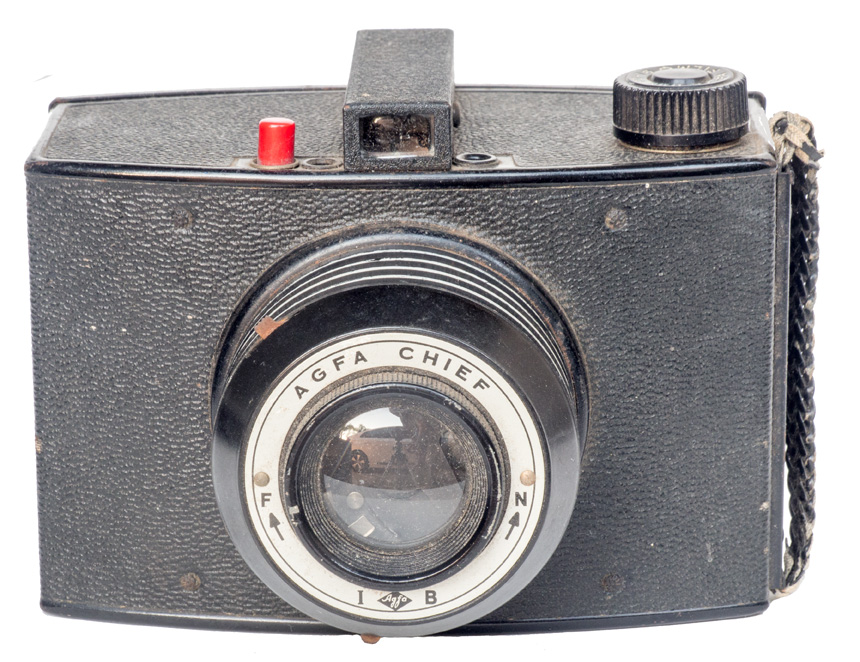
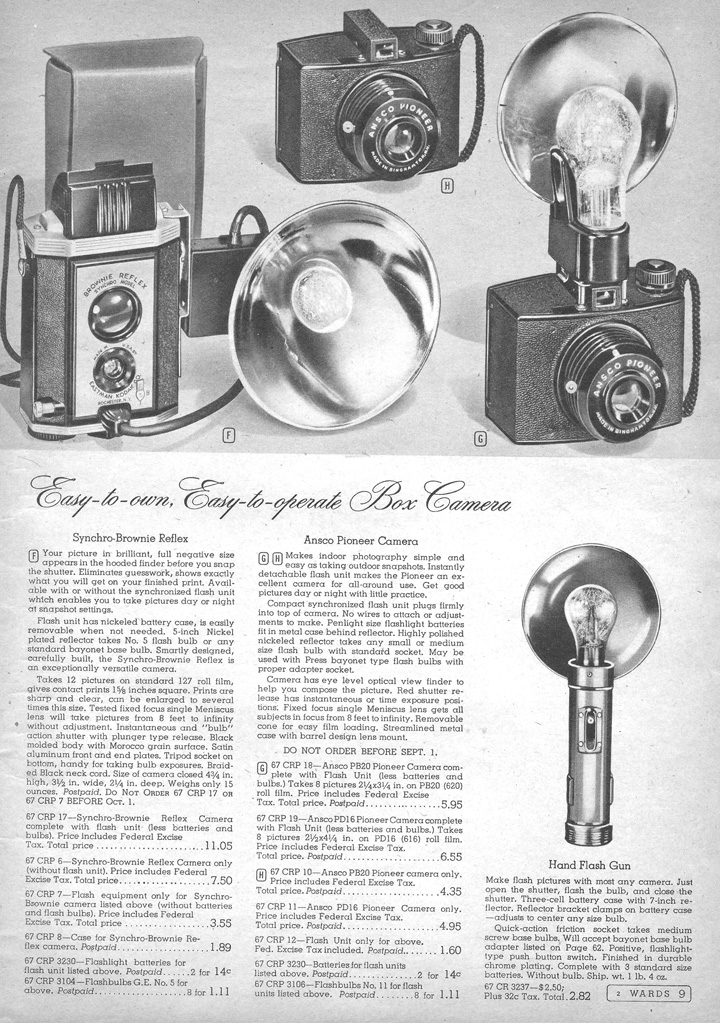
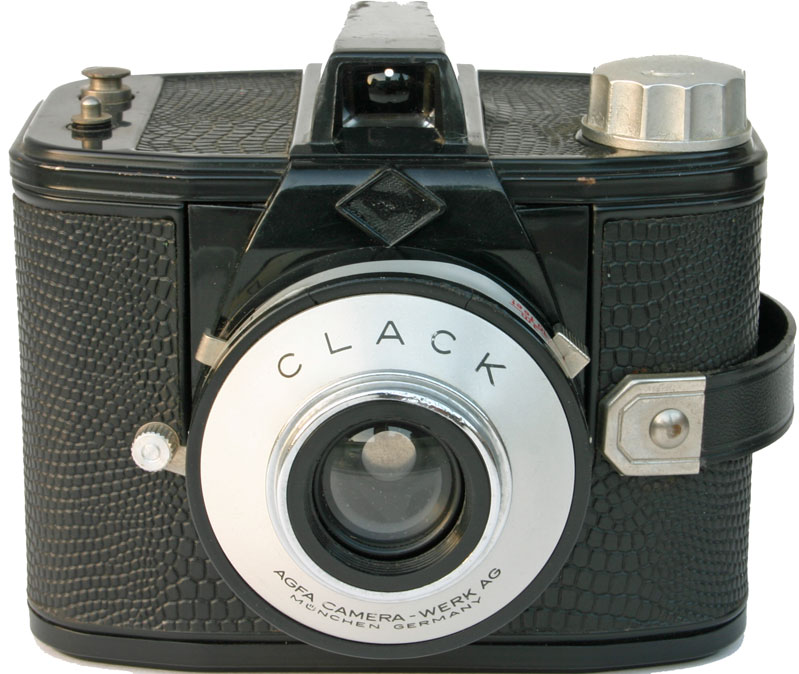
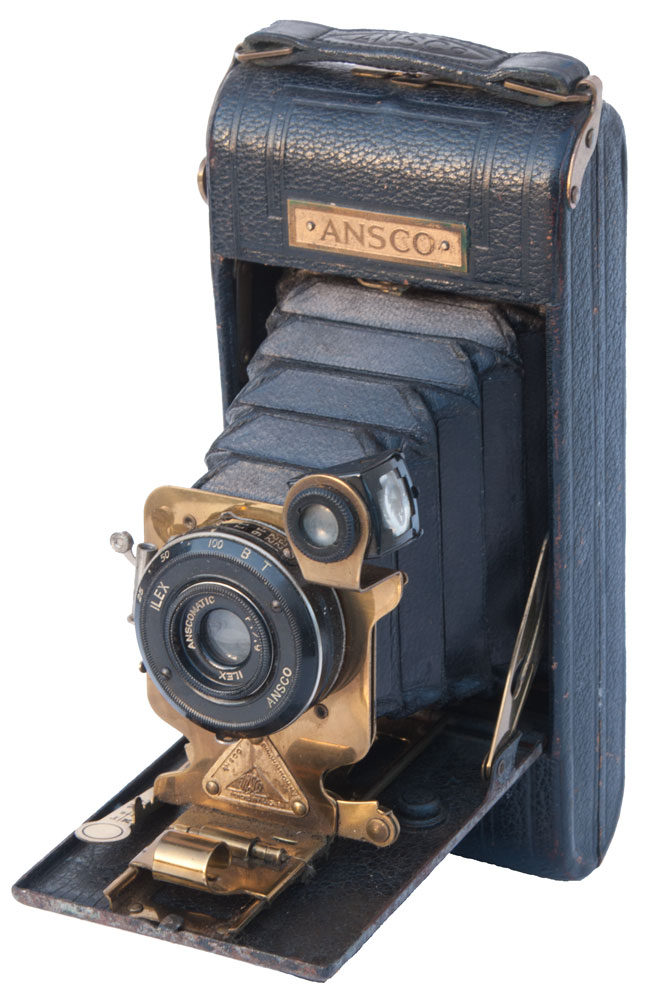
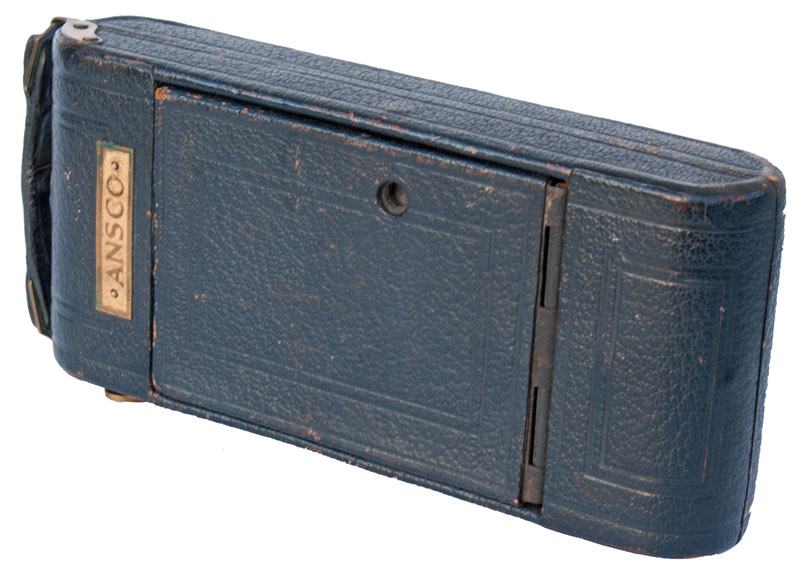
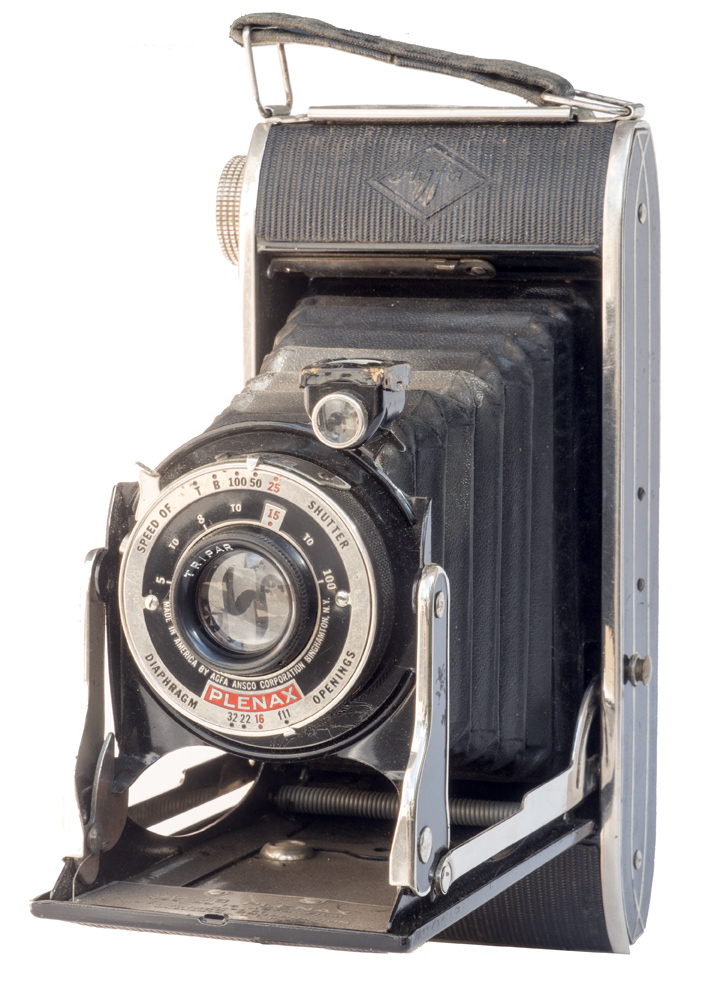
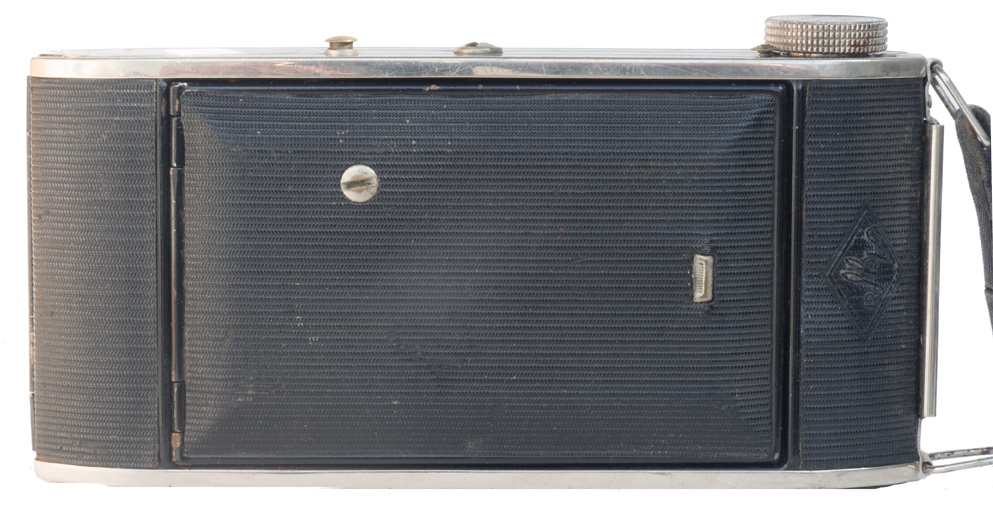
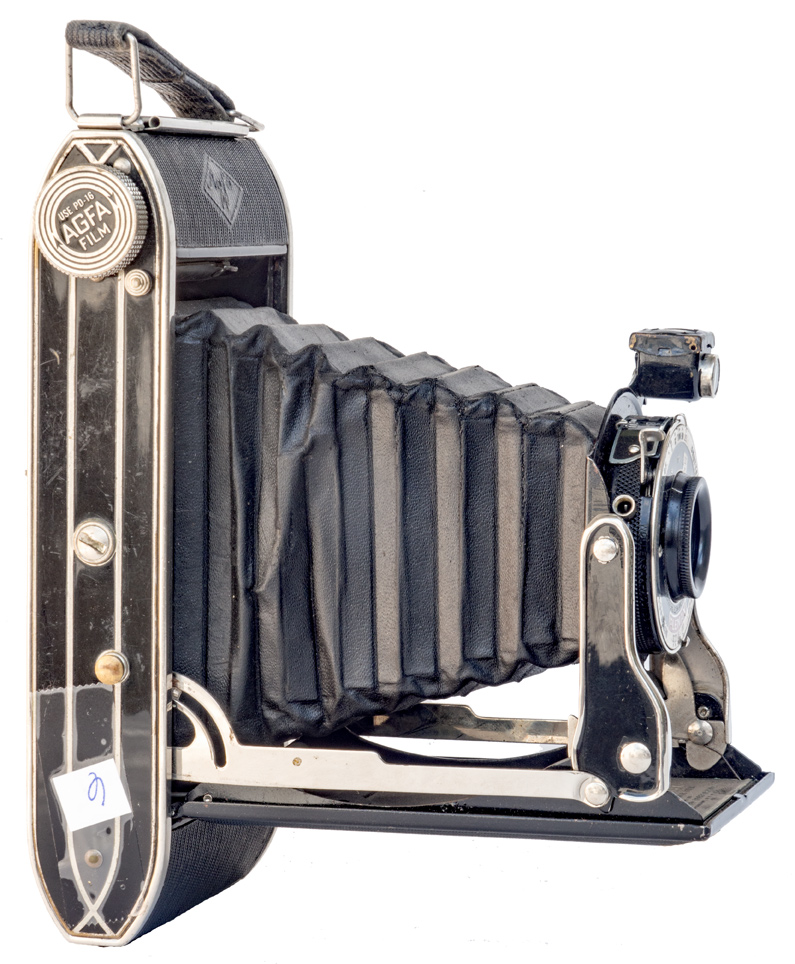
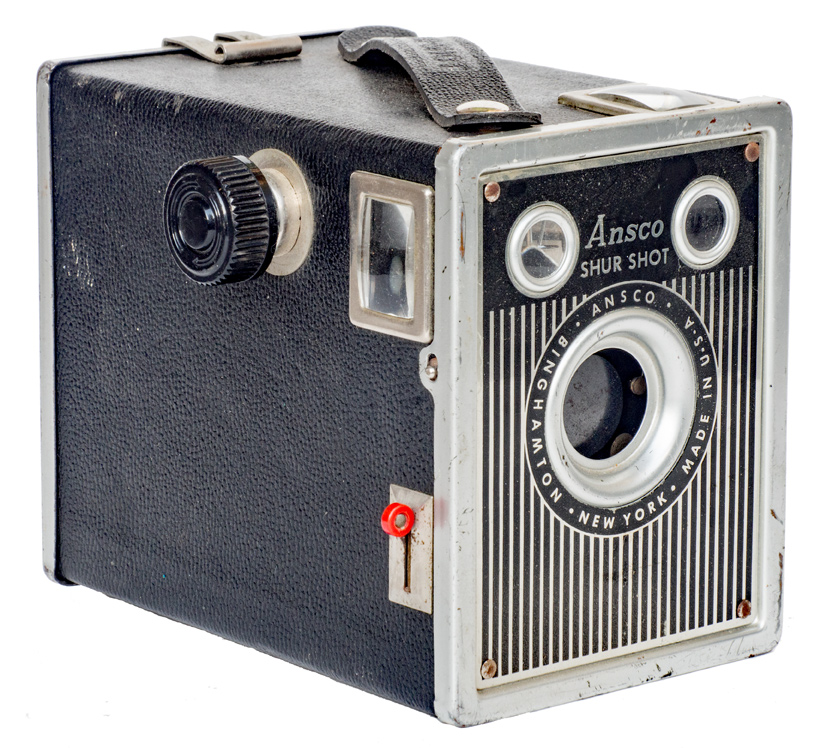

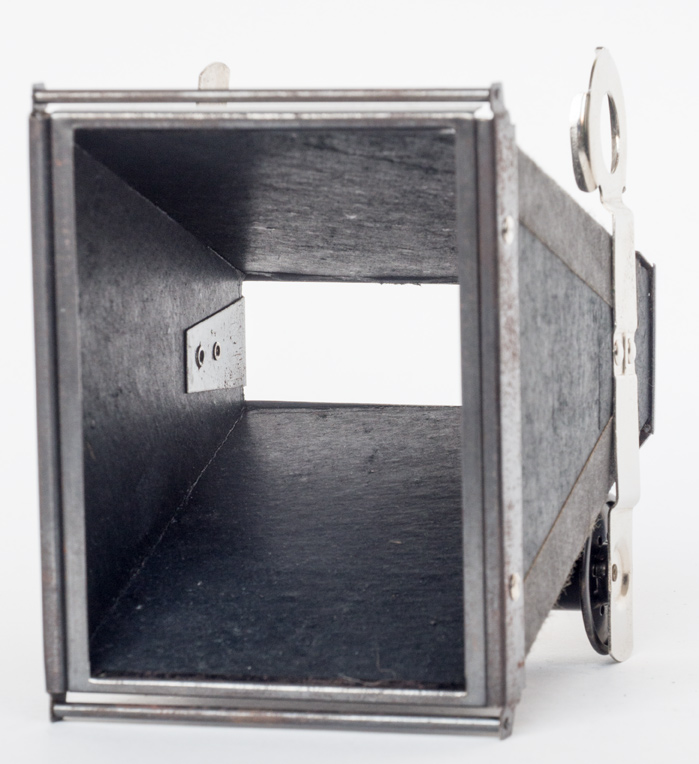
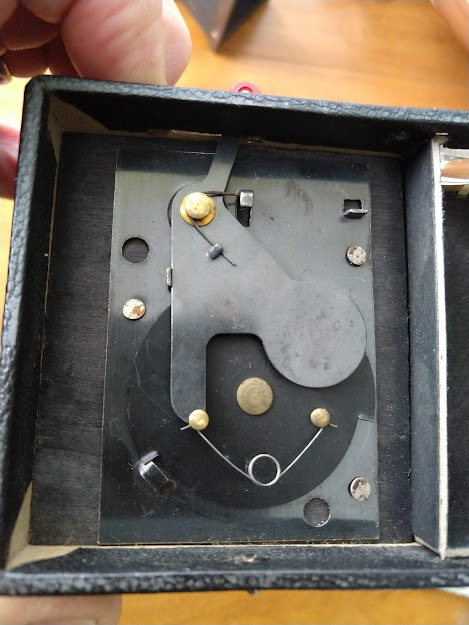
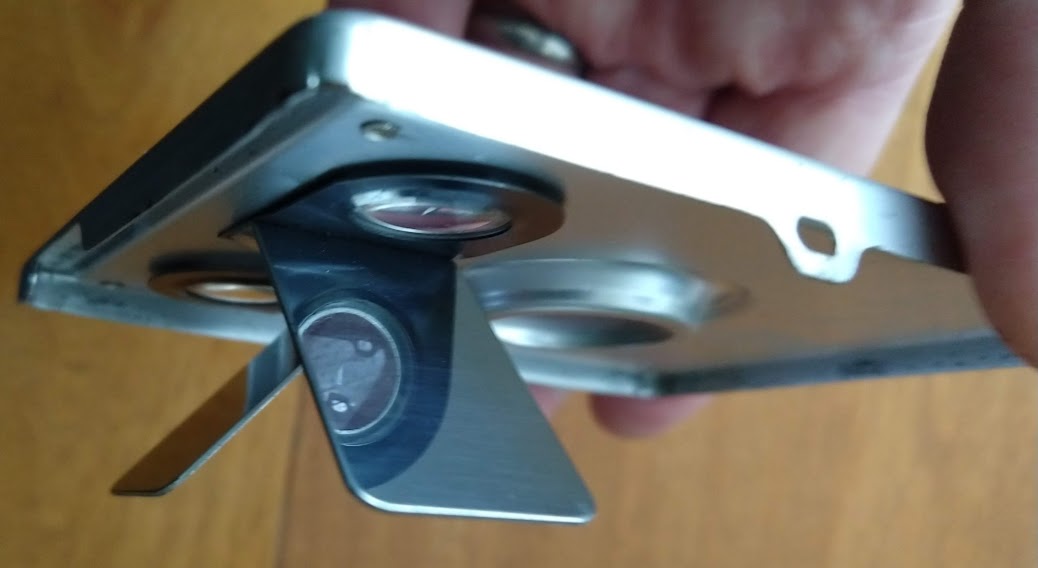
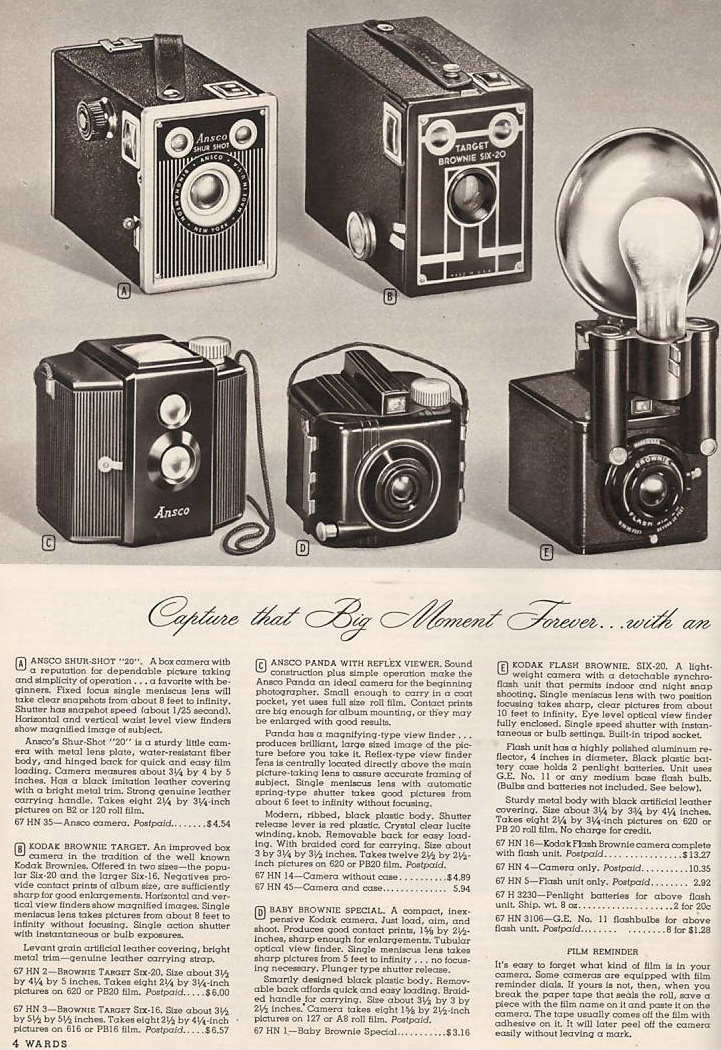
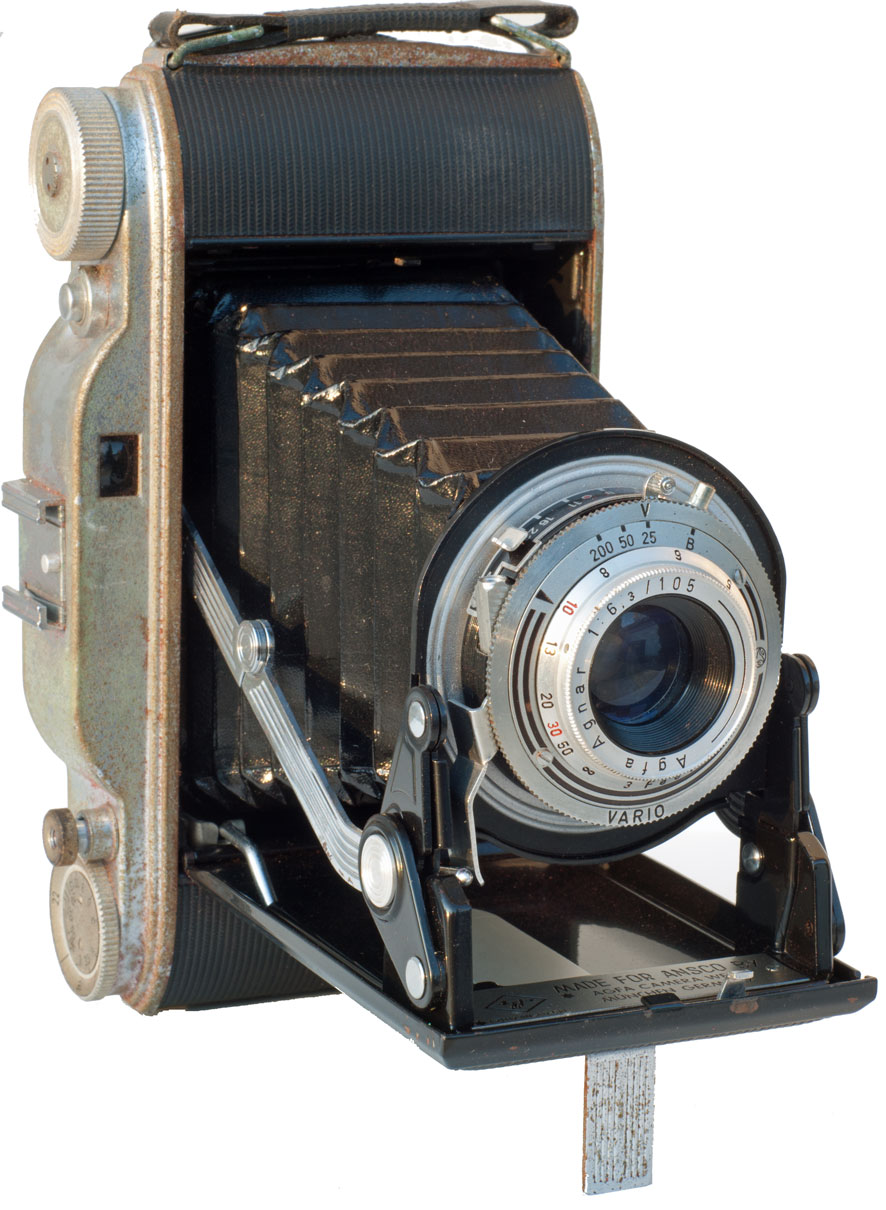
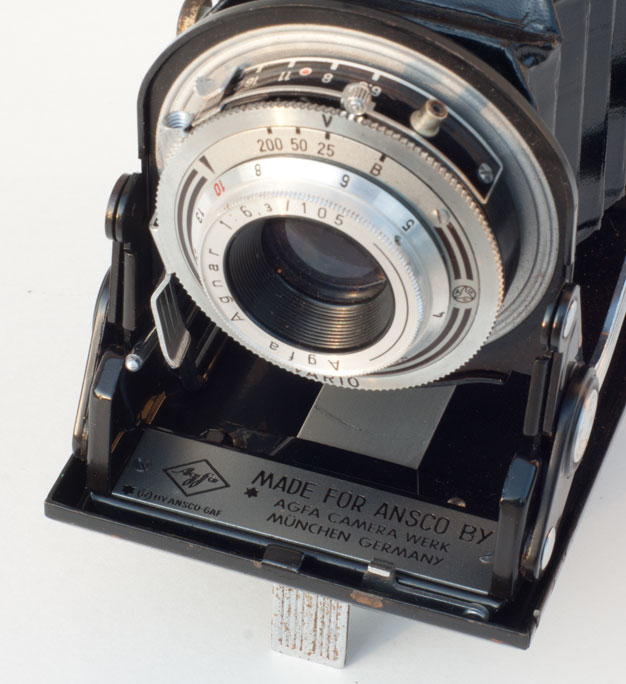
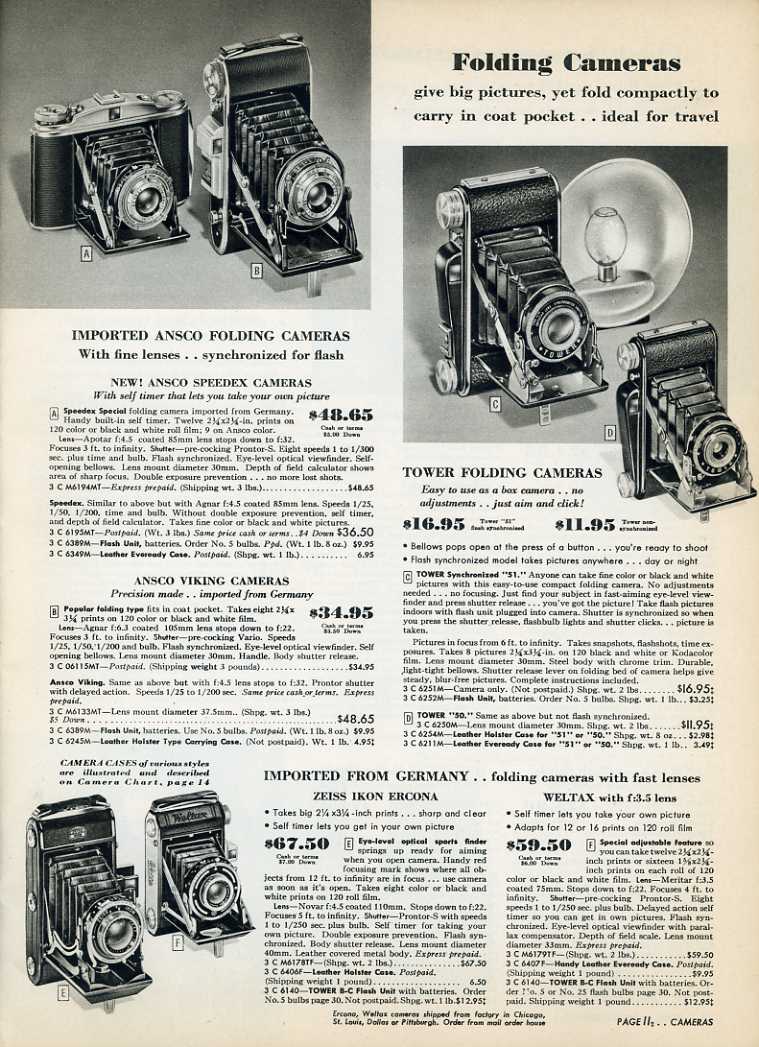
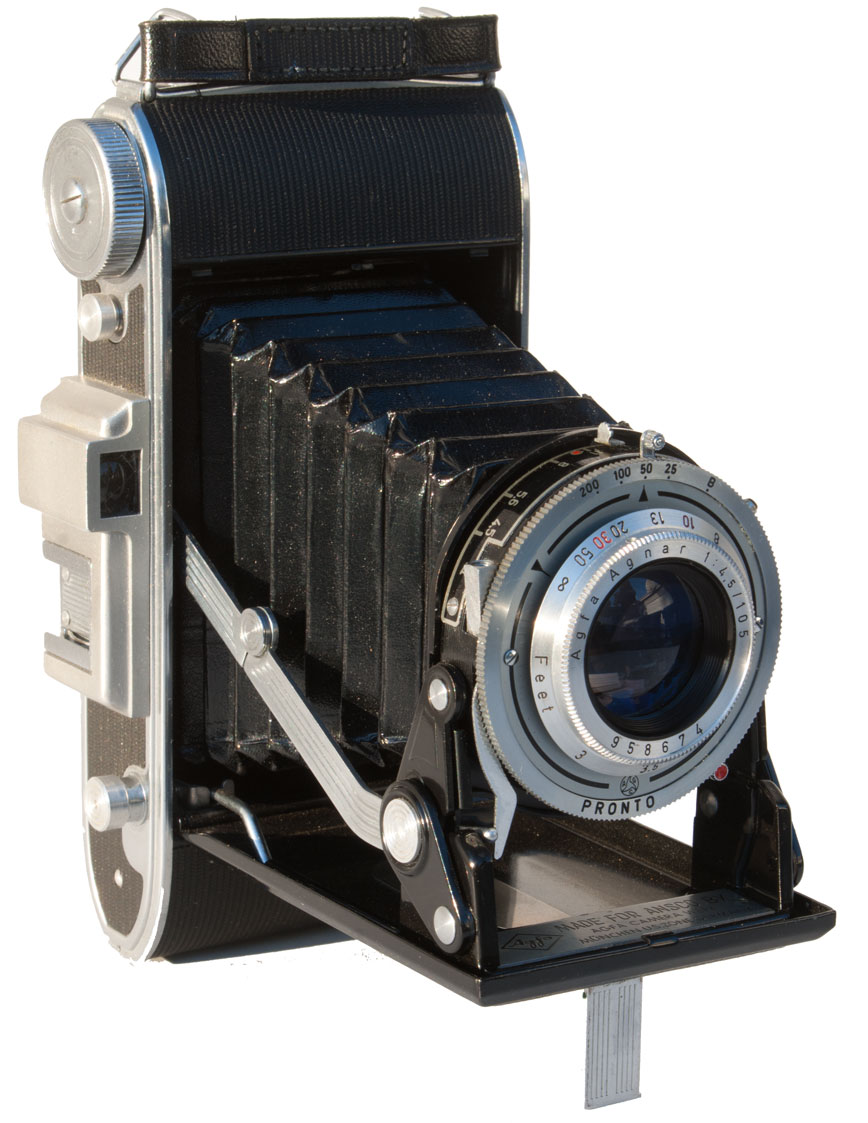
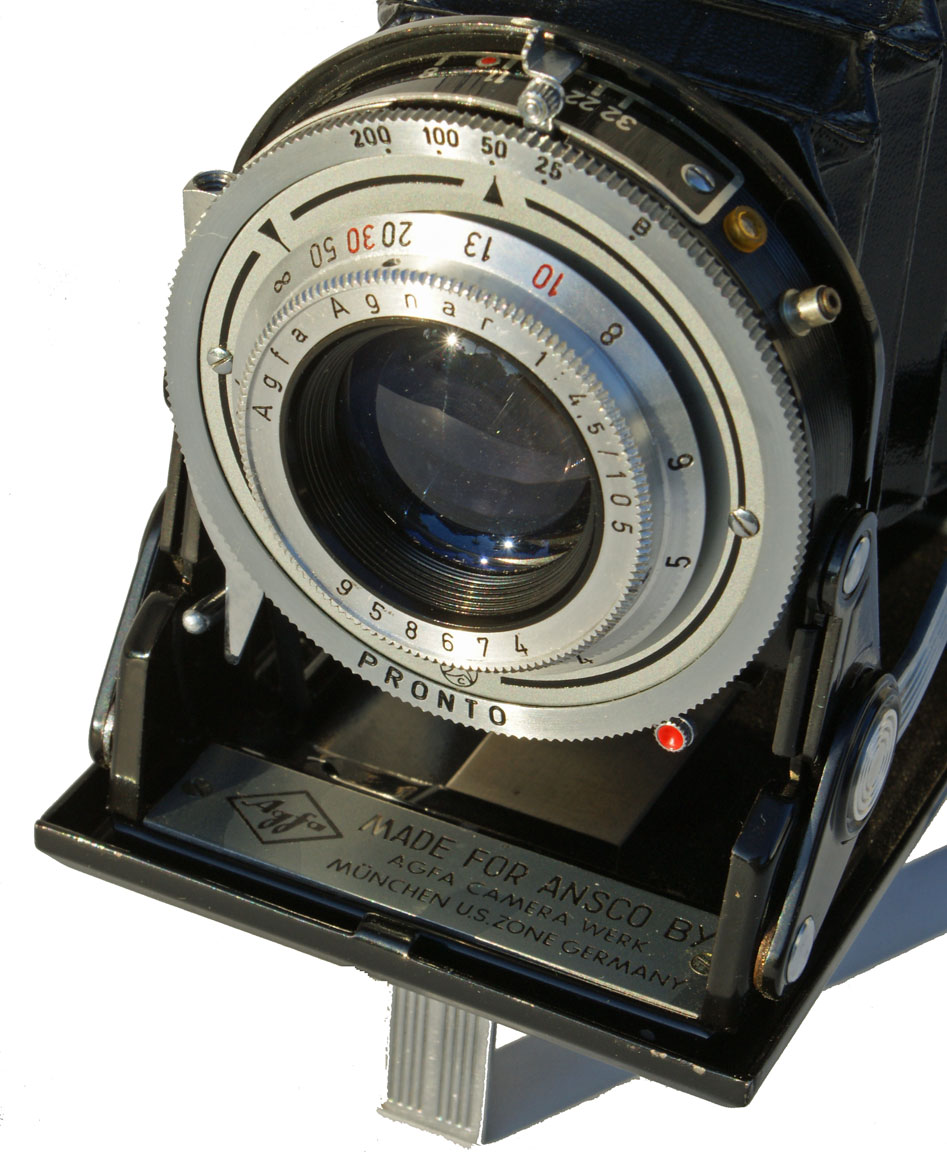
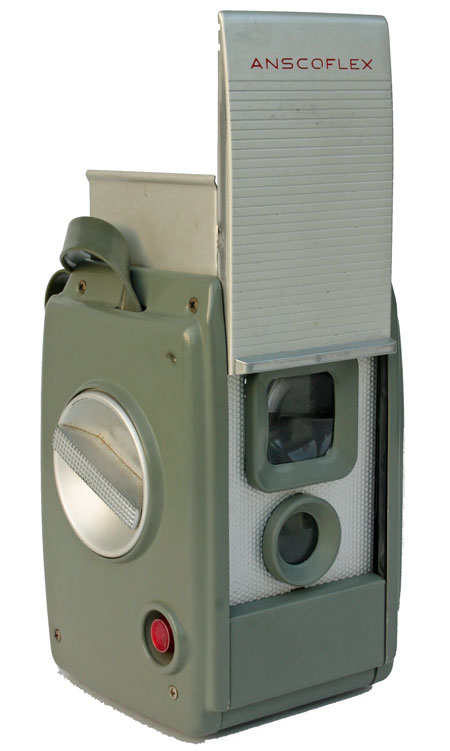
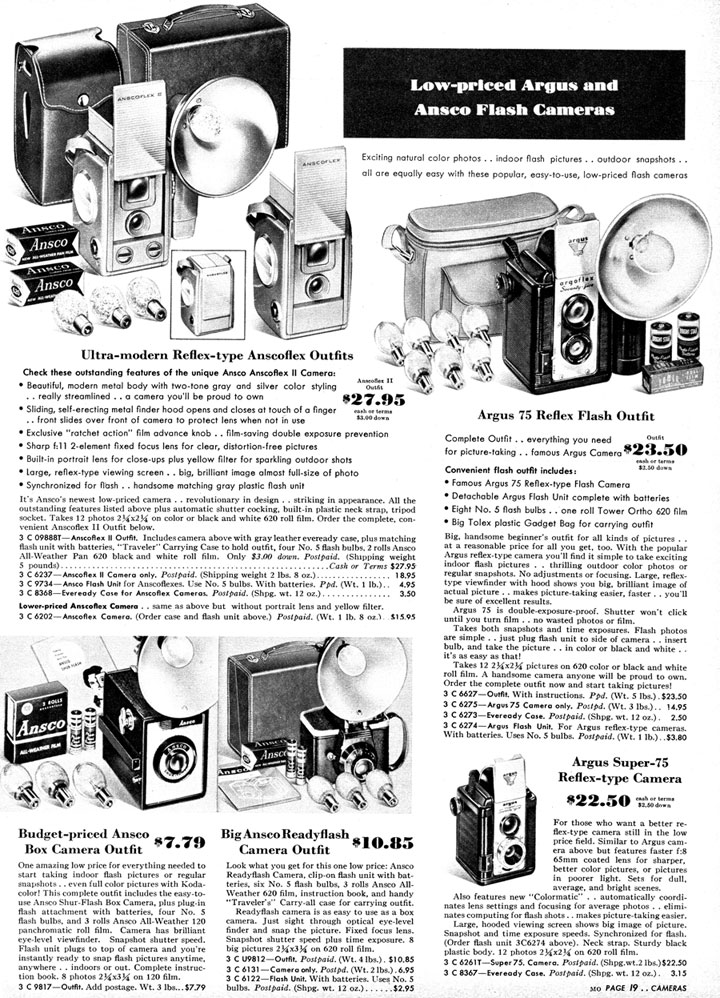
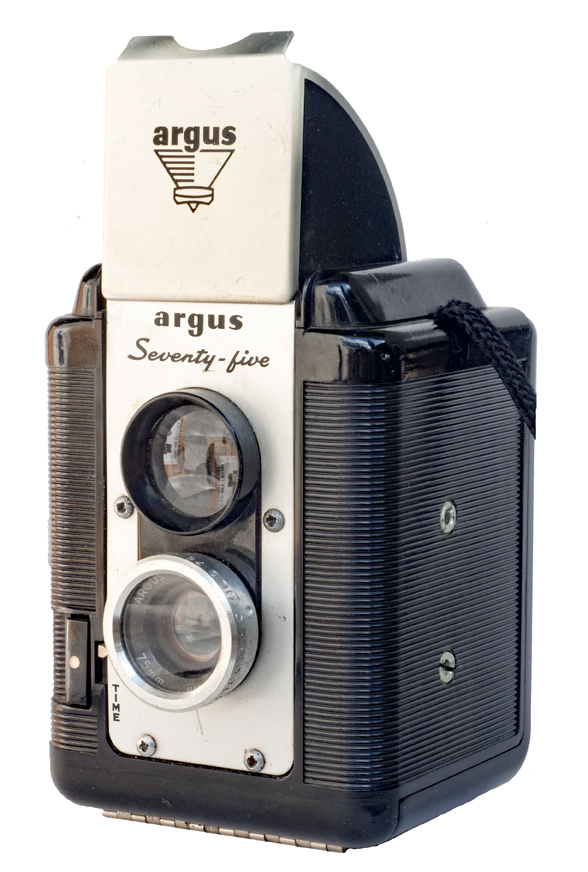
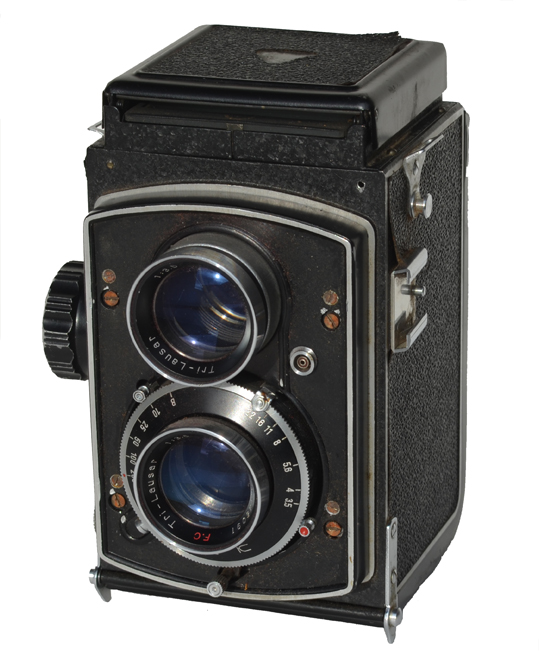
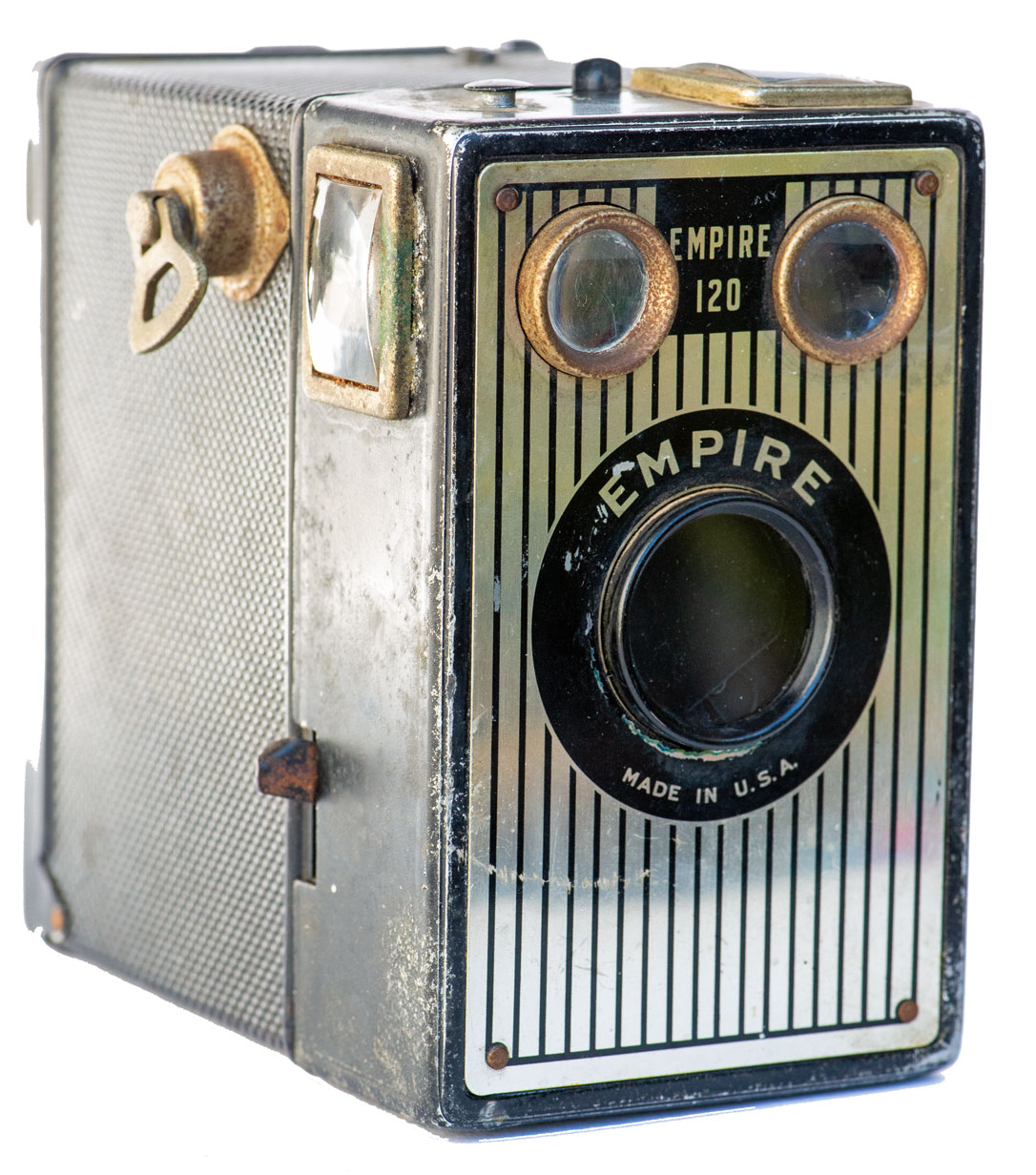
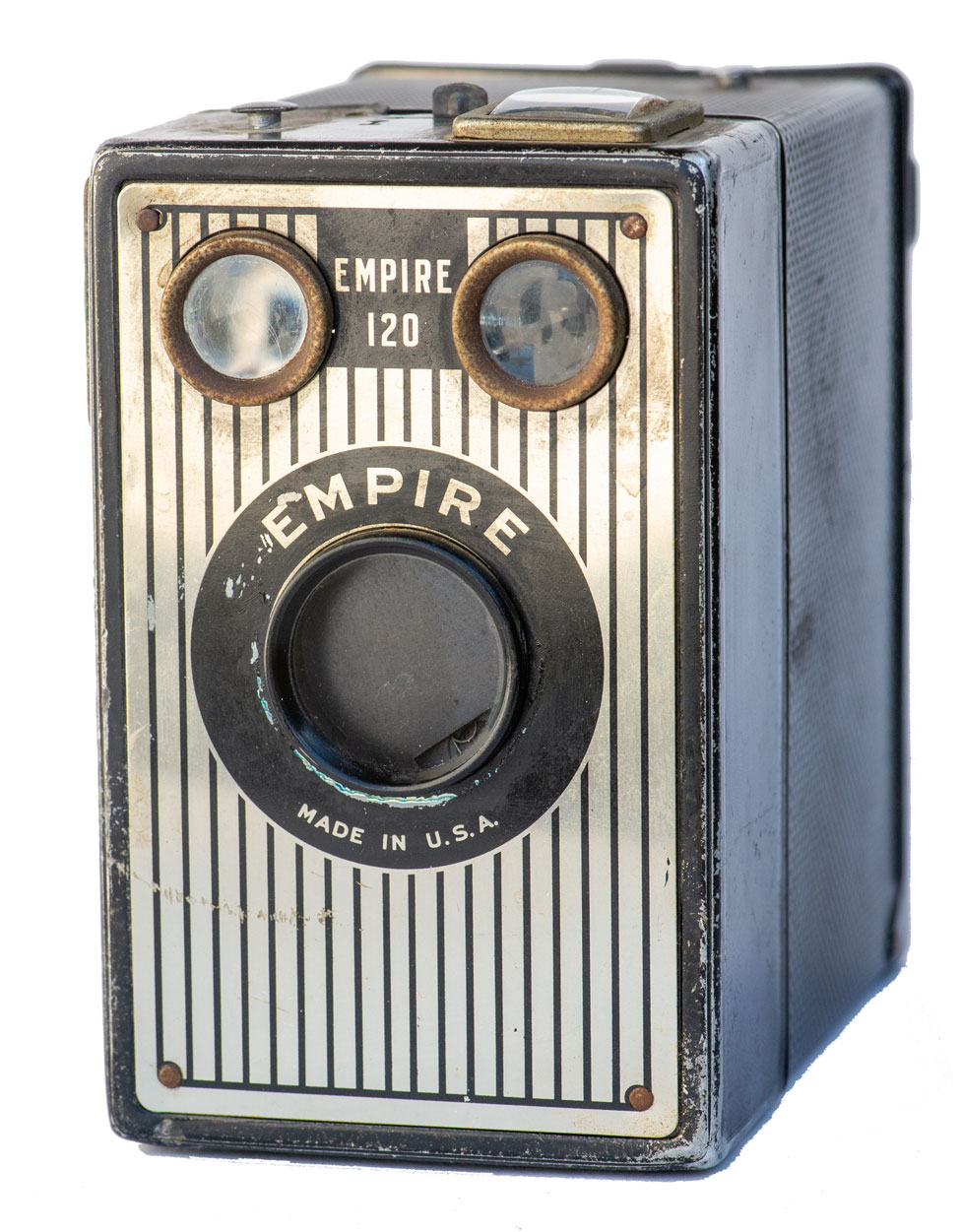
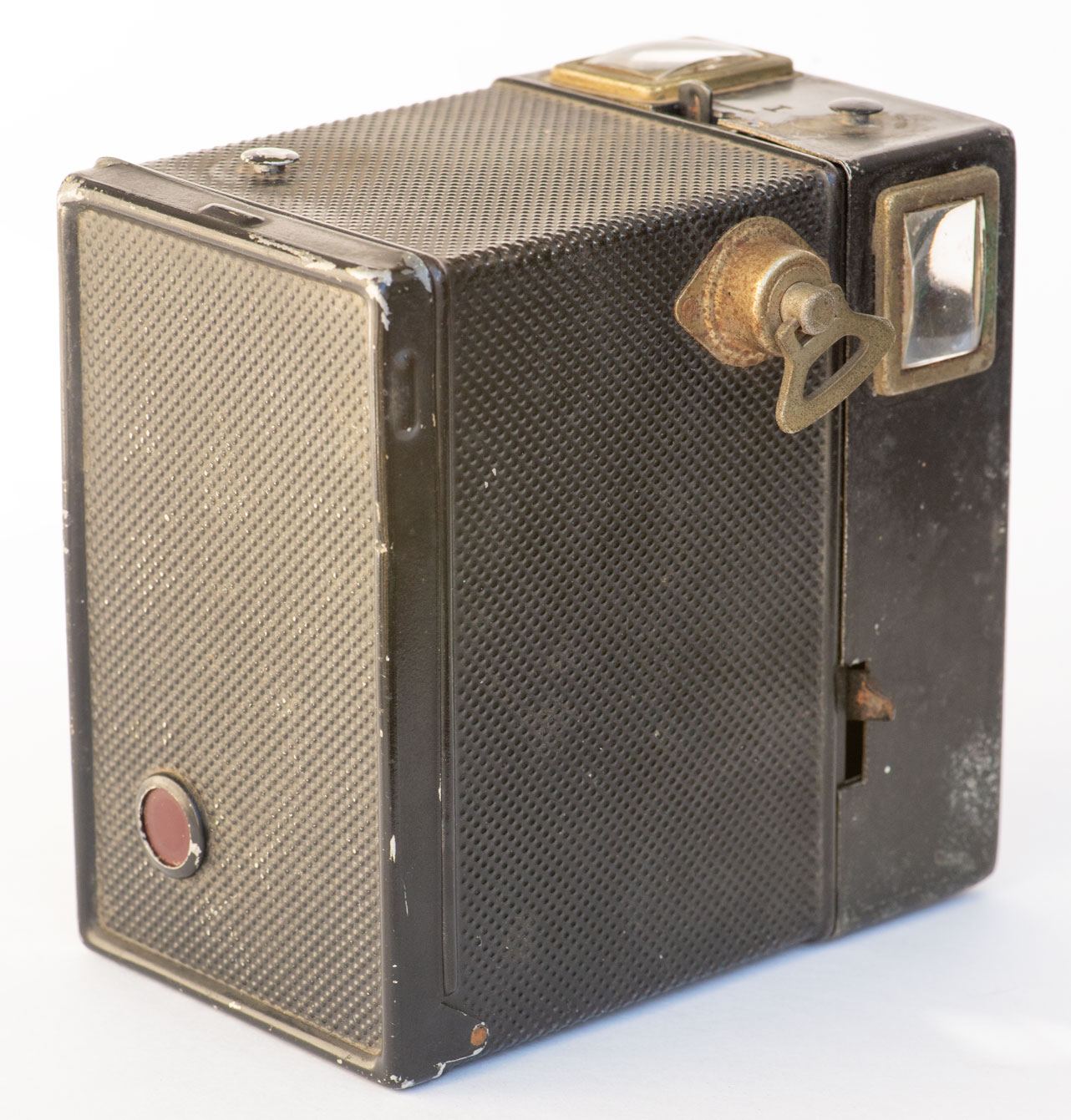
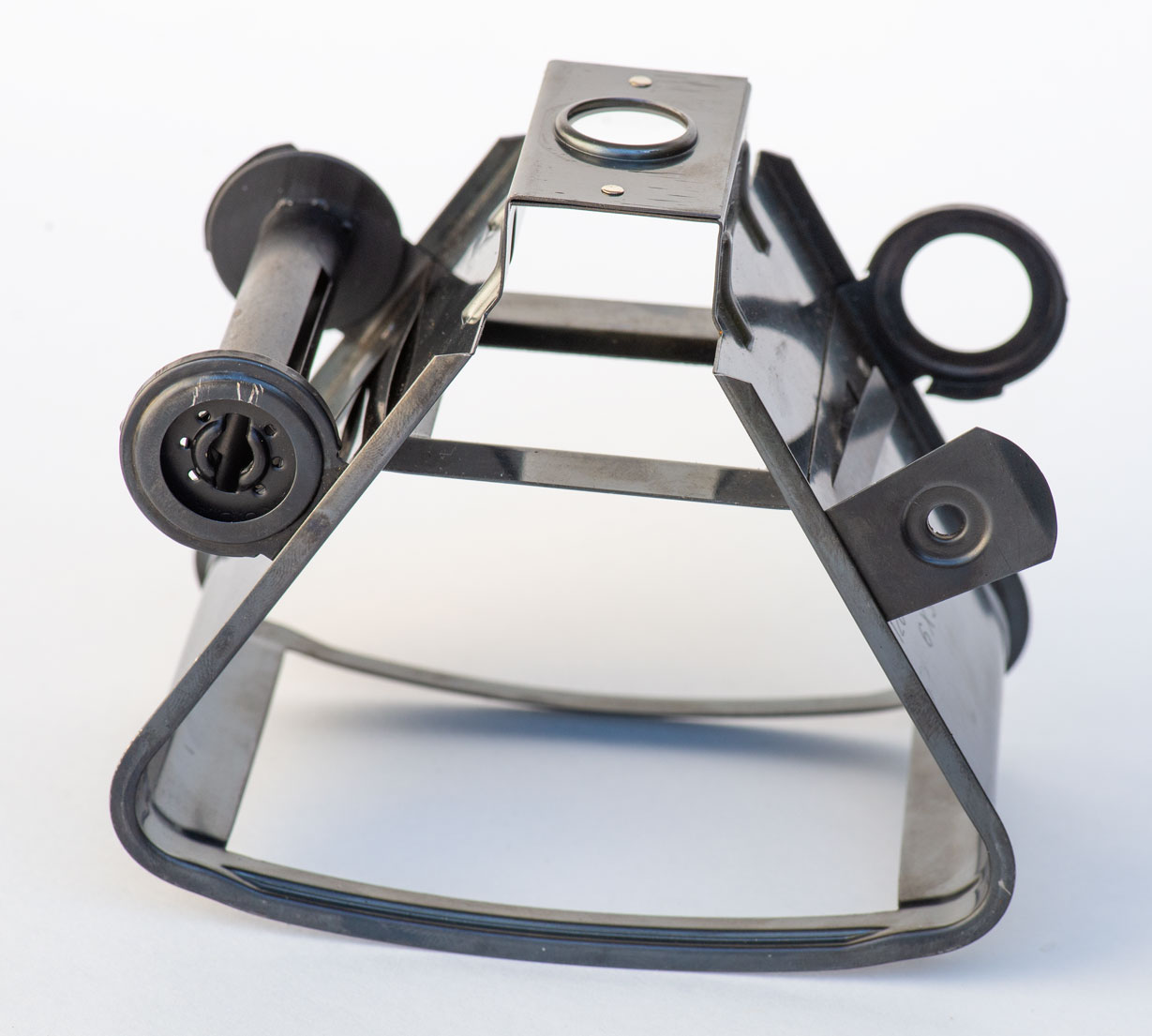
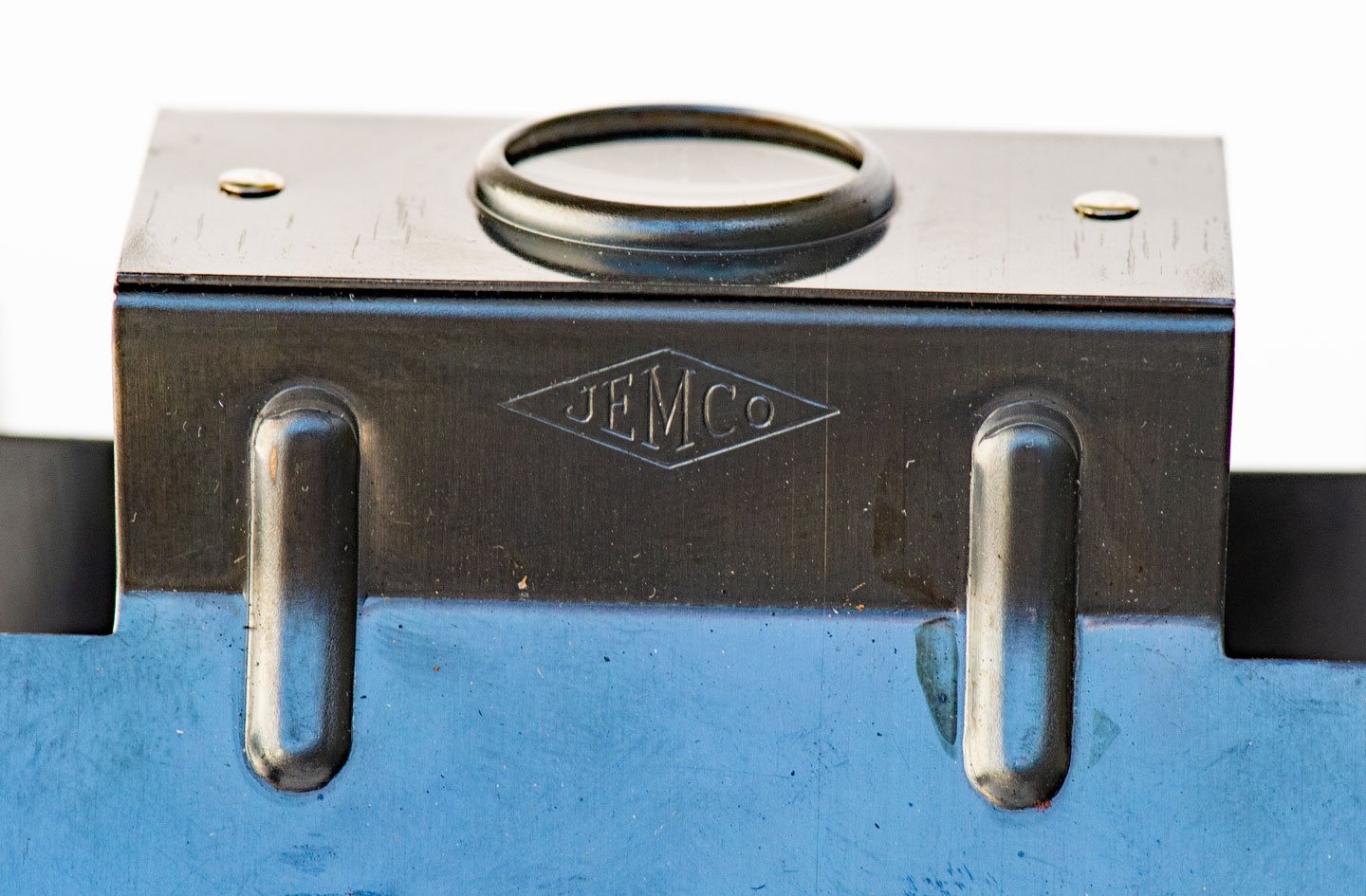
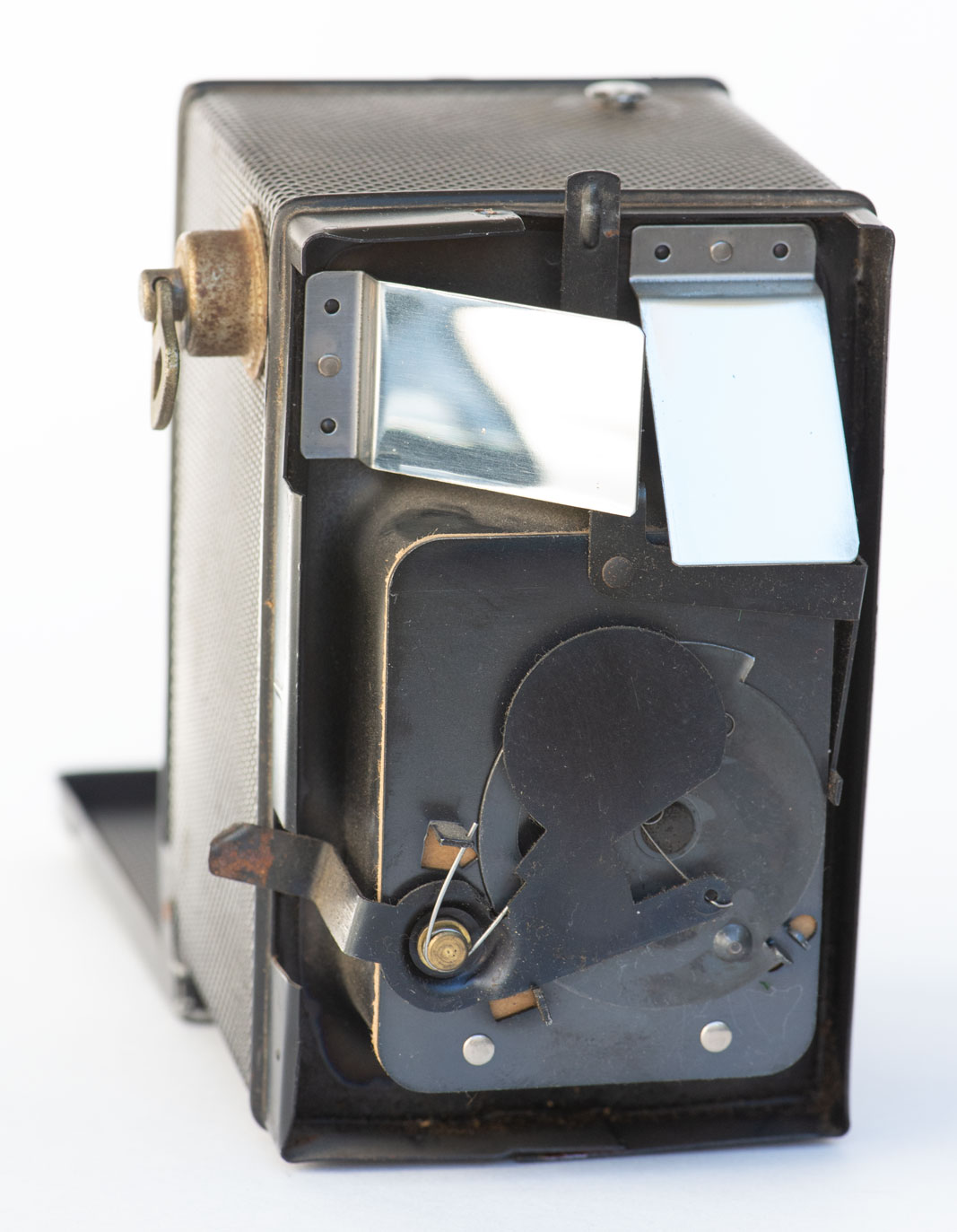
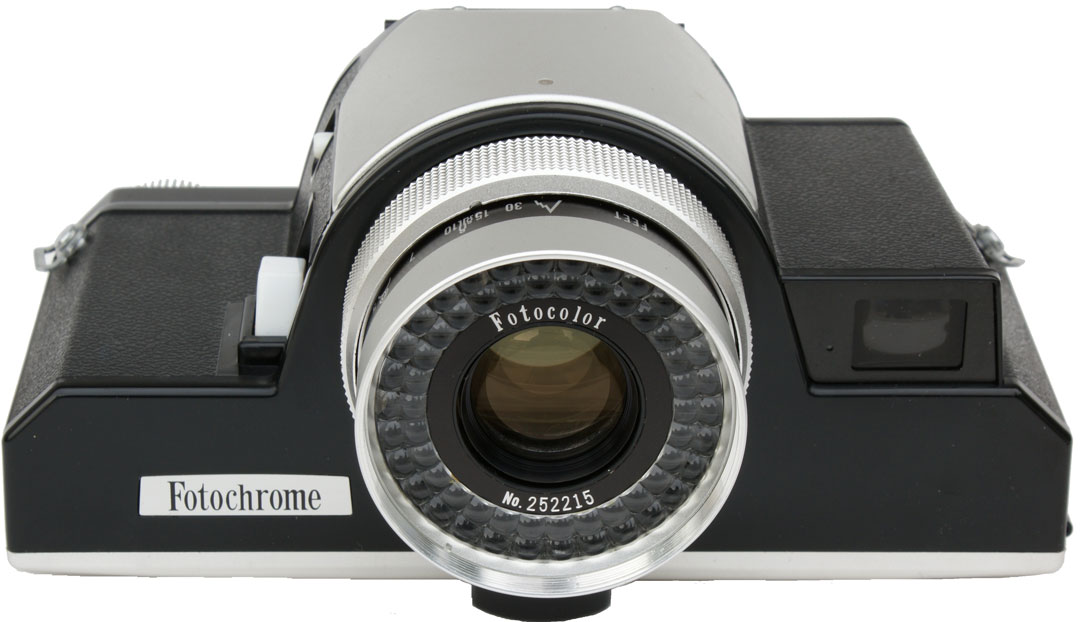
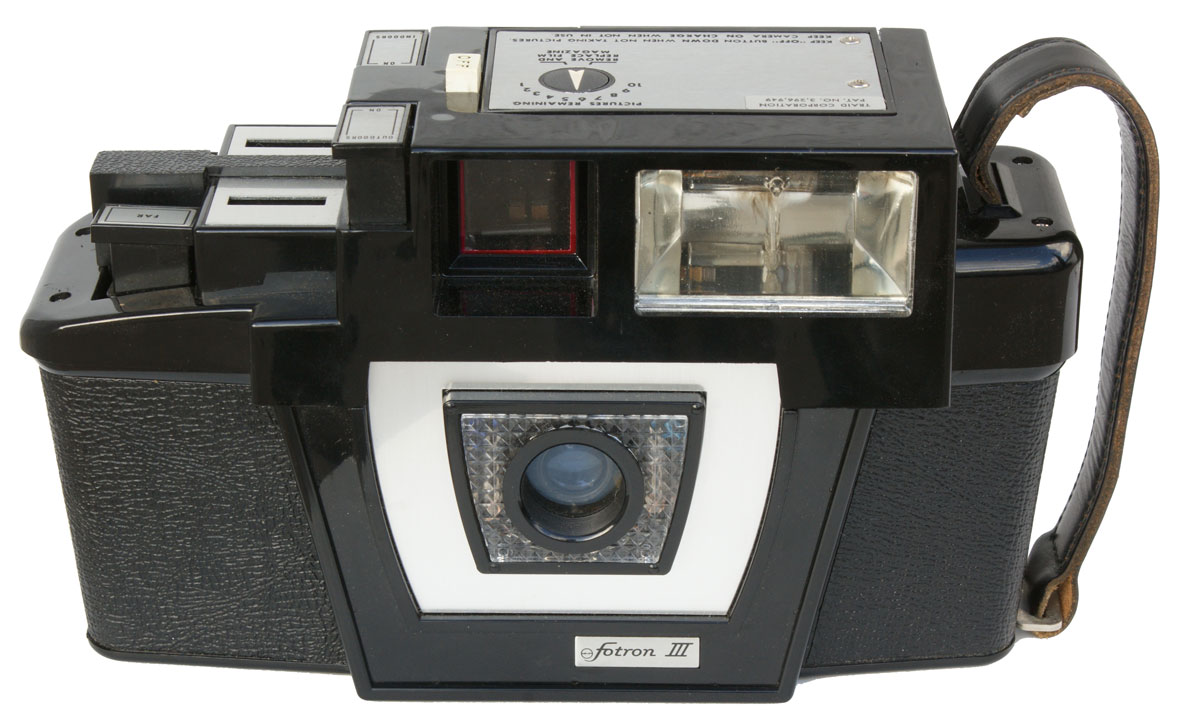
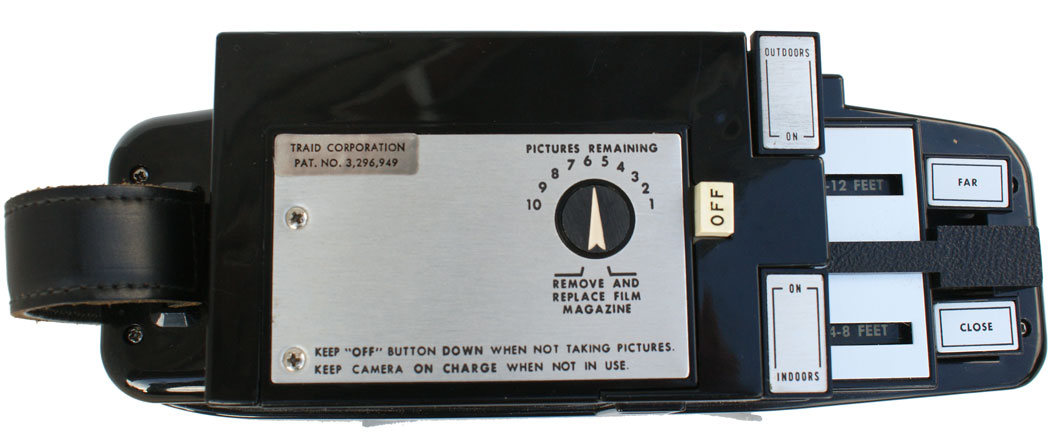
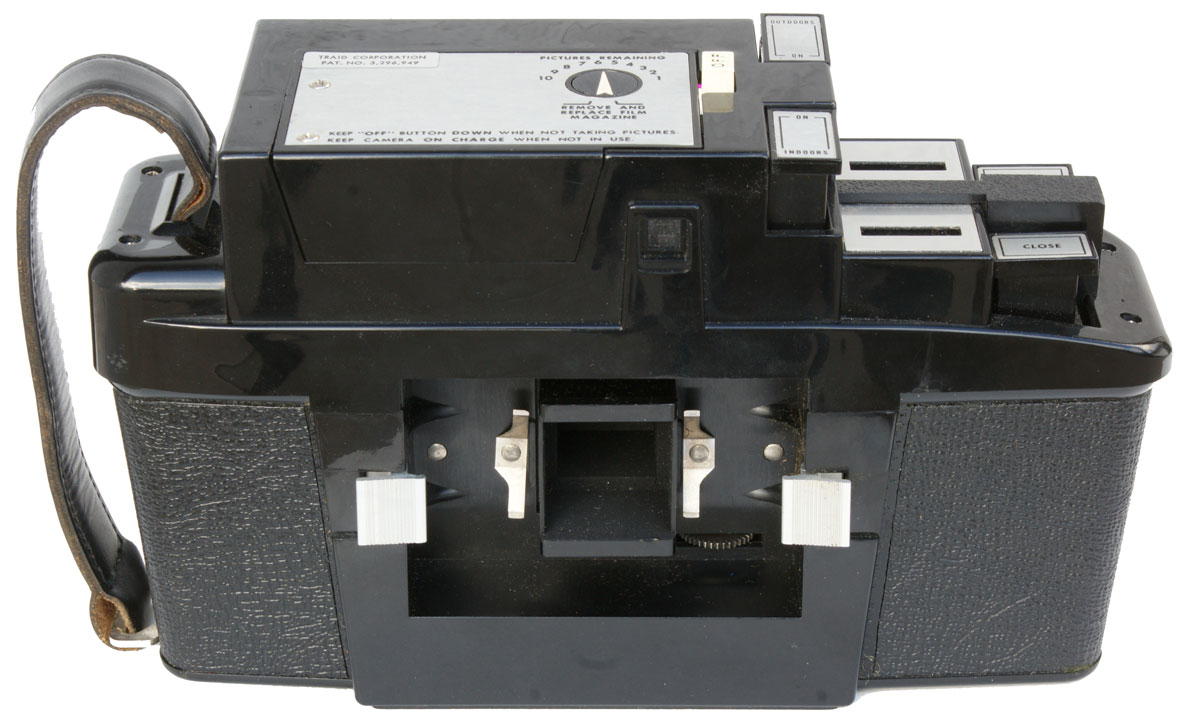
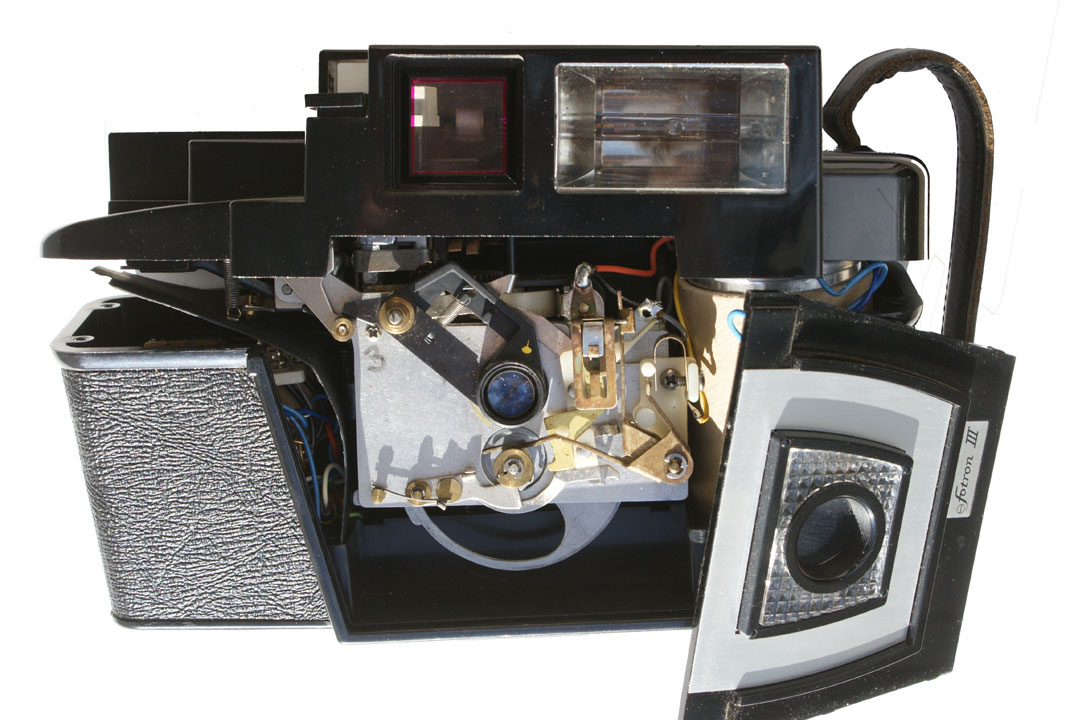
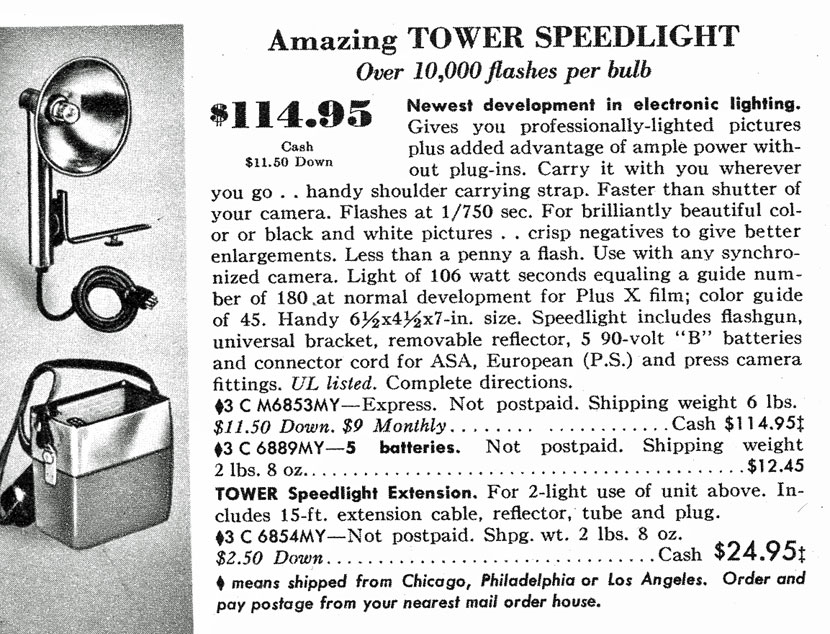
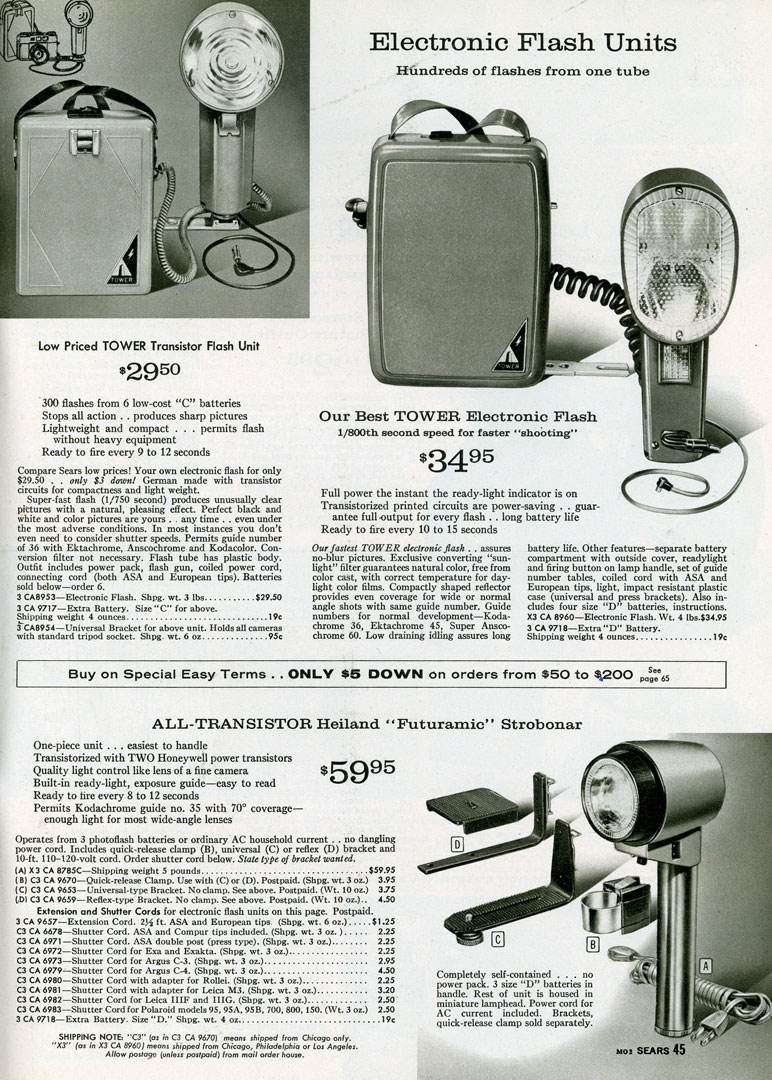
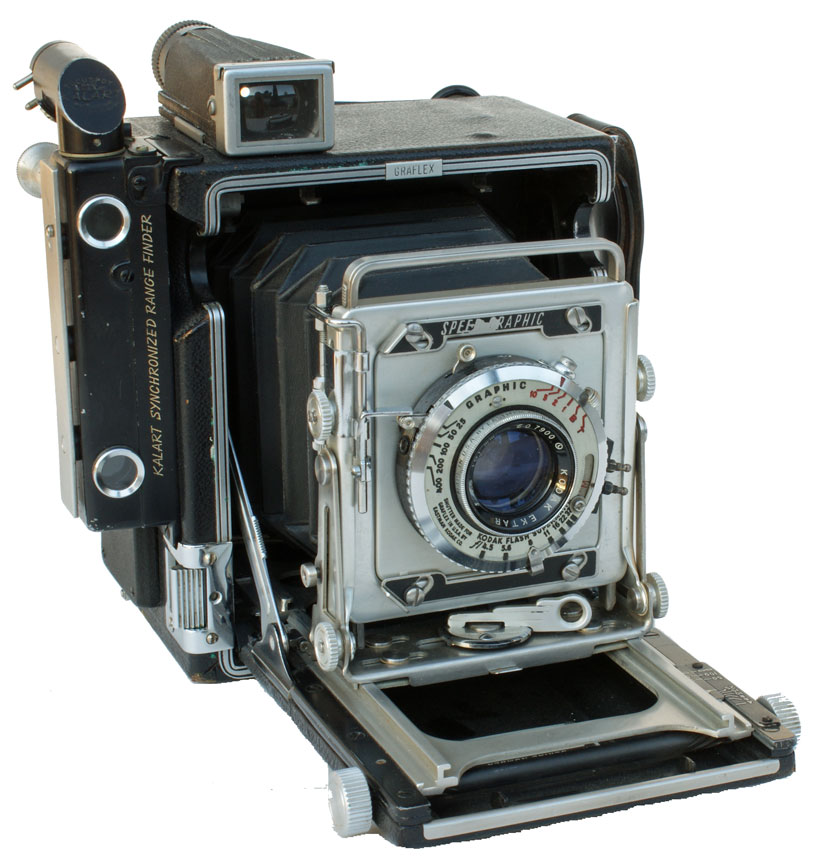
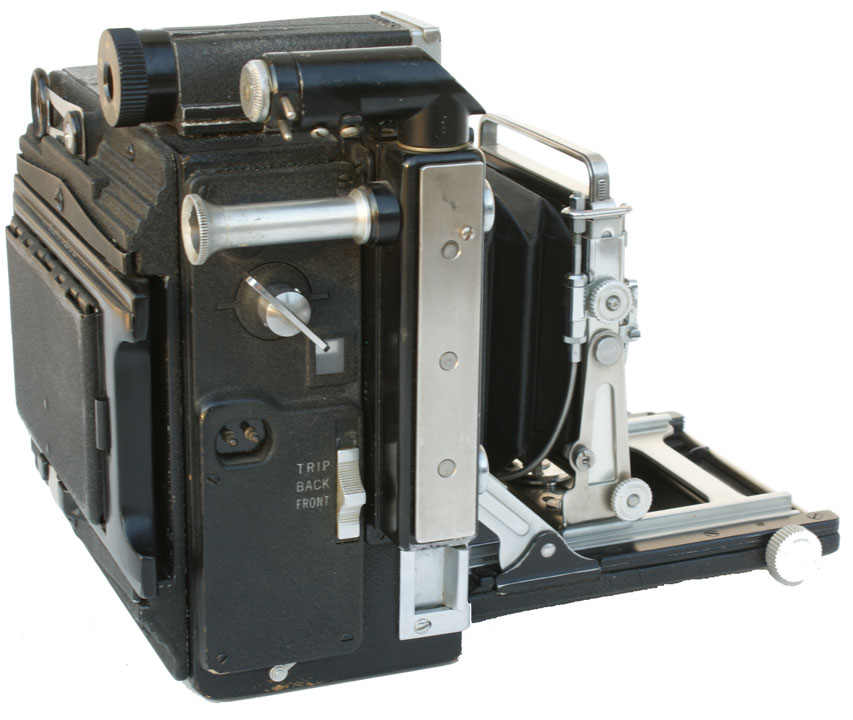
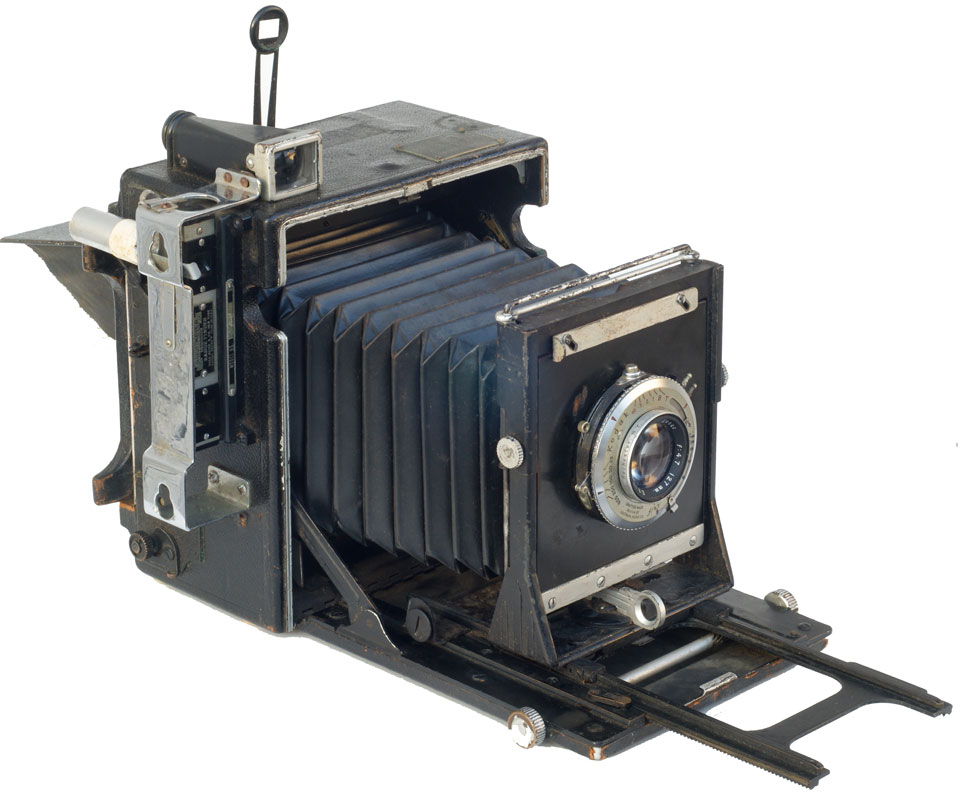
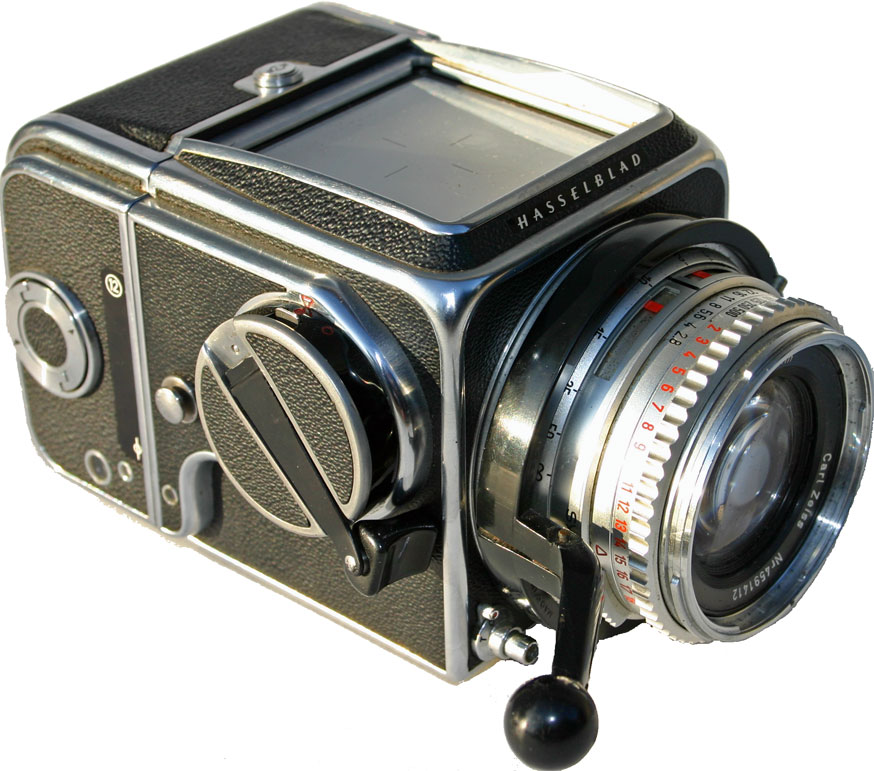
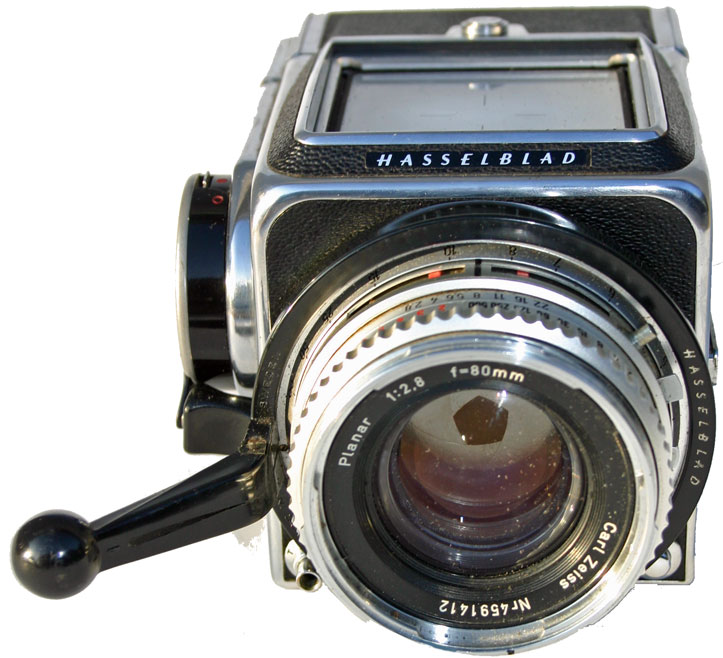
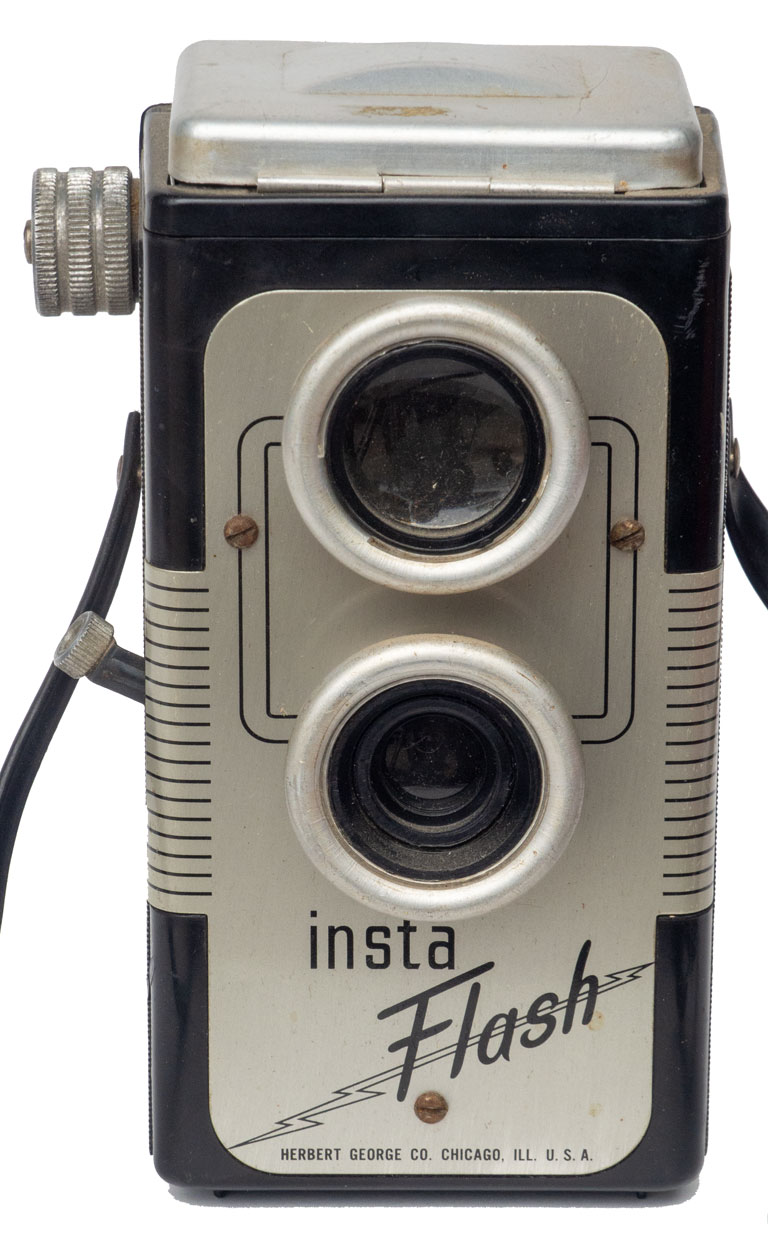
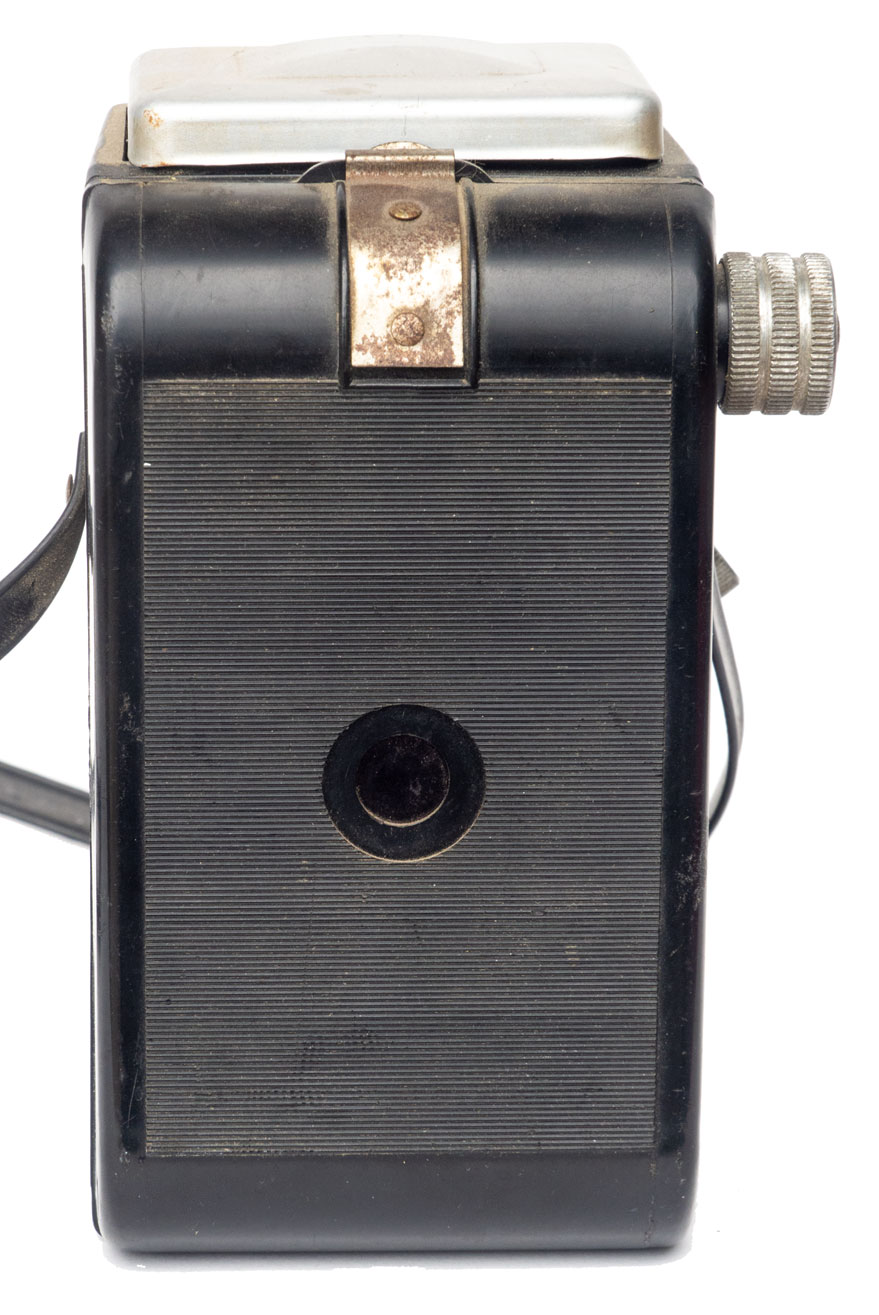
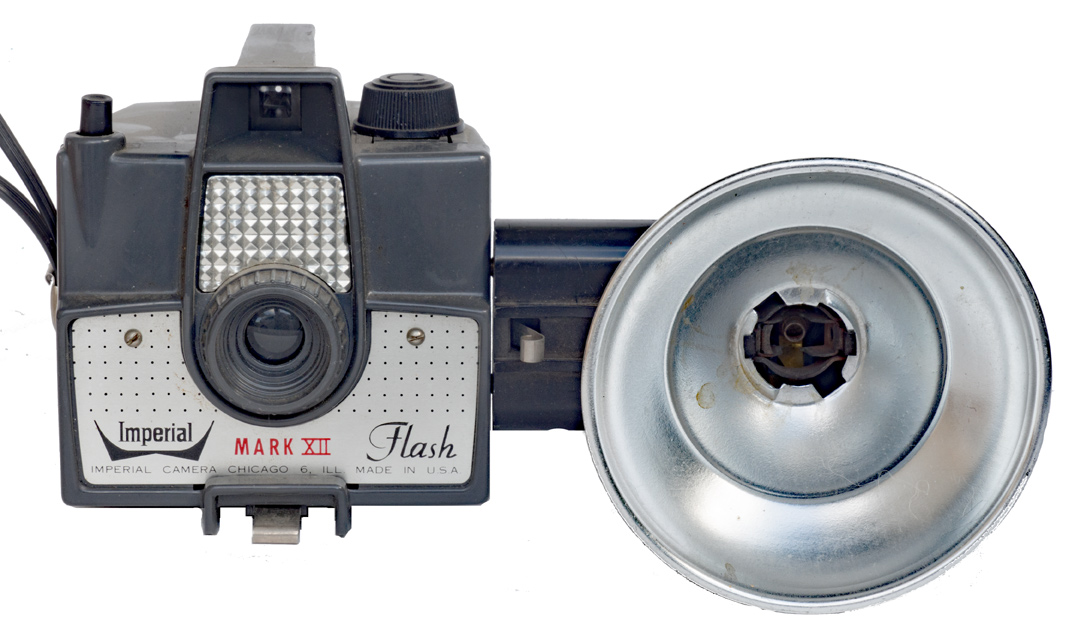
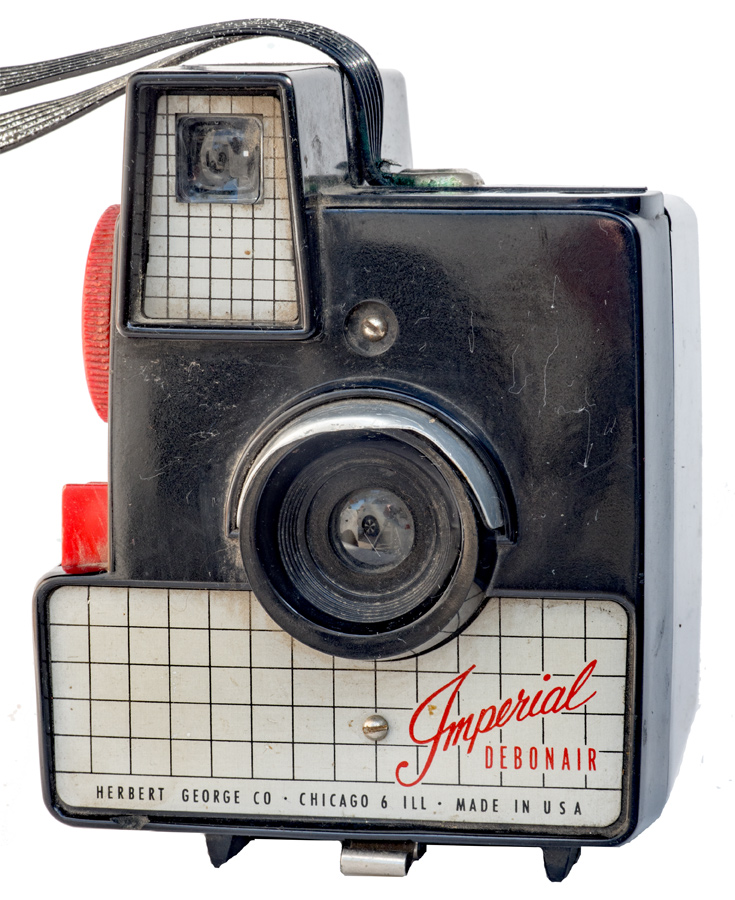
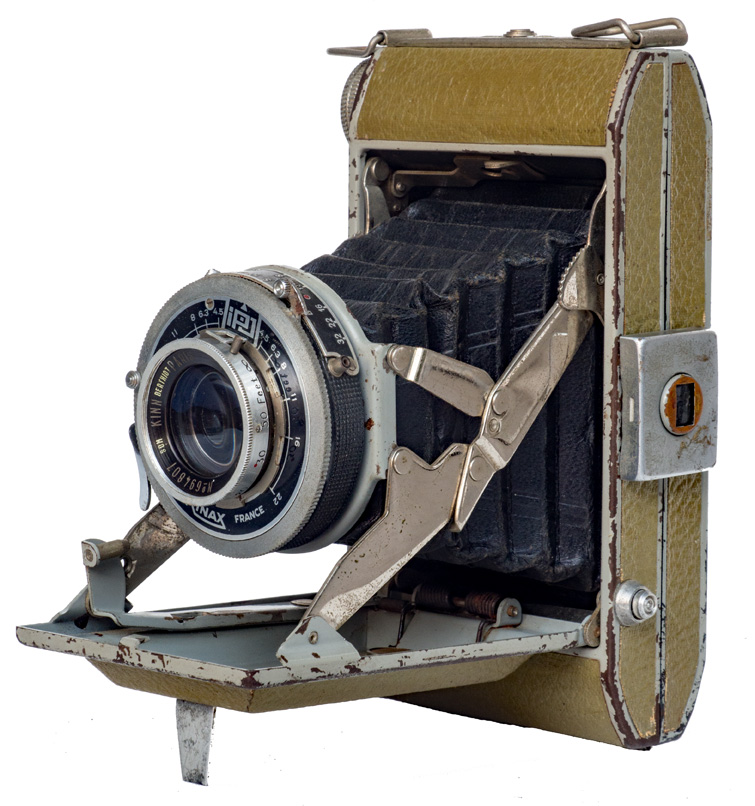
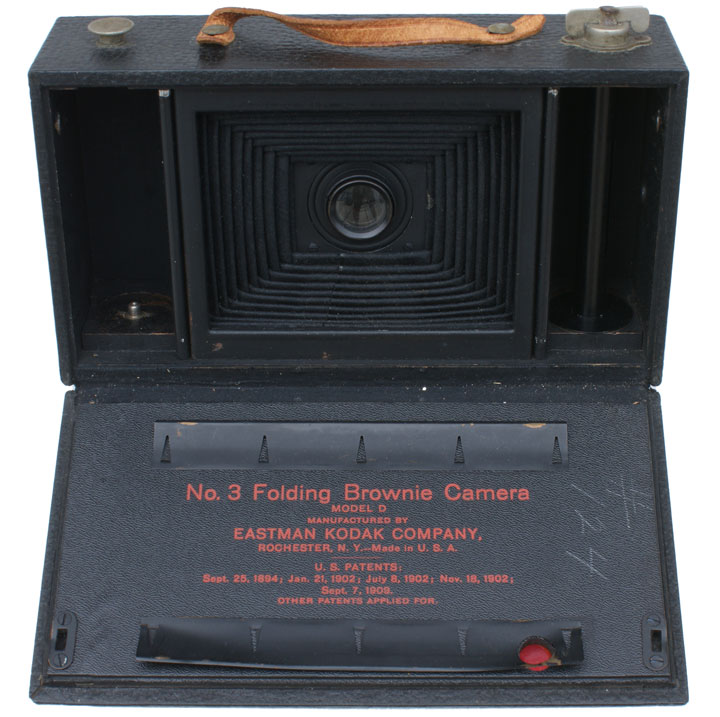
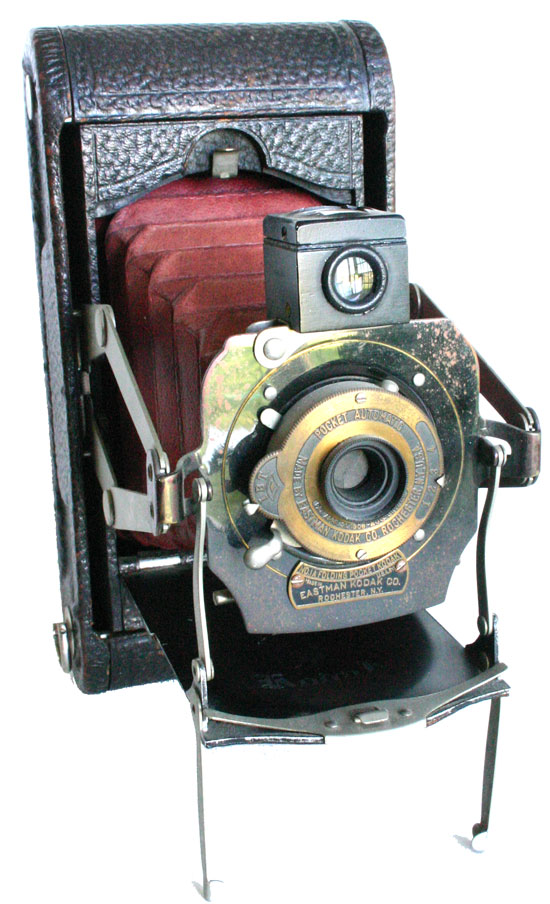
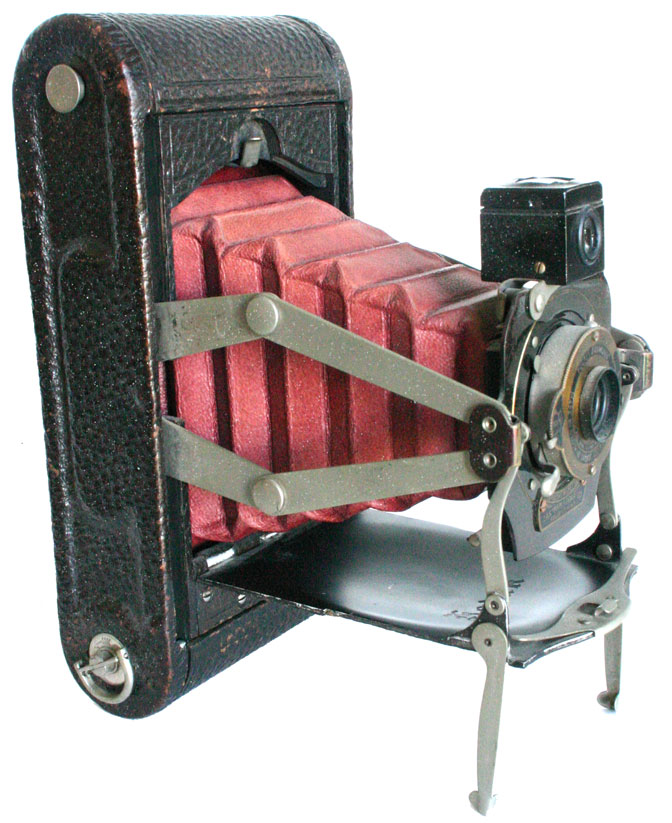
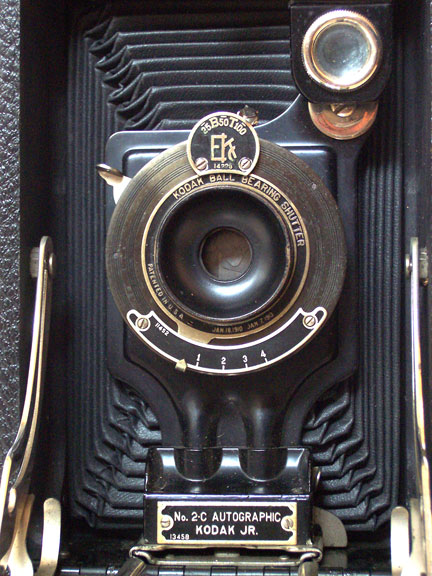
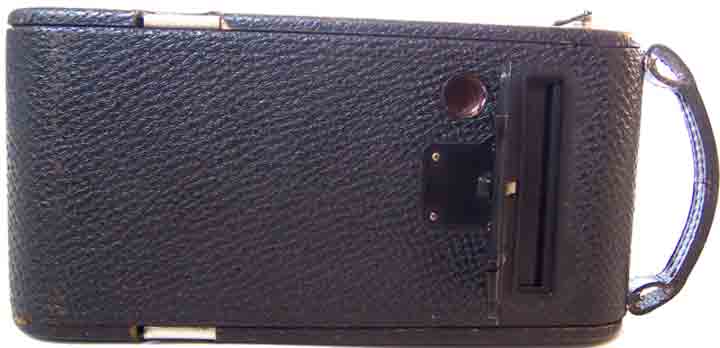
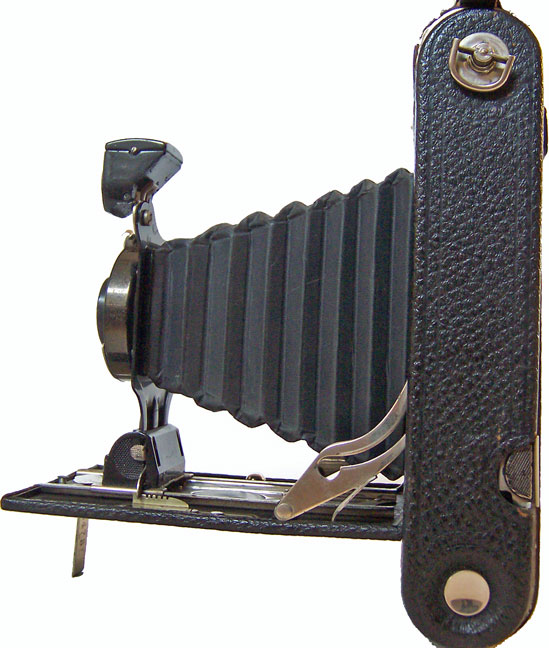
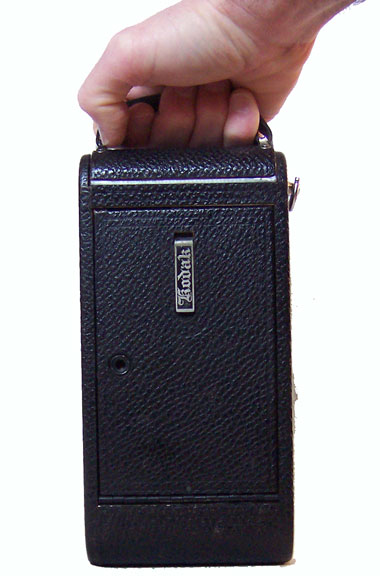
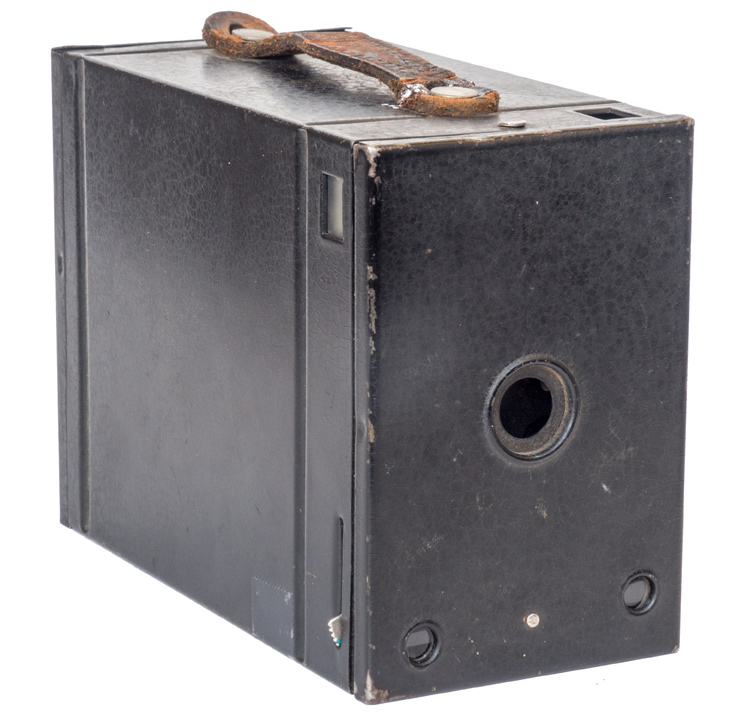
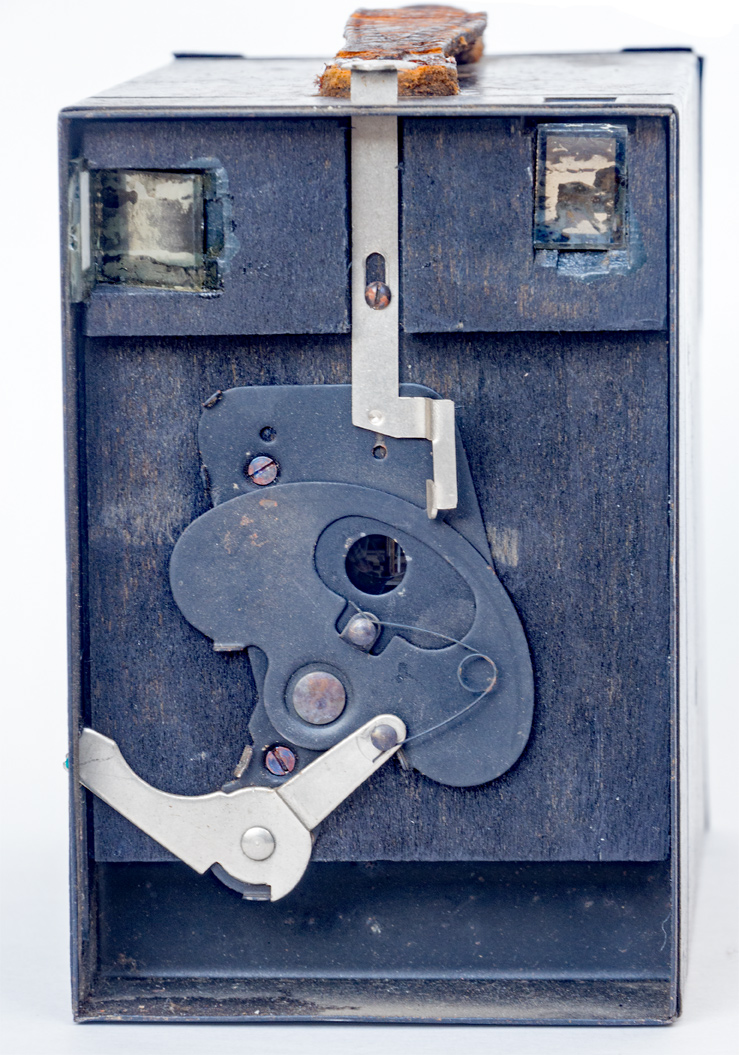
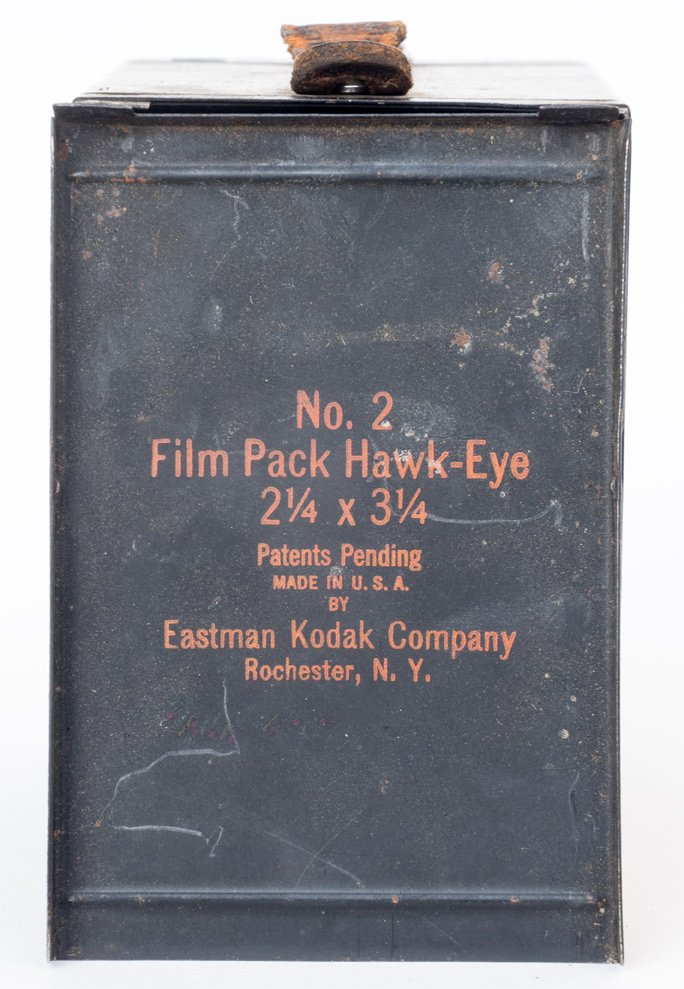
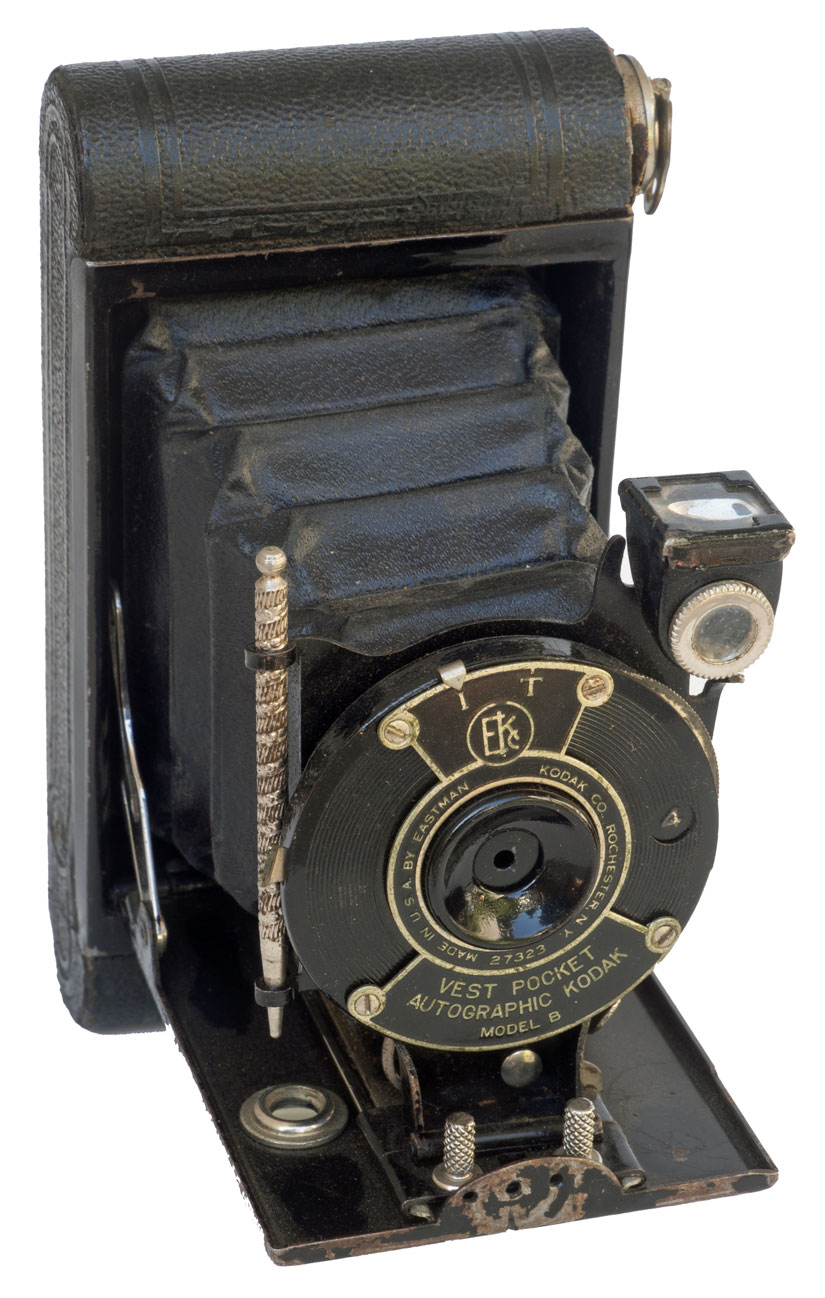
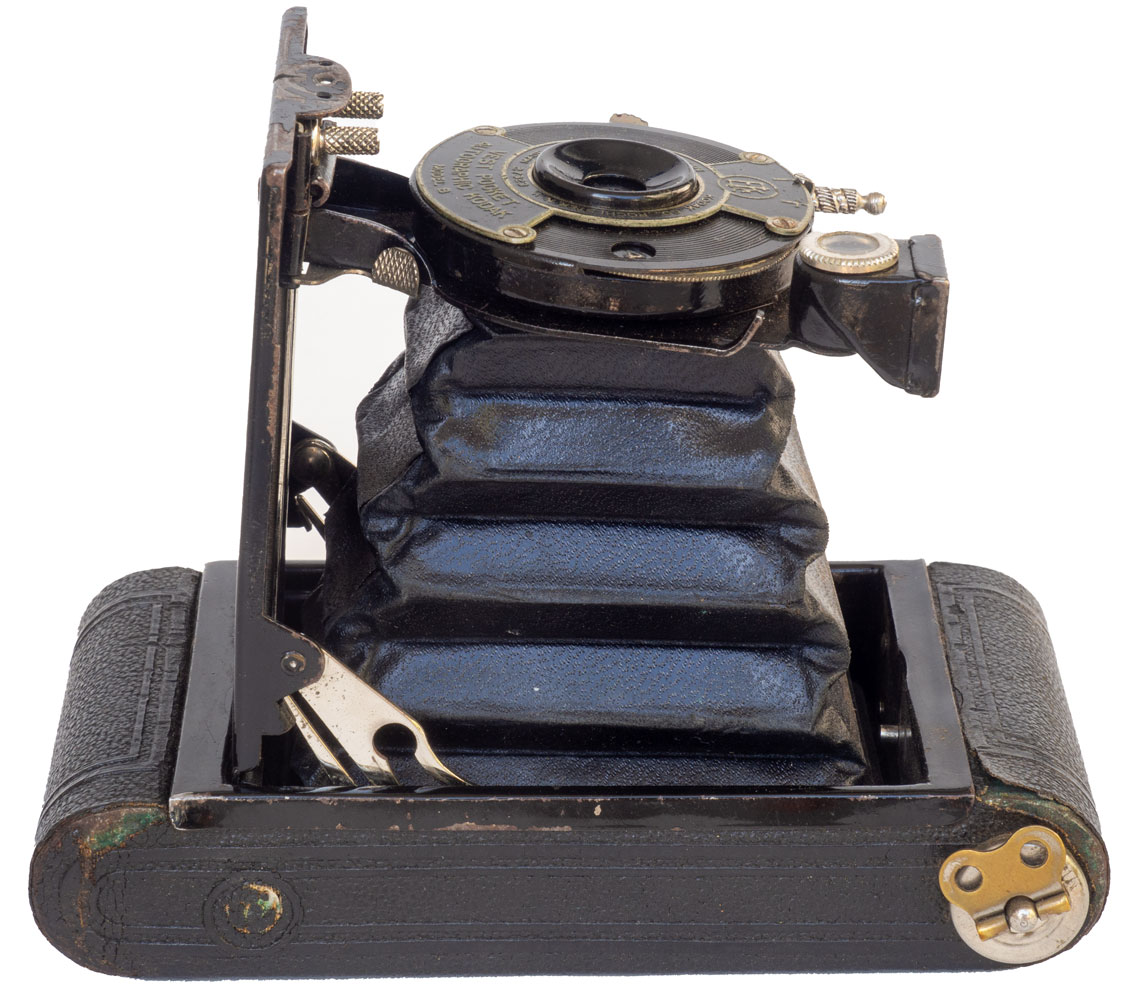
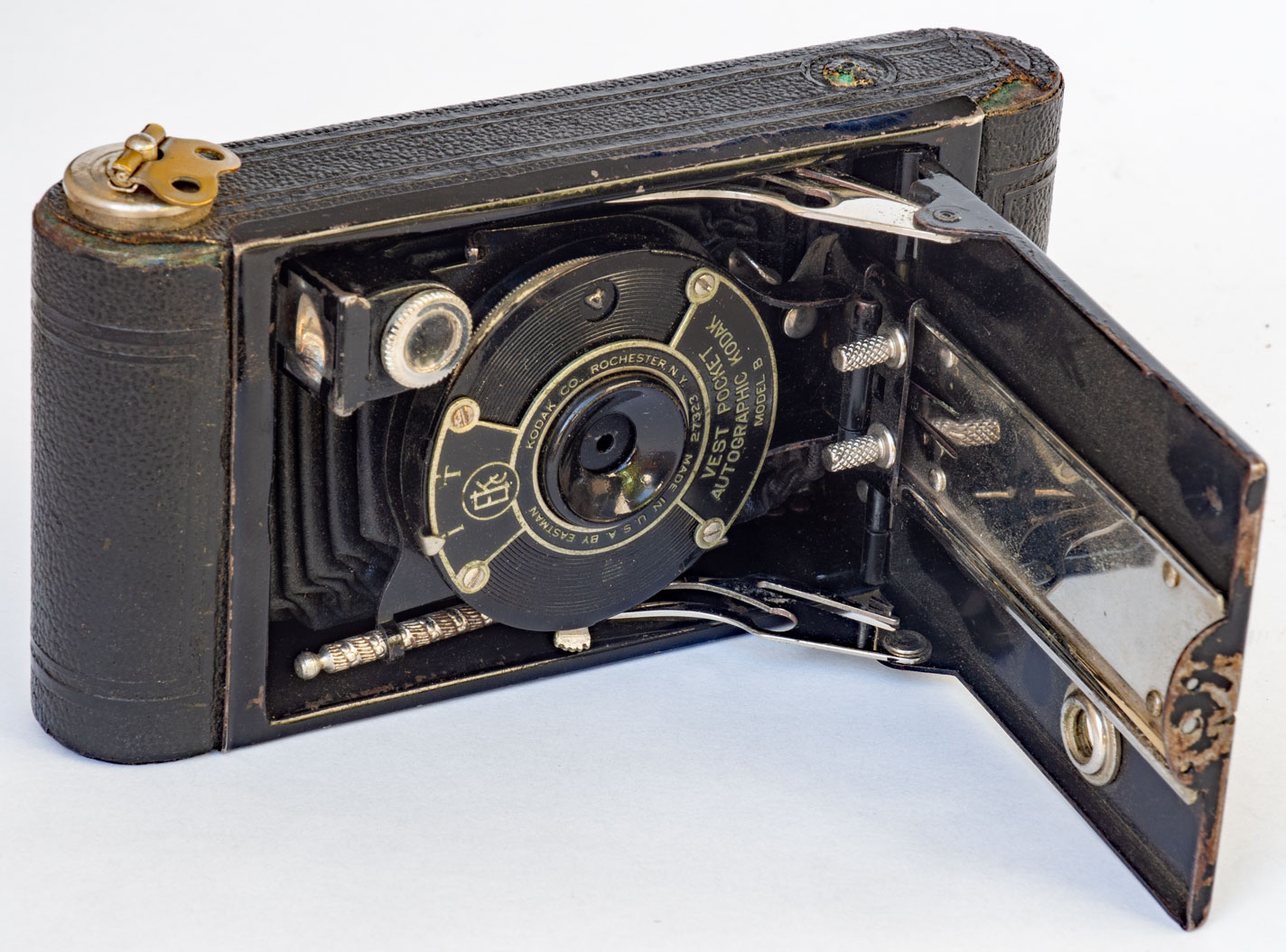
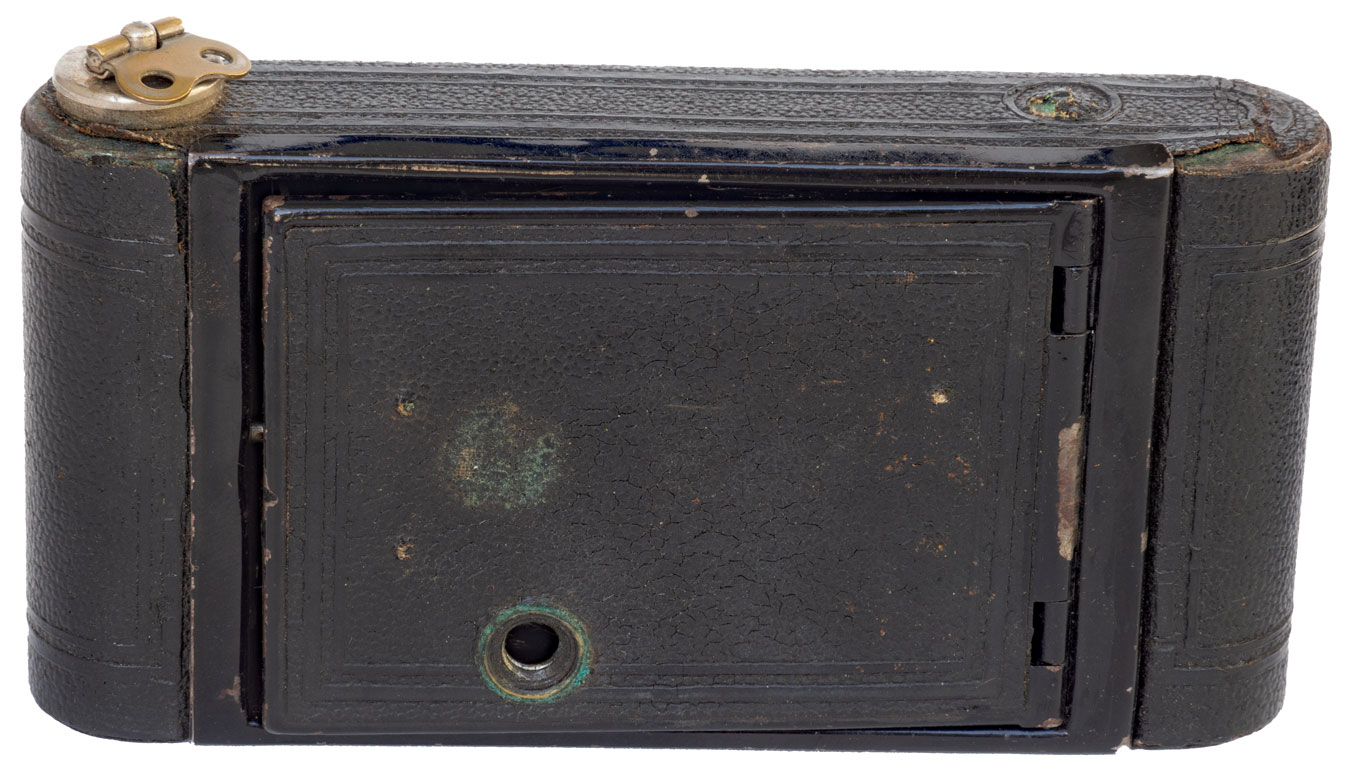
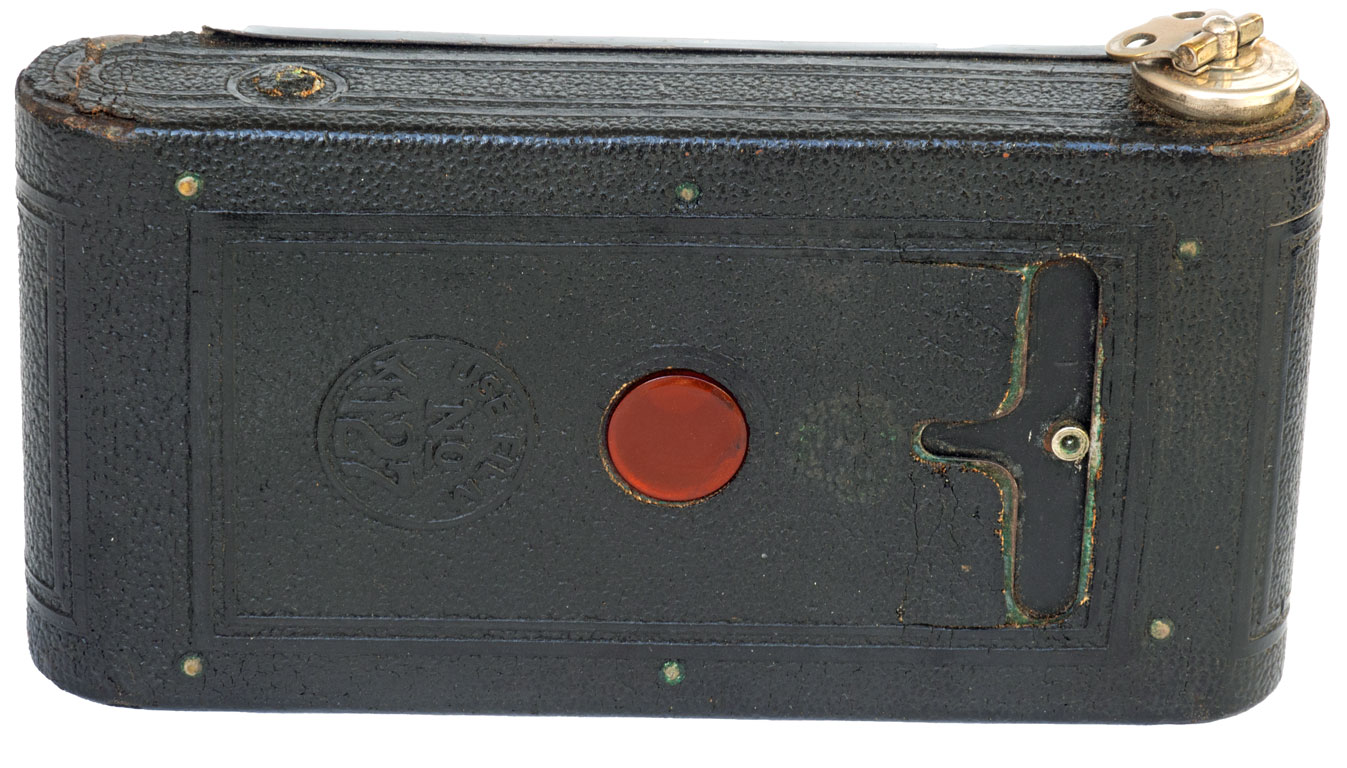
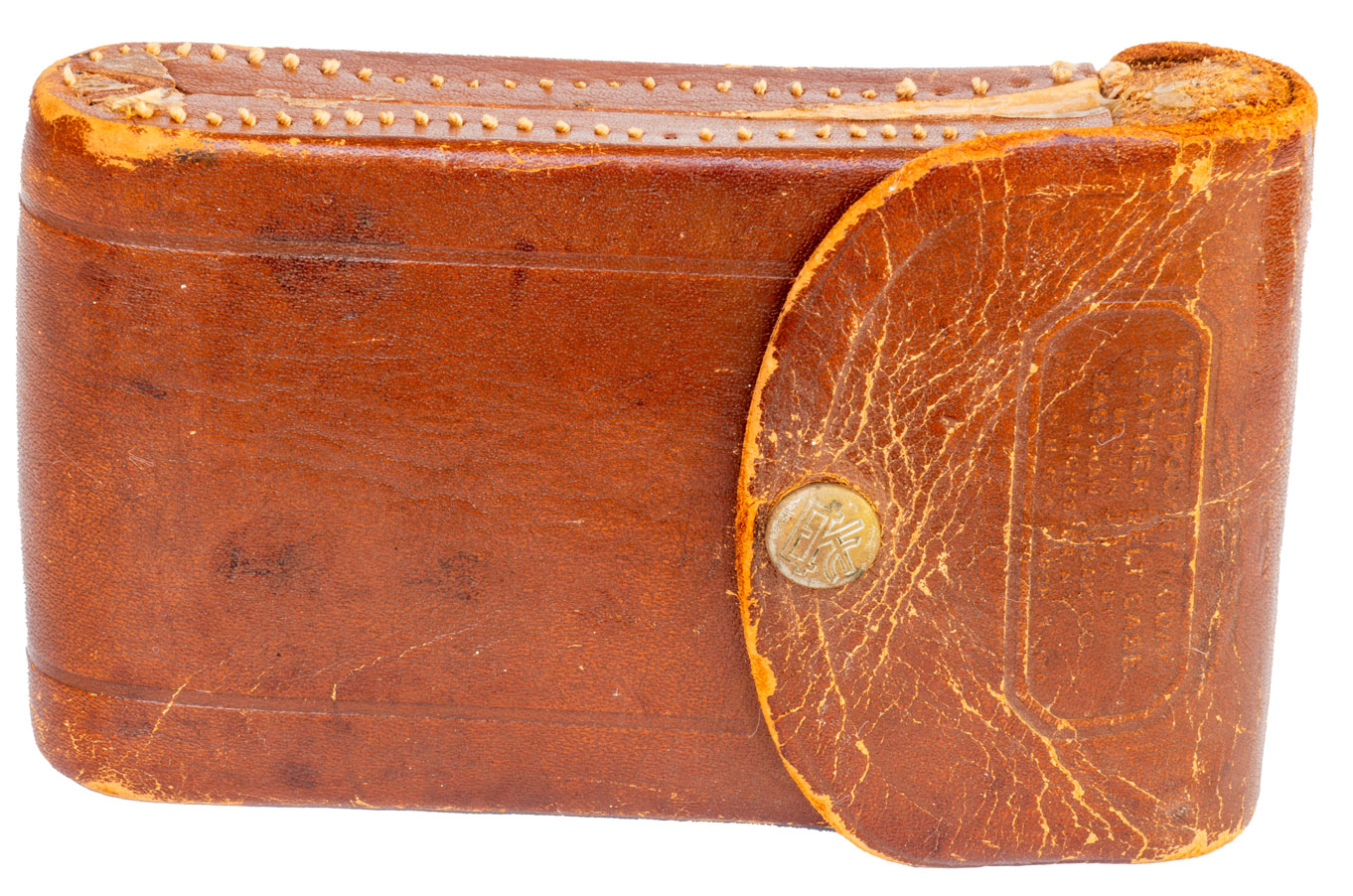
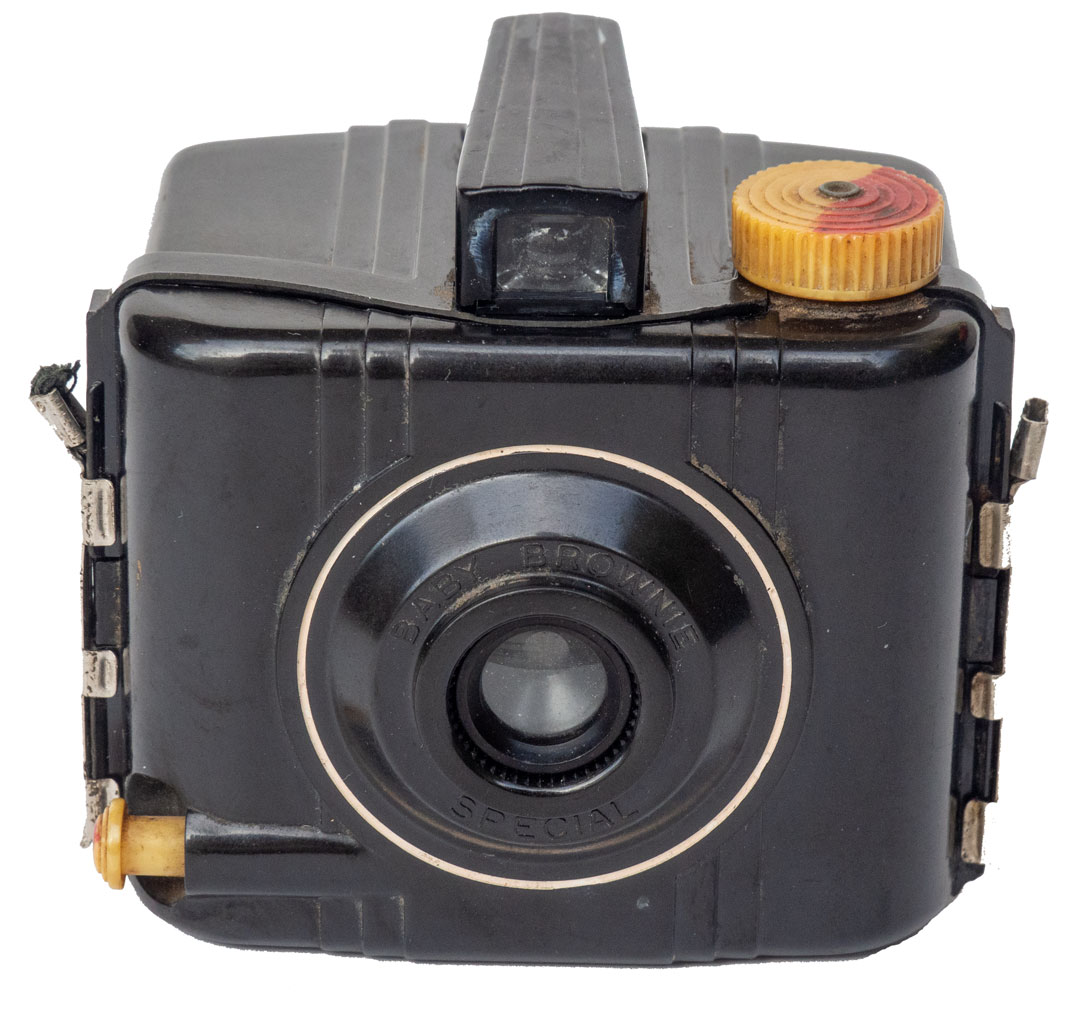
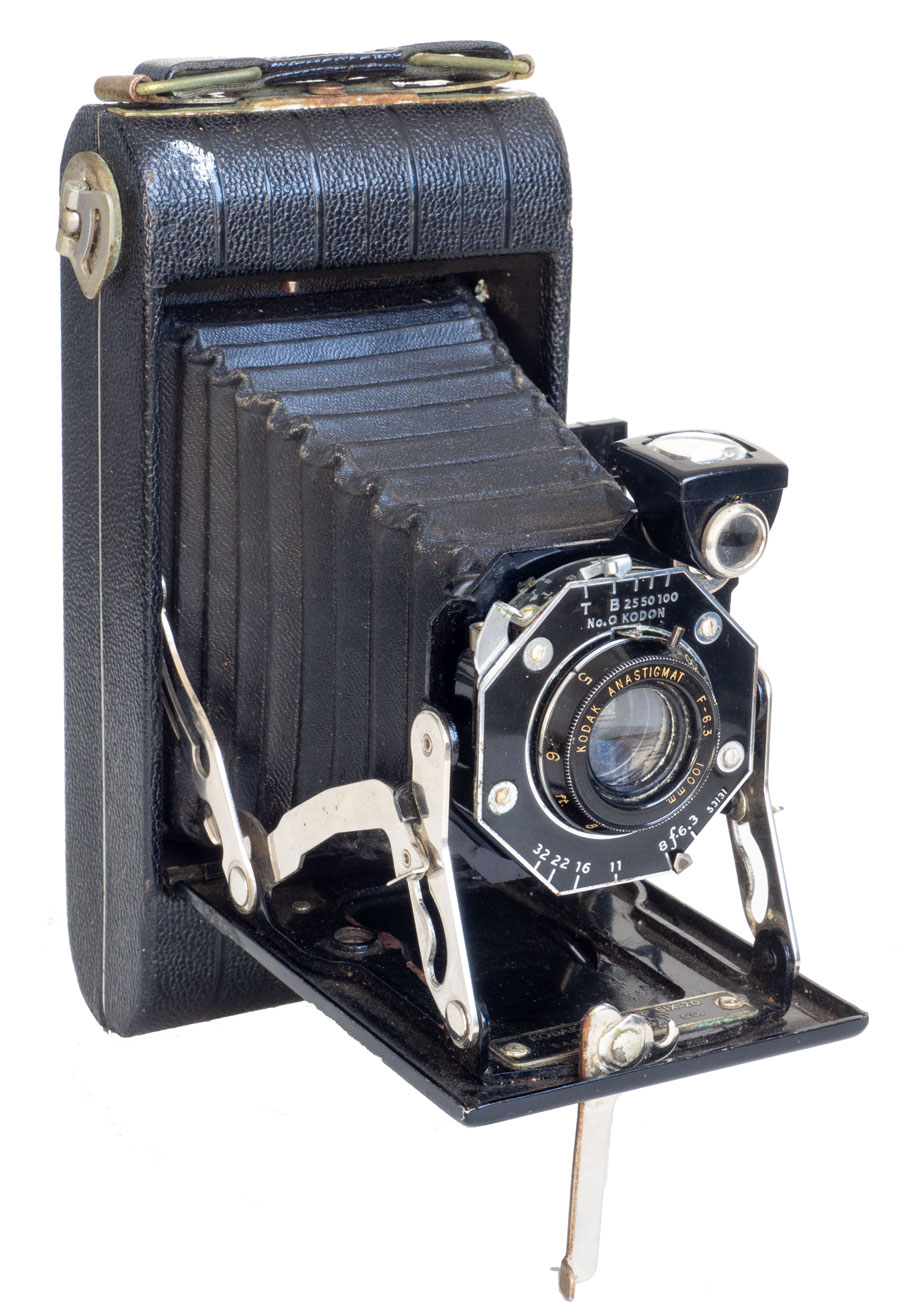
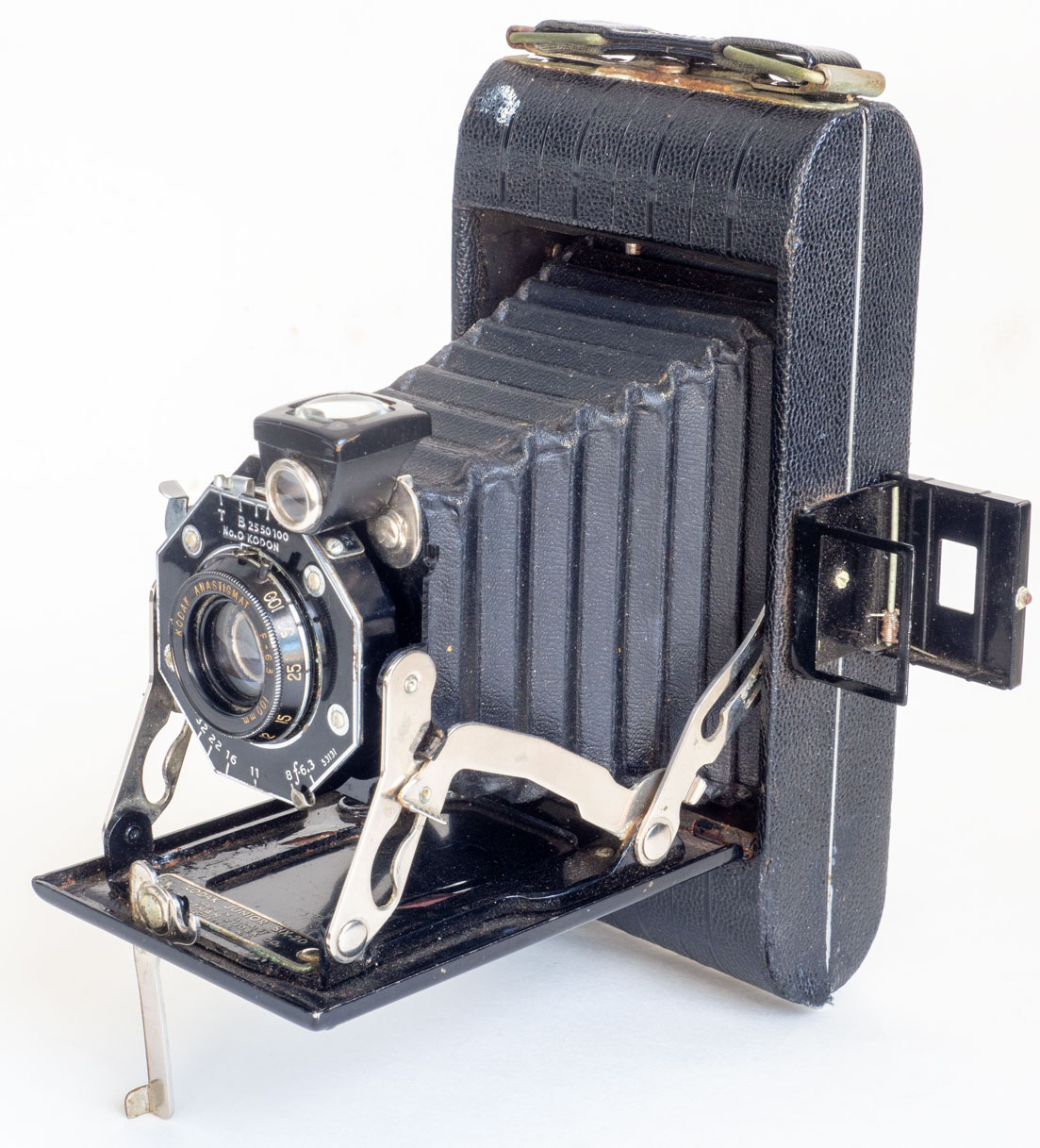
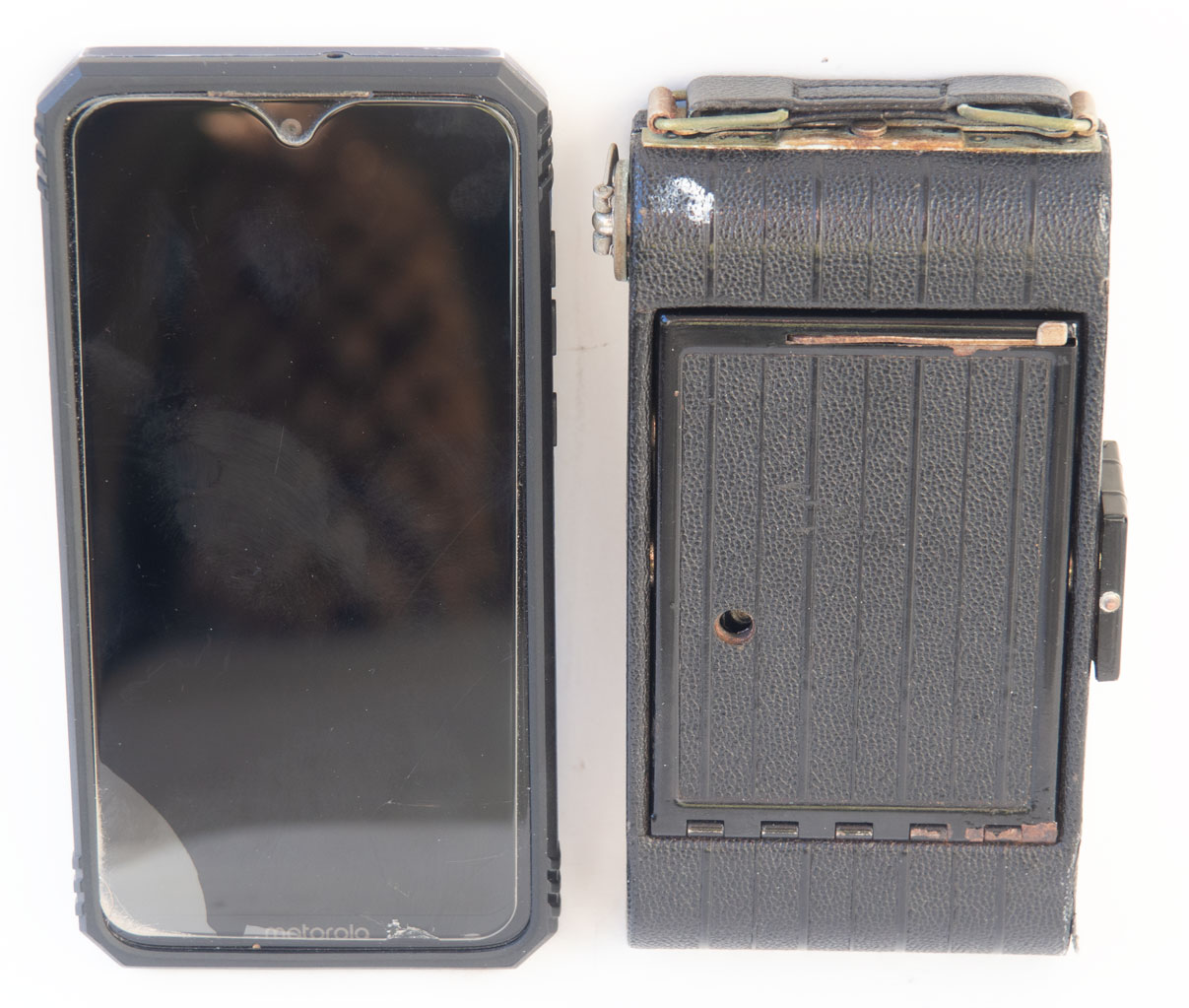
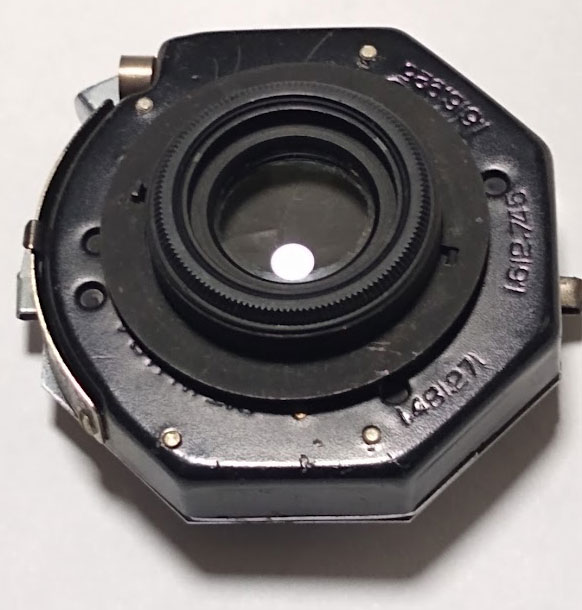
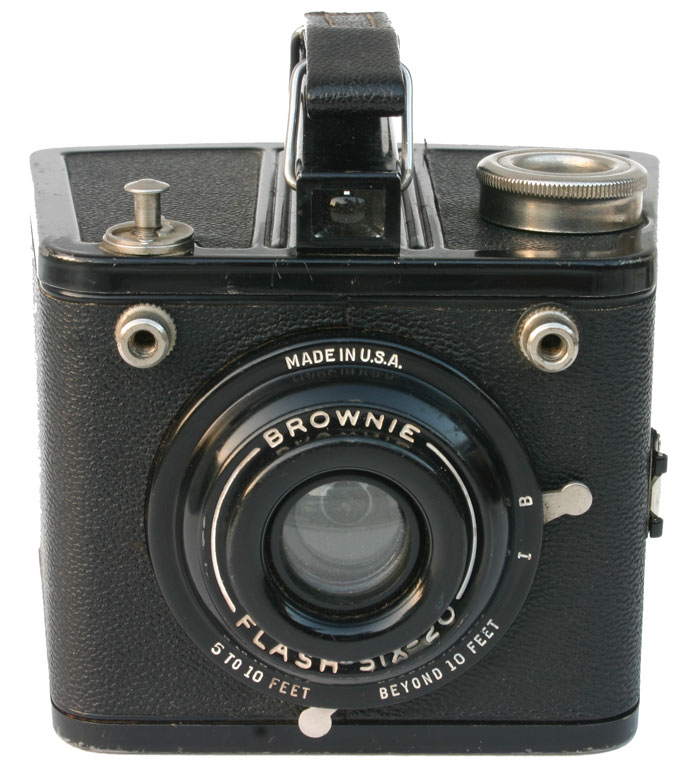
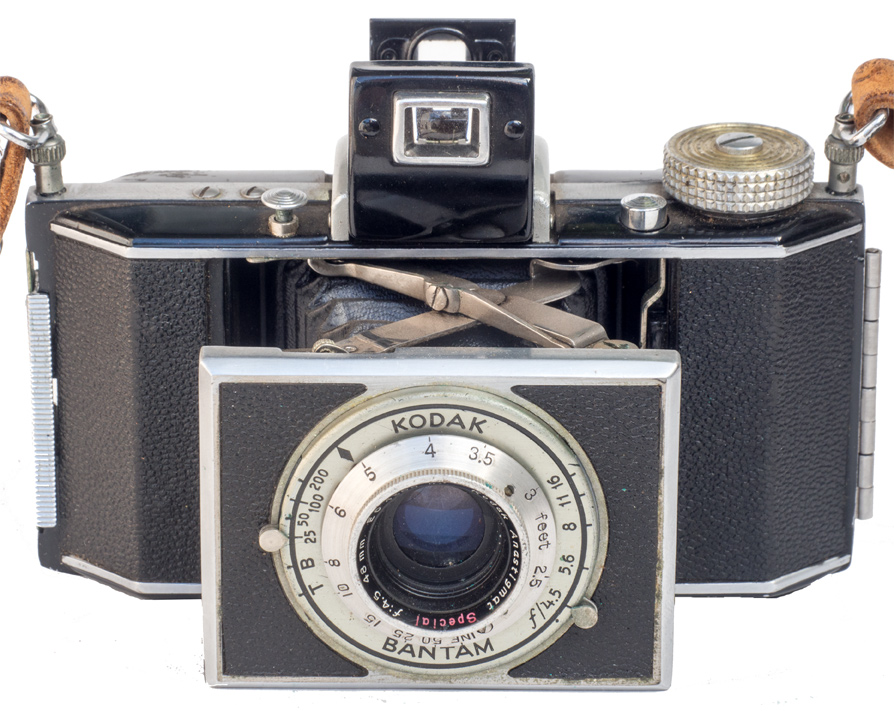
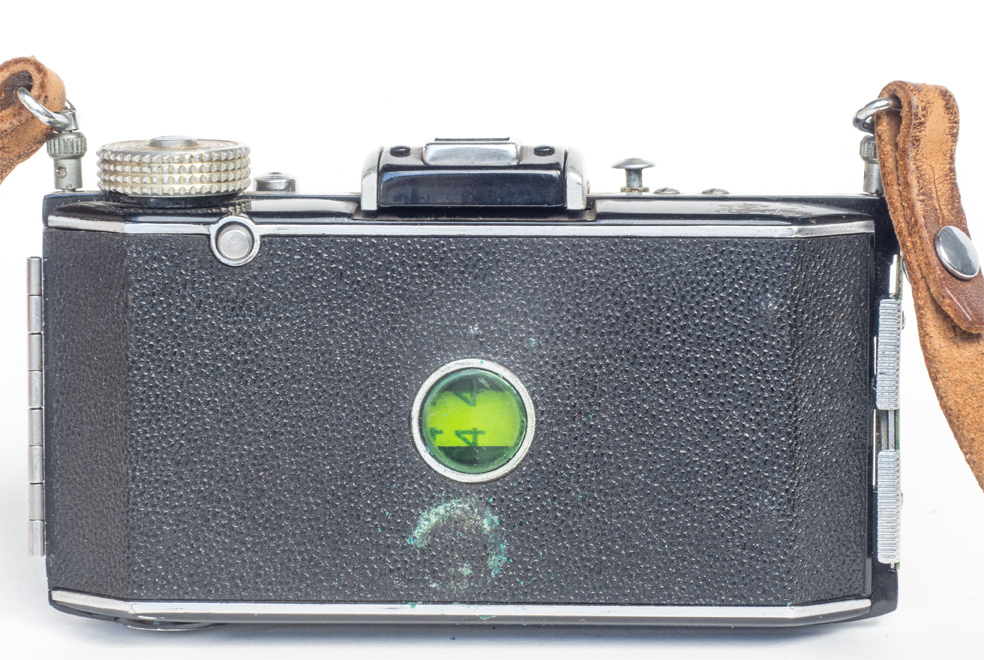
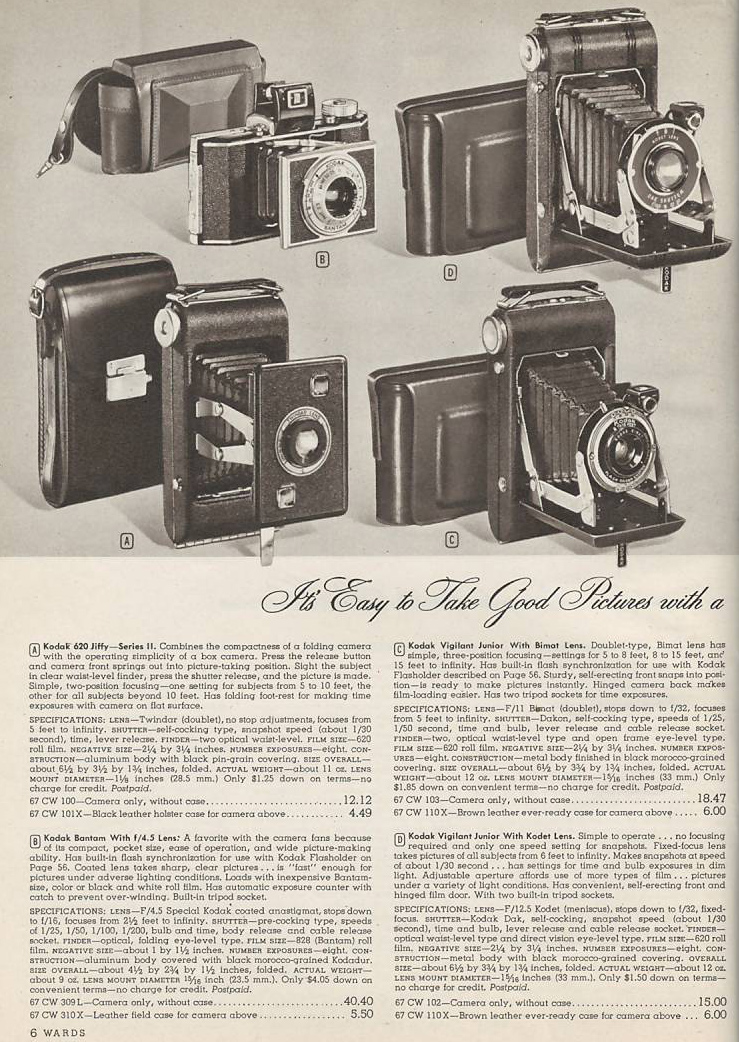
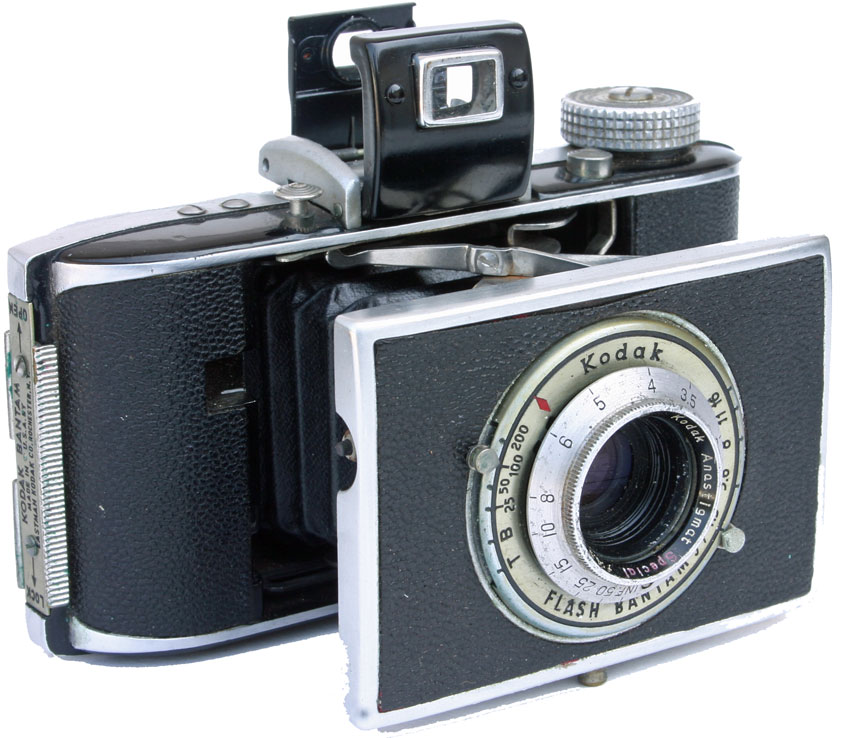
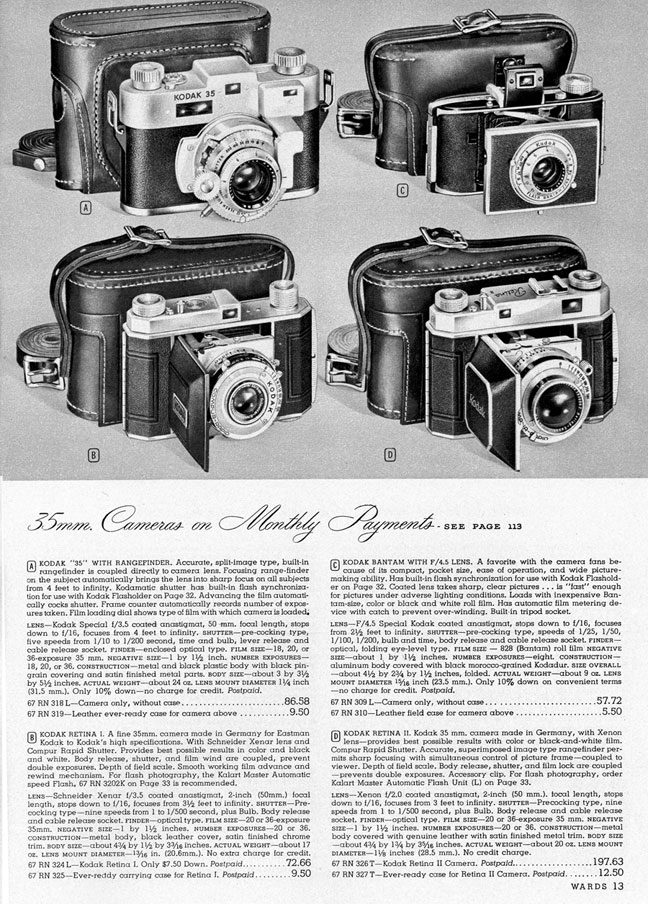
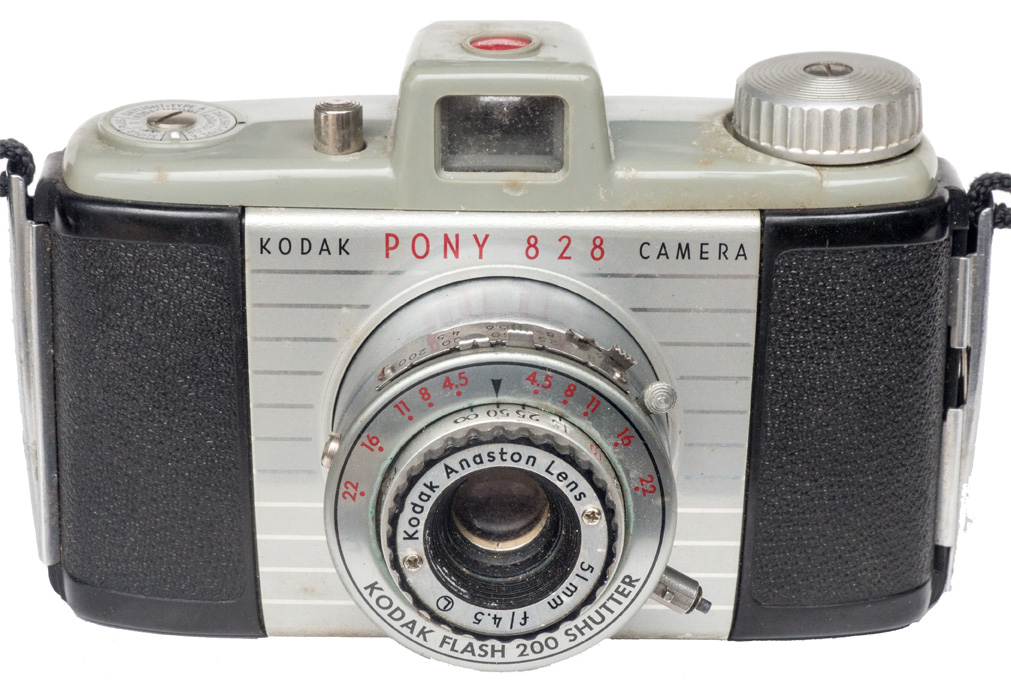
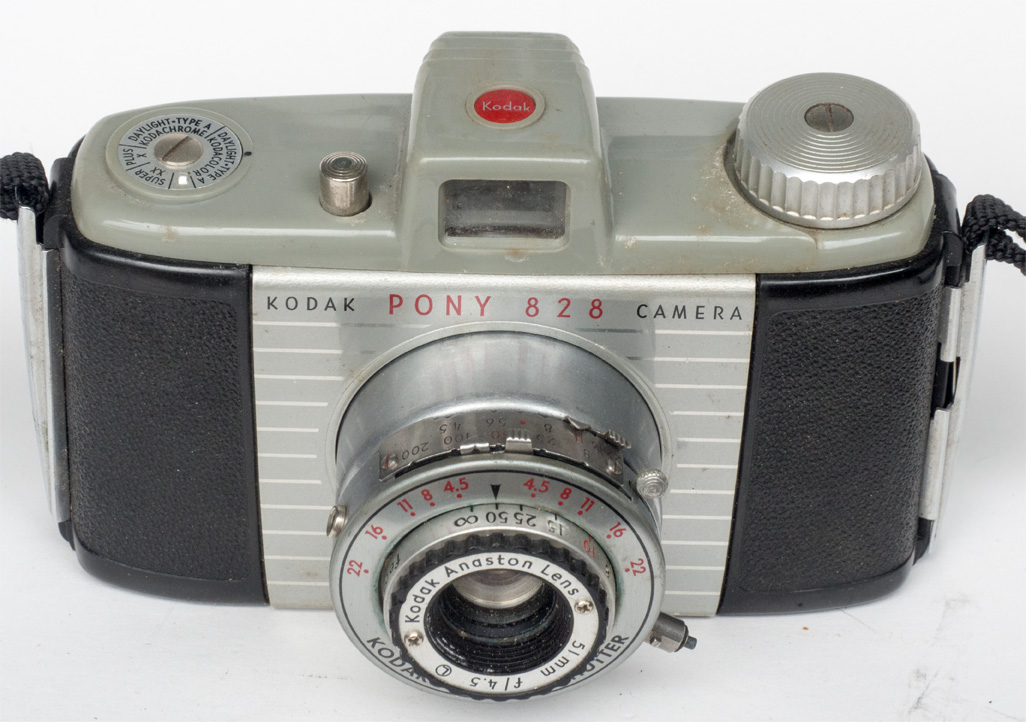
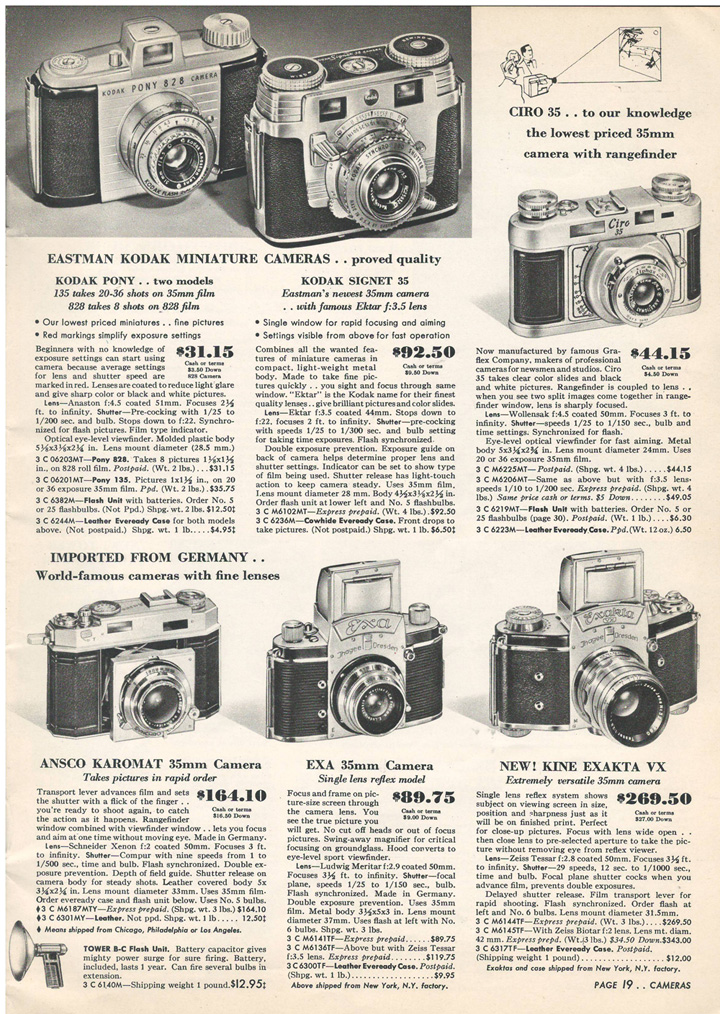
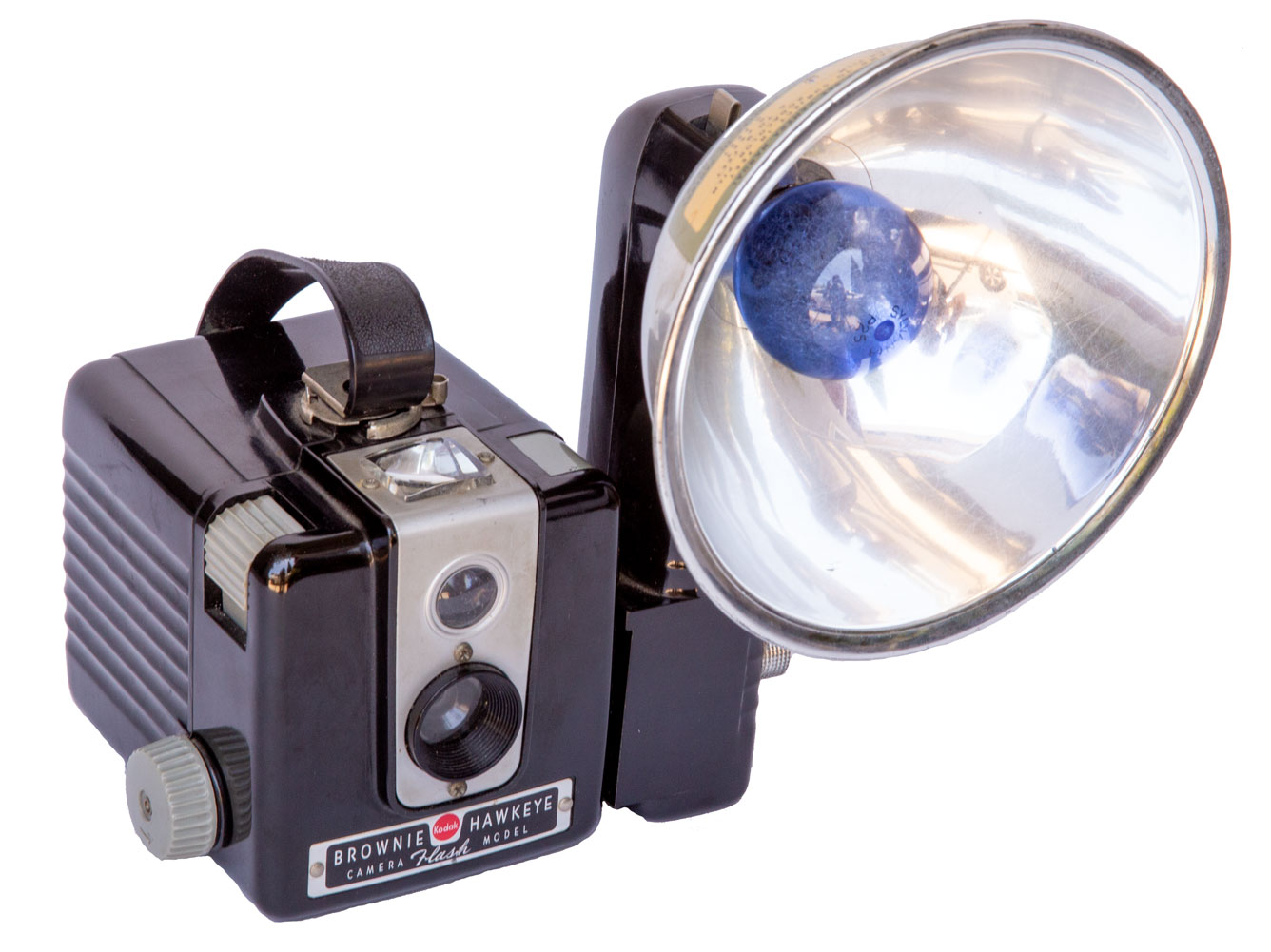
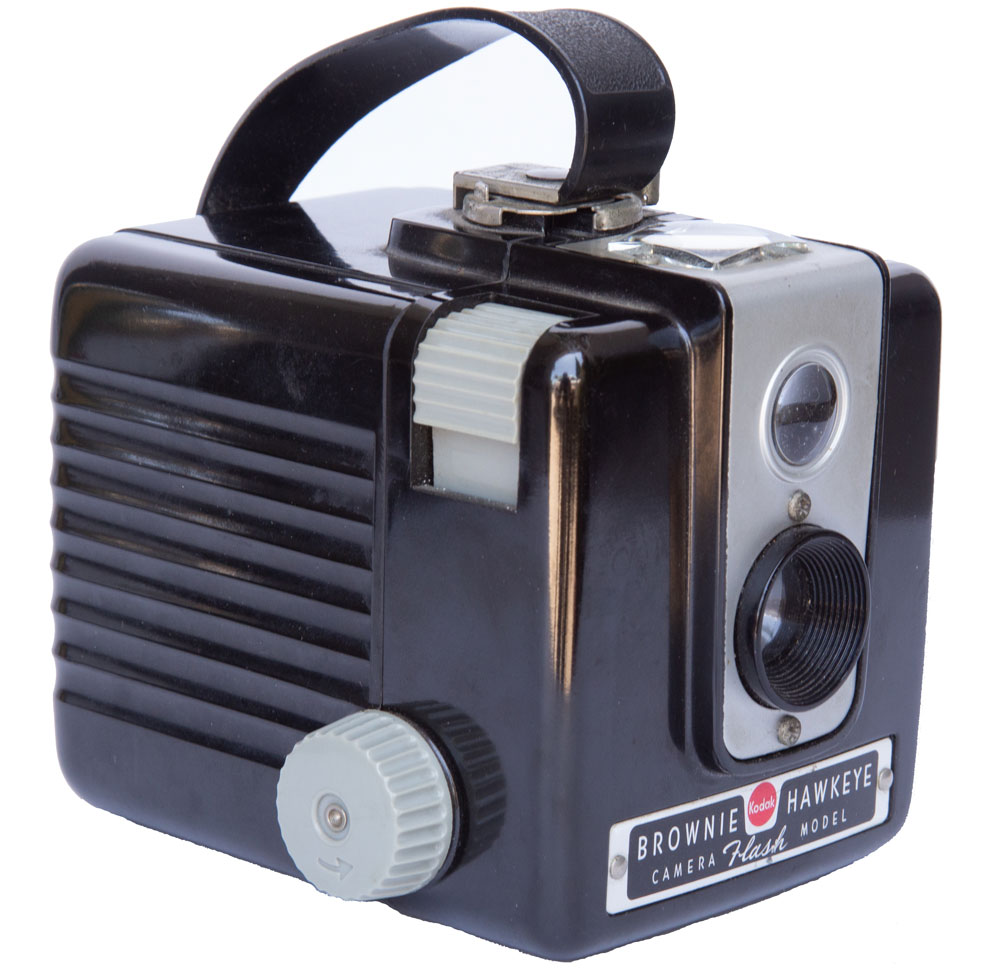
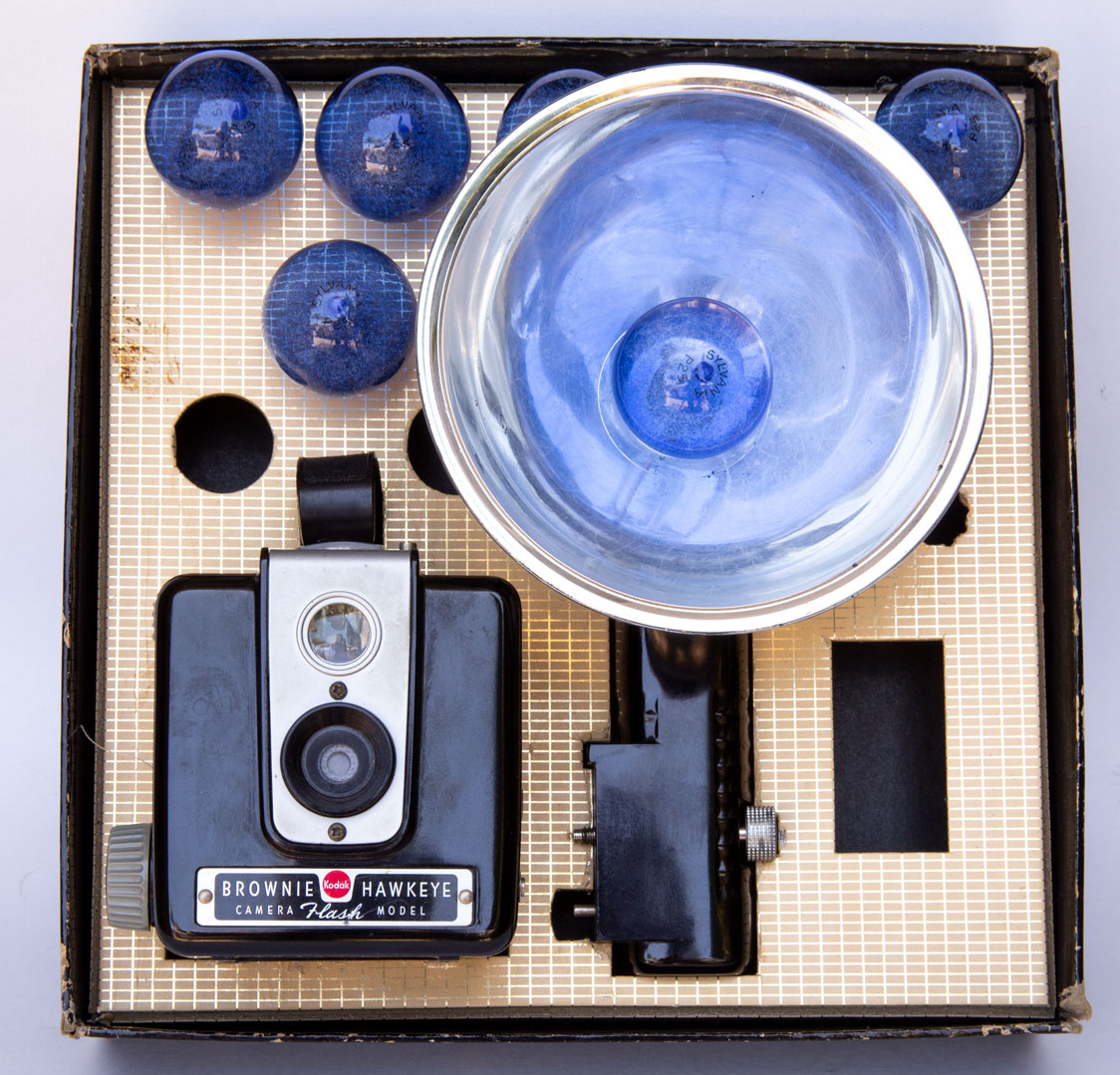
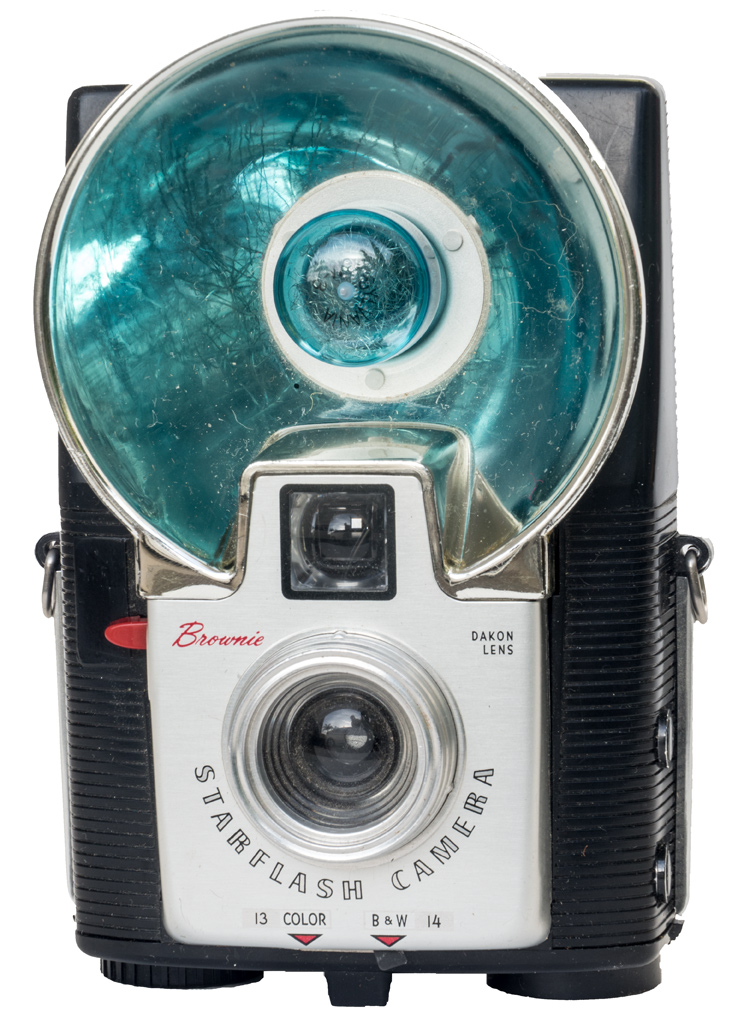
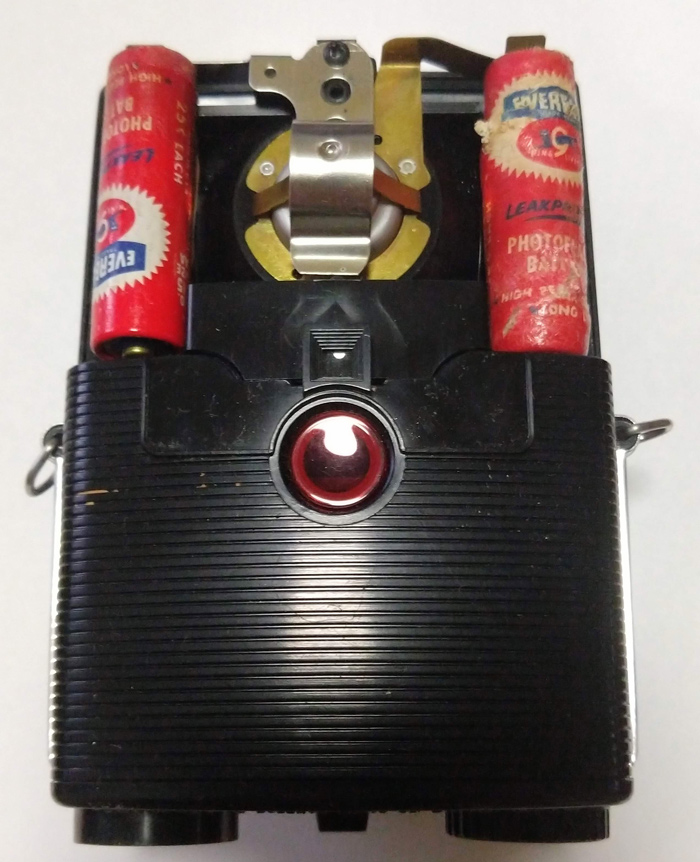
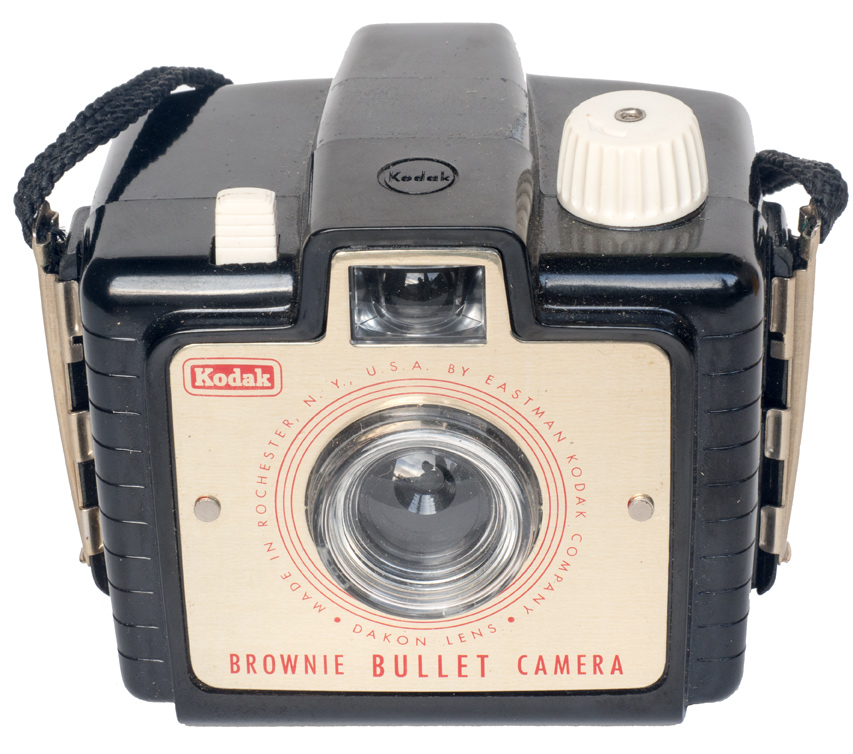
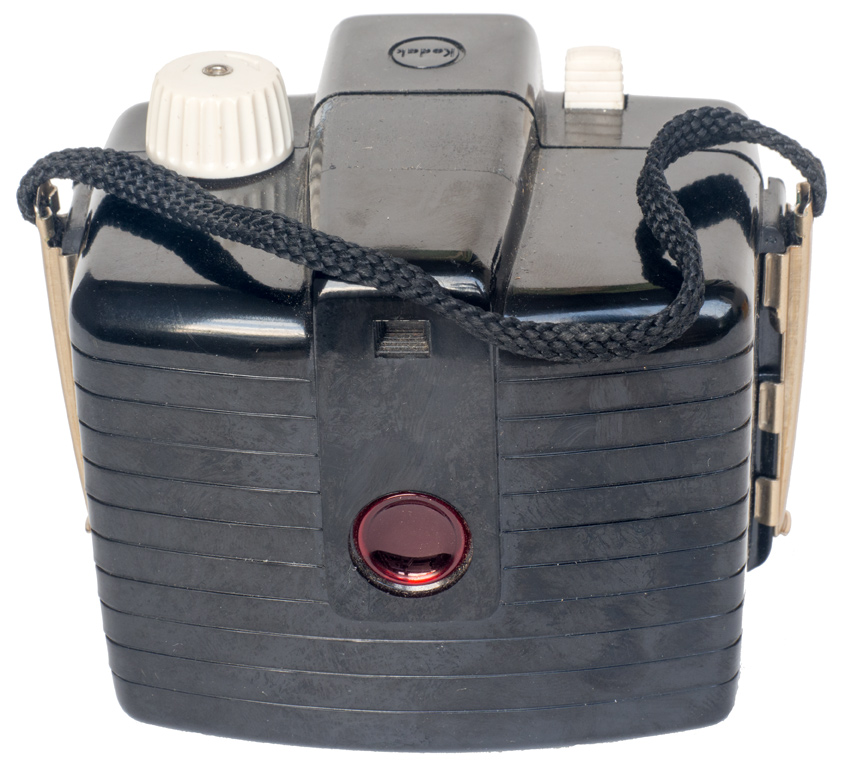
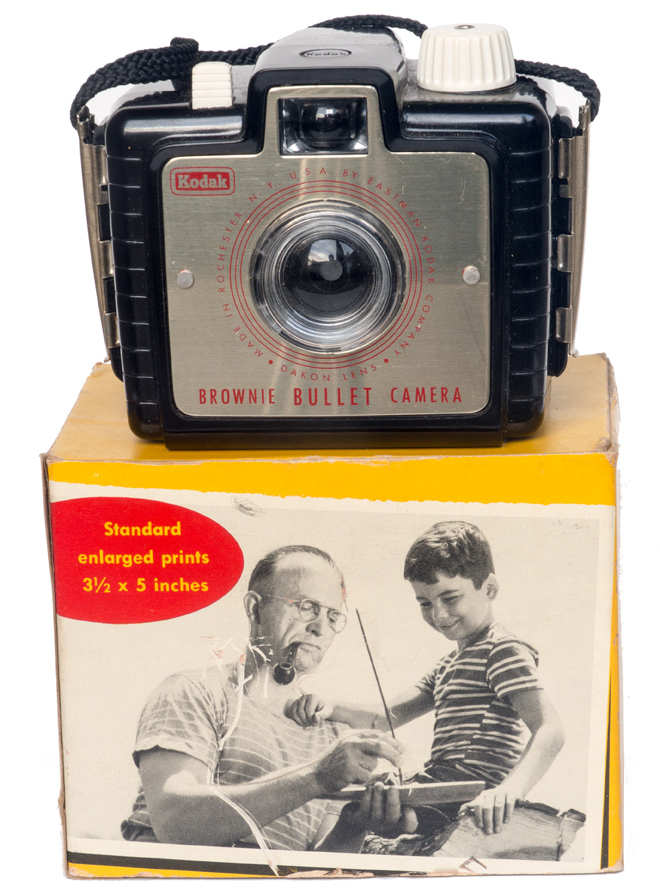
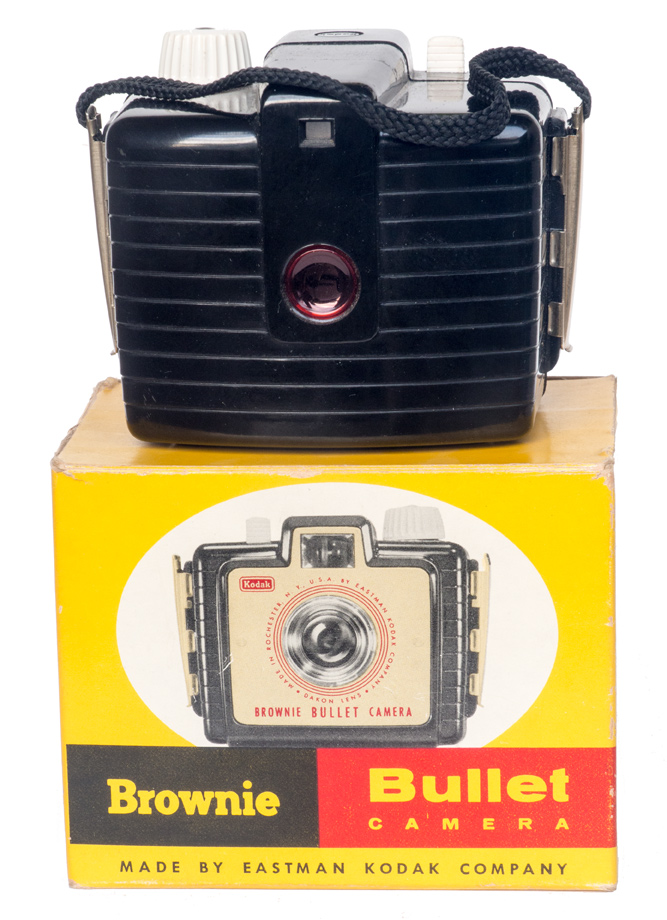
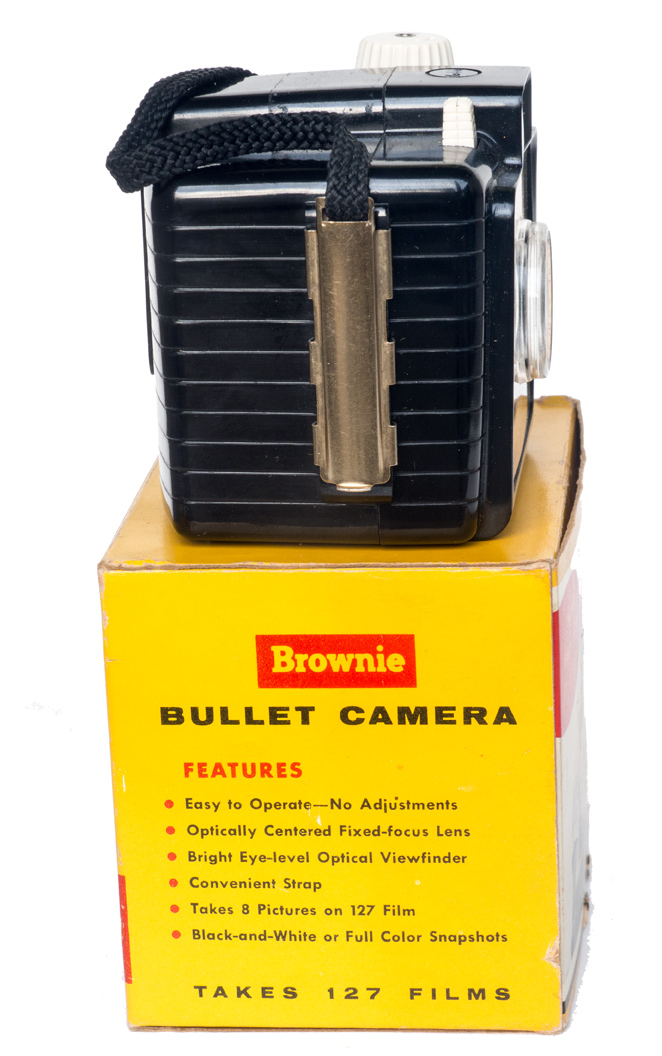
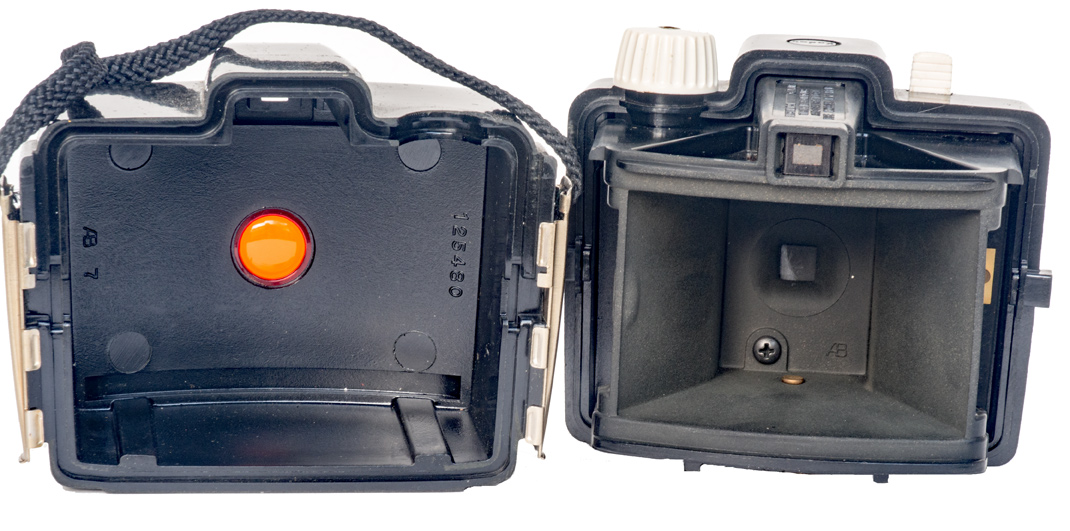
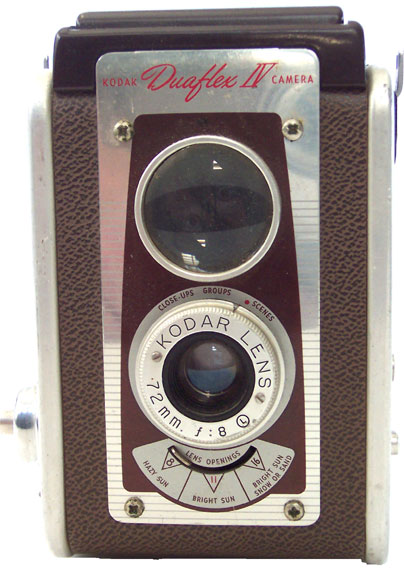
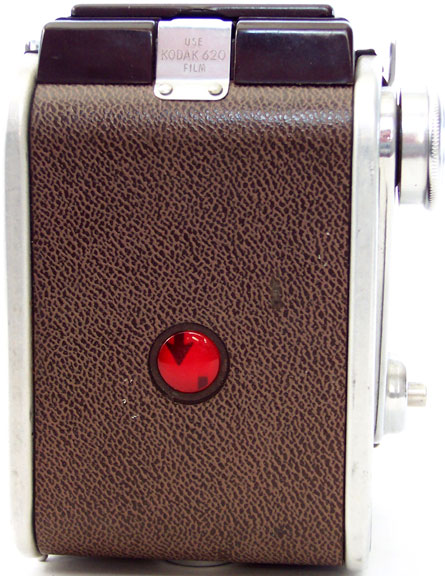
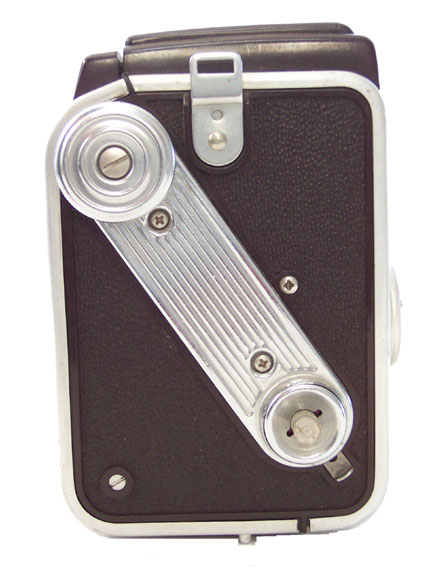
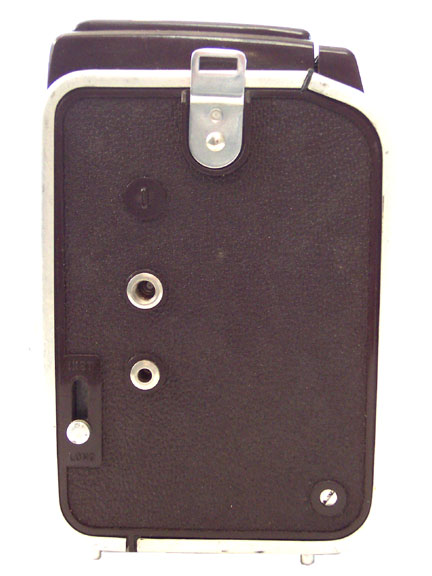
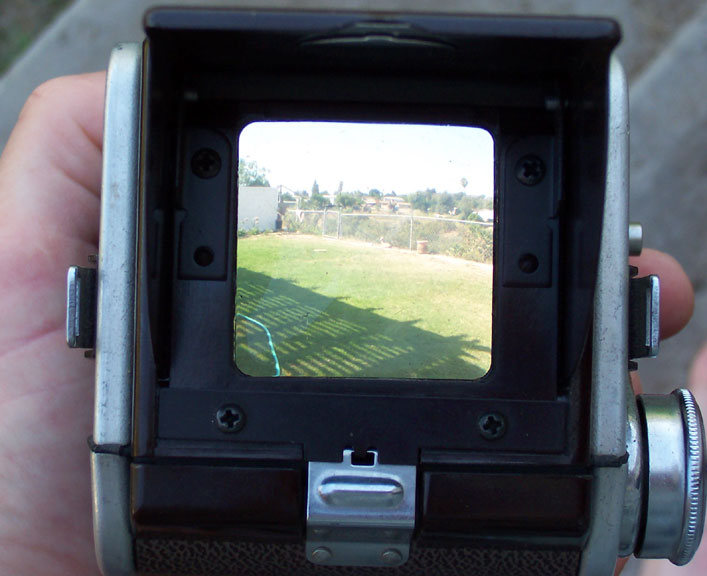
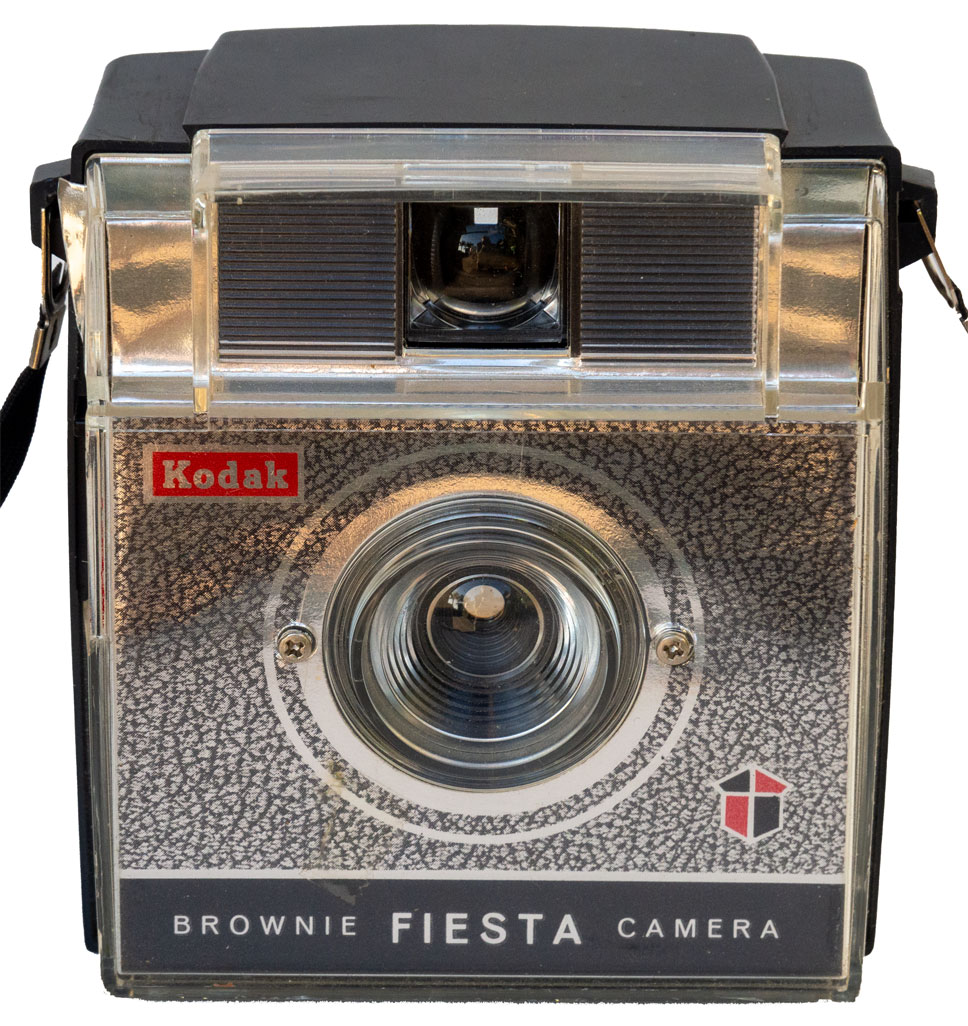
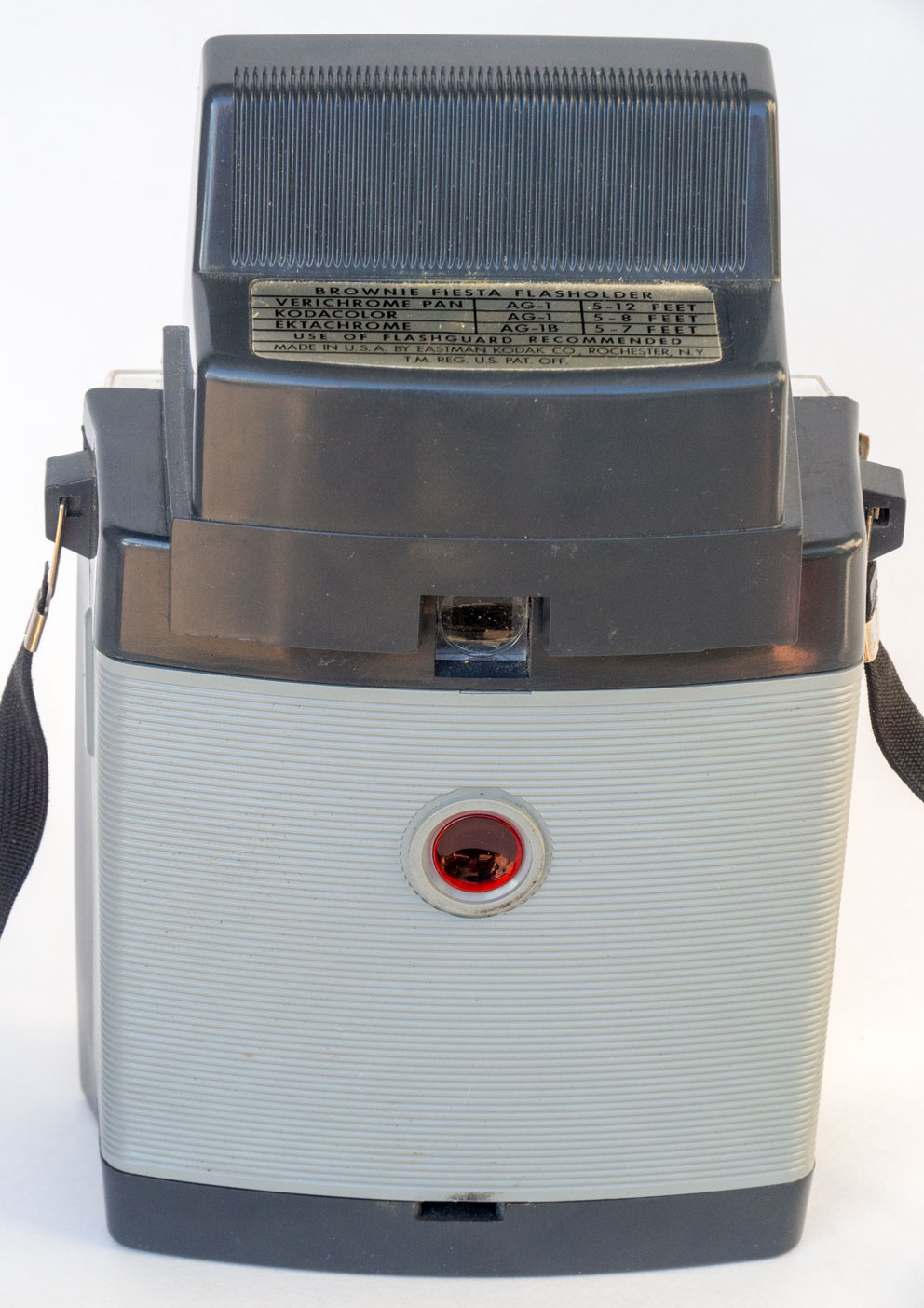
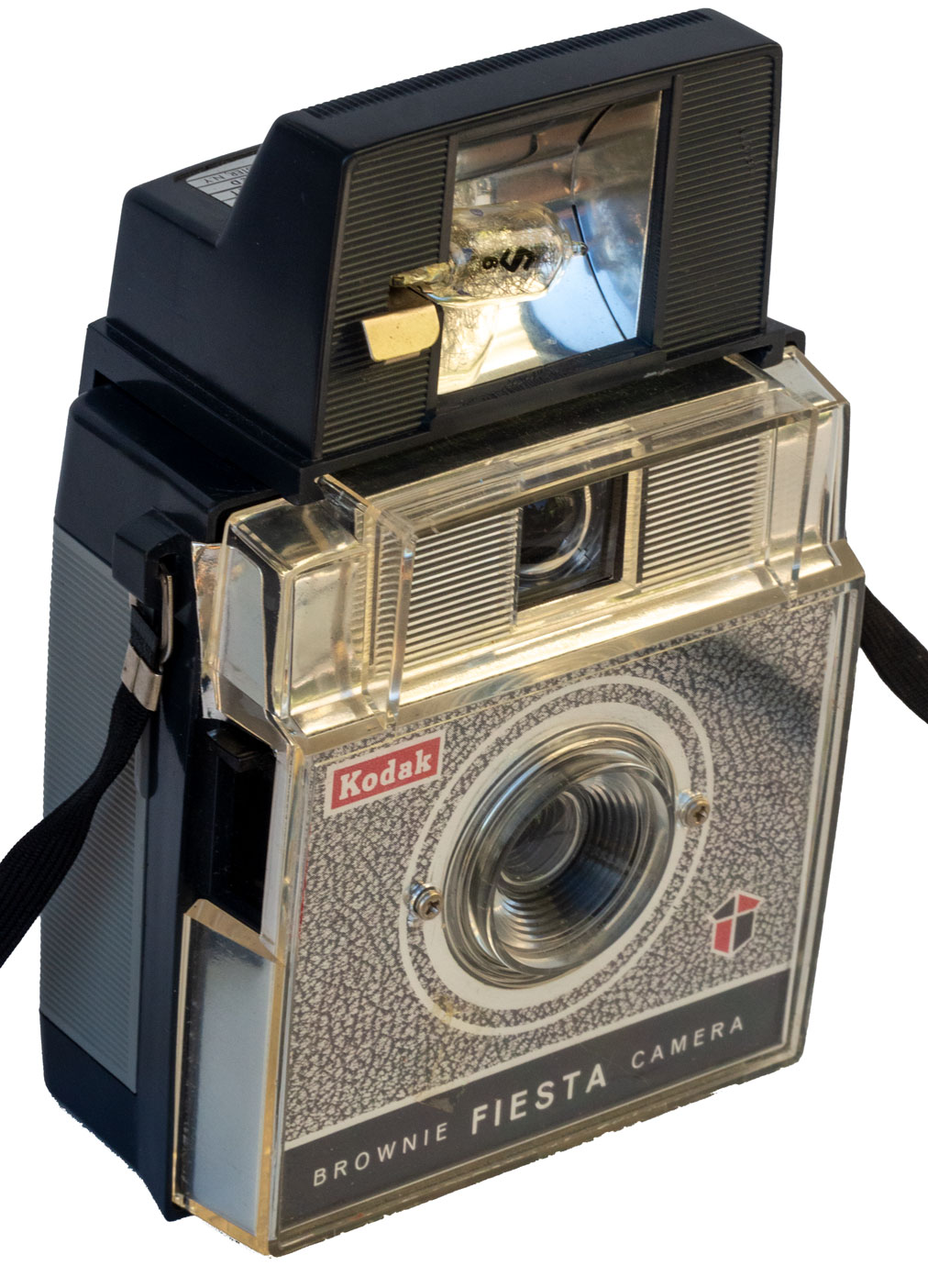
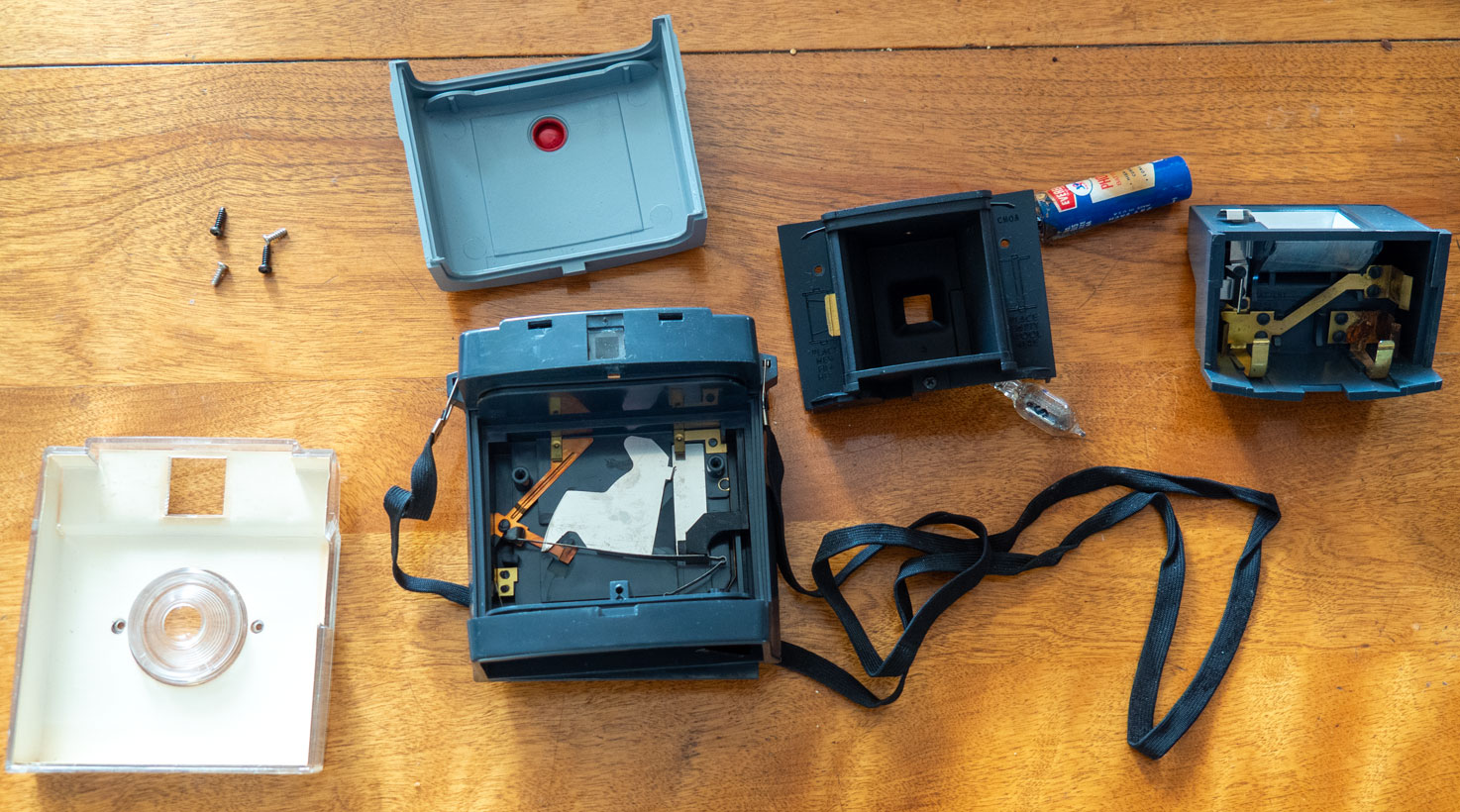
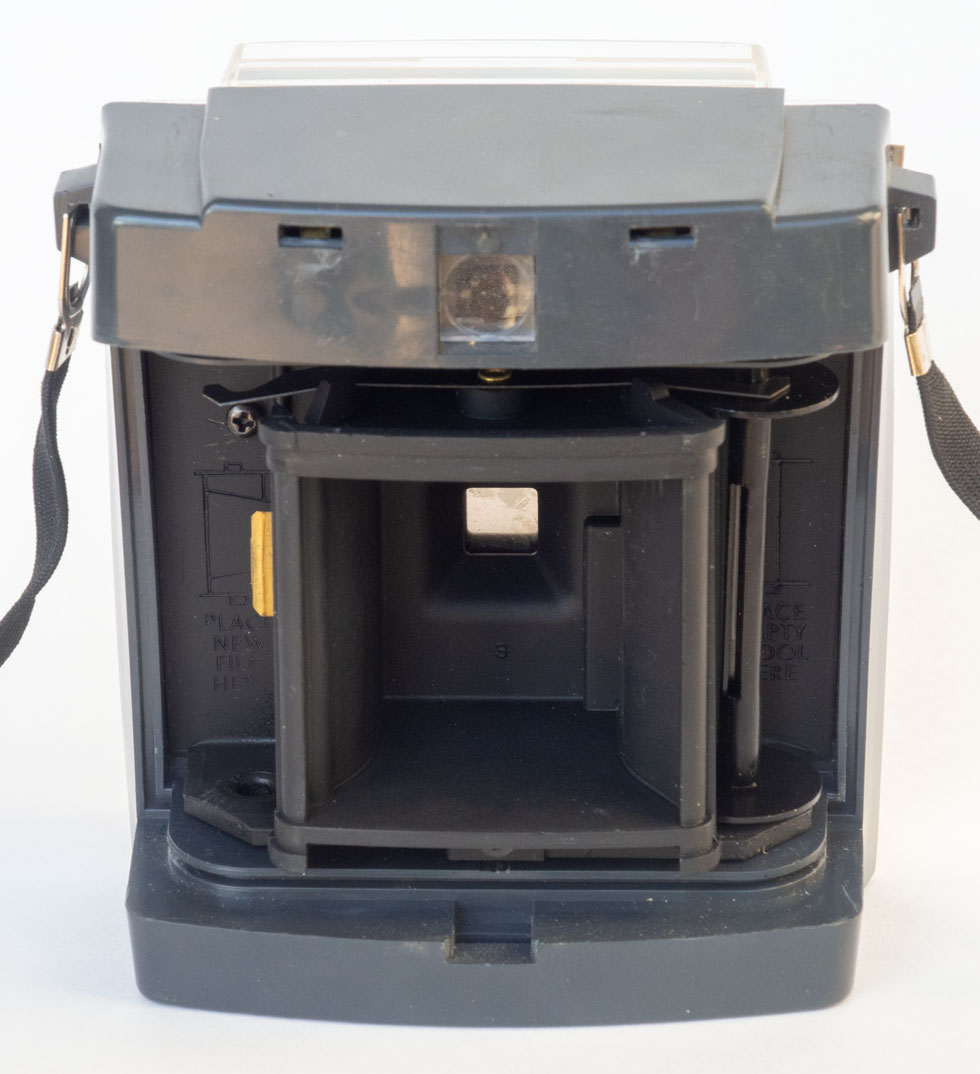
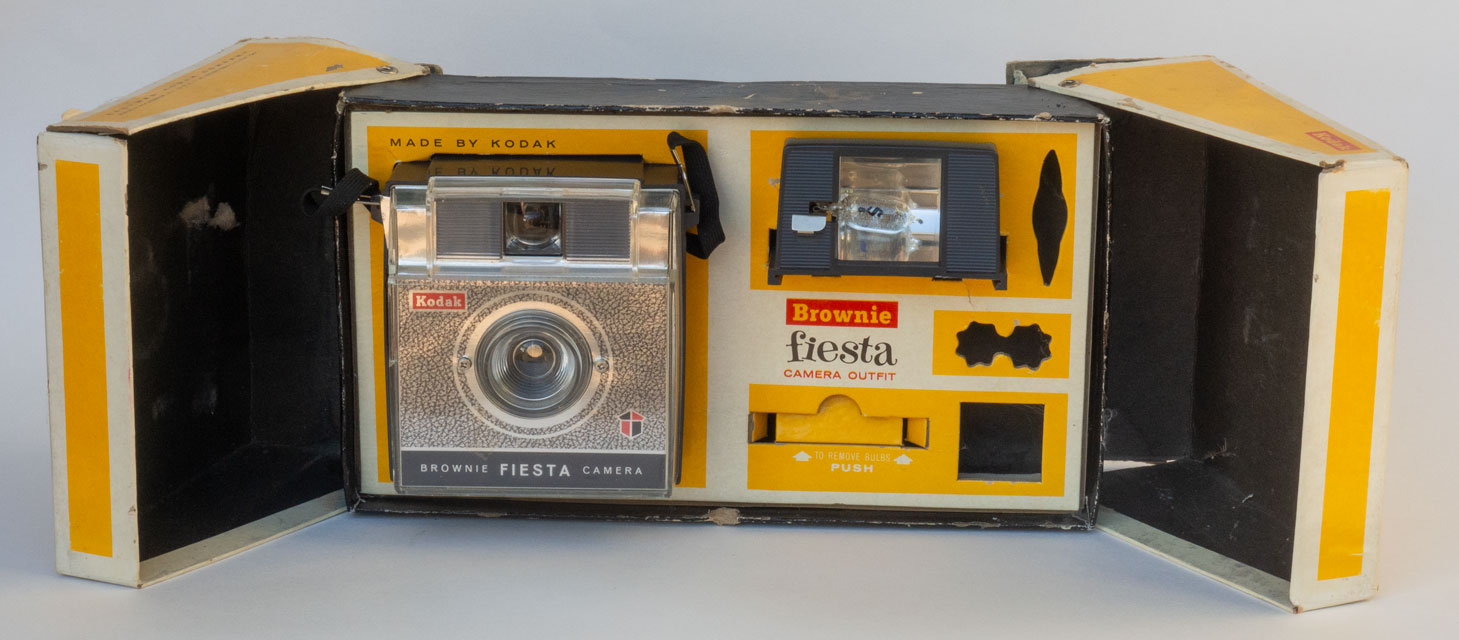
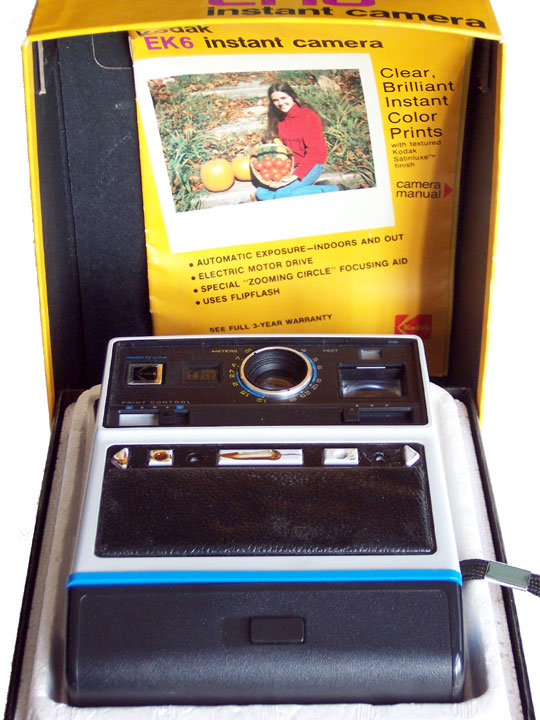
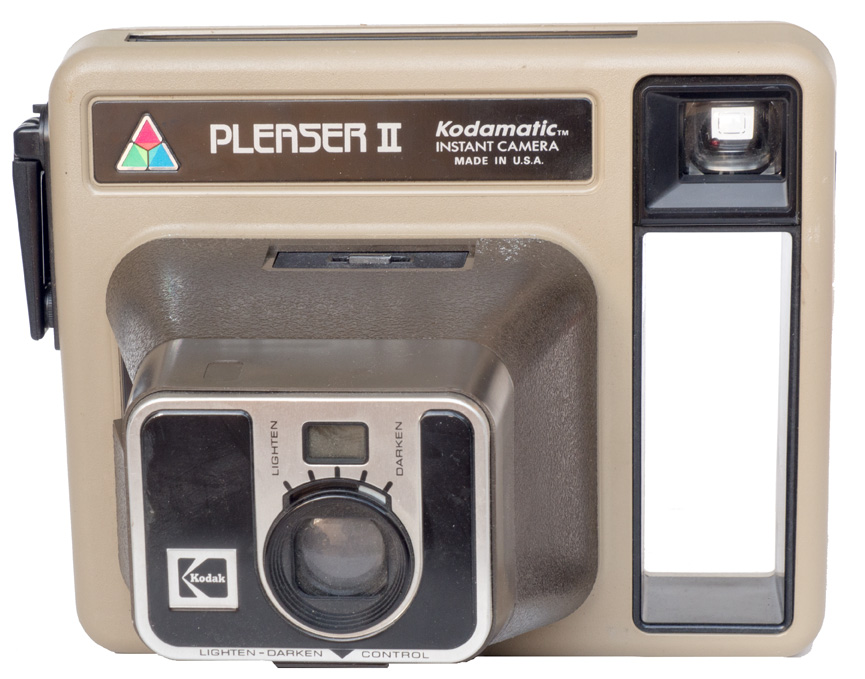
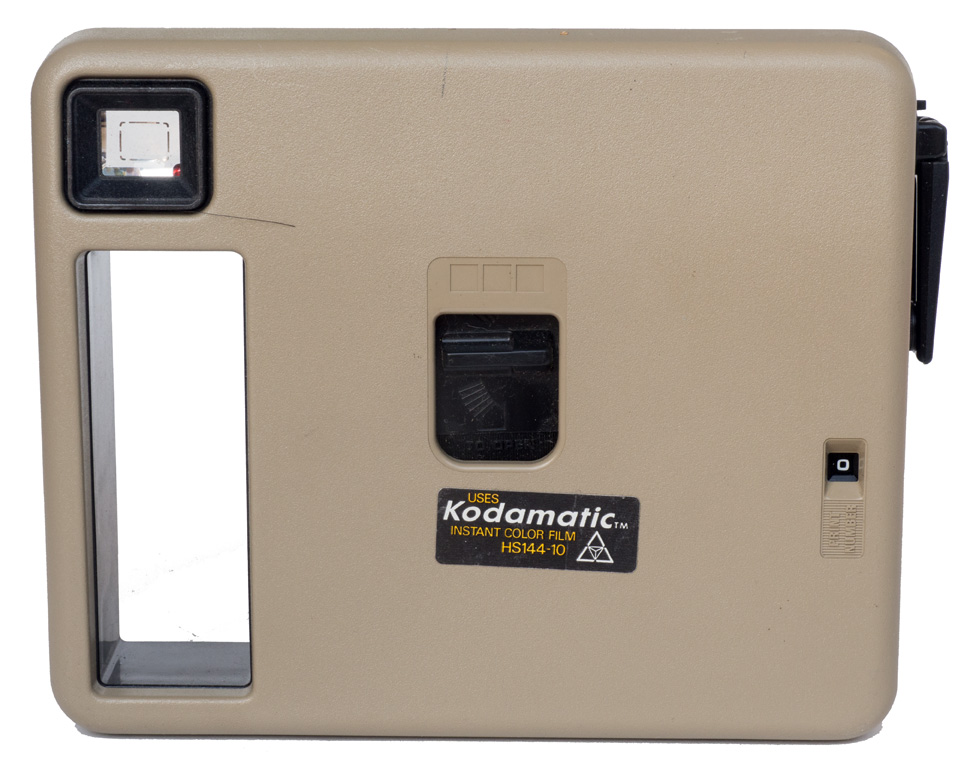
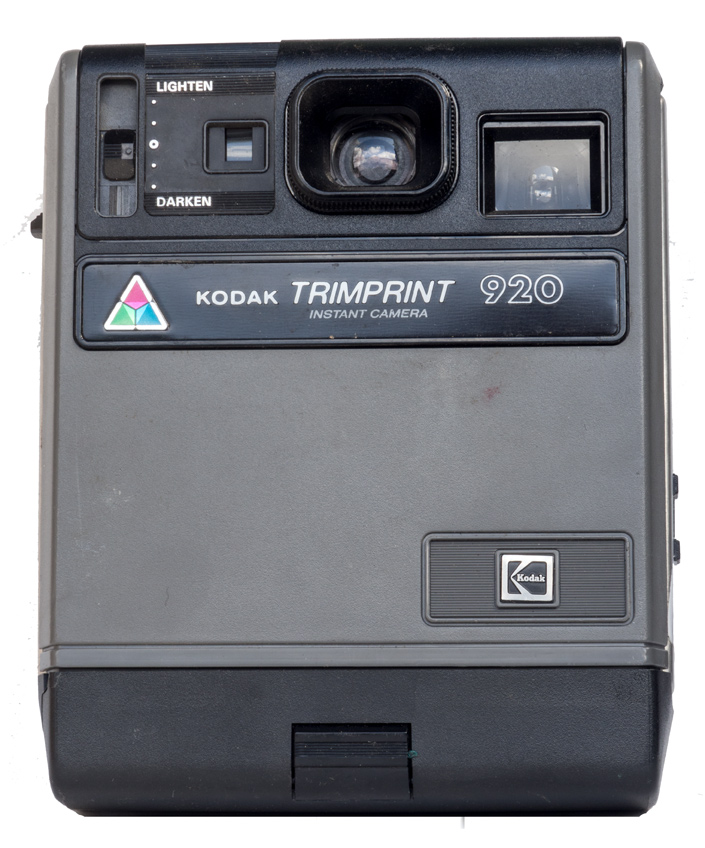
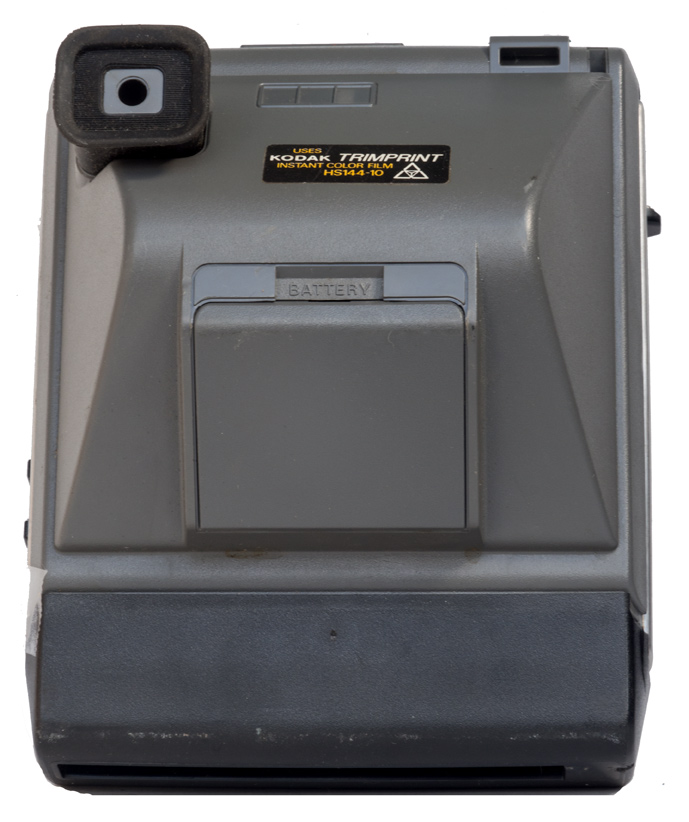
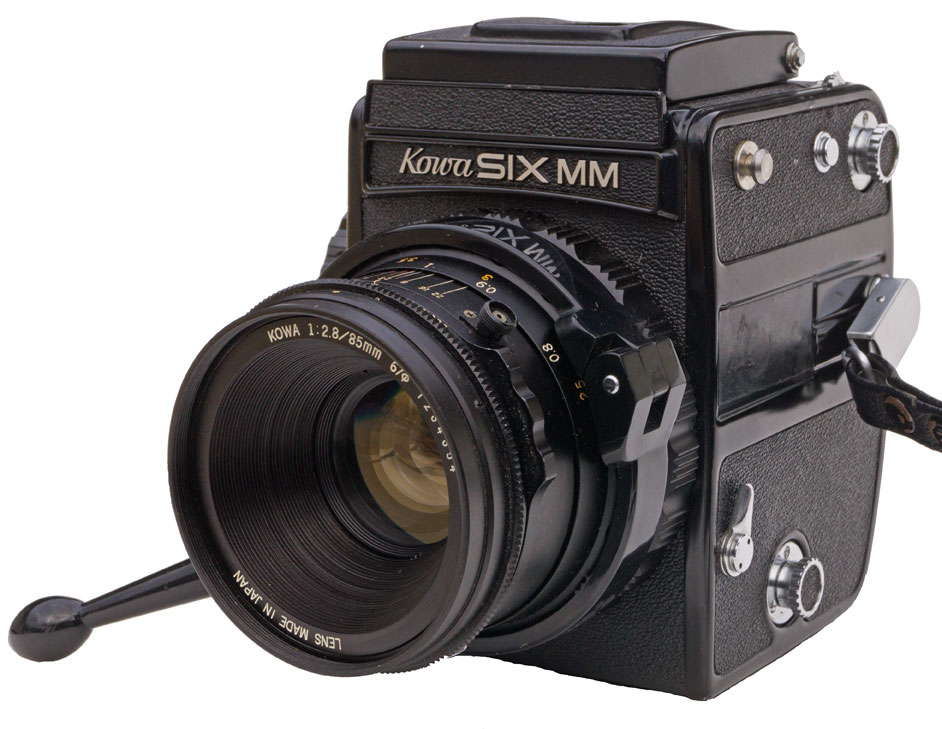
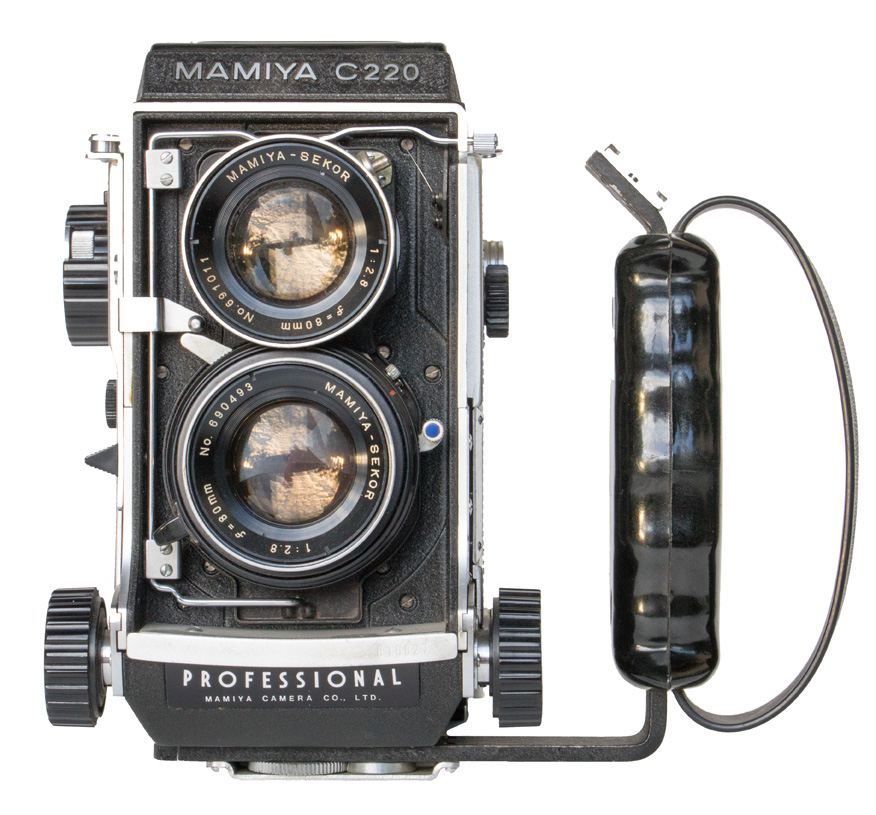
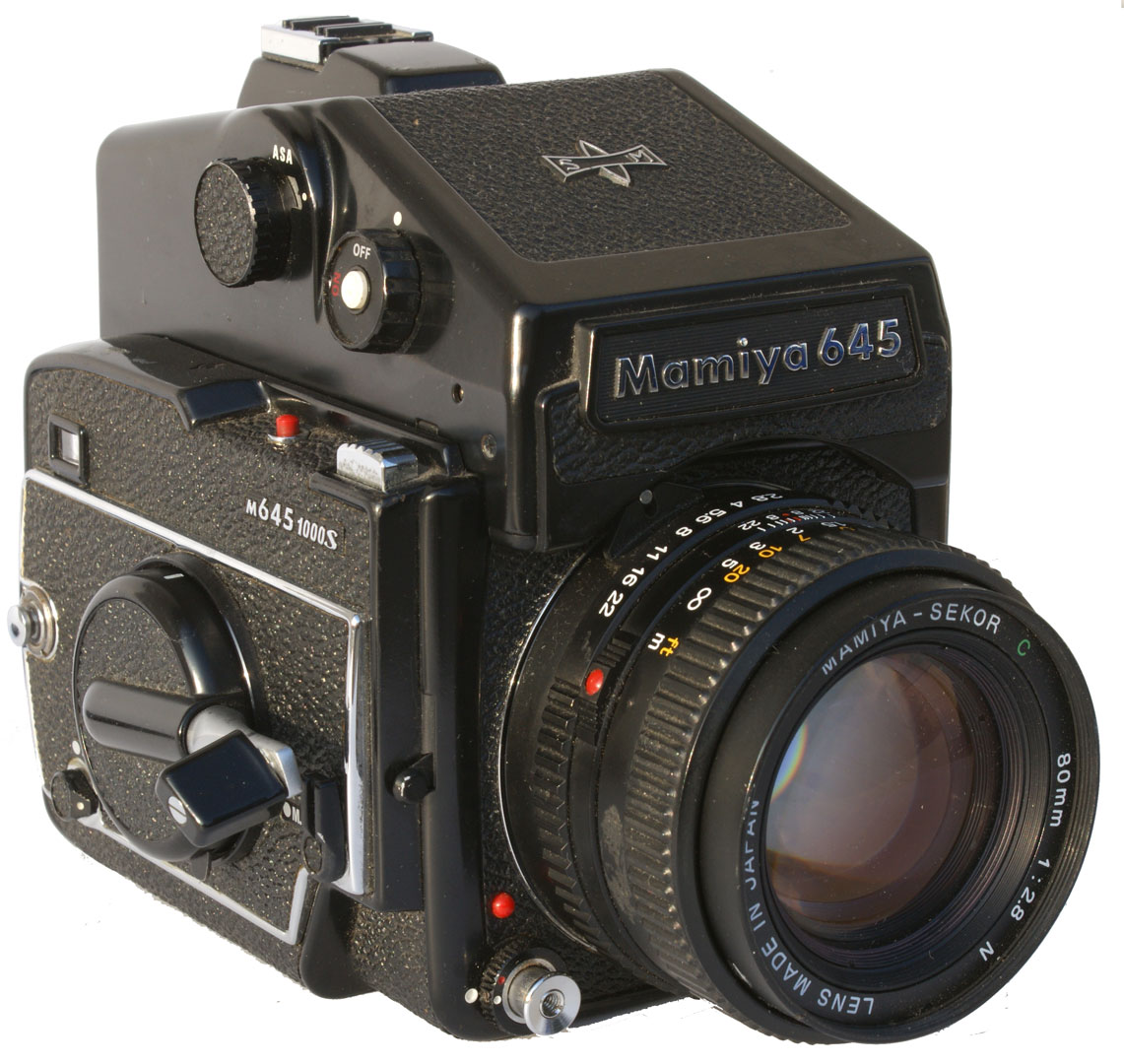
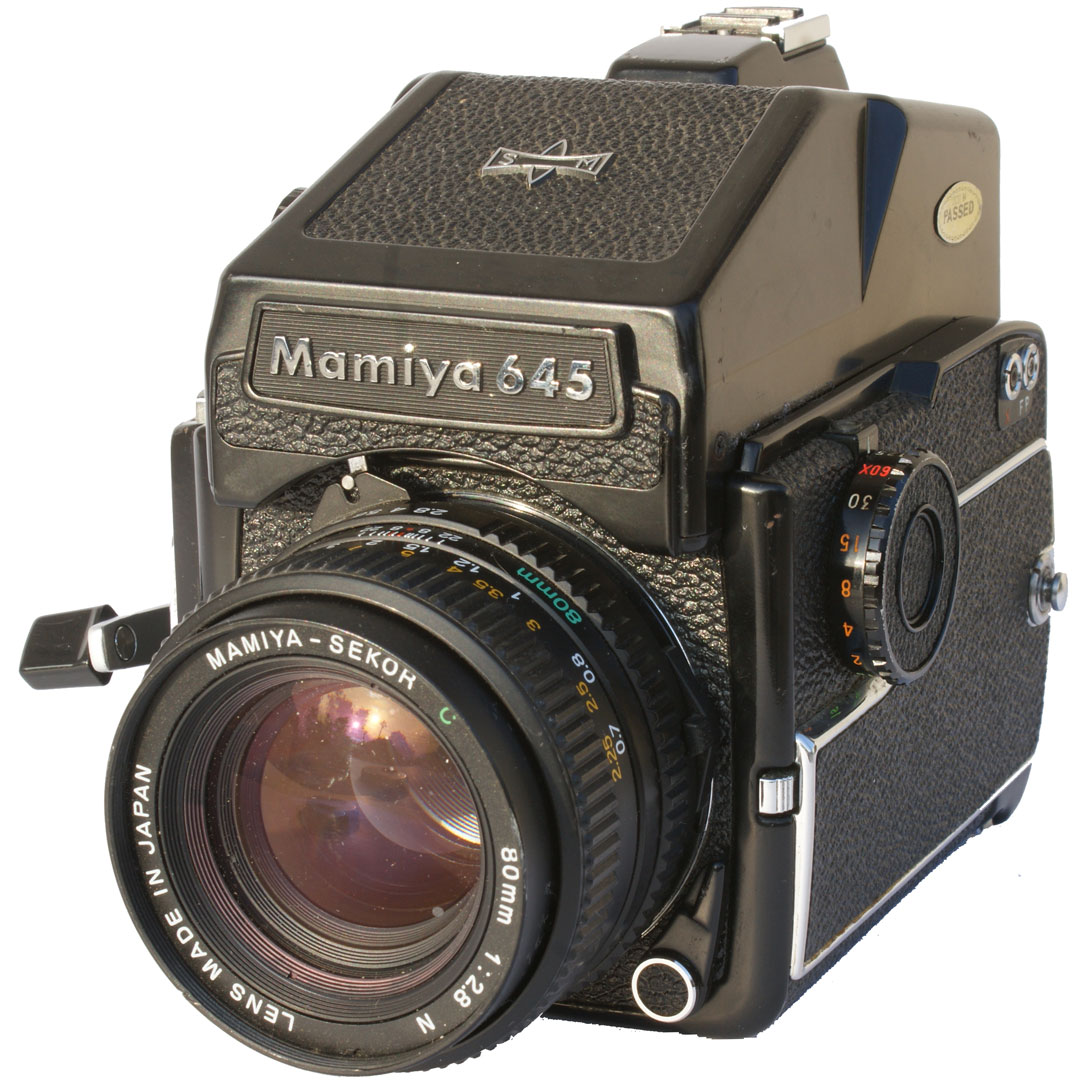
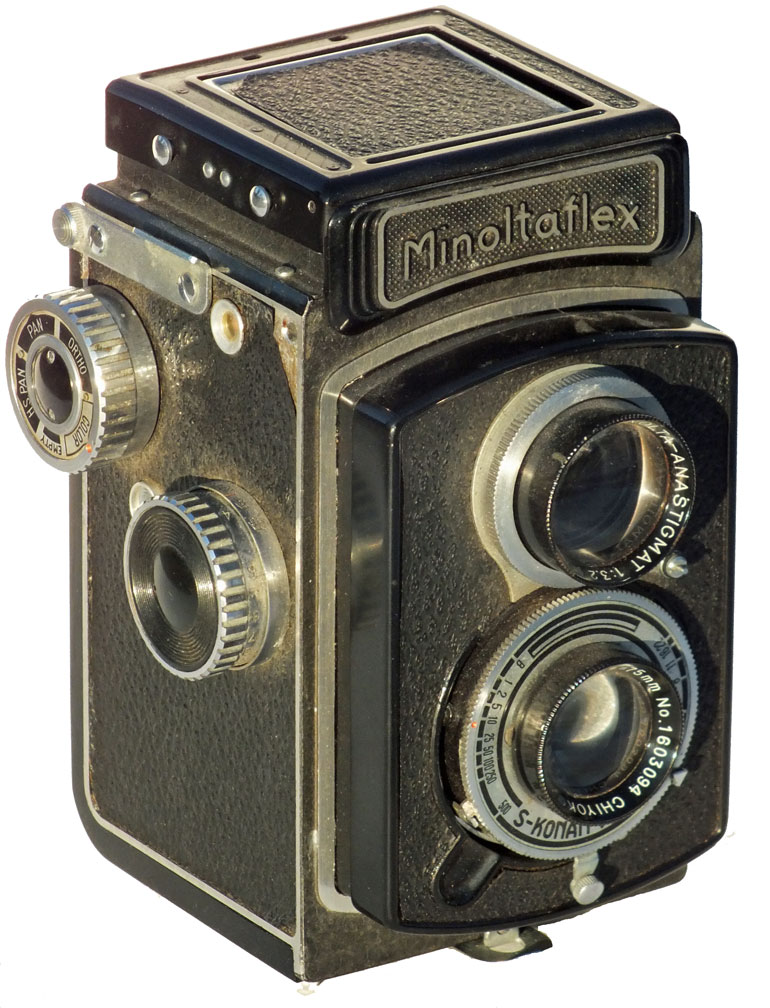
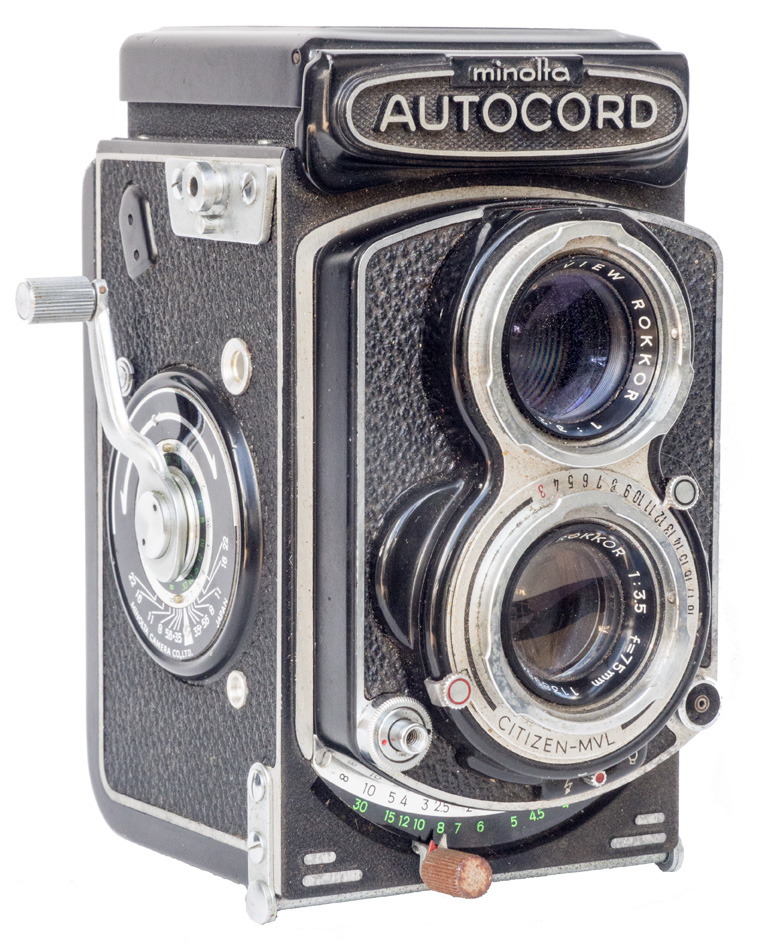
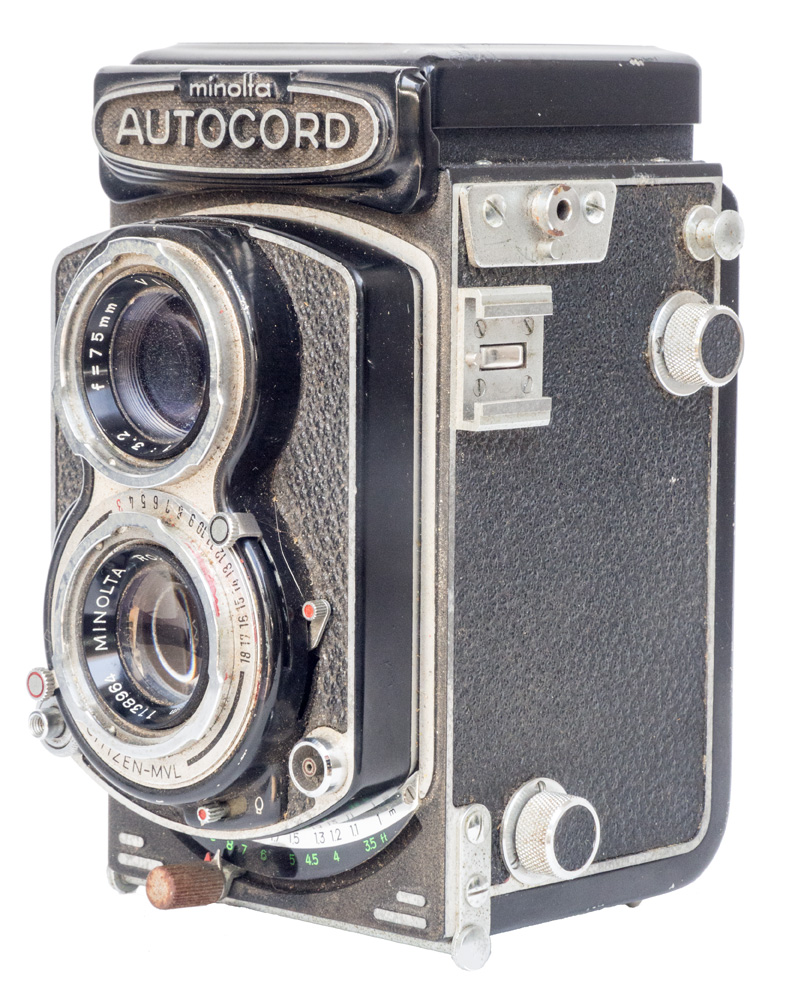
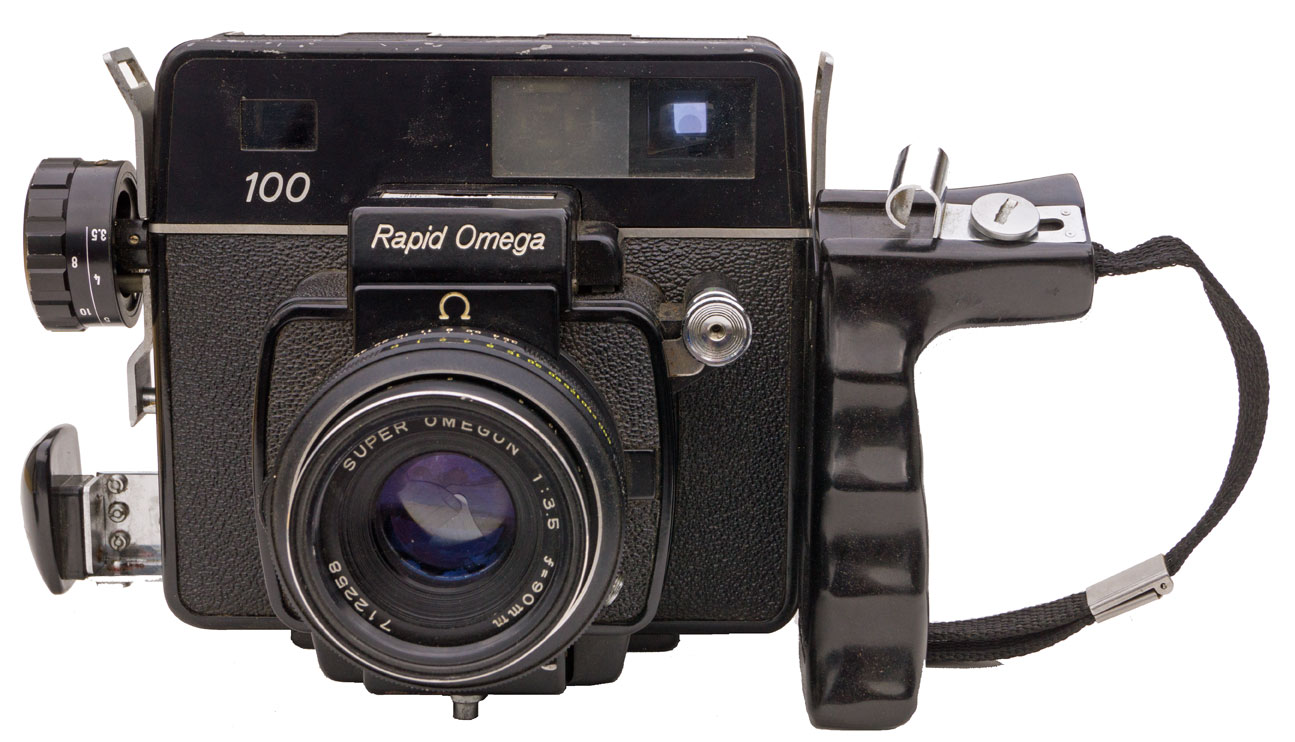
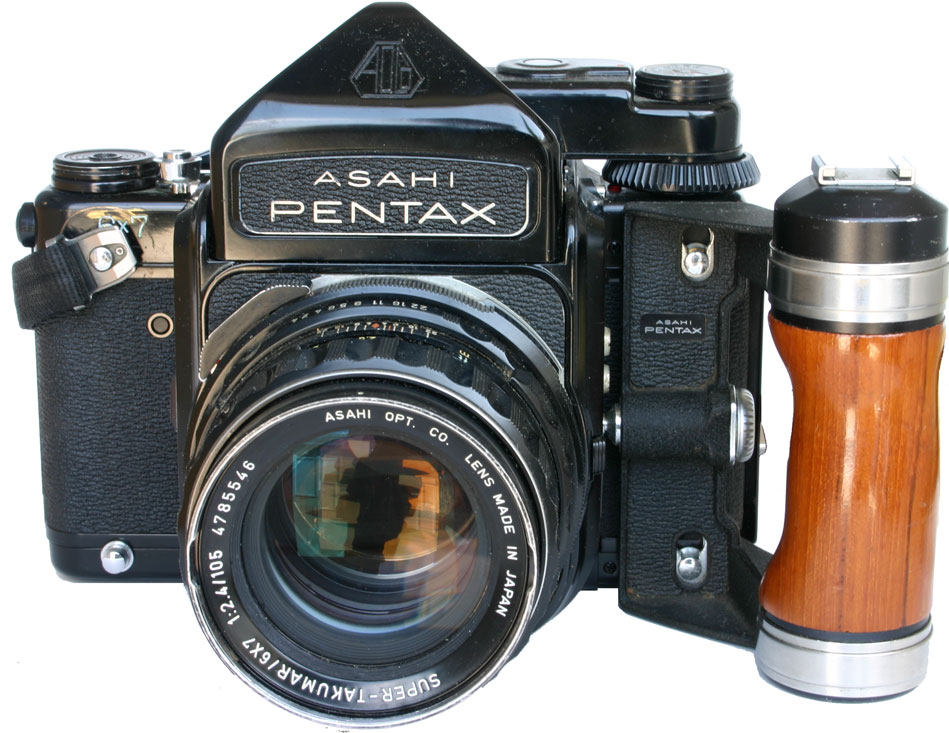
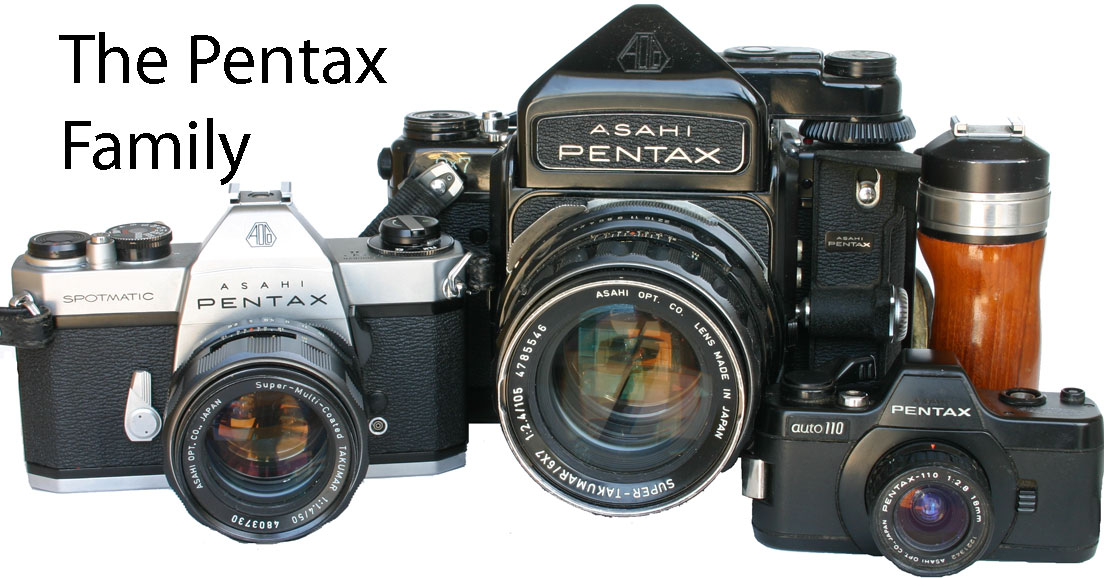
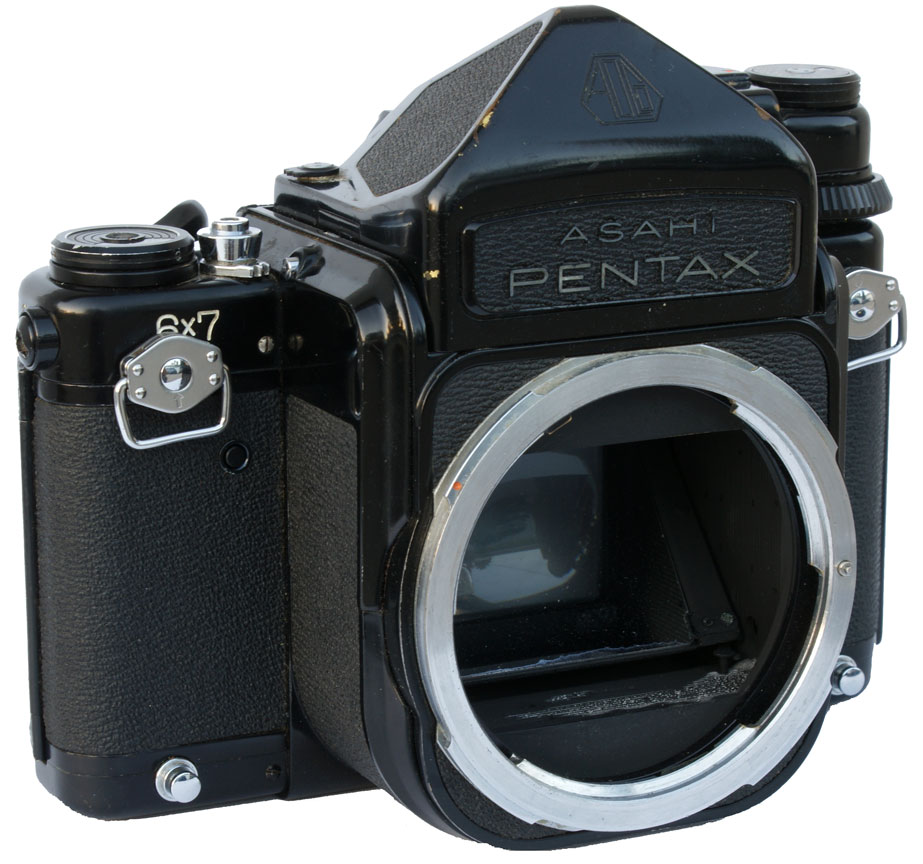
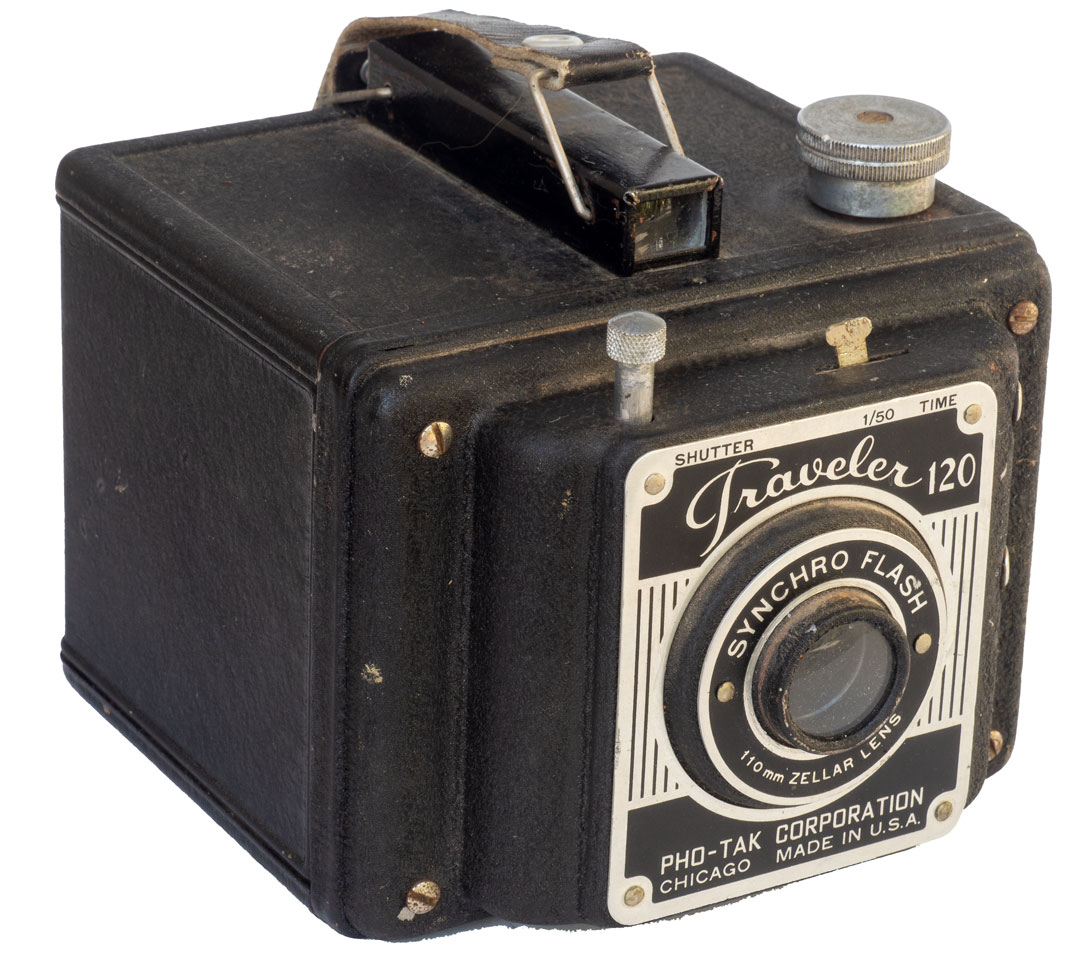
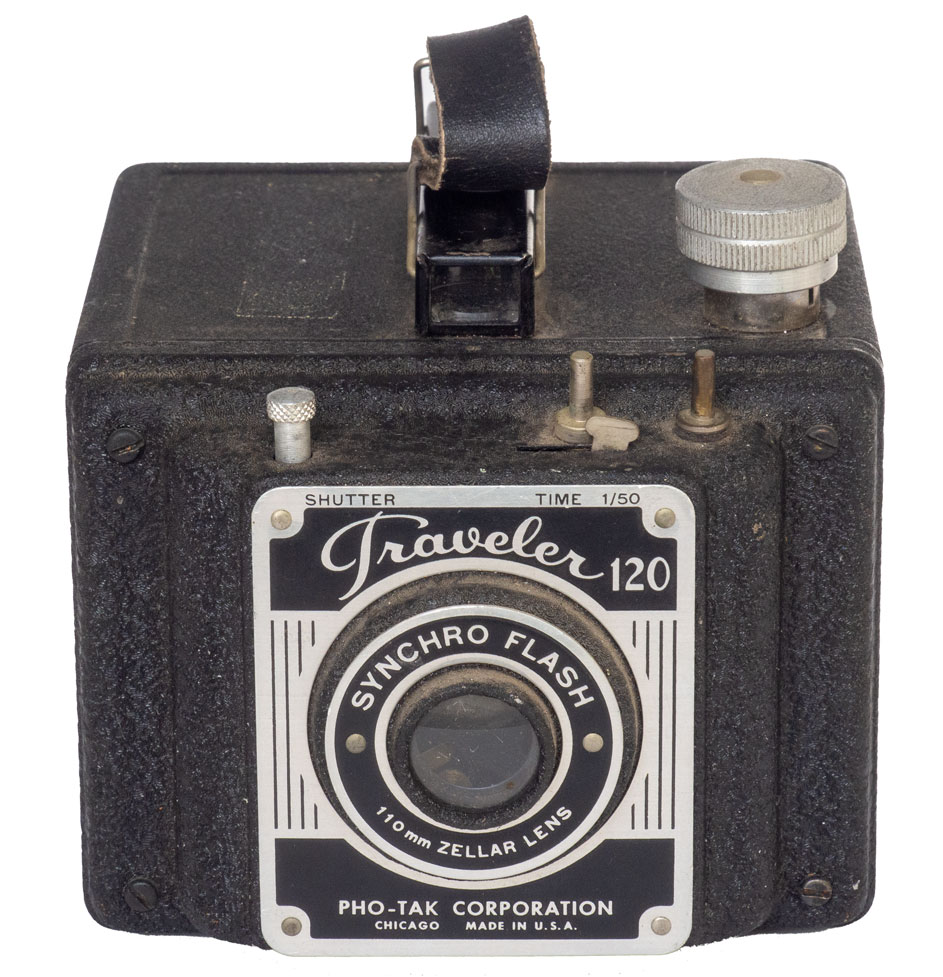
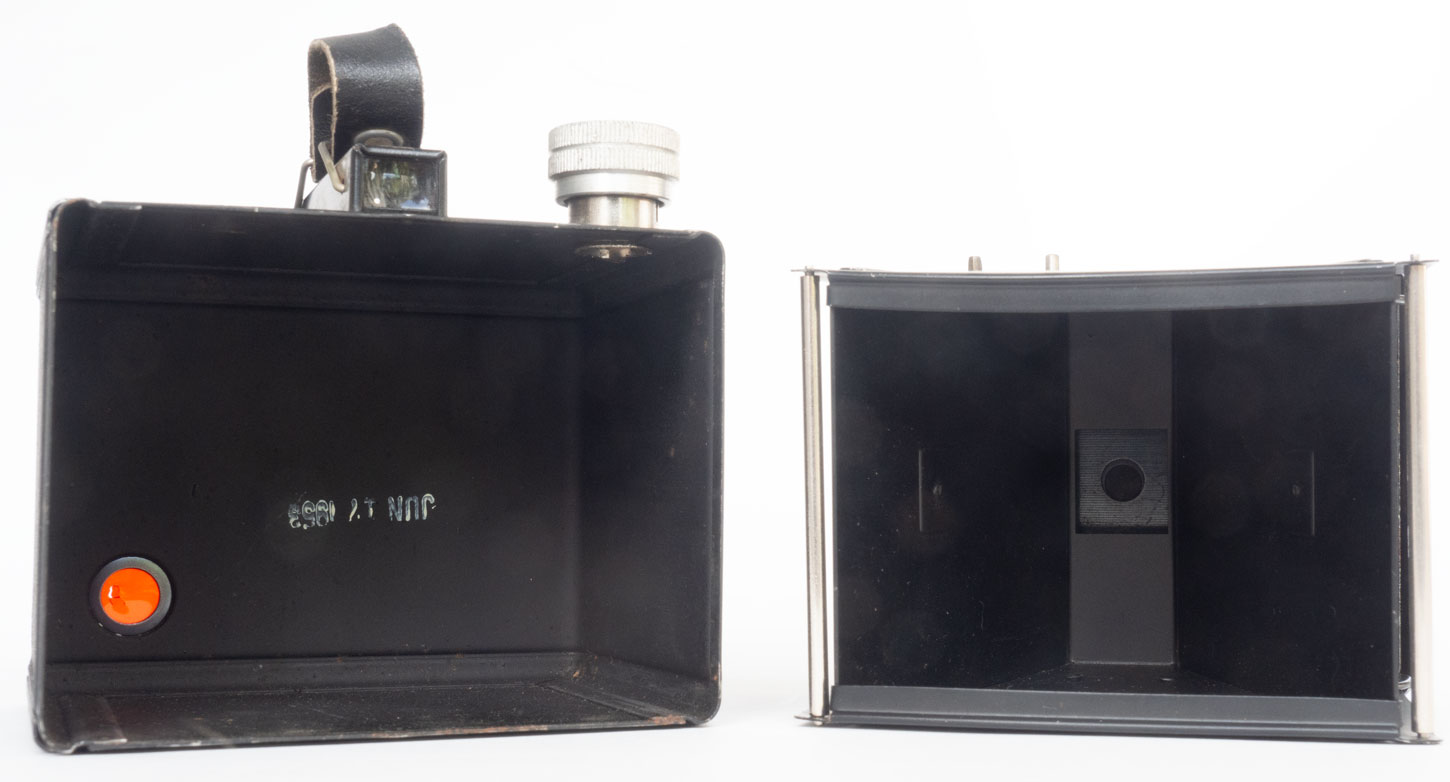
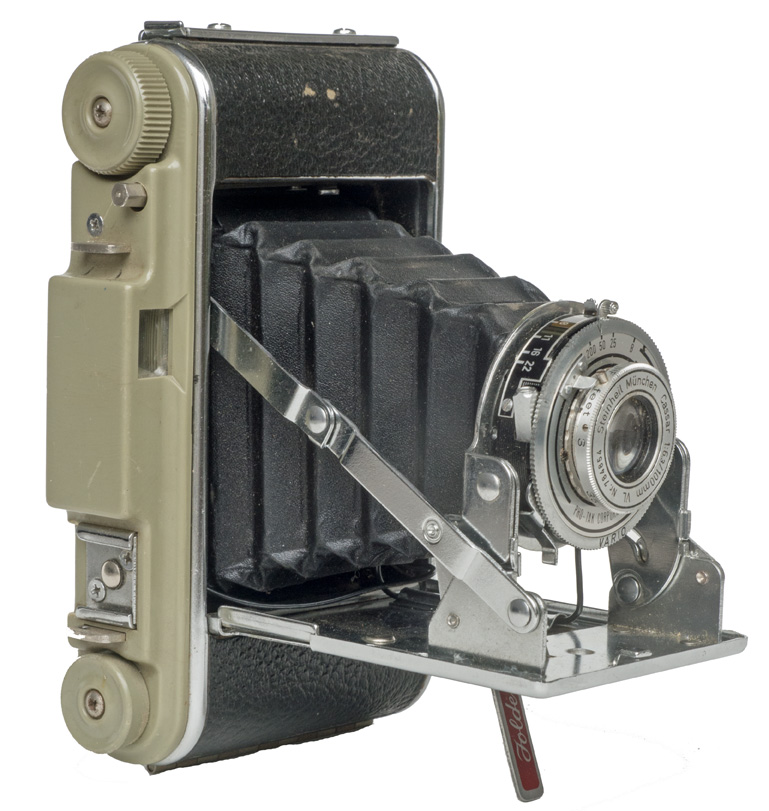
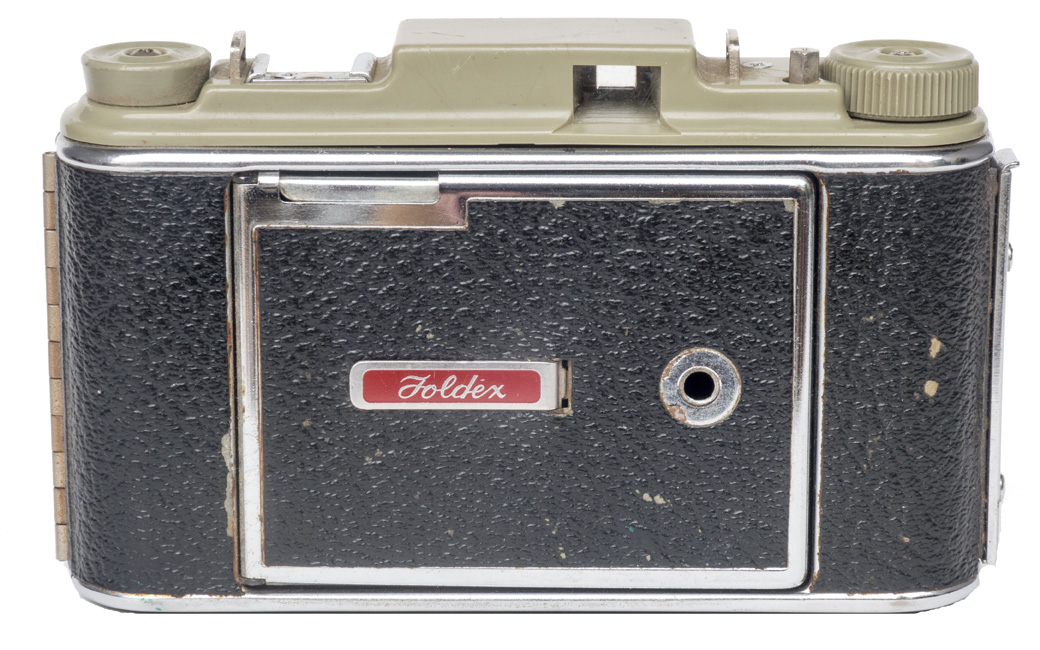
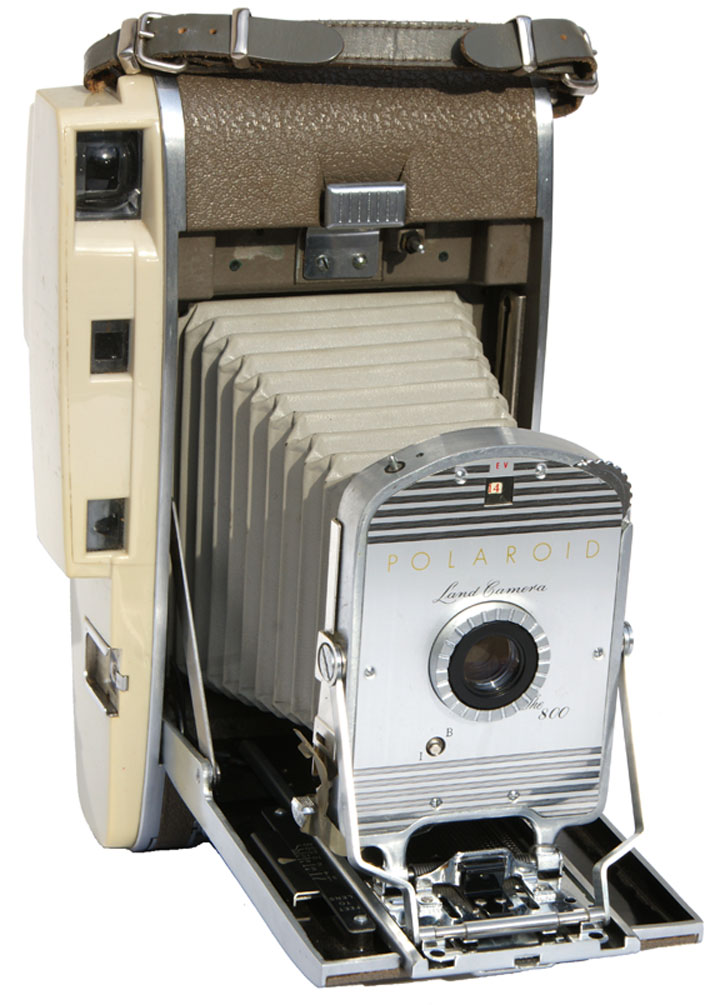
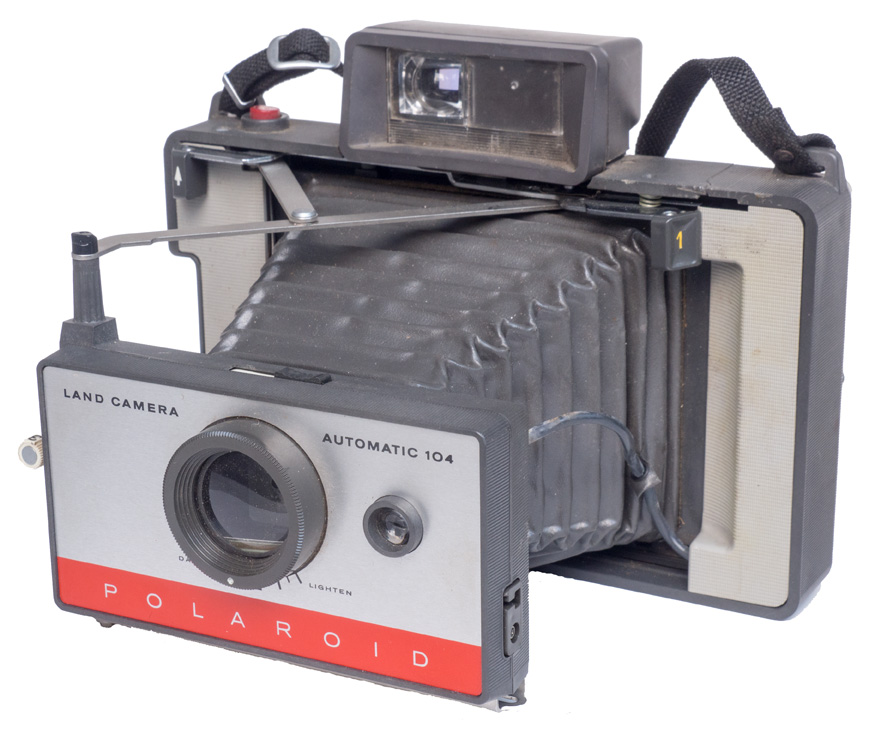
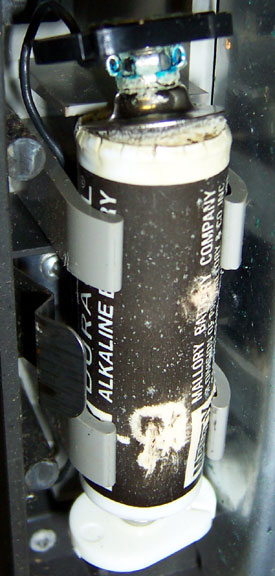
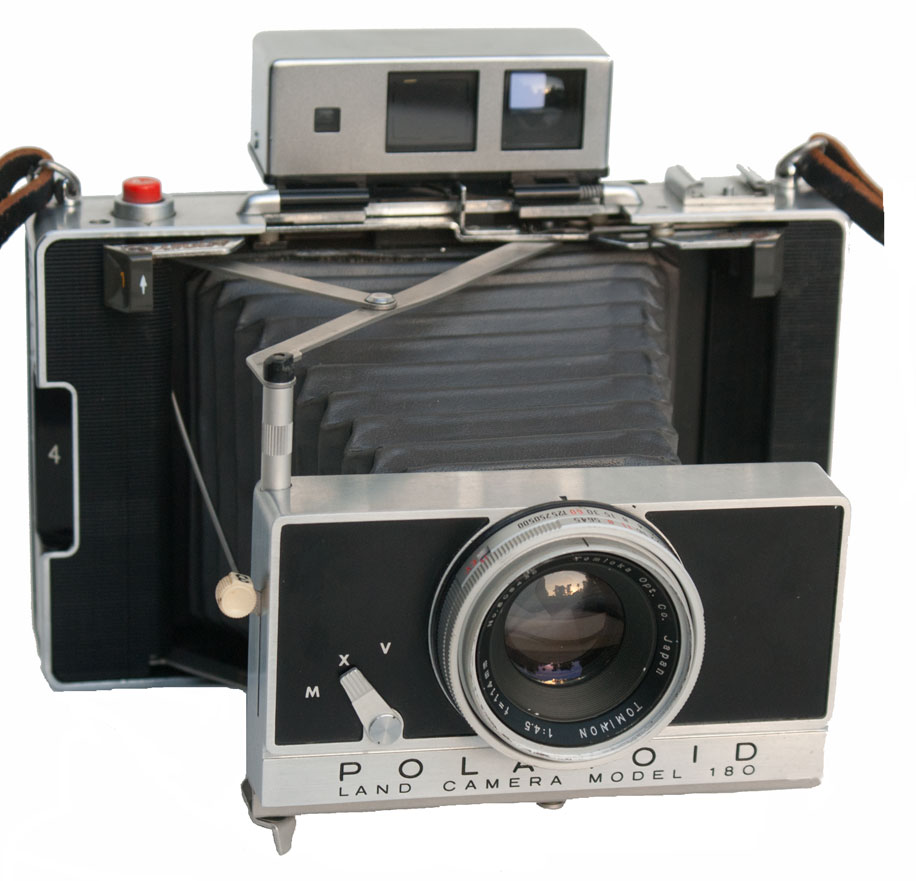
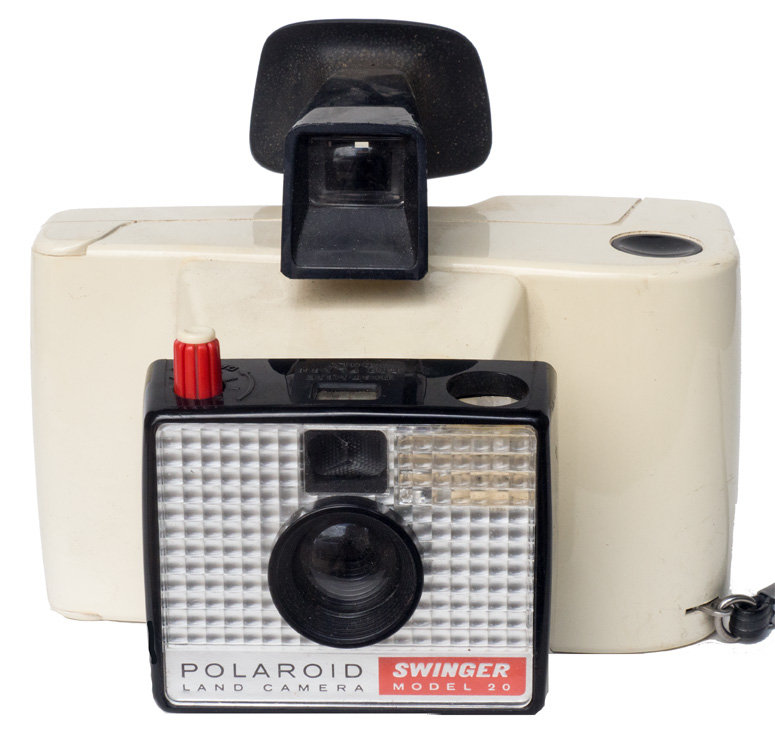
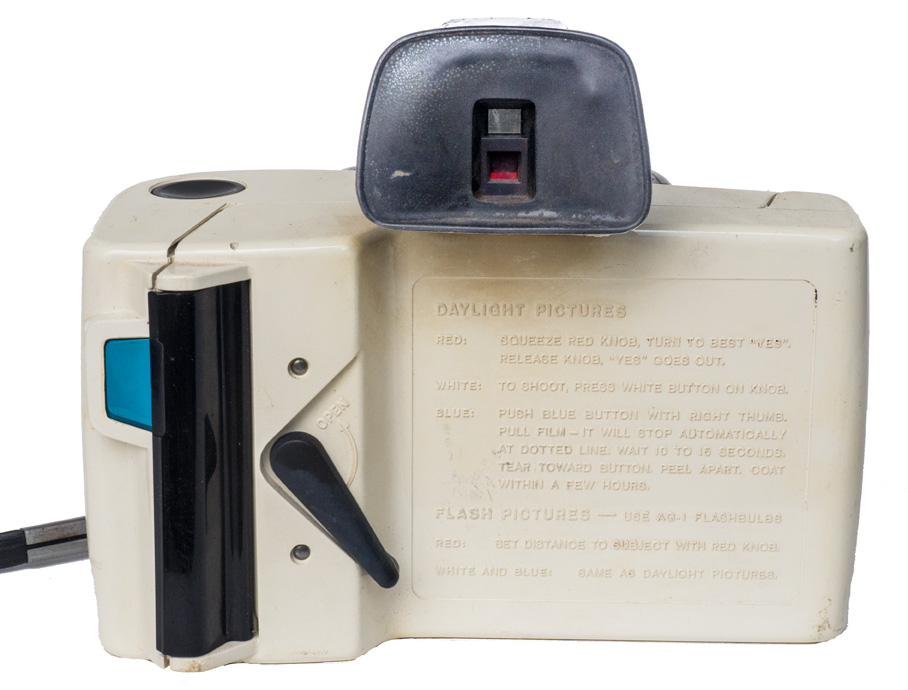
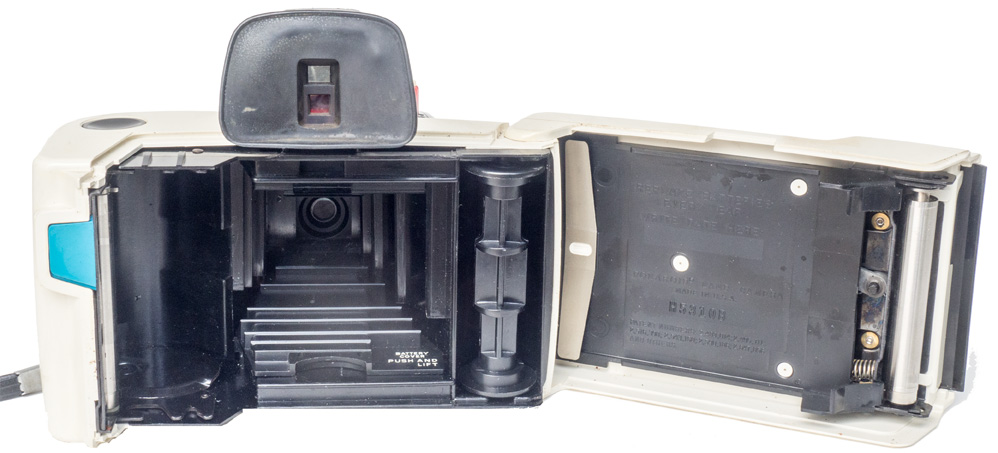
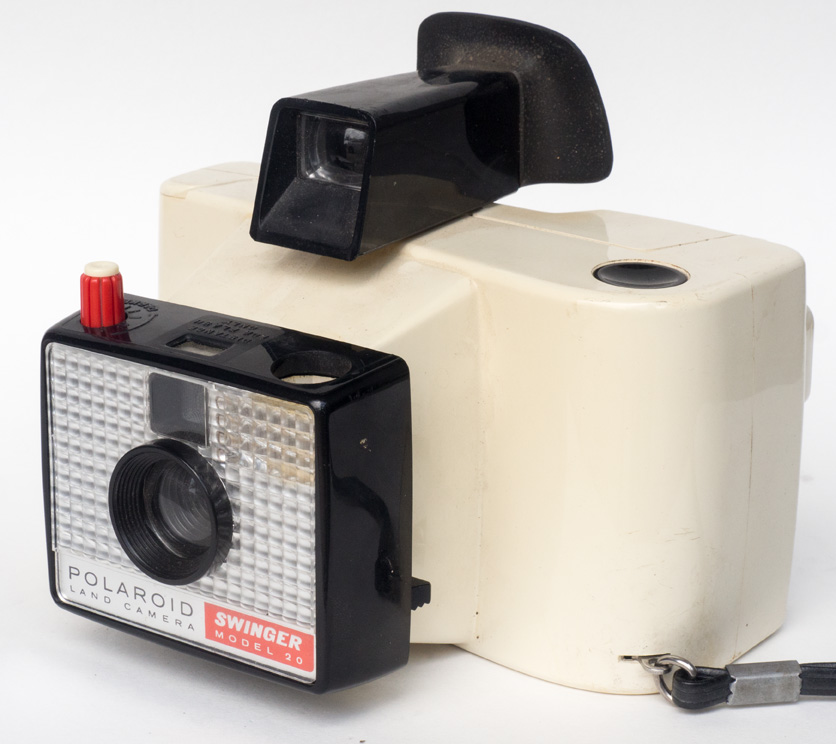
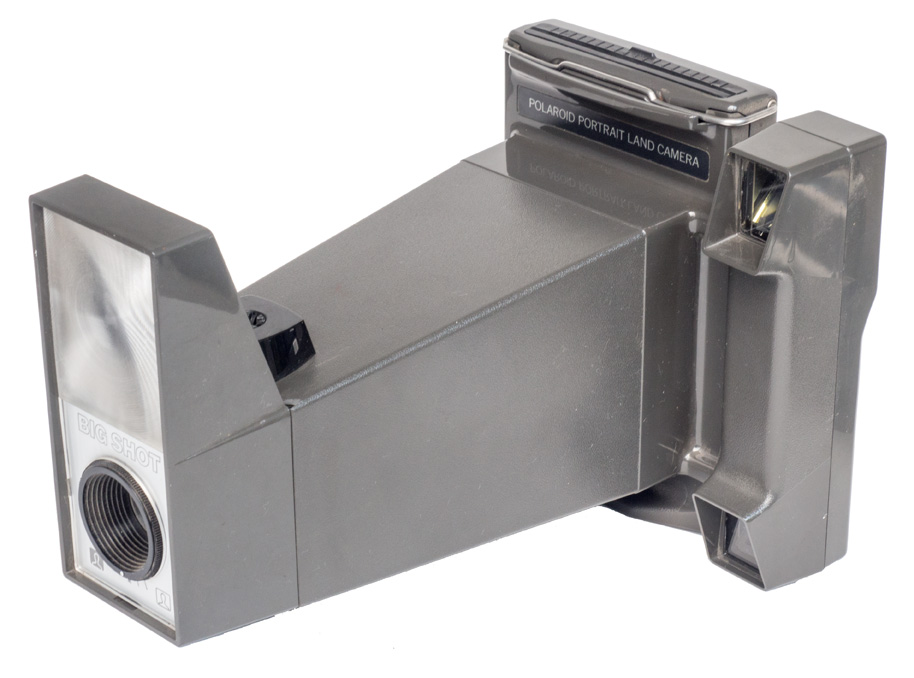
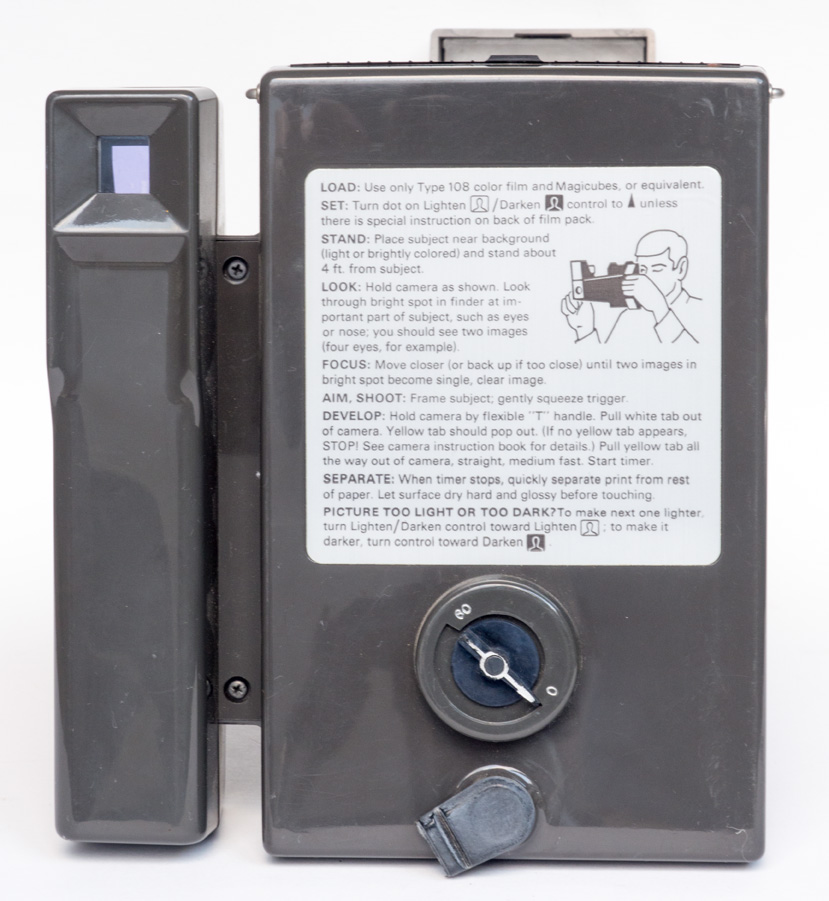
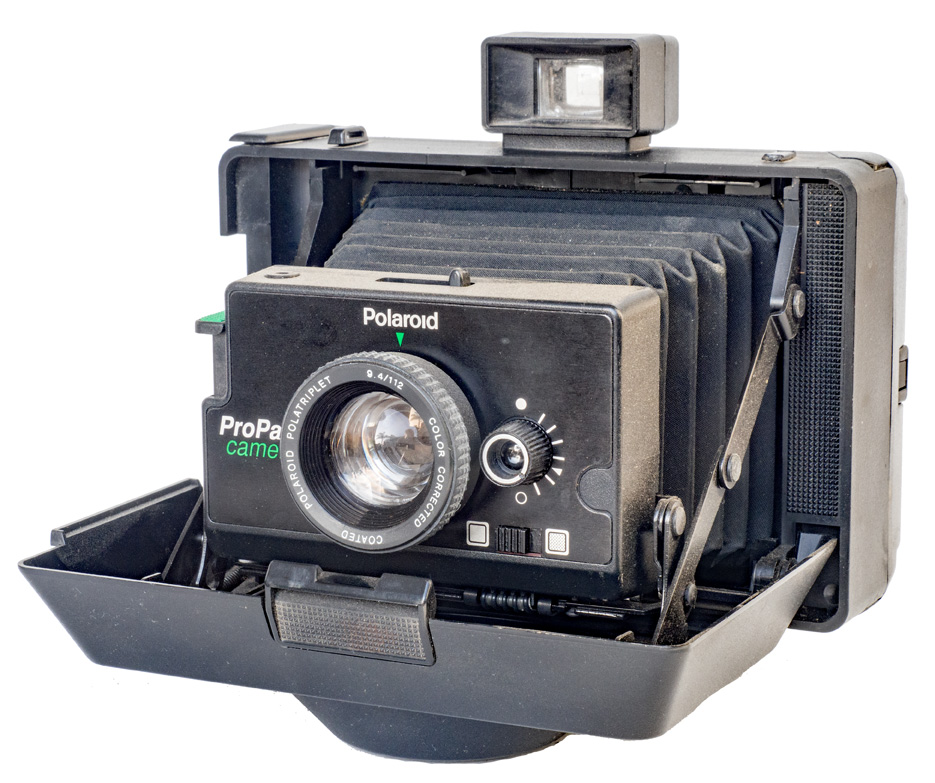
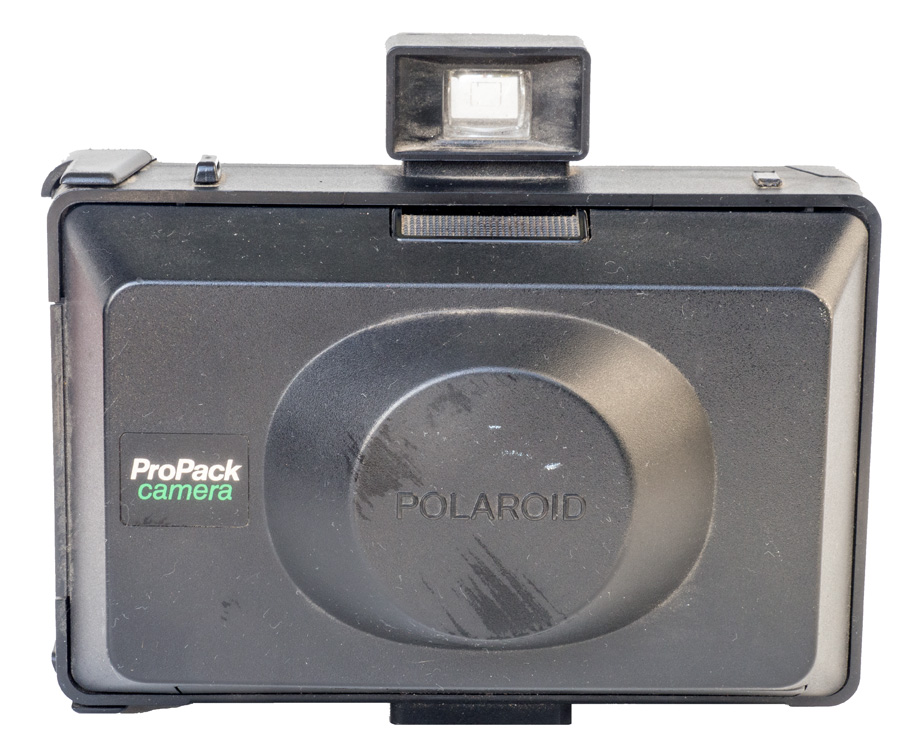
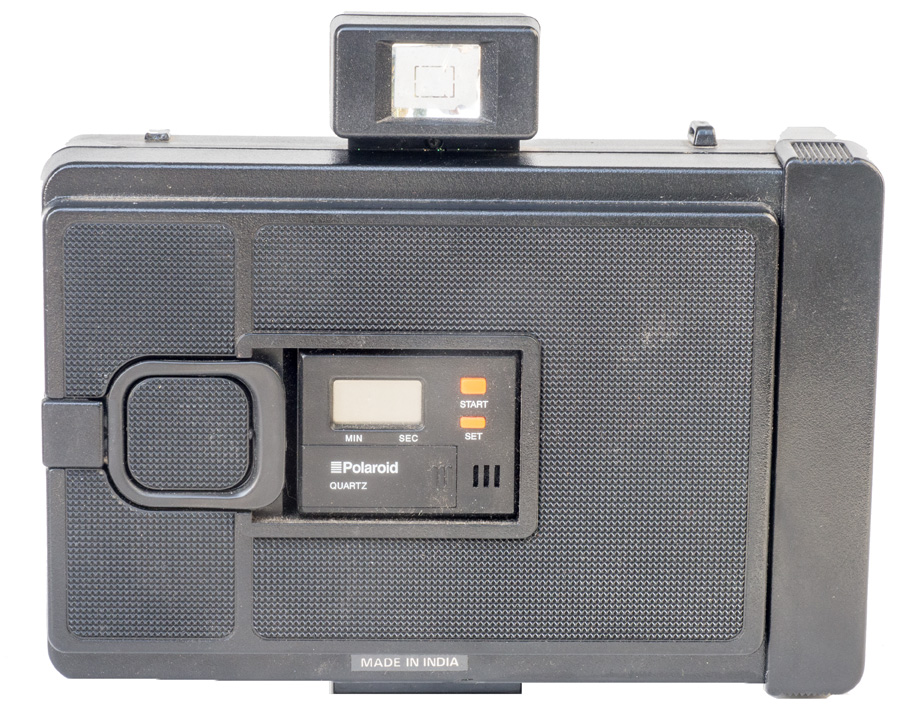
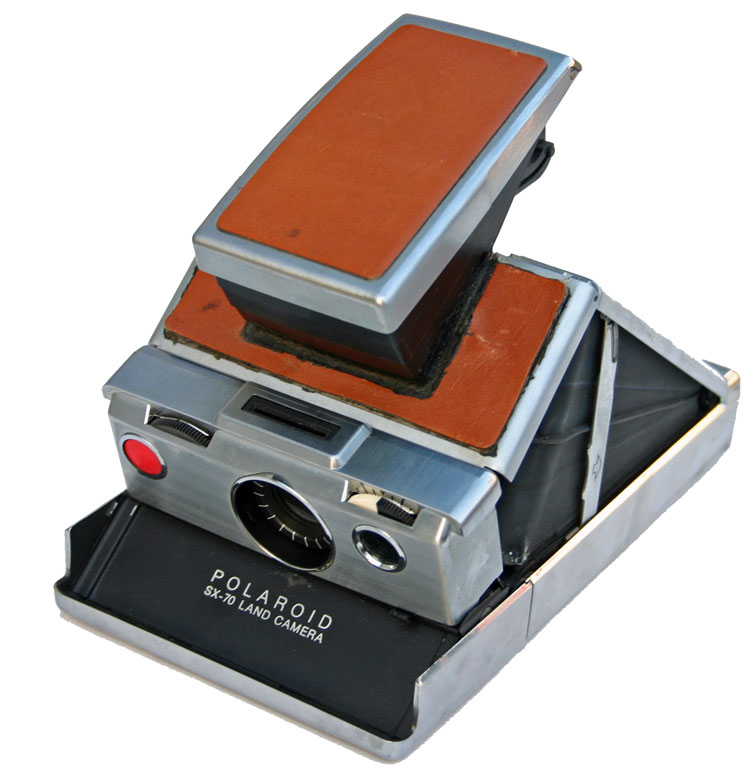
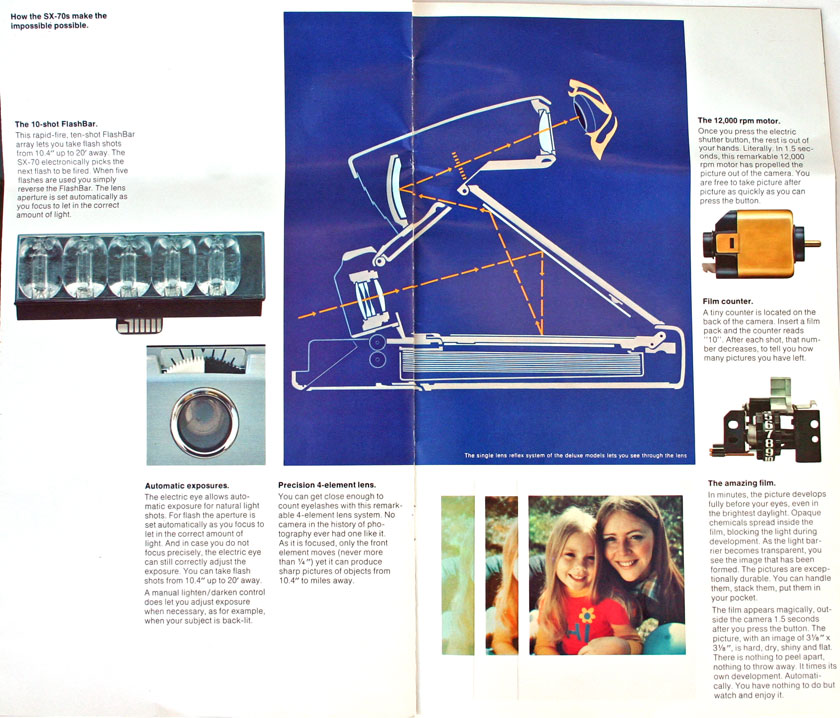
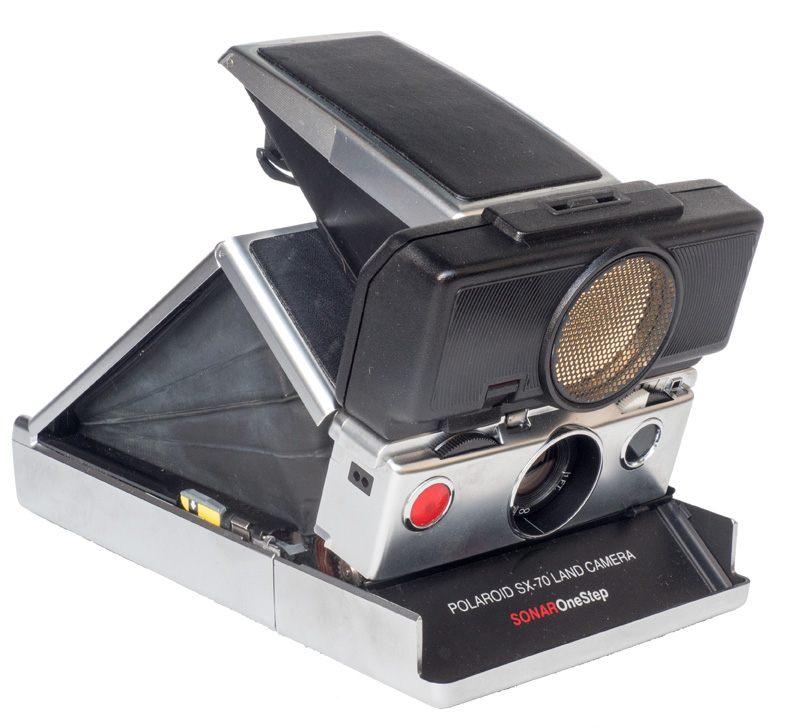
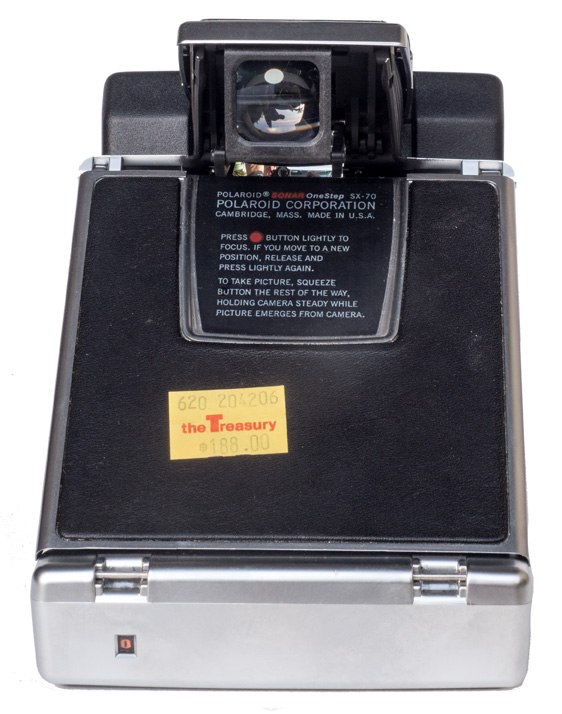
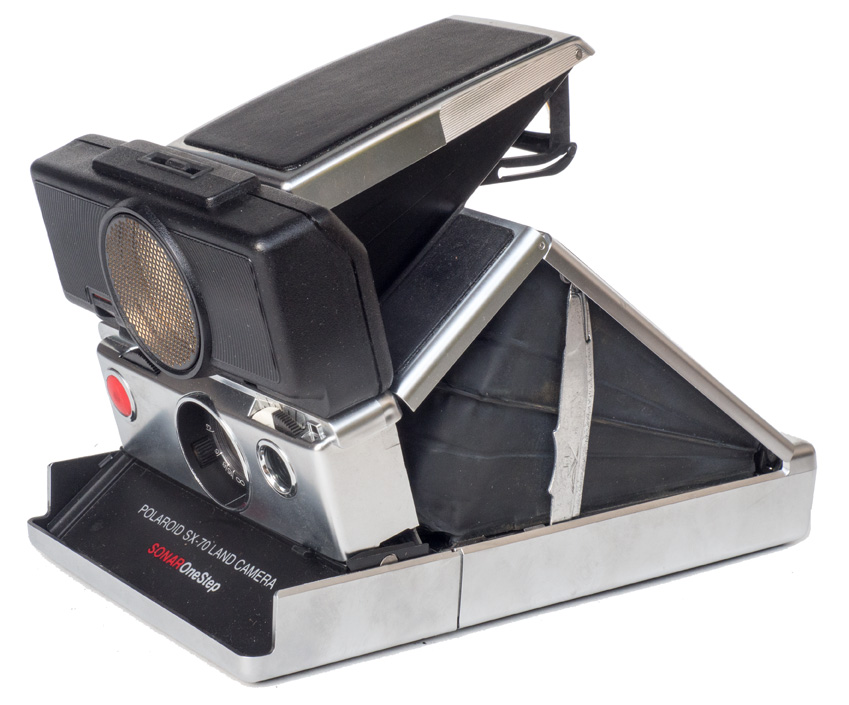
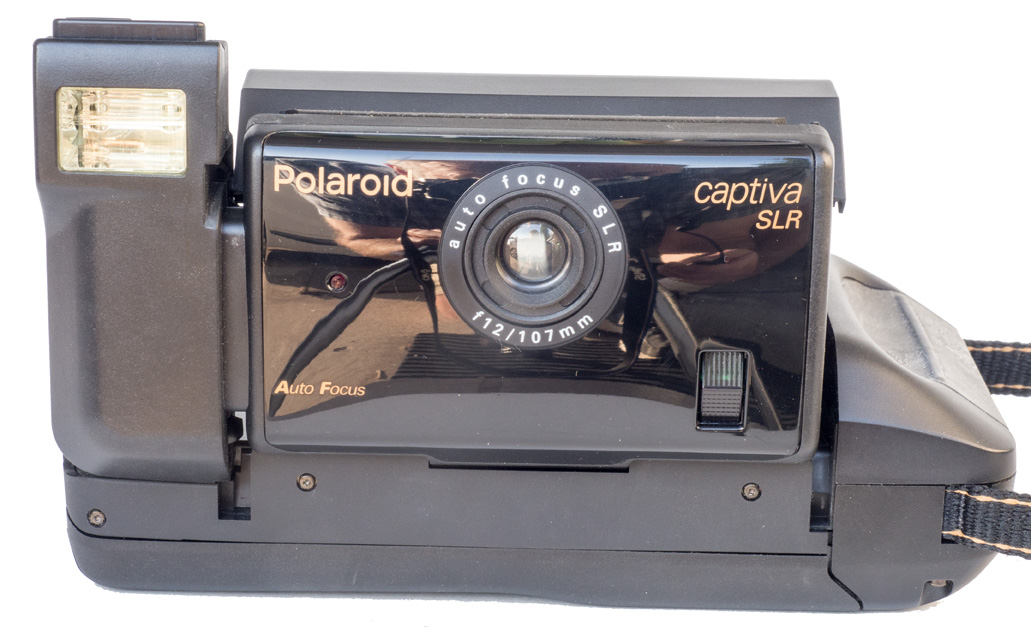
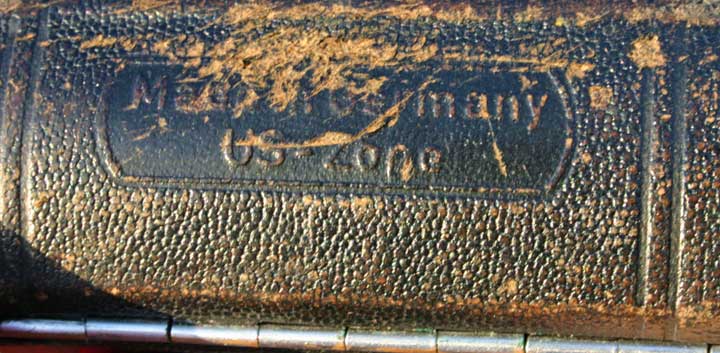
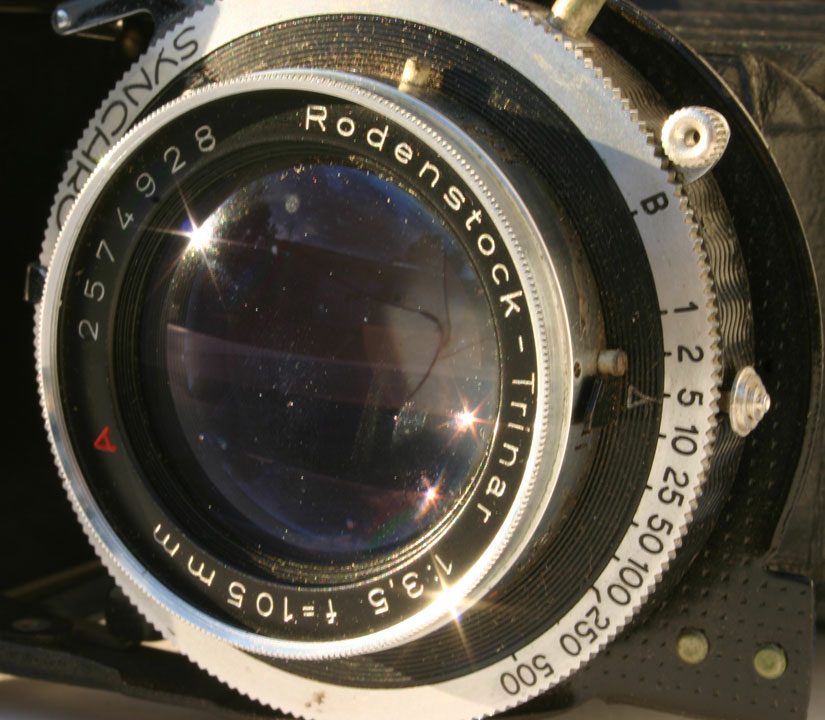
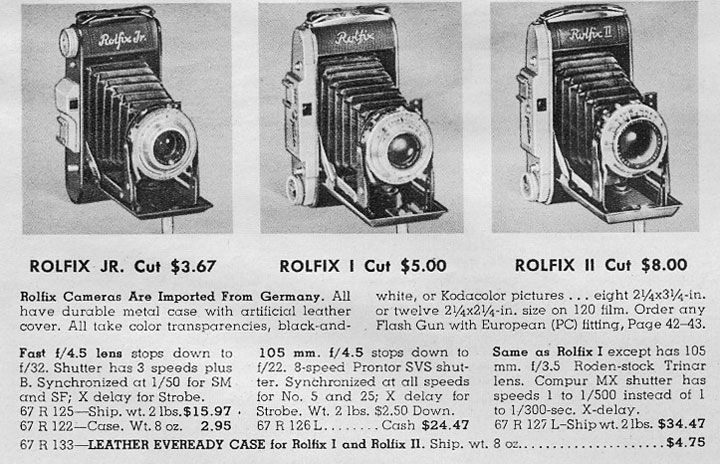
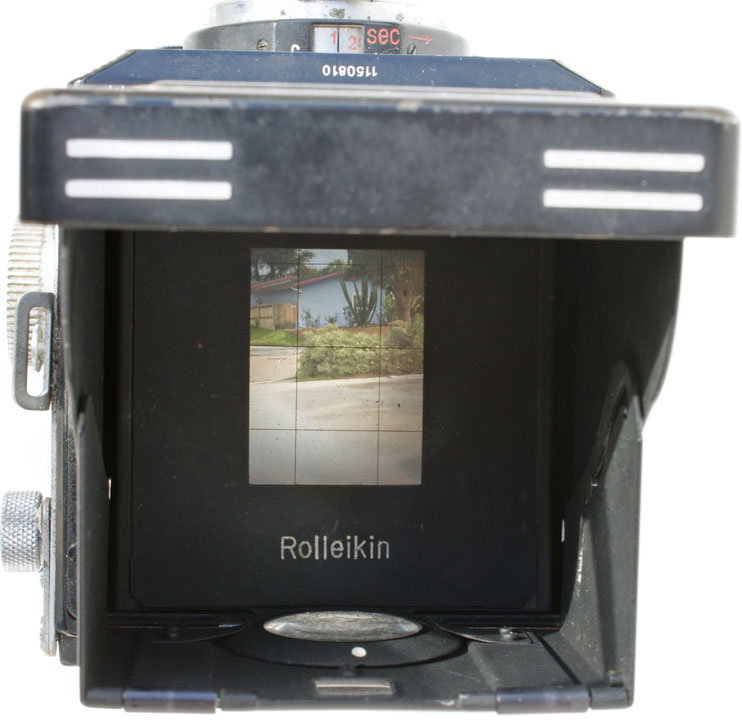
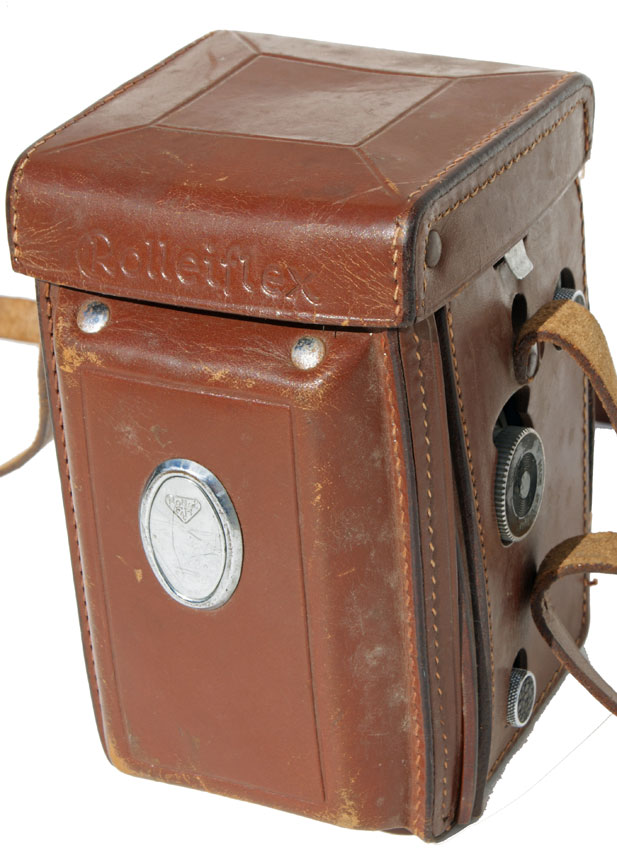
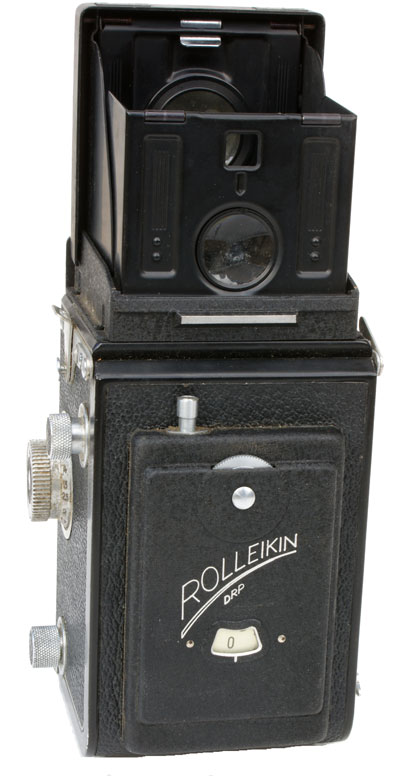
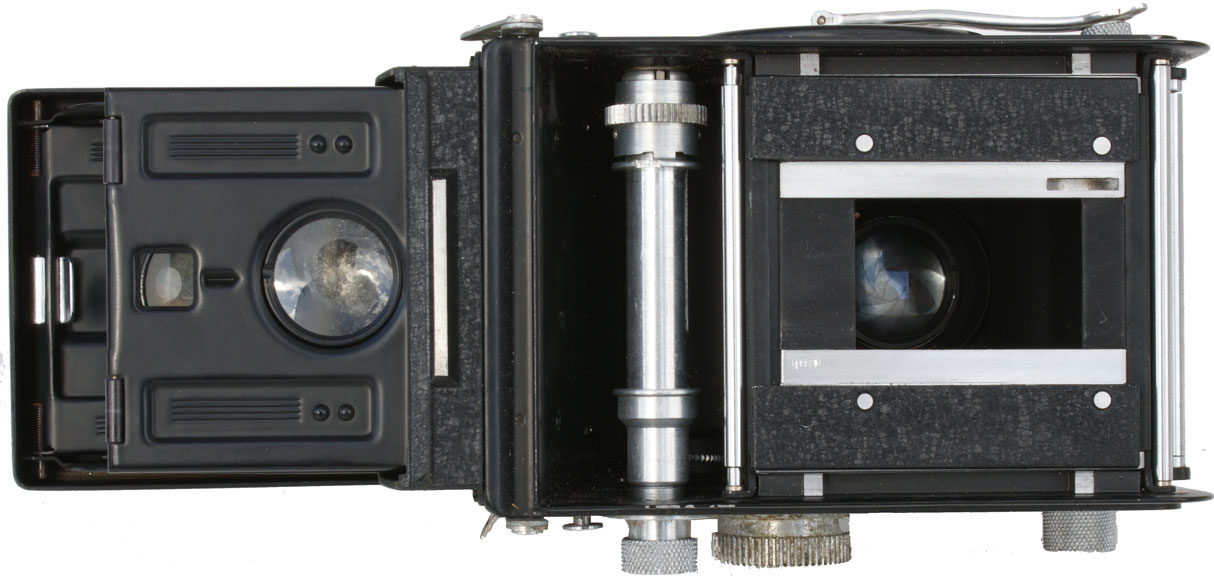
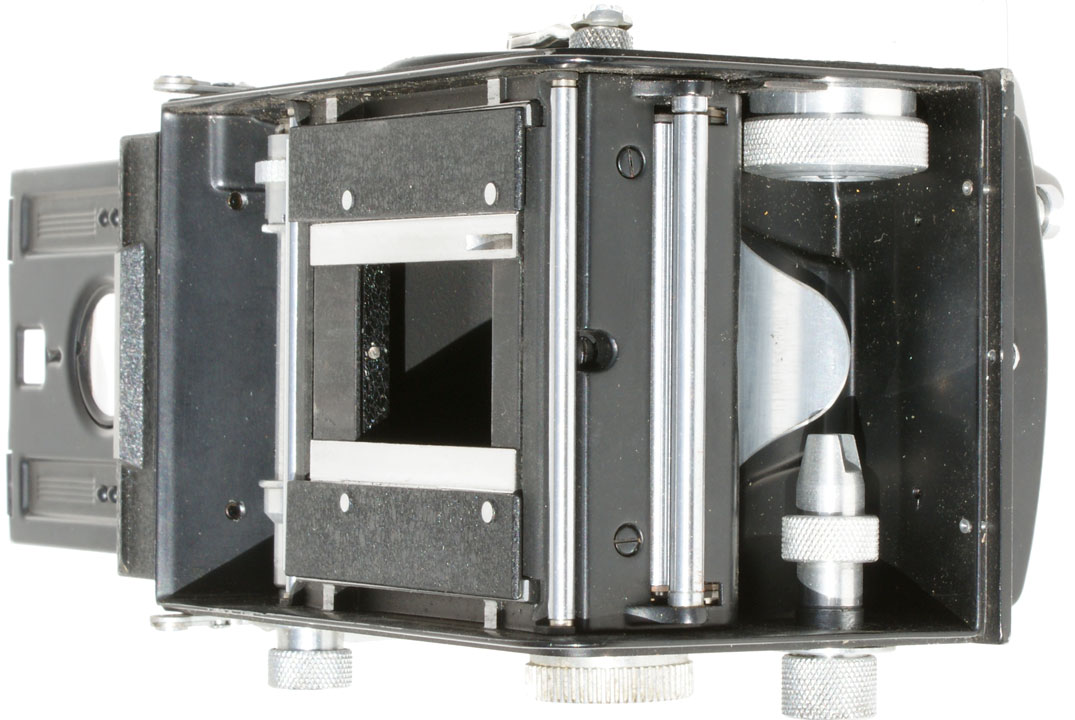
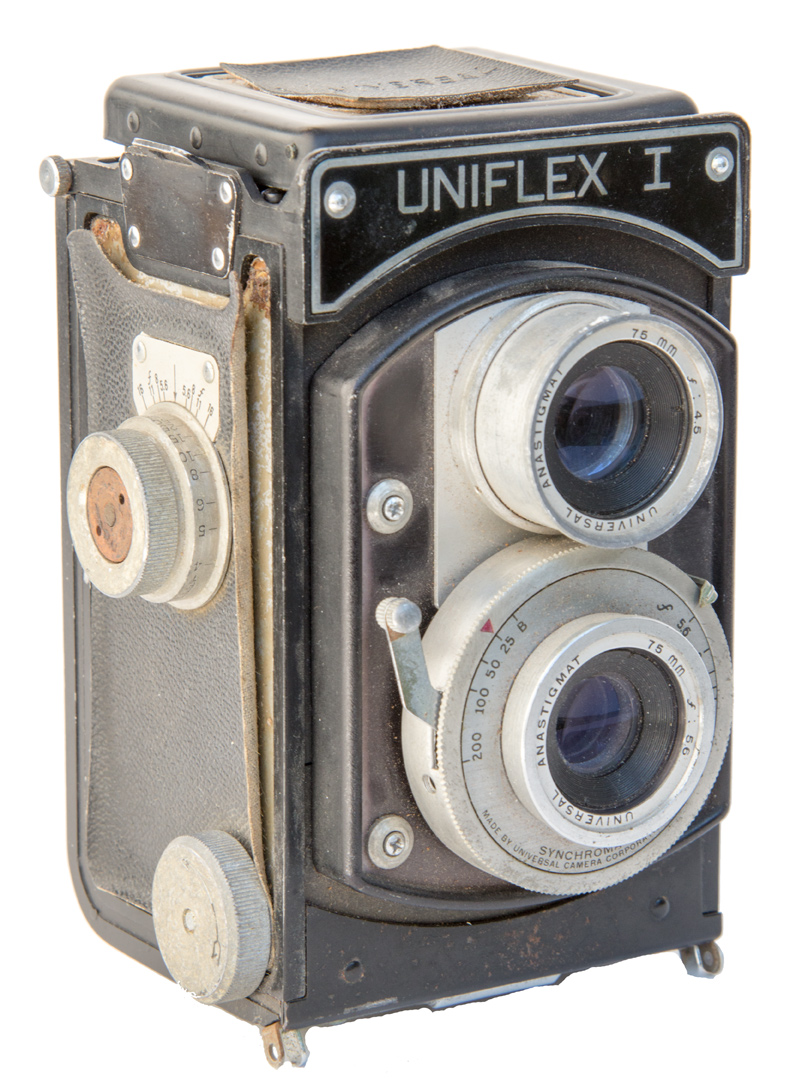
.jpg)
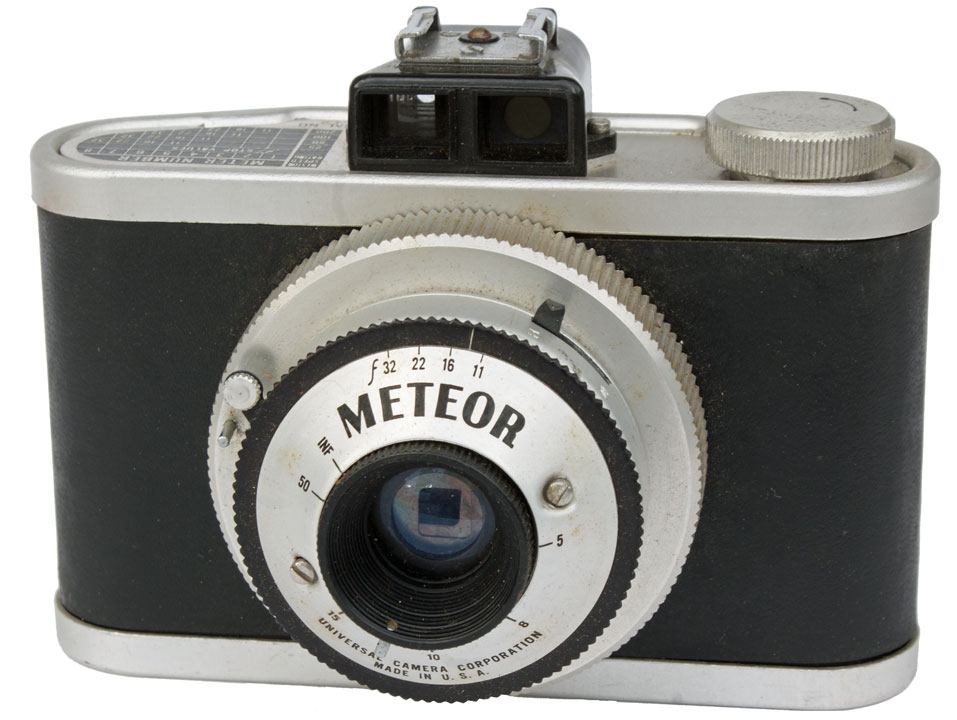
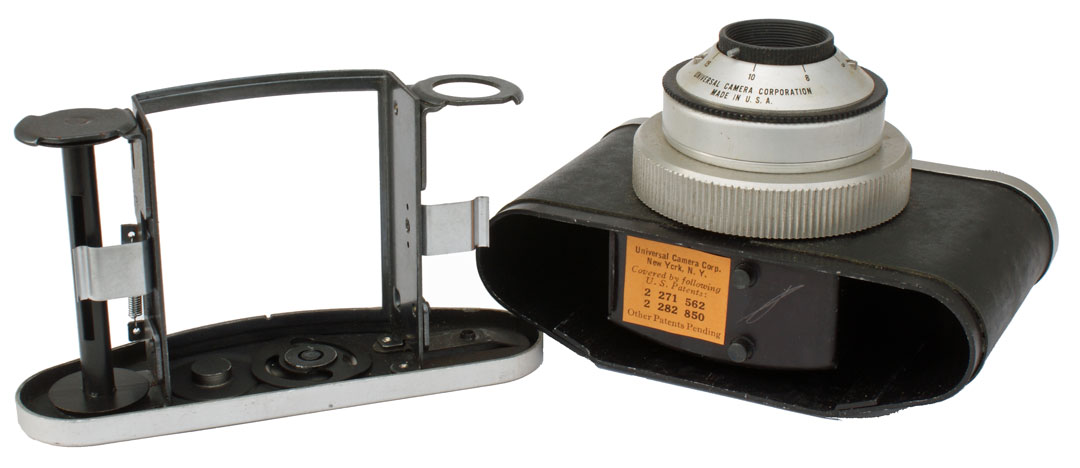
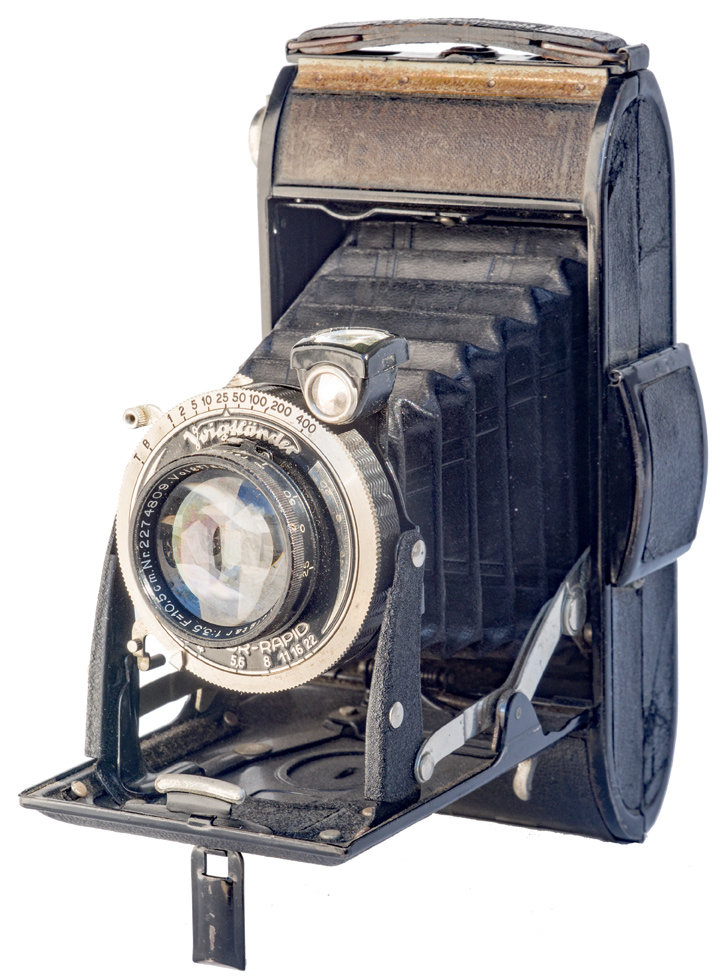
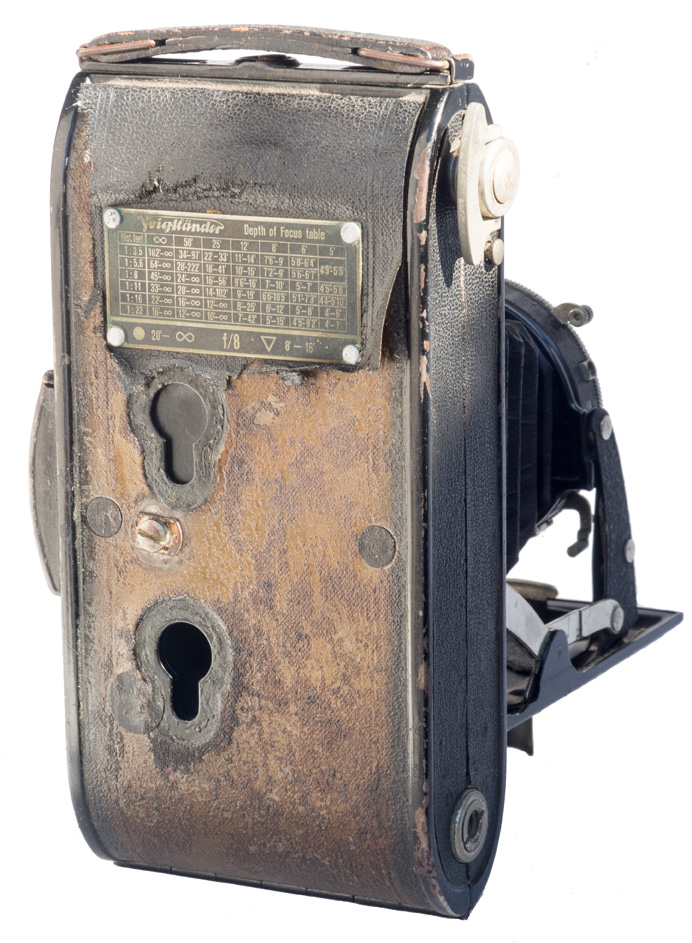
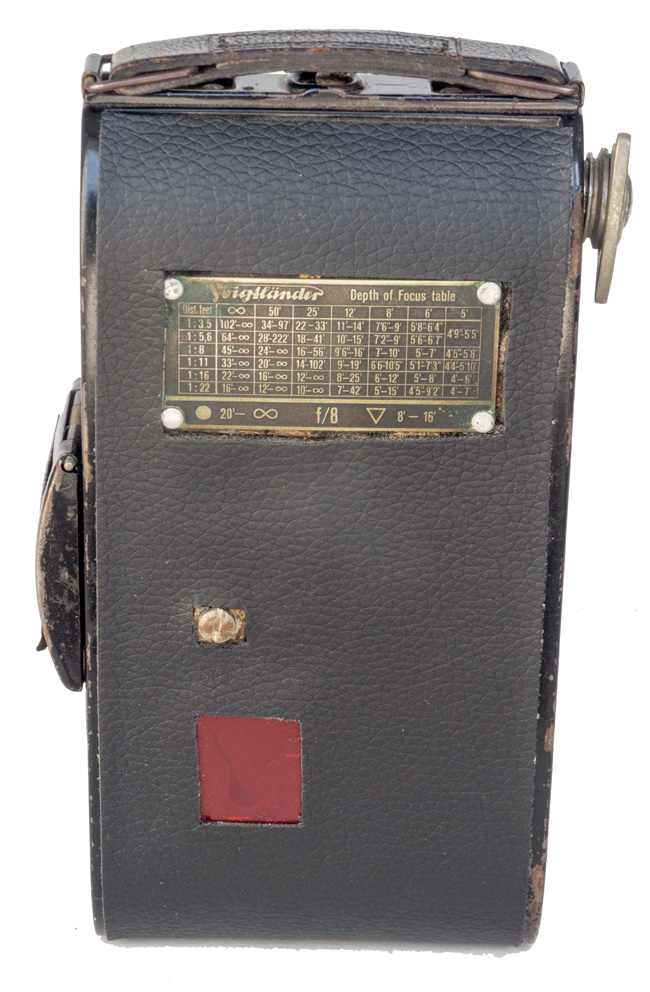
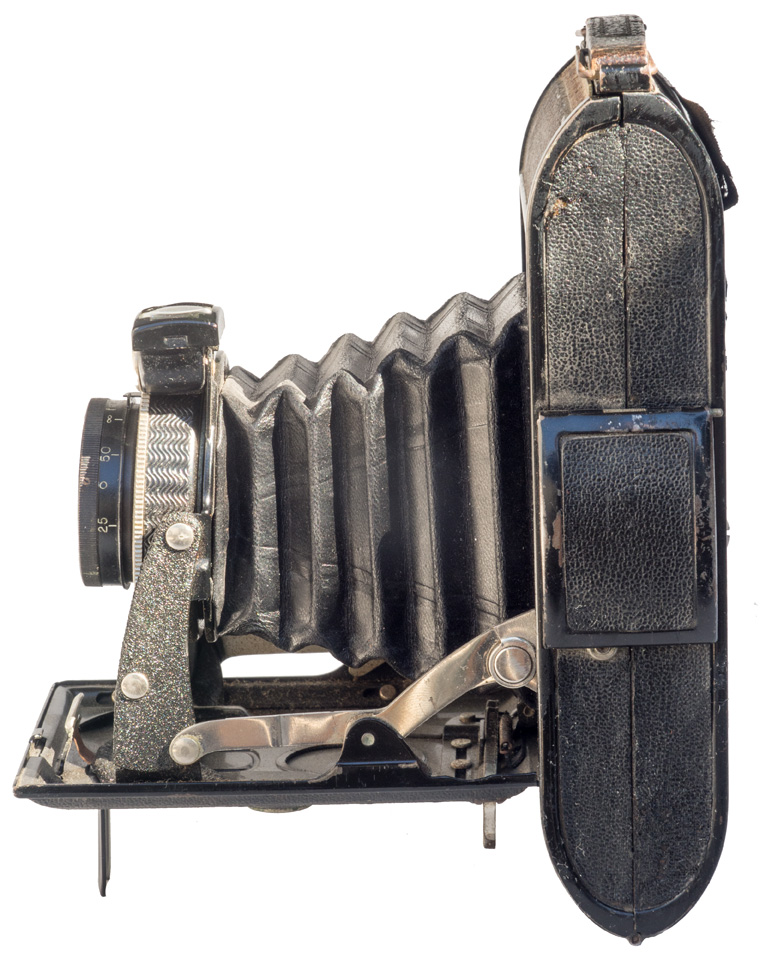
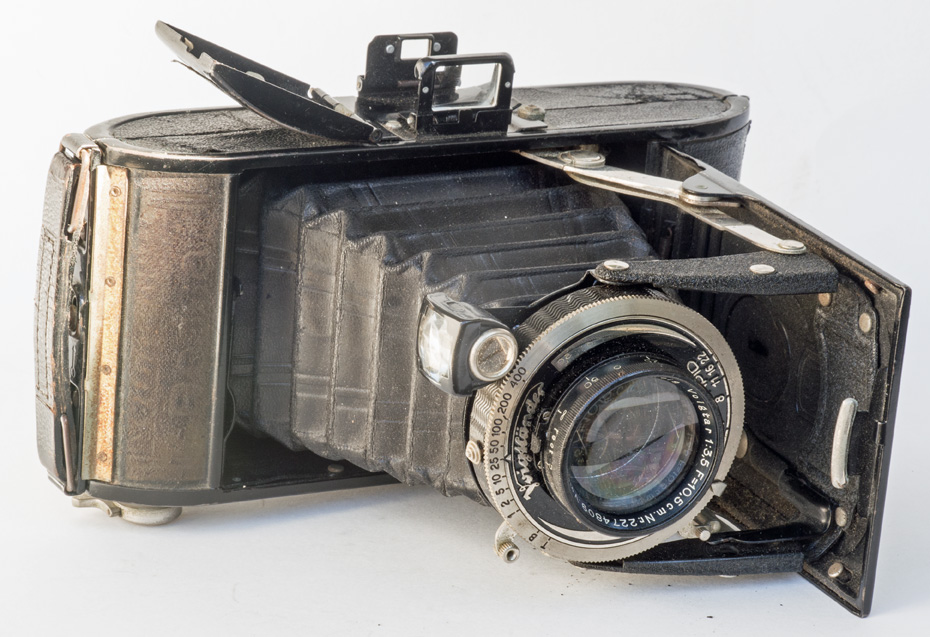
.jpg)
.jpg)